Effective Digital Marketing Strategies for Small Businesses in Australia to Boost Online Presence and Patient Acquisition
In the competitive landscape of small businesses in Australia, particularly in the healthcare sector, effective digital marketing services are essential for enhancing online presence and acquiring new patients. This article will explore various digital marketing strategies tailored for small healthcare practices, focusing on how these approaches can attract new patients and foster loyalty. Readers will learn about the importance of Search Engine Optimisation (SEO), social media marketing, email marketing, and reputation management. By addressing common challenges faced by small healthcare providers, this guide aims to provide actionable insights that can lead to improved patient acquisition and retention. We will delve into local SEO tactics, social media strategies, patient acquisition techniques, and the role of content marketing in driving business growth.
Indeed, research consistently highlights the critical role of a diverse set of digital marketing tools in enhancing healthcare clinic visibility and patient retention.
Digital Marketing Tools for Healthcare Clinic Visibility & Patient Retention
The findings revealed that healthcare clinics increasingly rely on digital marketing tools such as SEO, PPC advertising, content marketing, social media engagement, and email automation to improve visibility and patient retention.
Digital marketing transformation in healthcare clinics: strategies, challenges, and patient engagement outcomes, 2025
How Can Local SEO Improve Visibility for Small Healthcare Businesses in Australia?
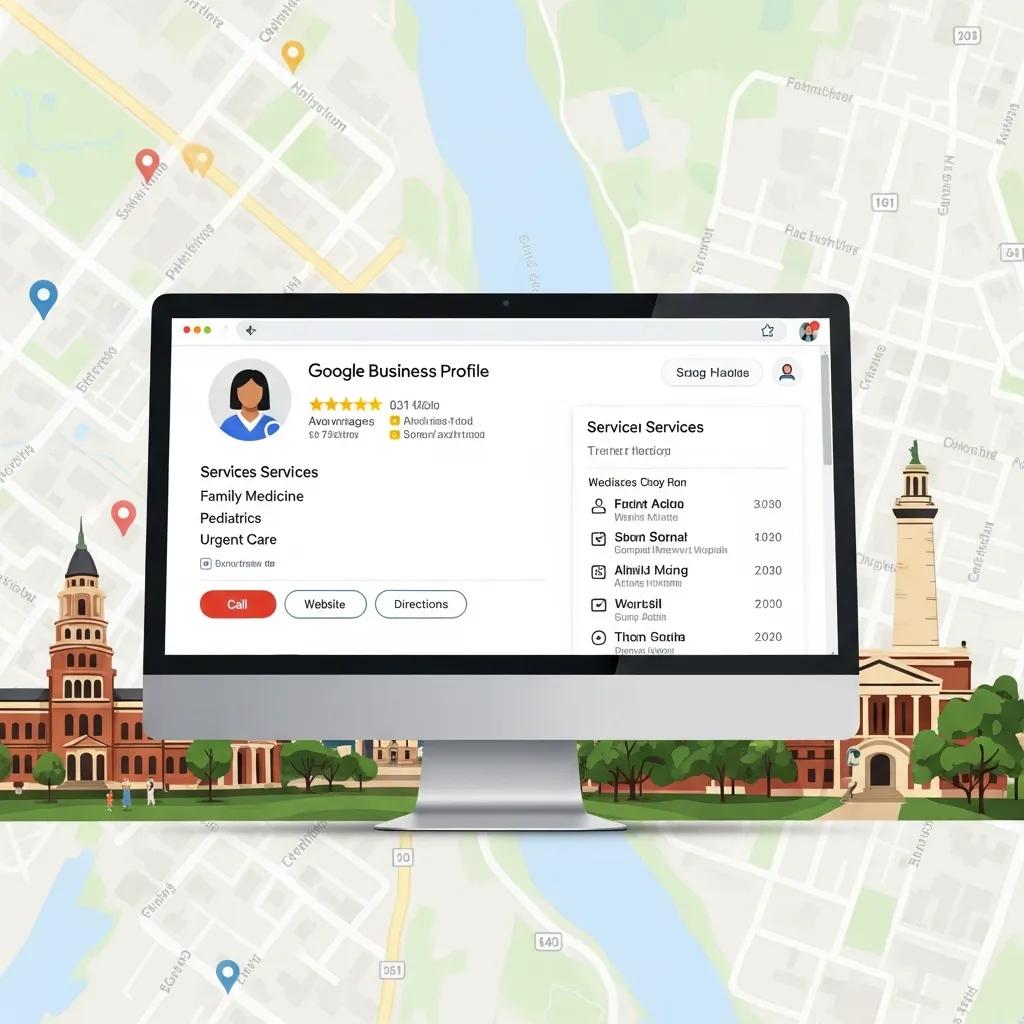
Local SEO can significantly enhance visibility for small healthcare businesses in Australia by improving their online presence through several key strategies. These include:
- Optimising Google Business Profile (GBP): A complete and optimised GBP with accurate services, categories, and photos signals relevance to search engines, increasing the chances of appearing in local search results.
- Creating Localised Service Pages: Developing suburb-specific service pages that target common conditions helps match local patient searches, improving visibility for long-tail queries.
- Implementing Structured Data: Using Service and LocalBusiness schema on relevant pages helps search engines display rich results, which can improve click-through rates.
- Encouraging Patient Reviews: Collecting and responding to verified patient reviews builds trust and credibility, which can enhance local search rankings.
- Maintaining NAP Consistency: Ensuring consistent Name, Address, and Phone number (NAP) citations across directories reinforces local ranking signals.
These strategies create a reliable local discovery funnel that can convert searches into calls and bookings, ultimately driving patient acquisition for small healthcare practices.
What Are Key Local SEO Tactics for Healthcare Practices?
Key local SEO tactics for healthcare practices include:
- Complete and Optimize Google Business Profile (GBP): Ensure services and photos are current.
- Create Localized Service Pages: Target specific suburbs and common conditions.
- Implement Structured Data: Use Service and LocalBusiness schema on relevant pages.
- Encourage and Manage Patient Reviews: Collect, respond to, and display verified patient reviews.
- Audit Citations: Correct any inconsistencies in Name, Address, and Phone number (NAP) across directories.
These steps help create a reliable local discovery funnel that converts searches into calls and bookings.
How Does Google Business Profile Optimization Drive Patient Acquisition?
Google Business Profile optimization drives patient acquisition by enhancing visibility, increasing engagement, and building trust. A complete and accurate profile appears more prominently in local search results, prompting more calls and bookings. Key metrics suchs as calls, website clicks, direction requests, and messages indicate high user intent and often convert to appointments. Additionally, positive patient reviews improve credibility and local search rankings, further influencing patient decisions. By effectively managing and optimizing their profiles, healthcare practices can attract and retain more patients.
What Social Media Marketing Strategies Work Best for Dentists and Small Healthcare Providers?
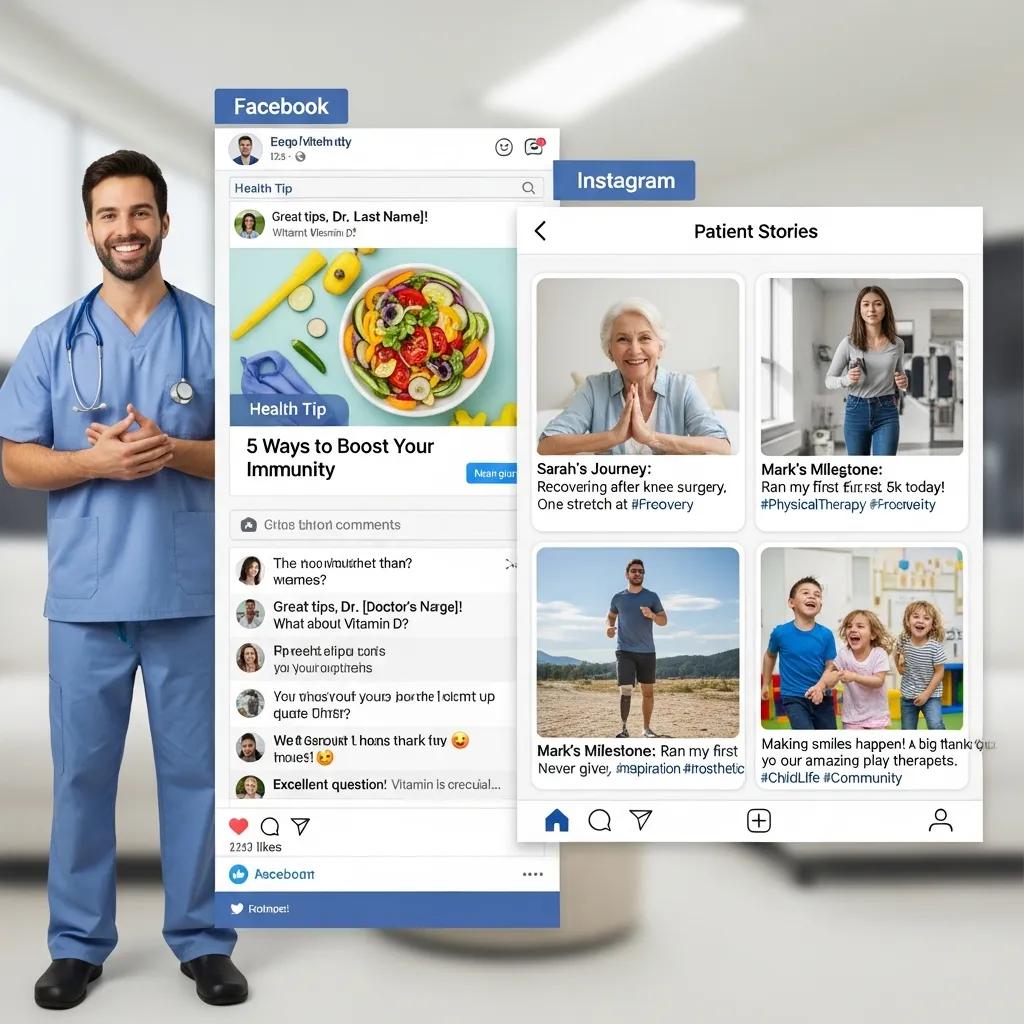
The best social media marketing strategies for dentists and small healthcare providers include:
- Engagement with the Community: Use platforms like Facebook and Instagram to share patient stories, health tips, and telehealth announcements, which helps build trust and keeps the practice top of mind.
- Interactive Content: Create content that encourages participation, such as Q&A sessions, health tips, and patient success stories. Engaging with followers fosters a sense of community.
- Paid Social Campaigns: Utilize targeted paid social advertising to reach specific local audiences, ensuring marketing budgets are spent effectively.
- Educational Content: Share valuable information through various formats, including short-form videos, visuals, and easy-to-read posts that explain common procedures or health topics. This type of educational content helps inform and engage patients.
- Regular Activity: Maintain an active presence on social media to strengthen relationships with existing patients and attract new ones.
- Reputation Management: Encourage satisfied patients to leave positive reviews and respond to feedback promptly to enhance online reputation and trust.
These strategies, when combined with SEO and patient engagement techniques, can significantly enhance visibility and patient acquisition for dental practices.
This aligns with broader research indicating that social media has become an indispensable channel for healthcare promotion and patient recruitment.
Social Media for Patient Recruitment in Healthcare Marketing
As the world is becoming more digitally oriented, the health care industry is increasingly visualizing SM as an important channel for health care promotion, employment, recruiting new patients, marketing for health care providers (HCPs), building a better brand name, etc.
Social media and health care, part
I: literature review of social media use by health care providers, D Farsi, 2021
Which Social Platforms Are Most Effective for Healthcare Engagement?
The most effective social platforms for healthcare engagement include:
- Facebook: Useful for local community engagement and event promotion.
- Instagram: Best for visual education and brand warmth, particularly through short videos and Stories.
- LinkedIn: Suitable for professional referral and recruitment content.
Choosing 1-2 platforms that align with audience match and production effort is recommended for optimal engagement.
How Can Content and Community Building Enhance Patient Relationships?
Content and community building enhance patient relationships by fostering emotional connections, increasing trust, and encouraging sharing of experiences. By creating valuable content that resonates with patients—such as testimonials and educational materials—healthcare providers can address patient concerns and empower them to make informed decisions. Engaging patients through social media and interactive platforms also builds loyalty and a sense of belonging. Additionally, understanding patient personas allows for tailored content that meets specific needs, further enhancing relevance and shareability. Overall, these strategies contribute to long-term patient engagement and retention.
What Patient Acquisition Techniques Are Proven for Small Healthcare Businesses in Australia?
Proven patient acquisition techniques for small healthcare businesses in Australia include:
- Marketing Attribution: Tracking which marketing interactions lead to patient inquiries and bookings to improve ROI and understand effective channels.
- Custom Websites: Developing SEO-friendly, tailored websites that enhance local visibility, reduce bounce rates, and integrate online booking systems.
- Local SEO: Optimizing for local searches with suburb-specific service pages and accurate Google Business Profile information to attract nearby patients.
- Content Marketing: Creating relevant content that addresses local patient queries to improve engagement and visibility.
- Reputation Management: Utilizing patient reviews and testimonials to build trust and social proof, which can enhance local discovery.
- Regular Website Maintenance: Keeping the website updated to improve performance, security, and compliance, which in turn supports patient acquisition.
How Do Digital Advertising and Targeted Campaigns Attract New Patients?
Digital advertising and targeted campaigns attract new patients by utilizing specific online channels such as search ads and social media to connect with potential patients. These campaigns employ persuasive calls to action and tailored messaging to convert interest into appointments. By understanding patient search behaviors and demographics, healthcare practices can strategically invest in high-value keywords and platforms, ensuring that their marketing efforts yield motivated patients ready to book consultations.
What Role Do Case Studies and Testimonials Play in Building Trust?
Case studies and testimonials build trust by providing social proof that demonstrates outcomes and patient experiences, which reduces perceived risk for prospective patients. They turn clinical outcomes into relatable stories, highlight satisfaction, and outline the clinical process, helping potential patients evaluate their options. Structured testimonials and anonymised case studies also enhance credibility by showcasing real-world experiences and measurable outcomes, ultimately supporting conversion rates and establishing authority in the healthcare field.
How Can Content Marketing and Email Campaigns Support Small Business Growth?
Content marketing and email campaigns support small business growth by enhancing patient relationships, increasing brand authority, and driving repeat visits. Strategic content marketing builds trust through consistent quality content, leading to higher patient retention and predictable demand. Email marketing nurtures relationships with personalized, segmented communications that guide patients from interest to booking, improving engagement and conversion rates. Together, these strategies create a stable cash flow, higher lifetime value, and a stronger local reputation, ultimately fostering sustainable business growth.
What Types of Content Drive Engagement for Healthcare Providers?
The types of content that drive engagement for healthcare providers include:
- Emotional Patient Narratives: Stories that create an emotional connection, framed with before/after context and an emotional payoff, encourage sharing and build trust.
- Visual Content: Images, infographics, and short-form videos that simplify complex topics enhance comprehension and engagement, making it easier for users to share.
- Actionable Content: Content that provides clear takeaways or actionable steps encourages sharing and engagement.
- Educational Resources: Blog posts, treatment pages, and patient education videos that inform and support patient decision-making.
- Social Proof: Testimonials and case studies that build credibility and trust.
These content types should be tailored to meet the needs and preferences of the audience while ensuring compliance and respect for patient privacy.
How to Design Effective Email Campaigns for Patient Retention?
To design effective email campaigns for patient retention, clinics should focus on the following strategies:
- Obtain Clear Consent: Ensure compliance with regulations by getting explicit opt-ins from patients before sending emails.
- Personalisation: Tailor messages based on treatment history, appointment types, and local references to increase engagement.
- Automated Email Sequences: Use automated sequences to send timely messages throughout the patient journey, such as welcome emails, reminders, and follow-ups.
- Content Variety: Include educational content, patient stories, and practical tips in newsletters, using visuals and clear calls to action to encourage bookings.
- Segmentation: Segment email lists by demographics, treatment types, and engagement levels to deliver targeted messaging.
- Measure Success: Track key metrics like open rates, click-through rates, conversion rates, and unsubscribe rates to evaluate and optimize campaigns.
- Avoid Common Pitfalls: Ensure proper consent, avoid over-mailing, and maintain relevance to prevent patient fatigue and unsubscribes.
By implementing these strategies, clinics can strengthen relationships with patients and improve retention rates.
How to Measure and Optimize ROI for Digital Marketing in Small Australian Businesses?
To measure and optimize ROI for digital marketing in small Australian businesses, particularly in healthcare, follow these steps:
- Source Tracking: Implement tracking systems such as UTMs, call-tracking, and intake forms to capture referral sources accurately.
- Key Performance Indicators (KPIs): Focus on essential KPIs like organic traffic, conversion rate, patient acquisition cost (PAC), and customer lifetime value (LTV). These metrics help assess content effectiveness and financial outcomes.
- Regular Reporting: Create monthly reports that attribute financial outcomes to specific marketing tactics. This includes tracking engagement metrics (time on page, scroll depth), conversions (leads and bookings), and retention (repeat visits).
- Attribution Models: Use attribution models to connect content outcomes to revenue, ensuring that you can measure the impact of your marketing efforts accurately.
- Continuous Optimization: Prioritize low-cost, high-return activities and reinvest gains into scaling content that performs well. Regularly review and adjust strategies based on performance data.
- Automation: Utilize automated reporting tools to streamline data collection and analysis, allowing for quicker decision-making and responsiveness to changes in performance.
By following these strategies, small businesses can effectively measure and optimize their digital marketing ROI.
Which Metrics Best Reflect Marketing Success in Healthcare?
The metrics that best reflect marketing success in healthcare include:
- Website Traffic – Number of visitors and their sources.
- Conversion Rate – Percentage of visitors who book appointments.
- Cost per Lead (CPL) – Marketing spend for each new lead.
- Patient Acquisition Rate – Number of new patients gained from campaigns.
- Return on Ad Spend (ROAS) – Revenue generated for every dollar spent on advertising.
These metrics help evaluate patient acquisition, engagement, and return on investment, ensuring campaigns align with business goals.
What Tools and Techniques Help Monitor Campaign Performance?
Tools and techniques that help monitor campaign performance include:
- Google Analytics (GA4) – For web analytics and tracking visitor behavior and conversions.
- Google Search Console – To monitor search performance and site indexing.
- Rank Trackers – For tracking keyword trends.
- Local SEO Tools – For monitoring Google Business Profile (GBP) and citations.
- Site Crawlers – To detect technical issues.
- Schema Validators – To test structured data.
- Local Reputation Platforms – To track review volume and sentiment.
- CRM Systems – For lead and conversion attribution.
- Heatmaps and Session Recordings – To gain qualitative insights into user behavior.
- Social Media Management Tools (e.g., Hootsuite, Buffer) – For scheduling and tracking social media performance metrics.
These tools provide a comprehensive view of campaign performance and help in making data-driven decisions.