

Top Healthcare and Dental Content Types to Boost Patient Engagement
Patient engagement in healthcare and dental marketing measures actions that indicate interest—bookings, enquiries, shares and repeat visits—which content must be designed to stimulate. This guide explains which content types most reliably drive interaction for healthcare audiences, why each format works, and how to map formats to patient journey stages for measurable results. Many practice owners struggle to convert attention into appointments because content lacks relevance, local context or clear CTAs; this article shows practical remedies and production tips. You will learn the top content formats, local and social strategies tailored to Australian dental patients, compliance-minded trust-building approaches, distribution and measurement tactics, and interactive tools that capture and qualify leads. The recommendations weave in specific metrics, tools and examples so you can prioritise formats that improve enquiries and conversions. Read on for format-specific checklists, comparative EAV tables, and step-based actions you can apply immediately.
What Are the Most Effective Content Formats for Maximising Audience Engagement?
Effective content formats are the media and structures that prompt patient actions by matching message to intent, and they work because each format meets a particular cognitive or decision-making need. Video content captures attention and demonstrates procedures visually, interactive tools qualify intent and capture leads, educational blogs build authority and improve search visibility, infographics simplify complex information for quick comprehension, and user-generated content (UGC) lends social proof that reduces perceived risk. Mapping formats to patient journey stages clarifies where to invest: awareness benefits from short-form video and infographics, consideration is served by educational blogs and quizzes, and conversion relies on testimonials and GBP posts. The following table compares these formats by best use case and expected engagement so you can quickly prioritise production resources. Understanding this mapping leads directly into practical production tips for video, which is discussed next.
Different formats excel at different patient stages and produce predictable engagement outcomes.
| Content Type | Best Use Case (patient stage) | Expected Engagement Metric |
|---|---|---|
| Short-form Video (Reels, Shorts) | Awareness / social discovery | High view rate, 1–3% click-through to profile |
| Interactive Quiz / Calculator | Consideration / lead qualification | Strong lead capture rate, longer session duration |
| Educational Blog / FAQ | Consideration / SEO-driven traffic | Higher organic visits, improved time on page |
| Infographic / Visual Guide | Awareness / patient education | High social shares, quick scroll-depth completion |
| Patient Testimonial (UGC) | Conversion / trust-building | Increased booking enquiries, higher conversion rate |
How Does Video Content Drive Patient Interaction and Engagement?
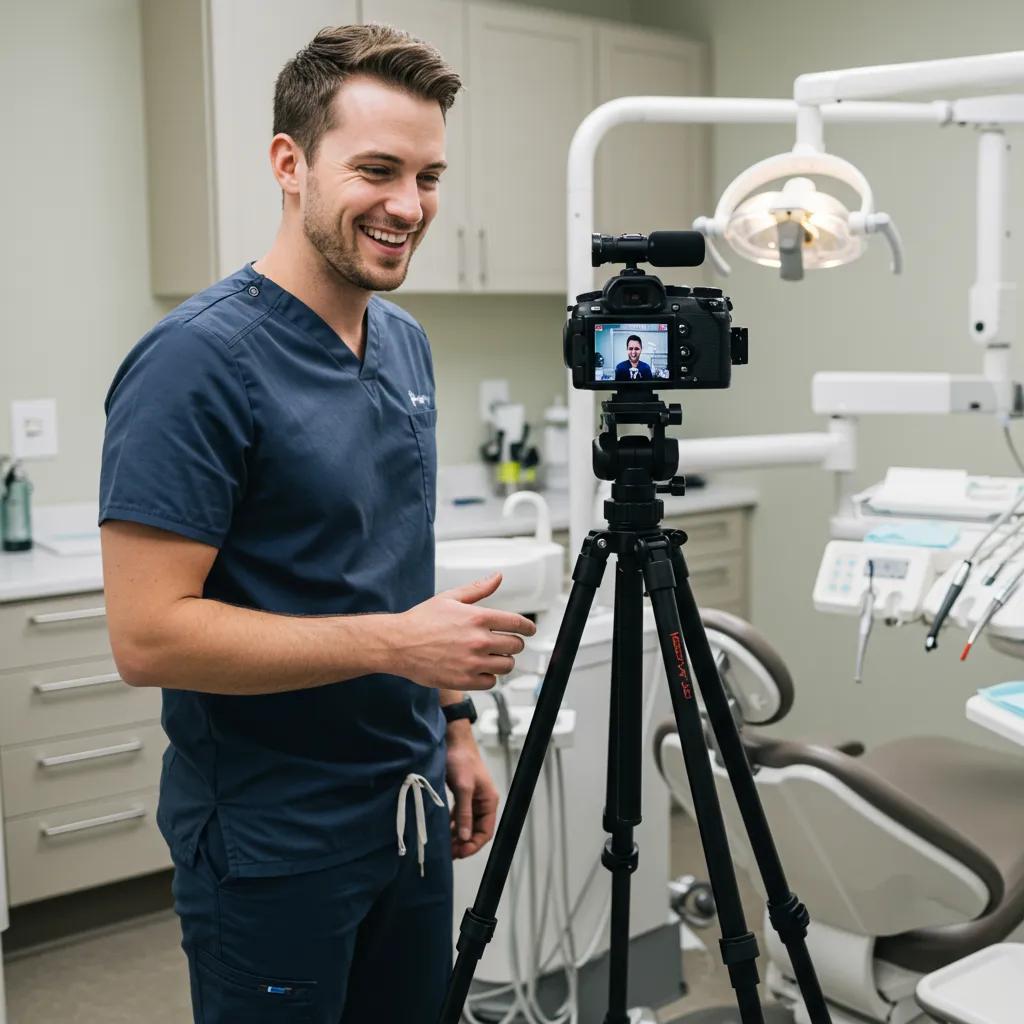
Video content drives interaction by combining visual demonstration, social proof and narrative to reduce uncertainty and make next steps clear for patients. Short-form video performs strongly on social platforms because it matches passive browsing behaviours and can be repurposed across channels to sustain reach. For dental practices, effective video types include clinic tours, short procedure explainers, before-and-after transformations and patient testimonials that respect privacy. Production tips focus on quick scripting, steady framing, captions for silent autoplay and a clear CTA that asks viewers to enquire or view a GBP listing. These practices naturally lead to choices about interactive formats that capture intent more directly.
Short-form video best practices help convert attention into measurable actions through concise storytelling, which transitions into how interactive content complements video.
Why Are Interactive Content Types Like Quizzes and Polls Essential for Lead Generation?

Interactive content such as quizzes, polls and ROI calculators generates engagement by actively involving users in assessment and decision-making, increasing time on site and revealing intent signals. Quizzes can qualify patients by symptom or readiness to book and are structured to capture contact details in exchange for personalised results. UX best-practices include mobile-first design, immediate feedback, minimal fields to reduce friction and CRM tagging for segmentation. Example quiz title for dentists: “Which Treatment Is Right For Your Smile?” with follow-up recommendations and nurture sequences. Designing this flow naturally connects to using educational blogs to deepen trust after a quiz result.
Well-designed interactive assets convert engagement into leads and inform content sequencing that uses blogs and videos for nurture and conversion.
How Do Educational Blogs and Articles Build Trust and Authority?
Educational blogs build trust by addressing common patient questions with evidence-informed explanations and localised advice, and they work because search demand aligns with problem-focused queries. Blog formats that perform well include how-to guides, procedure explainers, myth-busting posts and definitive localised resources that link to service pages and GBP entries. Structural templates use clear H1/H2 hierarchies, FAQ sections for featured snippets and internal links to appointment pages to close the loop. Content that answers intent and includes schema and local references positions practices in organic search while offering material for social and email repurposing. Mastering blog structure supports the creation of visual assets like infographics, which are discussed next.
Strong blogs feed other formats and provide durable content that captures organic traffic and supports conversion-focused pathways.
What Role Do Infographics and Visual Content Play in Patient Education?
Infographics and visual content distil complex clinical information into digestible steps and visuals, and they work because visual comprehension increases recall and shareability among local audiences. Use visuals for treatment timelines, aftercare checklists and contrasts between options, and place ALT text and descriptive filenames to support accessibility and SEO. Design considerations include legible typography, brand-consistent colours and mobile-optimised aspect ratios for social sharing. Embed infographics in blogs, GBP posts and downloadable assets to extend reach and encourage sharing. Visual content often prompts user-generated responses, which naturally ties into testimonial strategies covered next.
Visual assets accelerate understanding and social distribution, and they prepare audiences to seek personalised validation via testimonials and reviews.
How Can User-Generated Content Like Patient Testimonials Boost Credibility?
User-generated content such as legitimate patient testimonials increases credibility because prospective patients value peer experiences more than promotional language, and testimonials work by reducing perceived clinical risk. Collect testimonials using clear consent language, optional anonymisation for privacy and a simple permission workflow that records authorisation. Showcase quotes on service pages, use schema markup for review snippets and repurpose short clips as social proof across channels. Display testimonials alongside procedure explainers to link emotional reassurance with factual information, which amplifies conversion potential.
Ethically sourced testimonials support conversion and feed into local SEO and social strategies that engage Australian patients.
After describing top content formats and use-cases, consider practical help for implementation: Milkcan Marketing offers Dental Marketing Services that combine strategy, content production and optimisation tailored for small healthcare practices. Their approach aligns video, interactive tools and local SEO to drive enquiries while respecting privacy and compliance, providing practices with end-to-end support from concepts to reporting. This practical support helps clinics move from planning to measurable patient-acquisition outcomes.
How Can Dental Practices Use Content Marketing Strategies to Engage Australian Patients?
Content marketing for Australian dental practices succeeds when it combines culturally localised messaging, platform-appropriate formats and consistent posting cadence to build trust and surface in local search. Start by mapping patient journey stages to formats: short-form video and infographics for awareness, blog FAQs and quizzes for consideration, and GBP posts and testimonials for conversion. Resource allocation advice for small practices includes batching content production, repurposing assets across channels and prioritising GBP and social proof to improve local discovery.
These tactics prepare practices to adopt platform-specific content mixes and local SEO enhancements, which are detailed next.
What Social Media Content Ideas Work Best for Australian Dentists?
Social media content that resonates locally mixes education, team introductions and community-focused posts to humanise the practice and position it as a trusted local provider. A recommended weekly content mix balances educational tips, before/after highlights, staff spotlights, patient FAQs and community involvement posts to build familiarity and authority. Tone should be professional yet approachable, avoiding clinical jargon and adhering to compliant phrasing for any clinical claims. Post cadence for small practices often targets three to five quality posts per week, with one boosted post to extend reach to nearby suburbs. Implementing this cadence ties into short-form video production and local SEO work addressed below.
Practical social post ideas that are easy to produce and reuse:
- Quick Tip Videos: 30–45 second clips addressing common concerns.
- Staff Introductions: Team photos with short bios to humanise the practice.
- Before-and-After Highlights: Visual proof with consent and anonymisation.
- Patient FAQ Posts: Short answers to common treatment questions.
- Community Events: Local involvement posts that show neighbourhood ties.
How to Leverage Short-Form Video and Reels for Dental Patient Engagement?
Short-form video converts because it reduces friction—viewers learn quickly and can act on clear CTAs—so a concise production checklist ensures quality and compliance. Use a five-step production checklist: define the single message, script a 15–30 second hook, film with steady framing and natural light, add readable captions and close with a soft CTA to enquire or view service details. Sample script templates include myth-busting lines, quick procedure explainers and patient-care tips. Repurpose longer interviews into bite-sized clips to expand content output. Following this checklist supports distribution across Instagram Reels, Facebook and short video feeds, which complements local search efforts.
Which Content Types Are Most Effective for Local SEO in Dental Marketing?
Local SEO content focuses on location pages, geo-targeted blog posts and GBP posts that answer region-specific queries and include NAP consistency and schema markup to aid indexing. Create location landing pages with unique copy, service lists and local testimonials; produce blog topics that reflect local search intent such as “aftercare for root canal in [suburb]” and include internal links to service pages. GBP posts should be updated frequently with offers, new services and event announcements to trigger map visibility. Implementing local schema, consistent name/address/phone data and citation monitoring increases prominence in local packs.
These optimisations feed patient enquiries and work hand-in-hand with social distribution strategies.
How Does Google Business Profile Optimisation Enhance Content Visibility?
Google Business Profile drives visibility by surfacing concise, locally scoped content at the exact moment patients search for nearby dental services, and optimising GBP increases calls and bookings. Use GBP posts to promote new blog content, limited-time offers and patient testimonials; include high-quality images with descriptive captions and ensure services and Q&A sections are complete and regularly refreshed. Posting cadence of one to two GBP updates per week keeps the listing active and signals relevance to search algorithms. Track calls, clicks and direction requests from GBP to attribute enquiries accurately.
Optimising GBP strengthens local presence and complements owned content strategies on the website.
When practices want execution support for these social and local SEO tactics, Milkcan Marketing’s Dental Marketing Services provide local SEO and Google Business Profile optimisation as practical next steps, helping practices implement GBP post strategies, citation consistency and content cadence aligned with patient behaviour.
How Do You Craft Content That Builds Trust and Authority in Healthcare Marketing?
Content that builds trust and authority combines clinical accuracy, ethical compliance and local relevance to reassure patients and comply with advertising standards, and it works by reducing perceived risk through transparent information and evidence-based guidance. Implement approval workflows for clinical claims, clear disclaimers where appropriate and an editorial checklist that includes source citations and clinician review. Localisation strategies—using regional terminology and addressing local patient concerns—further increase perceived relevance. Balancing educational material with soft CTAs prevents content from feeling salesy while still guiding readers toward booking.
Establishing these trust-building mechanisms prepares content teams to handle compliance, localisation and promotional balance effectively.
What Content Types Help Navigate Compliance and Ethical Marketing in Healthcare?
Compliant content types emphasise education, general information and patient experiences without promising outcomes, and they work because regulators prioritise truthful, non-misleading messaging in healthcare. Use informational blogs, anonymised case summaries, clinician interviews and standardised disclaimers to communicate clearly while avoiding sensational clinical claims. Approval processes should include clinical sign-off, legal review for sensitive statements and clear consent for any patient material. When in doubt, anonymise identifying details and focus on procedural steps and typical recovery expectations to maintain trust.
A compliance-minded content approach protects patients and practices while preserving persuasive power through transparent, educational messaging.
How Can Localisation Improve Content Relevance for Australian Healthcare Audiences?
Localisation increases relevance by using Australian terminology, referencing local services and addressing region-specific access or funding questions, and it works because patients search with local intent and expectations. Adapt headlines and examples to regional contexts, mention local suburbs or commonly searched treatment queries, and link to relevant Australian health resources where appropriate. Consider currency, units and colloquial language in copy to improve relatability. Localisation also includes addressing cultural considerations and community health priorities to ensure messages resonate.
Localized content converts better because it aligns search intent with the practical realities of Australian patients and practice offerings.
How to Balance Patient Education with Service Promotion in Content?
Balancing education and promotion uses a content ratio and CTA strategy to prioritise trust while enabling conversions, and it works because patients respond better to value-first content. A common editorial rule is a 70:30 educational-to-promotional split, using soft CTAs within educational content and explicit CTAs on service pages. Soft CTAs invite readers to download guides, watch videos or book a consult, while direct CTAs appear on service and booking pages. Include a content review checklist to prevent overly promotional language and ensure educational value is preserved.
A consistent editorial ratio ensures content remains authoritative and useful while still converting readers who are ready to act.
What Are the Best Practices for Distributing and Promoting Healthcare Content?
Distribution multiplies the value of content by matching format to channel, and it works because each channel has distinct audience behaviours—social thrives on short visuals, email rewards personalised sequences and GBP surfaces location-based content at point of need. An optimised distribution mix for small practices combines organic social, targeted boosts, weekly GBP posts, monthly email newsletters and priority SEO updates. Amplification strategies include small-budget paid campaigns for high-performing posts and retargeting to site visitors who engaged with educational assets. The following subsections outline channel-specific tactics, email approaches, site integration and GBP tracking to maximise reach.
Effective distribution ensures content investment translates into measurable patient interactions and supports continuous optimisation.
How Can Social Media Channels Be Used to Maximise Content Reach?
Social channels extend reach by exposing content to both local audiences and lookalike segments, and they perform best when post formats match platform norms—short videos for reels, image carousels for Instagram, longer professional posts for LinkedIn. Budget guidelines for small practices often allocate modest monthly spends focused on high-performing posts and location targeting to nearby suburbs. Organic strategies prioritise community engagement—replying to comments, hosting polls and sharing local stories—to build loyalty. Paid boosts amplify posts with proven engagement to expand reach and capture new enquiries.
List of community engagement tactics that encourage recurring interaction:
- Reply promptly to comments and messages to foster trust.
- Run regular polls or Q&As to surface patient concerns.
- Share behind-the-scenes or team content to humanise the practice.
Using these tactics regularly increases visibility and helps build a local audience that converts over time.
Why Is Email Marketing Important for Patient Nurturing and Engagement?
Email marketing nurtures patient relationships through sequenced communications that guide prospects from interest to booking, and it works because segmented, personalised messages achieve higher opens and clicks than generic outreach. Typical lifecycle sequences include a welcome series, post-visit follow-ups, treatment reminders and reactivation campaigns for lapsed patients. Segmentation by treatment interest, stage and past interactions enables targeted messaging that increases relevance and conversion. Benchmarks for small practices vary, but personalised subject lines and concise CTAs improve performance. Email integrates with quizzes and calculators by delivering personalised results and follow-up resources to captured leads.
A disciplined email programme converts engaged readers into booked appointments by maintaining relevance across the patient lifecycle.
How Should Content Be Integrated into Websites for Better User Experience?
Site integration uses a hub-and-spoke architecture that organises content into central topic hubs and linked service pages, and it works because clear information hierarchies improve both UX and SEO. Implement topical clusters where a comprehensive hub links to detailed service pages, blog posts and FAQs; ensure mobile-first design, fast load times and accessible navigation. CTAs should be prominent yet contextually appropriate, with forms minimised to reduce friction and phone-call options for immediate enquiries. Internal linking maps help users and search engines discover related content while improving conversion paths.
A user-focused site architecture captures organic interest and converts it into measurable patient interactions through clear pathways and optimisation.
How Does Content Optimisation on Google Business Profile Drive Patient Inquiries?
Optimising GBP content drives enquiries by making essential practice information and timely offers visible in local search results, and it works because GBP surfaces direct action options like calls and bookings. Use GBP posts with images and short descriptions to promote new blog content or limited offers, leverage the Q&A to answer common booking questions and keep service lists accurate. Track GBP-driven phone calls and website clicks as part of attribution to understand the listing’s impact. Frequent updates and response to reviews signal activity to search systems and encourage trust from prospective patients.
GBP optimisation closes the loop between discovery and action by making content immediately actionable for nearby patients.
How Do You Measure Content Engagement and ROI in Healthcare Digital Marketing?
Measuring content engagement and ROI requires clear KPIs, a practical toolset and an iterative refinement loop to tie content to patient acquisition outcomes, and it works because consistent measurement reveals what content moves the needle. Primary KPIs include engagement metrics (time on page, scroll depth), lead metrics (form submissions, phone calls) and conversion metrics (bookings attributed to content). Recommended tools include GA4 for web analytics, Google Search Console for search performance, social insights for platform metrics and a CRM for lead attribution. The table below maps KPIs to tracking tools and explains why each matters so practices can build simple dashboards and reporting cadences.
Clear KPI-to-tool mapping supports monthly review cycles and informs content prioritisation decisions that improve ROI.
| KPI | Tool | Why it matters |
|---|---|---|
| Engagement rate (time on page, scroll depth) | GA4 / Heatmaps | Shows content relevance and stickiness |
| Organic search visibility | Google Search Console | Measures query performance and indexing health |
| Lead capture (forms, quiz completions) | CRM / Form analytics | Directly ties content to enquiries for attribution |
| Social engagement (views, shares) | Platform insights | Indicates content resonance and virality potential |
| Conversions (bookings, calls) | CRM + Call tracking | Demonstrates financial return and acquisition cost |
What Are the Key Performance Indicators for Healthcare Content Success?
KPIs for healthcare content success define measurable outcomes that indicate increased patient interest and conversion potential, and they work because they convert qualitative performance into actionable metrics. Core KPIs include engagement metrics—time on page, scroll depth and shares; lead metrics such as form submissions, quiz completions and phone calls; and conversion metrics like booked appointments and revenue per acquisition. Suggested benchmarks for small dental clinics can be established internally, but improvement trends and relative gains offer practical signals even without industry-wide standards.
Define measurement frequency (weekly for social, monthly for SEO) and use these KPIs to feed iterative content decisions that increase ROI.
Which Tools Are Best for Tracking Content Performance and Patient Interaction?
A practical measurement stack for small practices combines free and low-cost tools to track content performance: GA4 for web analytics, Google Search Console for search visibility, platform native insights for social metrics, and a CRM for lead and conversion attribution. Heatmaps and session recordings add qualitative insight into user behaviour, while call-tracking ties phone enquiries to specific campaigns. Integrating CRM data with analytics tools via simple UTM conventions and CRM source fields enables multi-touch attribution for better understanding of content contribution. Setting up basic dashboards in a spreadsheet or BI tool provides monthly clarity for decision-making.
Selecting the right tool mix ensures practices measure the metrics that matter without overwhelming resources, and it leads into a refinement process described next.
When tracking and reporting become operational challenges, Milkcan Marketing’s Dental Marketing Services offer measurement and reporting support through monthly reports and KPI dashboards that summarise engagement, leads and conversion trends for practice owners seeking external assistance.
How Can You Use Data to Refine Content Marketing Strategies?
Data-driven refinement uses a continuous loop—measure, hypothesise, test, iterate—to prioritise content updates and experiments, and it works because systematic testing reveals what concretely improves engagement and conversions. Start by identifying underperforming pages for pruning or updating, run A/B tests on headlines and CTAs, and repurpose top-performing long-form content into short clips and GBP posts. Prioritise updates based on potential impact and ease of implementation, and schedule quarterly content audits to refresh evergreen assets. Use attribution patterns to redistribute budget toward channels and formats that show consistent ROI.
An iterative approach converts analytics into actionable tests that steadily improve patient acquisition and content ROI.
What Interactive Content Types Generate the Highest Engagement for Healthcare Leads?
Interactive content drives higher engagement because it requires user input and returns personalised value, which increases time on site and lead quality. Key interactive types for healthcare include quizzes that assess readiness, ROI calculators that estimate marketing or treatment value, polls and live Q&A sessions that surface patient concerns and build rapport. Each tool serves a different lead stage: quizzes qualify consideration-stage users, calculators demonstrate financial scenarios, and polls stimulate community engagement. The table below compares these interactive tools by lead stage and example outcomes to help you prioritise implementation.
| Interactive Tool | Lead Stage | Example Outcome |
|---|---|---|
| Diagnostic Quiz | Consideration | Captures contact + recommended next steps |
| ROI Calculator | Consideration / Decision | Demonstrates revenue uplift scenarios |
| Polls & Micro-surveys | Awareness / Engagement | Inputs for content ideation and follow-up |
| Live Q&A | Awareness / Consideration | Real-time trust-building and appointment prompts |
Choosing the right interactive tool depends on your objective—qualification, education or conversion—and the table clarifies expected outcomes.
How Do Online Quizzes Assess Your Practice’s Digital Readiness?
Online quizzes assess digital readiness by asking targeted questions about current marketing activities, measurement practices and patient-acquisition channels, and they work because they transform a vague concern into quantifiable scores that prompt action. A quiz structure typically includes 8–10 items covering website performance, GBP activity, social presence and measurement; scoring segments respondents into readiness tiers with tailored next steps. Use minimal required fields and CRM tagging to route leads into appropriate nurture sequences and follow-up calls. Sample quiz questions and scoring logic feed targeted content recommendations and discovery conversations with practice owners.
Quizzes both educate practices about gaps and generate qualified leads that can be nurtured into marketing engagements or bookings.
What ROI Calculators Help Demonstrate Marketing Investment Benefits?
ROI calculators translate marketing inputs into revenue scenarios by modelling patient growth, average treatment value and conversion rates, and they work because visualising potential returns reduces risk perceptions about marketing spends. Key inputs include monthly new patient inquiries, average treatment revenue, conversion rate and expected uplift percentages; outputs show conservative and optimistic scenarios for revenue uplift and payback periods. Present results with clear assumptions and next-step recommendations to guide decision-making. Calculators are useful in sales conversations and as downloadable tools that capture contact details for follow-up.
ROI calculators make investment benefits tangible and support budgeting conversations with practice owners.
How Can Polls and Q&A Sessions Increase Patient Participation?
Polls and live Q&A sessions increase participation by soliciting direct feedback and creating dialogue that surfaces concerns and topics for content, and they work because interaction builds familiarity and positions clinicians as approachable experts. Promote polls ahead of time, use platform-native features for immediacy and follow up with content addressing poll results. For live Q&A, prepare a moderator, collect common questions in advance and include a soft CTA to book a consult at the end. Convert participants into leads by offering a downloadable guide or booking link as a follow-up.
Live engagement drives trust and yields actionable insights that inform blog topics, videos and interactive tools.
How Can Case Studies and Success Stories Enhance Content Marketing for Dental Practices?
Anonymised case studies and success stories enhance marketing by demonstrating measurable outcomes while protecting patient privacy, and they work because tangible metrics and process descriptions make results believable to practice owners and prospective patients. Structure studies around a clear challenge, an outlined approach and quantified results, and include visuals and anonymised quotes where consent allows. Present metrics such as inquiry uplift, booking growth and local ranking improvements to show marketing impact. The subsections explain what makes an effective case study, which metrics to include and how to anonymise stories ethically for publication.
Well-crafted case studies serve both as sales enablement and trust-building proof points for prospective patients and practice stakeholders.
What Makes a Dental Marketing Case Study Effective?
An effective dental marketing case study is concise, metrics-driven and focused on the challenge, the tactical approach taken and the measurable outcomes that followed, and it works because decision-makers prioritise evidence of impact. Use a template that lists objectives, actions (content produced, channels used), KPIs tracked and before/after metrics, supplemented by anonymised visuals. Highlight timelines, budget ranges and attribution methods to set realistic expectations. Include a clear next-step recommendation for readers to apply similar tactics in their practice.
A tight, transparent case study provides replicable lessons and contextualises expectations for other practices considering similar investments.
How Do Patient Growth Metrics Demonstrate Marketing Success?
Patient growth metrics show marketing success by quantifying increases in enquiries, bookings, organic traffic and local rankings, and they work because numbers provide a defensible basis for investment decisions. Focus on metrics that matter to practice owners: net new enquiries, conversion rate from enquiry to booking, average revenue per new patient and local search position changes. Visualise growth through simple before/after charts and contextualise metrics with the timeframes and activities that produced them. Use attribution models appropriate to the practice size—first touch, last touch or simple multi-touch—to explain contribution.
Transparent metrics tell the story of growth and enable practice owners to compare returns against other investments.
How Can Anonymised Stories Build Trust Without Breaching Privacy?
Anonymised stories build trust by preserving the essence of patient journeys while removing identifying details, and they work because ethical handling of sensitive information protects patients and practice reputation. Implement a consent process that offers opt-in for testimonials, provide templates for anonymisation and document approvals. Replace identifying data with general descriptors, use stock or consented images and focus on outcomes and process rather than personal details. Include a brief note about anonymisation to reassure readers that privacy has been respected.
Respectful anonymisation preserves credibility and allows practices to showcase outcomes in a compliant, trustworthy manner.
For practices ready to translate these approaches into action, Milkcan Marketing can develop tailored Dental Marketing Services plans that include strategy, content production, GBP optimisation and measurement to help practices implement interactive tools, content sequences and reporting frameworks that drive measurable patient acquisition.
Dental Marketing and Patient Journey Mapping for Practice Growth
Marketing is key to the success of any business, and dental practices are no exception. For a dental practice to grow, a single dentist should be seeing 24-50 new patients per month. To attract new dental patients, a practice must offer a competitive product at competitive pricing, along with convenient, high-quality services, all backed by a robust dental marketing plan. This article will explore how marketing can aid dental practices.
1. Introduction: Consumer journey analysis or mapping is an increasingly popular strategic management tool, praised by both academics and practitioners for its utility in understanding an organisation’s consumer experience. In the dental sector, this could also be a useful tool for enhancing the service experience and improving the strategic tools of modern dental practices. It appears that as care becomes more patient-centred, care teams require a “single pane” view of the entire dental patient journey.
Aim: In this article, we aim to share insights into the importance of mapping out the dental patient’s journey to better understand the needs and impulses that lead them to choose practitioners and services. We will primarily focus on identifying dental patients’ touchpoints.Dental Patient’s Journey Map: Introduction to Patient’s Touchpoints, M Antoniadou, 2021