

Proven Strategies for Creating Unique Content That Cuts Through Market Saturation Effectively for Healthcare Practices
Introduction
Content saturation occurs when many providers publish similar information, reducing visibility and patient trust; unique content breaks through by offering distinct value, relevance, and local context that directly influences patient choice. This article explains proven strategies for creating unique content that boosts patient engagement, improves local search visibility, and supports conversion across the patient journey. Readers will learn how to diagnose content gaps, develop a differentiated brand voice, use responsible AI and multimodal formats, map content to patient journey stages, measure outcomes with specific KPIs, and apply local SEO and Google Business Profile actions. The guidance targets Australian dental and broader healthcare practices with concrete, compliant examples and step-by-step tactics designed for small clinics. Throughout, we integrate practical checklists, EAV-style comparison tables, and lists of actionable ideas to help clinics convert content into inquiries and trust.
What Is Content Saturation and How Does It Affect Healthcare Practices?
Content saturation is when abundant, similar healthcare content overwhelms search results and social feeds, diluting patient attention because many pages answer identical queries; the mechanism is reduced relevance signals and lower engagement metrics that push practices off local SERPs. The specific benefit of recognising saturation is the ability to prioritise distinctive, patient-centric topics that increase visibility and perceived expertise. Identifying saturation helps clinics reallocate resources to higher-impact formats and localised messaging that outperforms generic pages. The next section explains why the Australian healthcare digital landscape is especially crowded and how local dynamics amplify saturation.
Why Is the Australian Healthcare Digital Landscape So Crowded?
Australia’s digital healthcare environment sees high online search intent for symptoms, providers, and treatments, which attracts many clinics and aggregator sites competing for the same queries. This competition produces overlapping service pages, repetitive blog posts, and standard directories, reducing differentiation and confusing prospective patients. Small dental submarkets, for example, often publish identical procedure descriptions and stock imagery, which lowers engagement and reduces click-through rates from local search results. Recognising these local dynamics prompts a targeted audit to find niche topic opportunities and neighbourhood-level content gaps.
How Does Generic Content Fail to Engage Patients?
Generic content underperforms because it lacks specificity, local relevance, and emotional resonance that patients seek when choosing a clinician, producing low time-on-page and high bounce rates. Common examples include templated “services” pages with boilerplate copy, stock photos that show no local staff or facility, and generic blog posts that repeat clinical facts without application to patient concerns. In contrast, differentiated content uses local signals, patient stories, and practical guidance that encourage deeper engagement and actions such as booking or calling. Addressing these failures requires a structured content gap analysis and persona-based topic selection, as explained next.
How Can Healthcare Practices Identify Their Unique Market Position?
A practical self-assessment clarifies strengths, specialisms, and underserved patient segments so practices can target unique topic areas instead of competing on commodity terms. Start with five diagnostic questions that reveal gaps: which procedures are most booked, what patient concerns repeatedly surface in calls, where competitors lack local case studies, which clinical outcomes you can document, and which community needs are unmet. Use patient feedback, appointment data, and a competitor audit to triangulate answers and prioritise topics that match patient intent. This diagnostic approach naturally leads practices to implement targeted content projects and, if desired, seek a third-party diagnostic to validate findings.
- Signs a practice should run a content diagnostic include:
Low Google Business Profile actions despite steady impressions.High bounce rates on service pages compared with local peers.Few or no locally focused case studies or patient stories.
Recognising a need for a structured diagnostic helps practices move from guesswork to a plan of differentiated content assets. For clinics wanting support, Milkcan Marketing offers a diagnostic to identify content gaps and local position, helping prioritise topics and formats that attract patients.
What Are the Most Effective Content Differentiation Strategies for Australian Dentists?
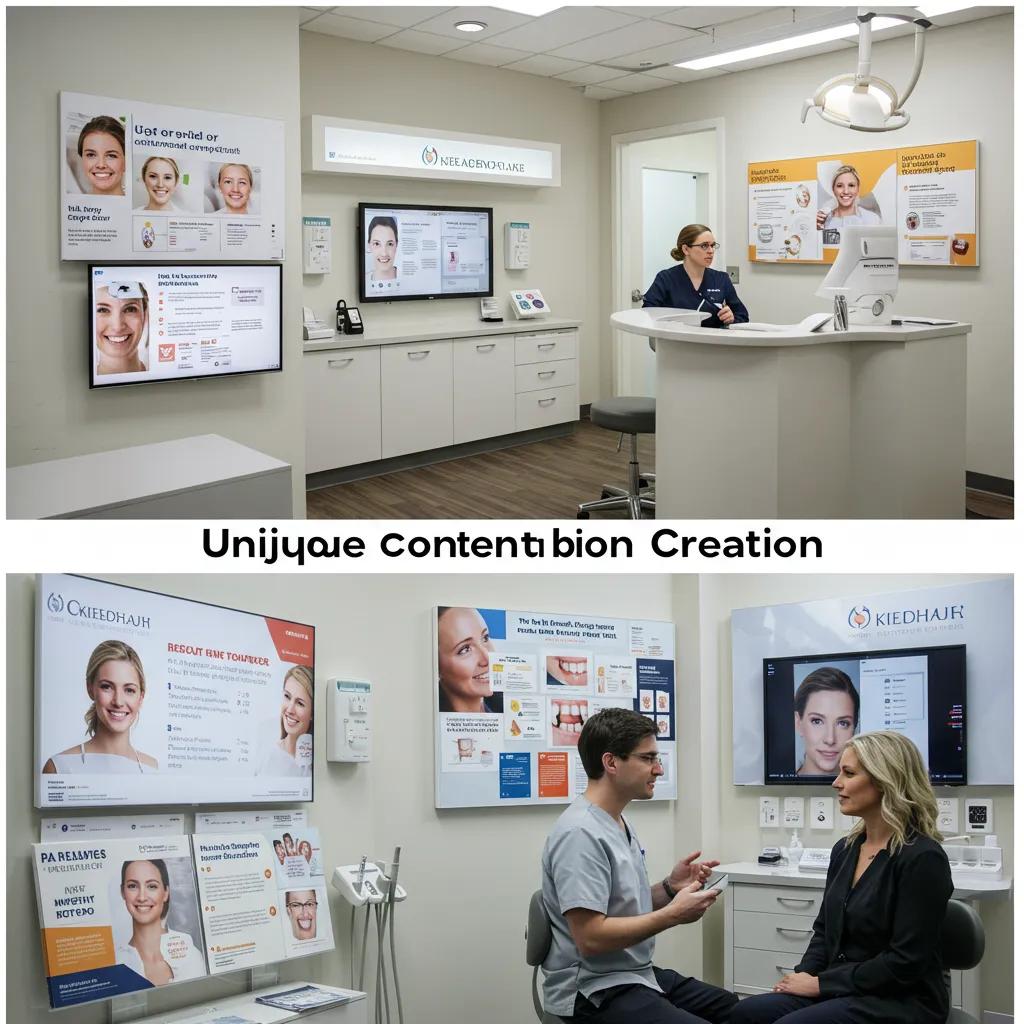
Effective differentiation combines voice, patient stories, original data, and high-engagement formats to create content that local patients value and search engines reward. The mechanism is to replace generic signals with unique, verifiable assets—such as local outcomes, testimonials, and neighbourhood-focused advice—that increase trust and local relevance, improving both discovery and conversion. The result is higher organic visibility, better Google Business Profile engagement, and more patient inquiries. Below are tactical substeps clinicians can apply, followed by a format comparison table to guide selection.
How Do You Develop a Distinct Brand Voice and Tone?
A distinct brand voice starts by defining patient personas, selecting tone attributes, creating sample phrases, and documenting rules for consistent use across channels. Begin with 1–2 target personas (e.g., nervous adult patient, parent of a child) and list three tone adjectives such as reassuring, practical, and localised, then produce sample sentences for appointment reminders, service pages, and social posts. Document do/don’t rules (for example, avoid clinical jargon without explanation) and add visual voice cues like staff photos that match tone. This voice framework ensures every asset communicates the practice’s unique personality and encourages trust from local patients.
Why Use Patient Stories and Testimonials to Stand Out?
Patient stories and testimonials build credibility through narrative evidence, converting readers by showing real outcomes and human experiences rather than abstract claims. Different formats—short video testimonials, written case studies with before/after photos, and structured patient interviews—serve different stages of the journey from awareness to decision. Ensure consent and compliance by using documented opt-ins and anonymisation options where required, and pair stories with data points such as treatment duration or satisfaction scores. Patient narratives also generate long-tail search phrases tied to local intent, enhancing discoverability for specific community queries.
Patient Engagement as a Safety Strategy: Perspectives
Patient engagement as a patient safety strategy: Patients’ perspectives, 2017
How Can Original Research and Data-Driven Content Build Authority?
Original research—simple local surveys, treatment outcome tallies, or clinic-based audits—creates proprietary data that positions a practice as a local authority and produces linkable assets for referrals and press. Low-cost methods include short patient satisfaction surveys, postcode-based treatment maps, or aggregated insights from appointment volumes that reveal common concerns. Present results as infographics, short executive summaries, and press-ready statements that local media or community partners can share. Data-driven content differentiates by offering evidence-based guidance rather than repeating general clinical facts.
What Visual and Interactive Content Formats Capture Patient Attention?
High-impact formats like short explainer videos, interactive quizzes, and procedural walk-throughs convert curiosity into appointments by reducing fear and increasing clarity about what to expect. Video builds trust by showing clinicians and staff; interactive tools such as cost calculators or symptom checkers educate and capture leads; infographics summarise complex clinical timelines into digestible visuals. Choose the format that matches your goal—education, trust, or conversion—and produce iterations optimised for GBP posts, social snippets, and landing pages. When needed, Milkcan Marketing’s Local SEO and Google Business Profile services can help implement these formats into a coordinated local visibility plan.
Different content formats compare as follows to guide selection based on use-case and expected engagement.
| Content Format | Best Use Case | Expected Patient Engagement |
|---|---|---|
| Video (short explainer) | Build trust and reduce anxiety before procedures | High: longer watch time, increased bookings |
| Patient testimonial (video/written) | Decision-stage validation and social proof | High: increased conversions and GBP actions |
| Infographic | Simplify complex treatments and share locally | Medium: strong social shares and page dwell |
| Interactive quiz/tool | Lead capture and education during consideration | High: direct lead capture and follow-up sign-ups |
This comparison shows how pairing format with a clear goal produces measurable engagement differences and informs production prioritisation.
How Can Healthcare Practices Overcome Content Saturation with Innovative Creation Techniques?
Overcoming saturation requires methodical ideation, compliance-aware AI use, multimodal creation, and disciplined repurposing to extend asset life and reach diverse audiences. The mechanism is to scale unique ideas responsibly and to amplify them across channels so a single researched asset converts readers, viewers, and local searchers. The benefit is consistent visibility with lower marginal cost per lead. The following subsections explain AI roles, multimodal mixes, and repurposing workflows.
How Does AI Help in Creating Unique and Compliant Healthcare Content?
AI assists ideation, headline generation, summarisation, and personalisation by rapidly producing draft structures and surfaces of patient-centric topics, but it requires human clinical review to ensure accuracy and compliance. Use AI for tasks such as ranking topic clusters, generating FAQ drafts, and producing structured outlines, then apply a clinician sign-off workflow and citation verification before publication. Maintain an auditable log of AI prompts and sources so every patient-facing claim can be traced and validated. Responsible AI accelerates production while preserving clinical integrity and patient safety.
What Are Multimodal Content Approaches for Diverse Patient Audiences?
Multimodal content mixes text, audio, video, and interactive tools to meet different information preferences and accessibility needs, increasing overall reach and engagement. For a common dental topic like tooth whitening, pair a long-form article with a short explainer video, a downloadable checklist, and a GBP post highlighting before/after images; cross-link each asset and repurpose clips for social snippets. This cross-channel strategy ensures patients discover content at various journey stages and formats, improving the likelihood of conversion and repeat engagements.
How Can Evergreen Content Be Repurposed to Maintain Relevance?
Repurposing evergreen articles into videos, GBP posts, social carousels, and FAQs extends their lifespan and keeps local search signals fresh, reducing the cost of sustained visibility. Implement a repurposing cadence: update facts quarterly, create a short video within one month of publication, publish a GBP post highlighting a key takeaway monthly, and assemble a FAQ from user questions every six months. Use a content calendar and asset mapping to turn one pillar piece into at least five distinct assets, ensuring continuous traffic and GBP interactions over time.
- Repurposing checklist:
Audit evergreen assets and ranking keywords.Create short-form video and GBP post from top-performing articles.Schedule periodic updates and redeploy assets across channels.
A disciplined repurposing workflow preserves topical authority and feeds local SEO and patient-engagement channels efficiently.
What Creative Content Marketing Ideas Drive Patient Engagement and Differentiation?

Creative, patient-first ideas drive engagement by addressing emotion, simplifying decisions, and encouraging participation, which lifts conversion rates and local visibility. The mechanism is to design experiences—interactive tools, human stories, and targeted video—that meet patients where they are and guide them to book or enquire. Below are practical implementation ideas and formats suited to dental practices.
How Do Interactive Quizzes and Tools Educate and Engage Patients?
Interactive tools such as symptom checkers, treatment suitability quizzes, and cost estimators educate patients while capturing leads for follow-up, using conditional logic to tailor advice and suggest next steps. Design quizzes with clear outcomes and follow-up content aligned to the patient journey, for example offering an educational PDF or booking prompt for decision-ready users. Integrate tools with your CRM for automated nurture sequences based on quiz outcomes and ensure clinical disclaimers are clear to maintain compliance. Interactive assets increase dwell time and provide segmented leads for targeted follow-up.
Why Is Behind-the-Scenes Content Effective for Healthcare Practices?
Behind-the-scenes content humanises clinics, reduces appointment anxiety, and builds rapport by showing staff introductions, clinic tours, and the step-by-step patient experience. These formats work because they convert abstract trust into concrete familiarity; potential patients can visualise the environment and meet the team before booking. Keep production simple—smartphone video with good lighting and scripted talking points—and always obtain written consent from staff and any patients featured. Behind-the-scenes content naturally feeds social channels, GBP photos, and short-form video campaigns to support booking intent.
How Can Video Marketing Enhance Patient Trust and Connection?
Video marketing ranges from short explainers that answer immediate questions to in-depth patient case studies that validate outcomes, and each serves different conversion goals. Short-form clips (30–60 seconds) address single FAQs and perform well on social platforms, while longer procedural walkthroughs and testimonial compilations belong on landing pages and YouTube for search. Optimise video thumbnails, captions, and schema-friendly titles to increase discovery, and repurpose transcripts into blog content and GBP posts. Video consistently improves conversion by showing real staff, simplifying procedures, and addressing patient concerns directly.
How Do You Measure the Success of Unique Content Strategies in Dental Practices?
Measuring success requires clear KPIs, reliable tools, and a conversion-focused workflow that links content engagement to patient inquiries and bookings. The mechanism is to track organic visibility and engagement metrics, GBP actions, and micro-conversions, then optimise topics and CTAs based on performance. Practices gain the benefit of predictable improvements and a feedback loop that aligns content production with measurable outcomes. The subsections below define KPIs, explain analytics setups, and convert engagement into bookings; a KPI table follows to provide benchmarks.
What Key Performance Indicators Track Content Effectiveness?
Primary KPIs for dental content include organic traffic and keyword visibility, engagement metrics such as time on page and scroll depth, conversion metrics like form fills and phone calls, and Google Business Profile actions including direction requests and calls. Prioritise KPIs based on practice objectives—awareness-focused campaigns emphasise impressions and engagement, while conversion-focused work tracks GBP actions and appointment bookings. Suggested short-term targets depend on starting baselines, but consistent month-on-month improvement in GBP actions and organic enquiries is the key indicator of success. These metrics feed decisions about format, topic refresh, and local promotion.
Intro: The table below lays out common KPIs, recommended tools, and realistic benchmarks for dental practices to measure and compare content performance.
| KPI | Tool / Method | Target / Benchmark |
|---|---|---|
| Organic sessions | GA4, Search Console | 10–20% YoY increase for local pages |
| GBP actions (calls/bookings) | GBP Insights | Improve by 15% within 6 months |
| Conversion rate (form/booking) | GA4 events, CRM | 2–5% on landing pages |
| Time on page / scroll depth | GA4 | >90 seconds median on pillar pages |
| Review volume | GBP, patient surveys | 20% increase in 6 months |
This KPI table helps practices set realistic expectations and choose measurement tools, forming the basis for an iterative reporting cadence. For clinics seeking a turnkey workflow, Milkcan Marketing provides measurement and reporting approaches and can share a sample KPI dashboard upon request.
How Can Google Analytics and Patient Feedback Improve Content?
GA4 event tracking combined with short patient surveys reveals both quantitative engagement patterns and qualitative resonance, enabling topic refinement and format adjustments. Set up events for key behaviours—click-to-call, form submissions, video plays, and scroll depth—and triangulate with patient feedback to understand why certain content converts better. Conduct brief post-visit surveys asking how a patient found the clinic and which content helped their decision; use those answers to prioritise new assets and update CTAs. This combined approach ensures content decisions are data-informed and patient-centred, closing the loop from discovery to booking.
How Do You Convert Content Engagement into Patient Inquiries?
Converting engagement into inquiries requires clear CTAs, low-friction booking flows, and follow-up sequences that capitalise on micro-conversions. Use CTA templates such as “Book a short consultation”, “Check treatment suitability”, and “Request a clinician call” placed contextually in articles, videos, and GBP posts. Optimise the booking UX with visible next steps, short forms or direct click-to-call actions, and an automated nurture email or SMS that reiterates benefits and next steps for undecided users. Tracking the conversion path from content touchpoint to booking identifies the most persuasive assets and informs future production prioritisation.
- Effective CTAs include:
“Request a brief assessment with our team””See patient stories and book a consultation””Check availability for a short phone consult”
A coordinated CTA and follow-up structure turns passive readers into active patients and supports measurable growth.
How Can Local SEO and Patient Journey Mapping Enhance Unique Content Impact?
Local SEO and patient journey mapping amplify differentiated content by ensuring assets are discoverable for local intent and aligned to the exact information patients need at each decision point. The mechanism combines neighbourhood signals, GBP optimisation, and stage-specific content to increase visibility and conversion; the benefit is more qualified local leads with a shorter path to booking. The subsections below explain why local SEO matters, how to map content to stages, and how GBP supports differentiated assets. A journey mapping table demonstrates content types and exact local SEO tactics.
Why Is Local SEO Critical for Australian Healthcare Content Differentiation?
Local SEO matters because most healthcare searches have local intent, and Google prioritises proximity, relevance, and prominence when presenting options to patients. Quick local SEO actions for dentists include consistent NAP (name, address, phone) across listings, dedicated localised service pages for neighbourhoods, and regular Google Business Profile posts highlighting unique content. These signals help your differentiated assets outrank generic competitors and surface for long-tail community queries. Strengthening local signals increases the impact of unique content by aligning it with how patients search for care.
How Do You Tailor Content for Each Stage of the Patient Journey?
Map content to awareness, consideration, and decision stages so patients receive the right information at the right time: awareness uses educational articles and short video explainers, consideration employs comparison guides and interactive tools, and decision relies on testimonials, pricing transparency, and booking CTAs. Track stage-specific KPIs—impressions and time-on-page for awareness, form completions and tool interactions for consideration, and GBP actions and bookings for decision—to evaluate performance. This mapping ensures that every asset has a role and supports efficient promotion and measurement.
Intro: The table below maps patient journey stages to content types and concrete local SEO or GBP tactics that enhance visibility and conversions for each stage.
| Patient Journey Stage | Content Type | Local SEO / GBP Integration Tactic |
|---|---|---|
| Awareness | Educational article, short video | Create localised landing pages and GBP posts summarising the content |
| Consideration | Comparison guide, interactive tool | Link tools from GBP services and use structured data on pages |
| Decision | Testimonials, pricing and booking CTA | Encourage reviews and add booking links / call prompts to GBP |
This mapping clarifies how to apply GBP and local SEO actions to each piece of content, ensuring assets reach patients when they are most likely to convert. Integrating these actions into your content calendar increases the visibility of unique content for local queries.
What Role Does Google Business Profile Play in Supporting Unique Content?
Google Business Profile supports unique content by surfacing posts, photos, Q&A, and review highlights directly in local search results where patients make booking decisions. Weekly GBP posts that summarise new articles, share patient stories, or highlight a video amplify content reach and create repeat local signals. Establish a simple cadence—weekly posts, monthly photo updates, and prompt review requests after appointments—to maintain prominence and feed local relevance. Combined with local landing pages and targeted content, GBP actions form a reliable channel for converting searchers into booked patients.
What Ethical Considerations Should Healthcare Practices Follow When Creating Unique Content?
Ethical content creation balances originality with accuracy, patient consent, and transparent processes so practices maintain trust and meet regulatory expectations. The mechanism is implementing clinician review, documented consent, and AI guardrails that ensure patient-facing content is both unique and safe; the outcome is sustained patient trust and reduced risk. The following subsections outline practical steps to preserve compliance while being creative.
How Do You Balance Uniqueness with Medical Accuracy and Compliance?
Balance originality and accuracy by adopting a staged approval process: draft by content specialist, clinical review and citation verification, then legal or compliance sign-off where necessary before publication. Use source citations from trusted medical bodies for clinical claims and avoid absolute outcome promises; include clear disclaimers when content is educational rather than diagnostic. Maintain a reviewer checklist that covers factual accuracy, appropriate tone, and evidence links, and ensure each published asset logs approver names and dates. This workflow supports creativity while protecting patients and the practice.
Why Is Transparency Important in Healthcare Content Marketing?
Transparency—about sponsorships, patient consent, and data usage—builds trust and protects reputation by making the basis and limitations of claims clear to the audience. Practices should obtain explicit written consent for patient stories, disclose sponsored content or affiliations, and provide clear privacy statements for interactive tools that collect data. Simple transparency practices, such as visible consent notes in testimonials and a short explanation of data use for quizzes, reduce ethical risk and increase patient confidence. Clear disclosures make unique content more credible and legally robust.
How Can AI-Generated Content Remain Compliant and Reliable?
AI-generated content remains compliant by applying human-in-the-loop checks, source verification, and version control so every patient-facing output is auditable and clinically accurate. Maintain a documented approval workflow where clinicians validate AI drafts, log sources used by the AI, and retain prompt records for accountability. Use AI for ideation, structure, and summarisation but never as a substitute for clinical judgement in patient-facing recommendations. This hybrid approach scales production while preserving reliability and ethical standards.
For practices ready to act, Milkcan Marketing can provide a tailored content differentiation audit and a recommended roadmap to implement these strategies, measurement templates, and local SEO actions that align with compliance practices. Contact Milkcan Marketing to request an audit and next steps to transform unique content into measurable patient growth.