

Monthly Content Calendar Examples for Effective Marketing: Content Planning and Strategy Templates
A monthly content calendar organises marketing activity by mapping dates, channels, themes and calls to action across a predictable schedule that supports patient acquisition and brand consistency. This article explains how a monthly content calendar works, why a content calendar template improves marketing outcomes, and how clinics can adopt editorial calendar examples and scheduling tools to generate bookings. Many small healthcare practices struggle with inconsistent posting, low conversion from social posts, and inefficient repurposing of assets; a structured monthly content planner solves those problems by aligning content with clinical campaigns and appointment CTAs. Below we outline what a content calendar template contains, a step-by-step method to build a monthly social media calendar, proven editorial calendar examples tailored for clinics, governance and metrics to track, customisation for different goals, common challenges and practical fixes, and where to find free and paid templates. Throughout, you will find channel-specific schedules, template fields, tool selection criteria, and ready-to-use examples to help dental and small clinic teams convert content into patient leads using an evidence-informed content scheduling approach.
Monthly Content Calendar Templates & Examples for Healthcare Marketing
A content calendar template is a structured planning document that lists upcoming content items with metadata such as post date, channel, content theme, owner and CTA, enabling teams to publish consistently and measure outcomes. The mechanism that makes a template essential is metadata-driven scheduling: by attaching channel, CTA and asset links to each entry, teams reduce last-minute work, enable repurposing and maintain cross-channel alignment that leads to more predictable patient enquiries. Clinics benefit because predictable education posts build trust, campaign timing increases bookings, and standardised templates protect compliance by recording approvals and sources. Below is an EAV-style table that defines key calendar components and their practical purposes for clinic marketing.
This table defines the primary calendar elements and why each is important.
| Calendar Element | Purpose | Example Value |
|---|---|---|
| Post date | Schedule publication to maintain cadence and coordinate campaigns | 2025-11-05 |
| Channel | Identify the distribution platform to tailor format and timing | Instagram Feed |
| Content theme | Ensure variety and alignment with pillars (education, social proof) | Preventive Care |
| CTA | Drive measurable action linked to lead generation | Book a dental check-up |
| Asset link | Point to creative or copy to publish and approve | Clinic photo / blog URL |
| Owner | Assign responsibility for creation and approval | Practice Manager |
This compact breakdown shows how discrete attributes combine into entries that support production, approval and analytics. Understanding these components leads directly into how a calendar improves planning workflows and cross-channel consistency.
How Does a Content Calendar Improve Marketing Content Planning?
A content calendar improves planning by turning ad hoc content into repeatable processes that reduce bottlenecks and preserve quality through advance scheduling and approvals. By mapping each item with owner, channel and CTA, teams can batch produce content, repurpose long-form assets across channels and avoid posting duplicates or conflicting messages. For example, a dental clinic can convert a patient education blog into a week of social posts, an email, and a short video, maintaining message continuity while stretching effort across formats. This procedural clarity also makes it easier to measure which entries drove bookings, and it creates an archival record that supports compliance and audits. These workflow improvements naturally lead into the specific features you should include when building an effective template.
What Are the Key Features of an Effective Content Calendar Template?
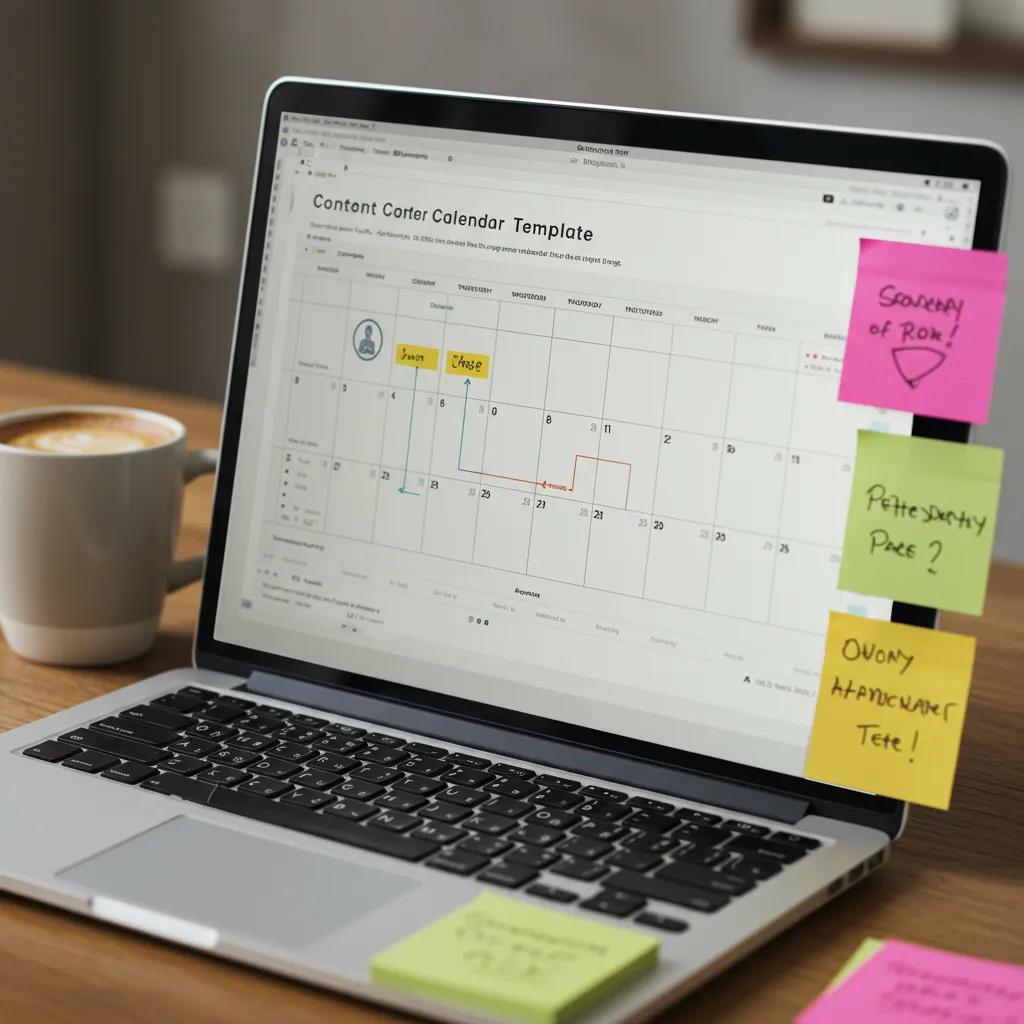
An effective content calendar template contains fields that capture scheduling, ownership, format, campaign association and performance so entries move smoothly from idea to published asset. Key columns should include date, channel, content theme, post copy, asset link, CTA, owner, status and KPI tag to enable both scheduling and later attribution.
A sample spreadsheet row for a clinic might read: 2025-11-05 | Instagram | Preventive Care | “5 tips for healthier gums” | image1.jpg | Book online | Sarah | Scheduled | Clicks→Bookings. Including SEO/keyword fields for blogs and tracking columns for impressions, clicks and conversions makes the template actionable. These feature choices determine whether the calendar functions as a simple schedule or as a connected editorial workflow that feeds patient lead-generation funnels.
Which Types of Content Calendars Are Best for Different Marketing Channels?
Different formats suit different channels: channel-specific calendars focus on format constraints (video length, image specs), while a unified master calendar keeps themes and campaigns consistent across channels, preventing topic clashes. Small clinics typically benefit from a hybrid approach: a master monthly sheet for themes and campaigns, plus channel tabs for post-level formatting and scheduled times. Use a campaign calendar to map promotions across email, paid ads and social, and a blog editorial calendar with SEO targets for long-form content. Choosing these formats enables teams to scale without losing the coherence that converts educational content into appointment bookings.
For clinics, the right balance between master planning and channel detail reduces confusion and ensures every post supports broader lead-generation workflows.
For clinics and healthcare teams that want ready-made calendar resources, the organisation acting as a Lead Generation & Information Hub offers downloadable calendar templates and consultations tailored to clinic workflows. These resources include template variants and scheduling checklists designed for healthcare compliance and appointment-driving campaigns.
How Can You Create a Monthly Content Calendar for Social Media Marketing?
A monthly social media calendar is built by defining goals, setting content pillars, mapping frequency and best posting times, and batching content production so publishing is predictable and measurable. The mechanism is goal-led mapping: choose primary goal (bookings, patient education), select supporting content pillars, and assign posts across the month to maintain balance between promotion and value. This approach reduces cognitive load for small teams and makes scheduling tools more effective because content is pre-crafted and assigned. The steps below show a reproducible process to create a month-long social schedule that maximises engagement and appointment conversions.
Follow these clear steps to create a monthly social media calendar:
- Define monthly goals and target audience segments to align content with patient needs.
- Select 3–4 content pillars (education, testimonial, promotion, community) and map weekly theme days.
- Assign frequency and best times per channel based on local audience behaviour.
- Batch create assets, prepare captions and CTAs, then schedule using a chosen tool.
- Track KPIs and adjust the next month’s calendar based on performance.
This stepwise plan leads naturally to a sample weekly schedule and timing guidance for clinics to adopt immediately.
What Is the Best Social Media Content Schedule for Consistent Engagement?
The best schedule balances frequency with quality: for many clinics, 3–5 posts per week on primary platforms keeps audiences engaged without overwhelming staff. A sample weekly cadence for Australian clinics could be: Monday — educational tip; Wednesday — patient testimonial or before/after; Friday — clinic update or offer; Saturday — quick FAQ or staff spotlight. Timing should consider local peak times (early morning, lunch breaks and early evening) and platform norms, so testing and small adjustments are essential. Consistency in posting days and times trains audiences and supports better reach and referral traffic.
These scheduling choices help align content with seasonal campaigns and appointment drives that follow.
How Do You Align Social Media Posts with Marketing Campaigns?

Aligning social posts with campaigns requires mapping campaign phases (awareness, consideration, conversion) to content types and CTAs across the month so every post supports the funnel. For example, a dental check-up drive can start with education posts in week one, social proof in week two, patient offers and FAQs in week three, and direct booking CTAs in week four, with retargeting ads in parallel. Tag every calendar entry with campaign name and desired KPI so attribution becomes clearer, and use UTM parameters for tracking links in bios and blog CTAs when possible.
This campaign-mapped approach ensures social activity drives measurable actions rather than isolated engagement.
Which Tools Help Simplify Social Media Content Scheduling?
Scheduling tools automate publishing, allow calendar views, support asset storage and often include basic analytics, which reduces manual work for small teams and enables consistent posting. When evaluating tools, prioritise ease of use, multi-account support, content library, approval workflows and basic compliance controls for healthcare content. Popular tool categories include free browser-based schedulers, mid-tier platforms with analytics, and enterprise suites with collaboration features; clinics usually find mid-tier tools offer the best balance of automation and cost.
Selecting the right tool shortens the time from content creation to publishing and helps teams maintain the monthly cadence described above.
Before choosing a tool, list required features and trial options to confirm the tool supports scheduled CTAs and simple analytics reporting for appointment conversions.
What Are Proven Content Strategy Examples Using Monthly Editorial Calendars?
Proven editorial calendars use clear themes, repeatable formats and repurposing rules so a single asset fuels multiple posts and channels, amplifying reach without multiplying effort. The mechanism is theme-based repurposing: a monthly theme generates blog content, short social clips, emails and ads that all point to a unified CTA, increasing conversions. For clinics, three repeatable calendar types work well: education-first (patient learning), promotion-led (campaigns for limited offers) and seasonal (events, holidays, public health weeks). Below is a comparison table showing example calendar types and their typical frequency and channel mix to help clinics pick a model that suits capacity and goals.
| Example Type | Frequency / Channel | Typical Value |
|---|---|---|
| Patient Education Series | Weekly blog + 3 weekly social posts + monthly email | Builds trust and bookings over time |
| Promotion-Heavy Calendar | Bi-weekly paid ads + 2 social posts weekly + reminder emails | Quick uplift in short-term bookings |
| Seasonal / Event Calendar | Campaign bursts around events + social + local PR | Drives timely appointment spikes |
| Mixed Pillar Calendar | Ongoing blog + social mix (education/testimonial/promo) | Balanced growth and retention |
This table illustrates how calendar structure influences content production and expected outcomes for lead generation and patient education. Translating these models into a practical month requires a clear structure for theme weeks, content formats and repurposing rules.
How Do Top Brands Structure Their Monthly Content Calendars?
Top brands often use theme weeks, pillar-based posting and campaign-centric blocks so each month has a repeatable pattern that teams can scale and measure. For small clinics, adopting a simplified pattern—one monthly theme, weekly sub-themes and fixed format days—keeps production manageable while delivering variety. The key adaptation for clinics is to prioritise content that builds trust (education and social proof) while reserving specific slots for promotions tied to appointment CTAs. Implementing simple approval and asset libraries replicates enterprise efficiency on a smaller scale.
These structural patterns set the stage for selecting themes and formats that fit capacity and goals.
What Content Themes and Formats Should You Include Monthly?
Clinics should mix education, social proof, how-to guides, staff introductions and promotions to cover awareness, trust and conversion needs within a month, using formats like short videos, carousel posts, blog articles and emails.
A suggested monthly ratio is roughly 60–70% educational and trust-building content, 20–30% promotional or offer-driven content, and 10% community or team-focused posts that humanise the practice. Repurposing a 1,000-word blog into three social posts and a short video maximises reach and reduces production time. Selecting themes aligned to common patient questions and seasonal needs keeps content relevant and conversion-focused.
How to Balance Promotional and Educational Content in Your Calendar?
Balancing promo versus education means setting a clear ratio and ensuring promotional posts include educational value to avoid alienating audiences, especially in healthcare where trust matters. A practical guideline is 70% educational/trust-building to 30% promotional content, with promotions framed as helpful advice (for example, “How routine check-ups prevent costly treatments” rather than hard-sell offers). Track which educational pieces lead to bookings and adjust the mix as attribution data becomes available.
This balance preserves patient trust while allowing clinics to drive measurable appointment growth through CTAs embedded in helpful content.
What Are Editorial Calendar Best Practices for Effective Marketing?
Editorial calendar best practices include assigning ownership, setting an approval workflow, scheduling regular reviews, and tracking specific KPIs so content supports strategic goals rather than random posting. The mechanism is governance plus measurement: ownership ensures accountability, review cadence keeps content fresh and compliant, and KPIs link entries to business outcomes like bookings. Establishing these practices reduces content drift and clarifies how each calendar entry contributes to lead generation. The checklist and metrics guidance below turn abstract governance into operational steps for small teams.
Use this checklist to implement editorial governance and measurement:
- Define roles and owners for content creation, approval and publishing.
- Set a weekly content queue review and a monthly strategic review.
- Add performance tags to calendar entries to capture engagement and conversion.
- Create an approval SLA for patient-facing clinical content to ensure compliance.
How Often Should You Review and Update Your Content Calendar?
You should review the operational calendar weekly for scheduling and approvals, and conduct a monthly strategic review to assess theme performance and reallocate resources; quarterly reviews refine pillar mix and goals. Weekly checks focus on the next 7–14 days of scheduled posts, ensuring assets and approvals are complete, while the monthly review looks at KPIs and campaign attribution to adjust the upcoming month. Quarterly sessions evaluate seasonal planning and resource needs. Establishing this cadence ensures the calendar remains practical and responsive to performance signals.
Regular reviews also create natural opportunities to incorporate local events and public health campaigns into upcoming months.
What Metrics Should You Track to Measure Calendar Success?
Track engagement, clicks, conversions and bookings as primary KPIs, and use a simple attribution method that links specific calendar items to appointment outcomes to evaluate ROI from content. A compact metrics table clarifies the mapping between metric and marketing objective for clinics.
| Metric | Description | Use Case |
|---|---|---|
| Engagement | Likes, comments, shares per post | Measures relevance and reach |
| Clicks | Link clicks to booking page or blog | Indicates interest that can convert |
| Conversions | Completed forms or booking actions | Direct lead generation metric |
| Bookings | Appointments scheduled attributed to content | Business outcome for ROI |
These tracked metrics let clinics test which content types and CTAs produce bookings, and inform the next month’s calendar adjustments. Clear KPI mapping also supports performance conversations during monthly reviews.
How Do You Coordinate Teams Using an Editorial Calendar?
Coordination requires clear role definitions, a shared calendar tool, and lightweight processes for handoffs and approvals so content moves from idea to publish without delays. For small clinics, a RACI-style approach—who is Responsible, Accountable, Consulted and Informed—keeps tasks clear, with one person ultimately accountable for the calendar. Use a shared calendar or project board for status updates, and maintain a simple content brief template to standardise submissions. Effective coordination reduces last-minute scrambling and ensures messaging consistency across patient touchpoints.
This coordination model enables clinics to scale content efforts while preserving quality and regulatory compliance.
How Do You Customize a Content Calendar Template for Different Marketing Goals?
Customising a calendar for specific goals means changing content mix, CTA types and KPIs to match desired outcomes such as lead generation, brand awareness or patient retention. The mechanism is alignment: modify content pillars, adjust posting frequency and include goal-specific tracking fields so attribution is clear. For lead generation, increase conversion-focused posts and booking CTAs; for awareness, prioritise broad educational content and shareable formats. The steps below translate goal differences into practical calendar modifications.
Start customising by answering five quick alignment questions: What is the primary goal? Which channels convert best? What CTAs generate measurable actions? Who owns follow-up? What budget supports paid amplification?
What Are the Steps to Tailor a Calendar for Lead Generation vs. Brand Awareness?
Tailoring a calendar involves shifting content ratios, CTA specificity and tracking mechanisms: lead generation calendars include direct booking CTAs, short form conversion content and follow-up automation, while awareness calendars prioritise broad educational content and shareable formats. For a clinic over one month, lead-gen focus might include two booking-driven posts per week plus targeted ads, while awareness focus would include more long-form educational posts and community stories. Adjust KPI tags accordingly—conversions and bookings for lead gen, impressions and engagement for awareness.
This side-by-side approach clarifies trade-offs and resource allocation for small teams.
How Can You Incorporate Seasonal and Event-Based Content?
Incorporate seasonal and event content by mapping national public holidays, local events and health awareness weeks into your monthly plan with lead times of 3–6 weeks for asset creation and promotion. For Australian clinics, consider school term dates, local community events and national health campaigns when scheduling preventive-care messages and promotions. Tag entries with event names and required approvals, and reserve buffer posts for last-minute local opportunities. Planning with lead times ensures creative, compliance checks and scheduling are completed before campaign launch.
Seasonal mapping ensures timely relevance and helps clinics capture search and social interest when potential patients are most receptive.
Which Content Calendar Formats Work Best for Small vs. Large Marketing Teams?
Solo practitioners benefit from a simple spreadsheet or shared calendar with fixed weekly slots and automated scheduling tools, while larger teams should use project management platforms with approval workflows, asset libraries and analytics integrations. A starter format for solo clinics is a single-sheet monthly calendar with columns for date, channel, theme, caption and CTA, whereas multi-person teams should use templates that include status, owner, campaign tags and KPI fields. Scalability depends on consistent naming conventions and reusable templates to avoid duplicative work.
Choosing the right format reduces friction and ensures the calendar supports growth rather than becoming an administrative burden.
What Are Common Challenges When Using Monthly Content Calendars and How to Overcome Them?
Common challenges include content overload, inconsistent quality, and last-minute changes that disrupt schedules; the solution set involves prioritisation, templates, batching and contingency planning. The mechanism is resilience: design workflows that tolerate change with pre-approved evergreen assets, slot-based promotion rules and a fast-track approval SOP. These practices prevent schedule collapse and maintain standards even when teams are small. The tips below offer pragmatic actions clinics can adopt immediately.
Below is a problem-solution list to address typical calendar issues:
- Use a priority matrix to focus on high-impact entries and postpone low-value posts.
- Create reusable templates and asset banks to speed production without sacrificing quality.
- Batch content creation so multiple posts are produced in single sessions.
- Maintain a small library of evergreen posts for emergency swaps.
How to Avoid Content Overload and Maintain Quality?
Avoid overload by limiting the monthly theme count, prioritising high-value content and using repurposing rules so each major asset fuels multiple outputs rather than creating many distinct pieces. Implement a short quality checklist (accuracy, compliance, brand tone, CTA clarity) and require that each item meets those criteria before scheduling.
Batch creation days also improve quality by allowing focused creative time and review cycles. These steps maintain consistent patient-focused messaging without overwhelming staff.
What Are Tips for Staying Consistent with Your Content Schedule?
Staying consistent depends on batching, automation, reminders and delegation so content is created ahead of publication and scheduled in tools that handle posting. Set weekly work blocks for content creation, use scheduling tools for off-hours publishing, and assign clear owners for each content pillar.
Implement simple recurring reminders and a one-page SOP describing the production process. Consistency emerges from routine and clear responsibilities rather than ad hoc effort.
How to Handle Last-Minute Changes in Your Content Calendar?
Handle last-minute changes by maintaining a contingency SOP that includes pre-approved evergreen assets, a fast-track approval list and a small buffer of unscheduled posts to swap in quickly. The SOP should define who can approve emergency content and the compliance checks required for patient-facing material.
Having evergreen posts and a clear swap procedure minimises disruption and preserves messaging coherence. This contingency planning ensures the calendar remains responsive without compromising quality.
Where Can You Find Free and Paid Content Calendar Templates for Marketing?
Clinics can find useful templates across free spreadsheet libraries, platform-built calendars and paid template marketplaces; choose based on team size, channel mix and required features. Free options often include simple spreadsheets and docs that are easy to adapt, while paid solutions add automation, analytics and calendar libraries that save time for scaling teams. The table below compares typical template and tool types by cost, best-for scenarios and key features to help clinics decide.
| Template / Tool | Cost / Best for | Key Features |
|---|---|---|
| Spreadsheet Template | Free / Solo practitioners | Simple fields, editable, easy to customise |
| Platform Calendar (built-in) | Free–Paid / Small teams | Native scheduling, basic analytics, integrations |
| Paid Template Library | Paid / Growing teams | Pre-built workflows, asset templates, support |
| Project Management Template | Paid / Multi-person teams | Approval workflows, task assignments, audit trail |
These options give clinics a roadmap to choose a starting point and upgrade path as needs evolve. Selecting between free and paid comes down to time saved versus budget available.
What Are the Best Free Content Calendar Templates Available Online?
Free templates commonly include monthly spreadsheet calendars, editorial calendar docs, and basic scheduling sheets that are easy to adapt for clinics; they are ideal for solo practitioners who need a low-friction starting point. Adapt free templates by adding columns for CTA, KPI tag and compliance approval to make them clinic-ready.
The main trade-offs are manual scheduling and limited integrations. For many clinics, free templates are a practical testing ground before investing in paid tools.
How Do Paid Templates Offer Added Value for Marketing Teams?
Paid templates and platforms provide automation, template libraries, collaborative approval workflows and basic analytics that save time and reduce errors as teams scale; these features translate into faster campaign launches and clearer attribution. ROI often comes from time-saved and better conversion tracking that supports more effective paid amplification.
Paid options also typically include support and onboarding, reducing setup friction for clinics transitioning from ad hoc planning.
How to Choose the Right Template Based on Your Marketing Needs?
Choose a template by answering five questions: team size, channels used, posting frequency, budget and primary goals; match a simple spreadsheet for solo clinicians, a platform calendar for small teams, and paid workflow templates for multi-person operations. Trial options and map required features like approval workflows, asset libraries and analytics before committing.
Adjust the choice after two months of testing to ensure the template supports your lead-generation and retention goals.
This selection checklist helps clinics move from experimentation to a repeatable calendar process that supports measurable patient growth.
Developing a Social Media Content Calendar Tool for Strategic Digital Marketing
This project addresses the issue of inefficient and inconsistent social media content planning, particularly for individuals and small businesses lacking access to expensive, complex scheduling tools. The investigation focuses on developing a customisable, user-friendly Social Media Content Calendar Tool using Google Sheets.
Developing a Social Media Content Calendar Tool for Strategic Digital Marketing, 2025
Developing a customisable, user-friendly Social Media Content Calendar Tool using Google Sheets can address the issue of inefficient and inconsistent social media content planning, especially for individuals and small businesses.
Social Media Content Scheduling: Theory, Evidence, and Application
This paper outlines a theoretical framework to link key social media scheduling attributes to profitable content scheduling on social media. Furthermore, we outline a theoretical framework to link key social media scheduling attributes to profitable content scheduling on social media.
Scheduling content on social media: Theory, evidence, and application, VK Kanuri, 2018
A theoretical framework can link key social media scheduling attributes to profitable content scheduling on social media.
Optimising Clinic Services through Social Media Marketing and Content Planning
Furthermore, to ensure that publications are issued regularly and on schedule, careful planning is necessary, employing content mapping and the creation of a social media content strategy.
OPTIMIZATION OF OBSTETRICS AND GYNECOLOGY CLINIC SERVICE VISITS WITH A MARKETING PLAN APPROACH AND PUBLICATION ON SOCIAL MEDIA, T Hariyanti, 2025
To ensure publications are issued regularly and on schedule, careful planning is necessary, employing content mapping and the creation of a social media content strategy.