
Optimise Dental Title Tags for SEO Success
Title tags are the HTML headlines that represent a page in search results, and optimised title tags directly influence visibility, relevance, and patient clicks for dental websites. This guide explains what title tags are, how they signal relevance to search engines, and how well-crafted titles increase click-through rates, patient trust, and local discoverability for dental practices. Many practices struggle to convert search impressions into appointments because titles lack local intent, clear service language, or a compelling call to action; this article offers step-by-step methods to fix that. You will learn how to conduct keyword research for dental title tag optimisation, craft high-performing title templates, align title tags with Google Business Profile data, avoid common mistakes, measure performance, and use structured data to reinforce semantic context. Throughout, I integrate Australia-specific examples, practical templates, and semantic SEO techniques—including keyword patterns, semantic triples, and EAV tables—so you can implement title tag changes that measurably improve local dentist SEO and patient acquisition.
Why Do Title Tags Matter for Dental SEO and Patient Acquisition?
A title tag is the visible headline in search results that summarises page content, signals relevance to Google, and entices users to click; it works by matching searcher intent with targeted keywords and clear value propositions. Better title tags increase organic click-through rates (CTR), which in turn can signal relevance to search engines and improve rankings for dentist queries over time. Clear, accurate title tags also set patient expectations before they land on a page, reducing bounce and increasing appointment conversions by aligning search intent with service pages. Below is a concise list of primary reasons title tags matter for dental practices and patient acquisition.
Title tags influence dental patient behaviour for three key reasons:
- They shape the first impression in search results, determining whether a patient clicks to learn more.
- They communicate service relevance and location, which is crucial for local dental queries such as appointment-ready searches.
- They contribute to perceived credibility by including trust cues like specialisms or rating references when appropriate.
These impacts work together: improving click-through rates feeds more qualified visits to site pages, and consistent alignment between title and page content builds trust that supports conversions and longer-term reputation signals.
What Impact Do Title Tags Have on Dental Website Click-Through Rates?
Title tags act as the primary text users read in a search result, and small changes in phrasing often yield measurable shifts in CTR; the mechanism is psychological salience combined with keyword relevance. By prioritising high-intent keywords, using action verbs, and a clear unique value proposition (UVP), a dental practice can turn more impressions into clicks without changing ranking position. For example, swapping a generic title for a patient-focused title that includes service and location can produce double-digit CTR improvements in local tests. Improving CTR also provides search engines with behavioural feedback that can be interpreted as increased relevance, which should encourage further optimisation across related queries.
These CTR improvements lead naturally to another area of optimisation: how title tags intersect with ranking signals and on-page relevance, which influences whether click gains convert into higher visibility over time.
How Do Title Tags Affect Google Rankings for Dentists?
Title tags affect rankings primarily as relevance signals: they are one piece of on-page SEO that helps search engines understand what a page is about and which queries it should match. When a title tag contains semantically accurate keywords that align with page content and structured data, search engines more reliably map that page to relevant queries in the local dentist niche. Title tags also interact with other local signals such as Google Business Profile, citations, and on-page content; coherence across these elements strengthens ranking potential for local pack and organic results. Ensuring semantic alignment between title, H1, content, and schema reduces ambiguity and supports search engines in surfacing the right page for patient queries.
Understanding title tags as part of a broader relevance system helps inform strategic testing and measurement—which metrics indicate success and which actions to take next.
Why Are Title Tags Important for Building Trust with Dental Patients?
A well-crafted title tag sets accurate expectations about services, pricing cues or specialisms, and uses trust-building language without making unverifiable claims; this reduces perceived risk for prospective patients. Trust cues such as “emergency dentist”, “cosmetic dentist”, or conservative references to ratings can reassure users they’ve found a relevant, credible practice before they click. When title text mirrors the landing page content and Google Business Profile details, patients experience continuity that reduces bounce and improves conversion to booking or contact. The combination of precise service wording and clear location information increases perceived professionalism and aligns patient intent with the practice’s offering.
This trust-building effect ties directly into how keyword research should prioritise appointment-ready queries versus informational searches, which we address next.
How to Conduct Effective Keyword Research for Dental Title Tag Optimisation?

Keyword research for title tags identifies the specific service and local intent phrases that patients use when searching for dental care, and the process balances volume, intent, and local relevance to select the best targets. The approach begins with harvesting real queries from Google Search Console, supplementing with competitive and keyword-tool data to identify high-intent local phrases. Prioritise keywords that combine service + location and appointment intent, and map each to a single landing page to avoid cannibalisation. Below is a concise step-by-step workflow to find and prioritise dental title tag keywords.
Follow these steps for actionable keyword research:
- Gather query data from Google Search Console for organic impressions and CTR by page.
- Identify high-intent patterns such as “book”, “emergency”, “near me”, and service + suburb combinations.
- Use tools like Ahrefs or SEMrush for volume and competition context, then refine to localised variants for Australia and UK markets.
- Prioritise low-competition, high-intent phrases for service pages and higher-volume informational terms for blog content.
This step-by-step workflow leads into practical classification of which keyword types dentists should target in title tags and how to match intent to page purpose.
After this practical workflow, Milkcan Marketing’s local SEO and content marketing approach can support clinics that lack in-house SEO capacity. They focus on selecting high-intent local keywords, mapping those keywords to service pages and content assets, and building content that converts local searchers into patients. For example, a hypothetical Australian suburban practice might target “emergency dentist [Suburb]” for urgent-care pages and use content marketing to capture informational queries about root canal options.
| Keyword Type | Intent / Local Relevance | Example Phrases |
|---|---|---|
| Transactional (appointment-ready) | High commercial intent; should map to service pages | “book dentist [Suburb]”, “emergency dentist near me” |
| Local discovery | Contains city/suburb strings; drives local pack and organic clicks | “cosmetic dentist [City]”, “teeth whitening [Suburb]” |
| Informational | Lower commercial intent; use for blog/HOWTO content to nurture patients | “cost of dental crown Australia”, “how long does teeth whitening last” |
This table clarifies how keyword types map to intent and informs which pages should receive focused title tag optimisation.
Which Keywords Should Dentists Target in Title Tags?
Dentists should prioritise keywords that pair a specific service with a location or clear commercial intent, because these phrases match appointment-ready patient behaviour and convert best. Primary keywords should appear early in the title tag, with secondary modifiers such as suburb or “near me” following, and brand or practice name placed at the end where appropriate. For specialised services like orthodontics or cosmetic dentistry, use hyponym phrases that reflect the niche—for example, “orthodontist [City]” or “teeth whitening [Suburb]”—to capture targeted traffic. Balancing search volume and competition matters: choose lower-competition long-tail phrases if local markets are crowded to improve discoverability.
Matching keywords to intent reduces wasted traffic and supports higher conversion rates, which feeds back into performance measurement and optimisation cycles.
How to Identify Patient Search Intent for Dental Keywords?
Patient search intent falls into three broad categories: informational, commercial/transactional, and navigational, and recognising these categories determines whether a page should be optimised for queries or serve as content to educate. Appointment-ready queries often include verbs like “book”, “call”, or “near me,” indicating transactional intent and a need for a clear CTA in the title tag. Informational queries focus on “how”, “cost”, or “symptoms” and should be routed to blog or FAQ content with educational titles. Use query modifiers and SERP analysis to classify intent: if the SERP shows local pack results and service pages, the intent is likely commercial and merits a conversion-focused title.
Intent mapping allows you to choose the correct title template and to avoid optimising service pages for purely informational keywords that belong on content pages.
What Are the Best Tools for Dental Keyword Research in Australia and the UK?
Accurate local keyword research combines first-party data with competitive tools to reveal demand patterns and gaps specific to Australia and the UK markets; this hybrid method reduces guesswork and emphasises real patient language. Google Search Console provides the raw queries driving impressions and clicks, while Ahrefs or SEMrush supply volume, difficulty, and related terms to expand candidate keywords. Local directories and Google Business Profile insights add context on how patients discover practices in a city or suburb. Combine these sources into a ranked spreadsheet that includes intent, volume, competition, and suggested page target.
A recommended workflow is to extract queries from GSC, augment with tool data for volume/competition, and test shortlisted titles in live SERPs to observe CTR changes before full scale rollout.
What Are the Best Practices for Crafting Compelling Dental Title Tags?
Best practices for dental title tags centre on clarity, relevance, and local intent: keep length within safe limits, place the primary keyword early, include a concise UVP or CTA when space allows, and append brand at the end when beneficial. Titles should be patient-focused, avoid hyperbole, and be consistent with landing page content and Google Business Profile entries. Below is a checklist-style list of core rules that can be applied across service, location, and content pages.
Apply these rules when writing title tags:
- Keep the primary service and location at the front of the title to match search queries.
- Use an action verb or UVP if it fits naturally, but avoid misleading claims or medical promises.
- Place the practice name at the end for service pages, and only include it first for navigational queries.
- Test variations and rely on CTR and conversion data to decide final versions.
To make these best practices actionable, the table below compares title tag components using entity-attribute-value format and shows examples you can adapt.
| Component | Recommended Format | Example Title Tag |
|---|---|---|
| Service + Location | “[Service] [Suburb] | [Practice Name]” | “Emergency Dentist South Yarra | Smile Clinic” |
| Action + UVP | “Book Now” or “Same-Day Appointments” appended where relevant | “Book Same-Day Emergency Dentist South Yarra” |
| Brand Placement | Place brand after pipe or dash when space is limited | “Teeth Whitening Melbourne – BrightSmiles” |
This comparison clarifies how component placement affects clarity and search relevance, and it supports creating reproducible templates for site-wide use.
How Long Should Dental Title Tags Be to Avoid Truncation?
Title length should balance character count with pixel width to avoid truncation in modern SERPs, and the practical rule of thumb in 2025 is to target about 50-60 characters or a pixel width that stays under typical SERP cutoffs. Pixel-based truncation varies by characters used, so include shorter, high-value text early in the title and reserve brand names for the end. Use SERP preview tools during drafting and monitor live results; if a title truncates, adjust by removing lower-value modifiers or compressing phrases. Testing matters because slight phrasing changes can preserve key terms without exceeding display limits.
Keeping primary keywords and location visible in the first 50–60 characters reduces the risk of losing vital query-match words in search results.
How to Use Action Verbs and Unique Value Propositions in Title Tags?
Action verbs and UVPs increase CTR by prompting user action and highlighting distinct benefits, but in healthcare contexts they must remain factual and non-misleading; use words like “book”, “same-day”, “affordable” only when accurate and verifiable. Craft short phrases that communicate convenience or a clear next step: for transactional pages, begin with “Book” or “Reserve” followed by the service and location. For cosmetic or elective services, emphasise outcome-focused UVPs such as “natural results” or “minimal downtime” only if these reflect real practice advantages. Test variants to measure CTR uplift while ensuring compliance with advertising guidelines for healthcare.
A careful use of action language improves engagement without sacrificing trust, and when combined with correct keyword placement it supports conversions.
When and How to Include Your Dental Practice Name or Brand?
Include the practice name when the query is navigational or when local brand recognition is high; otherwise, place the brand at the end of the title to prioritise service and location for broader local queries. For clinic homepage or About pages, leading with brand makes sense; for specific service pages, put the brand after a separator so the service phrase remains prominent. Avoid repeating the brand in meta titles and H1s unnecessarily; one clear mention is sufficient. Consistency across title tags and Google Business Profile naming reduces confusion and strengthens local signals.
Brand placement decisions should reflect user intent and whether the brand adds recognition value in search results rather than competing for limited display space.
How to Incorporate Location and ‘Near Me’ Terms for Local SEO?
Include precise city or suburb strings and mobile-oriented patterns like “near me” on pages targeted at urgent or local discovery queries, but avoid stuffing multiple location variants on a single page. The pattern “Service + Suburb | Practice Name” works well for service pages, while mobile snippets may benefit from “Service near me” on schema-enhanced pages for immediate queries. Validate location wording against Google Business Profile entries and local citations to maintain NAP consistency. Use location strings that patients actually use—suburbs, neighbourhoods, and common abbreviations—and test results for mobile display.
Aligning title location strings with GBP and local citations amplifies local search signals and helps the practice appear in both organic and local pack results.
How Can Google Business Profile Enhance Local SEO Title Tag Optimisation for Dentists?
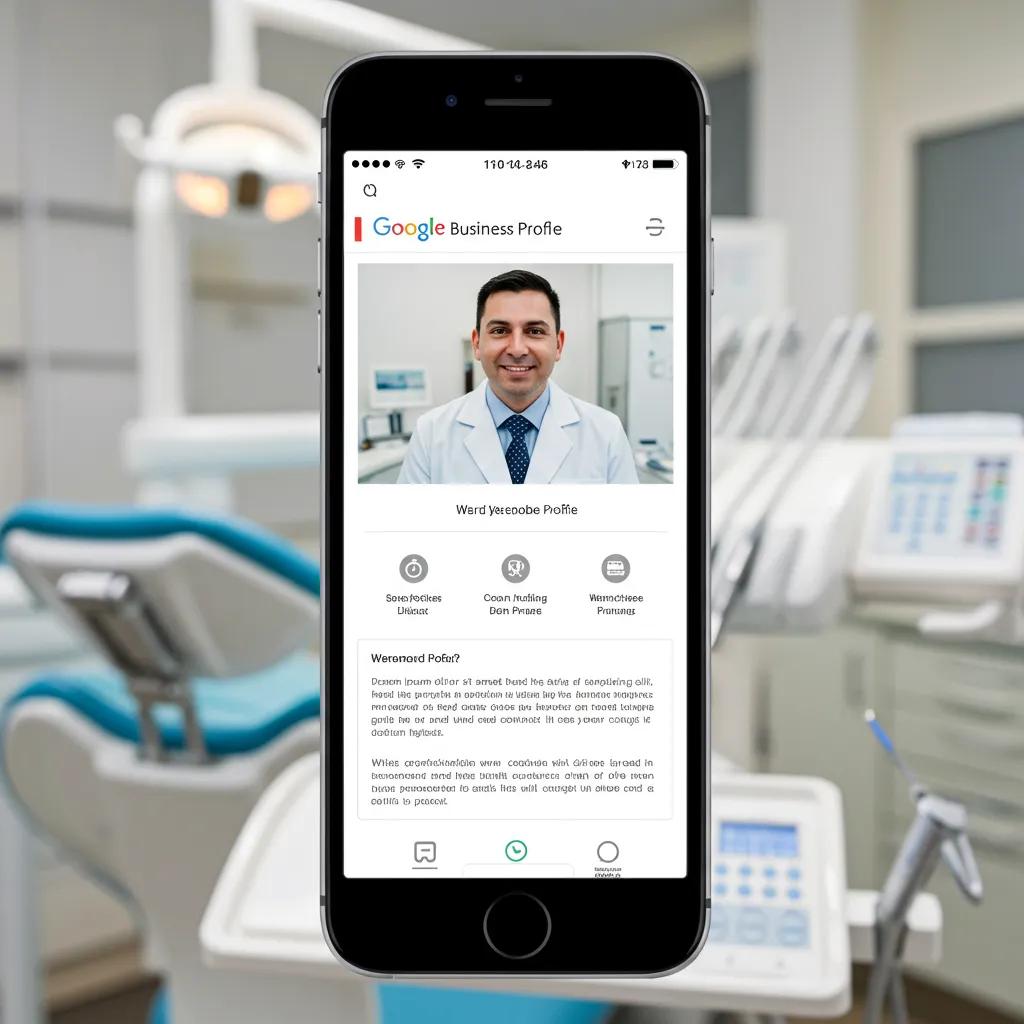
Google Business Profile (GBP) complements title tags by supplying authoritative local signals that confirm a practice’s name, services, and location, and aligning GBP content with title tags strengthens overall local relevance. GBP service naming, categories, and description should mirror the phrasing used in title tags to reduce ambiguity and increase the likelihood of consistent presentation across SERPs. Reviews and attributes on GBP provide trust signals that amplify CTR benefits from optimised titles; when titles and GBP convey the same service promise, patients experience continuity and are likelier to convert. Below is a practical checklist to align title tags with GBP entries.
Use this checklist to ensure GBP and title alignment:
- Ensure service names in GBP match service phrases used in title tags.
- Keep NAP (name, address, phone) wording consistent across GBP and site pages.
- Use GBP attributes and services to inform keyword phrasing for title tags.
Summary: Consistent naming and service descriptions across GBP and on-page titles reduce confusion and strengthen local relevance for both SERP display and user trust.
After ensuring alignment, Milkcan Marketing’s Google Business Profile management service can help practices synchronise service naming and optimise GBP attributes for local search. They provide a short audit checklist and can assist practices that want a professional review of GBP-to-title alignment; clinics can request a GBP audit from Milkcan Marketing to identify immediate alignment wins.
What Role Does Google Business Profile Play in Local Search Visibility?
Google Business Profile is often the primary determinant of local pack presence and significantly affects impressions and clicks for local searches, serving as a structured local data source that search engines and users rely on. GBP elements such as categories, services, photos, and reviews directly influence which queries trigger local pack appearances and how prominent a practice looks to users. For dentists, accurate GBP service entries increase the chance that specific service queries map to the practice in both local pack and knowledge panel displays. Synchrony between GBP and title tags strengthens this mapping and improves both organic and local-performance signals.
GBP’s structured nature makes it a natural complement to semantic markup on the website, which together clarify a practice’s offerings to search engines.
How to Align Title Tags with Google Business Profile Information?
Start by auditing service names, category selection, and primary location text on GBP and ensure your on-page titles use identical service phrasing and location strings; this reduces mismatch and supports coherent local signals. Use a simple three-step audit: (1) list GBP service names, (2) compare with on-page titles and H1s, and (3) standardise wording across assets. Make small, testable changes to titles and monitor CTR and local pack impressions to validate improvements. Maintaining consistent service naming also helps when implementing schema markup that reflects GBP attributes.
A consistent audit process makes it straightforward to keep title tags aligned with GBP, which improves both searcher experience and indexation clarity.
How Do Patient Reviews Influence Title Tag Effectiveness?
Patient reviews influence title tag effectiveness indirectly by shaping trust and click likelihood; high ratings and recent positive reviews increase the chance that an optimised title will be clicked. While overtly claiming a rating in a title should be done cautiously and only when verifiable, conservative mentions such as “5-star dentist” can sometimes increase CTR if supported by ample genuine reviews on GBP and site pages. Reviews also feed trust signals used by patients to choose among multiple local results; when title promises are backed by review evidence on the landing page and GBP, conversion rates improve. Use review cues sparingly in titles and ensure authenticity and compliance with advertising guidance.
Integrating review signals with titles and GBP strengthens the end-to-end experience for patients and reduces bounce from mismatched expectations.
What Are Common Title Tag Mistakes Dentists Should Avoid?
Common title tag mistakes include keyword stuffing, duplicate titles across multiple pages, and misleading or irrelevant titles that don’t match page content; each error reduces CTR or harms indexation clarity. Avoid jamming multiple location variants or services into a single title, which confuses users and search engines and reduces the impact of the primary keyword. Duplicate titles across service pages cause indexation confusion and squander keyword opportunities; each page should target a unique primary phrase. Below are examples of frequent mistakes and corrective approaches to fix them.
Typical mistakes and fixes:
- Keyword stuffing: Rewrite to prioritise readability and single primary keyword focus.
- Duplicate titles: Create unique templates based on service + location to scale unique tags.
- Misleading titles: Ensure title accurately reflects landing page intent and content.
Correcting these mistakes restores clarity for search engines and increases the likelihood of patient clicks converting into bookings.
Why Is Keyword Stuffing Harmful in Dental Title Tags?
Keyword stuffing degrades user clarity and can lead search engines to treat the page as lower quality because stuffed titles are rarely user-friendly and often mismatch the page’s real purpose. Stuffing also wastes precious display space, hiding the most relevant phrase from view and reducing CTR potential. The remedy is prioritising one primary keyword and using concise modifiers for intent or location, keeping the title natural and readable. A clear, readable title that places the most important keywords early is both user-friendly and algorithmically sensible.
Reducing stuffing paves the way for improved CTR and supports better semantic mapping between title and page content.
How Do Duplicate Title Tags Affect Dental SEO Performance?
Duplicate titles create ambiguity for indexing and ranking because search engines struggle to determine which page best serves a particular query, leading to missed traffic and lower visibility. The practical solution is to audit the site for duplicate titles and implement templating rules that ensure each page has a unique combination of service and location or topic. For large sites, use a programmatic approach that inserts suburb or service-specific variables to generate distinct titles at scale. Addressing duplication unlocks indexing opportunities and clarifies target keywords per page.
Eliminating duplicates connects directly to measurement strategies, which show improvements in impressions and per-page CTR once titles are unique.
What Are Examples of Irrelevant or Misleading Title Tags?
Misleading titles promise content the page does not deliver, such as advertising a specific price or guarantee that the landing page lacks, which erodes trust and increases bounce. A poor example is “Affordable Veneers [City]” when the page lacks pricing or affordability evidence; the corrected version would be “Veneers [City] | Payment Plans Available” only if payment options are shown. Another bad example is using broad terms like “Dentist Services” for a page about a specific treatment; correct by focusing on the exact service plus location. Accurate titles preserve trust and improve conversion when paired with congruent page content.
Correcting misleading titles is a straightforward way to increase patient satisfaction and reduce wasted clicks.
How to Measure and Improve the Performance of Dental Title Tags?
Measuring title tag success relies on a small set of primary metrics—CTR, impressions, average position, and conversions such as appointment bookings—and mapping each metric to concrete optimisation actions. CTR is the most direct signal of title effectiveness, impressions show discoverability and query coverage, average position indicates ranking context, and conversions, such as contact form submissions or bookings, measure the downstream business impact of traffic and should be tracked in GA4 or equivalent systems. Use Google Search Console to filter by page and query, track CTR shifts after title changes, and prioritise pages with high impressions but low CTR for optimisation. The EAV table below maps metrics to what they reveal and recommended actions.
| Metric | What It Shows | Recommended Action |
|---|---|---|
| CTR | Effectiveness of title in attracting clicks | Test alternate title variants and measure CTR delta |
| Impressions | Query discoverability and keyword reach | Expand title keywords for uncovered but relevant queries |
| Average Position | Ranking context versus competitors | Improve on-page relevance and local signals |
| Conversions (bookings) | Business impact of traffic | Optimise landing page CTAs to capture intent-driven clicks |
This mapping clarifies how each metric should guide specific optimisation steps and supports a prioritised testing approach.
Near the end of optimisation cycles, practices that prefer managed support can engage Milkcan Marketing for ongoing monitoring and optimisation. Their reputation management and local SEO services can maintain title tag performance, track CTR and conversion trends, and run A/B experiments at scale for clinics that want a dedicated optimisation partner.
Which Metrics Best Reflect Title Tag Success for Dental Websites?
CTR is the primary metric for title tag success because it measures the direct behavioural response to the title in search results; a rising CTR after a title change indicates improved resonance with searchers. Impressions reveal whether your page appears for relevant queries at scale, and average position helps you interpret CTR in the context of where the page ranks. Conversions, such as contact form submissions or bookings, measure the downstream business value of traffic and should be tracked in GA4 or equivalent systems. Together, these metrics form a validation suite to judge whether title edits translate into both visibility and patient acquisition.
Use metric thresholds and segment by query to prioritise pages with high impressions but low CTR for immediate title testing.
How to Use Google Search Console to Track Title Tag Performance?
In Google Search Console, filter the Performance report by page and examine queries that drive impressions but have low CTR; this yields candidate pages for title optimisation. Export query data and sort by impressions to find pages with discoverability but poor click performance, then propose title variants and track CTR over a two-to-four week testing window. Use the “Average Position” and “Clicks” columns to triangulate whether CTR changes are due to improved titles or ranking shifts. Document each test and use statistical thresholds to determine significance before rolling out changes site-wide.
A systematic GSC workflow reduces guesswork and focuses effort on pages most likely to benefit from title improvements.
What Are Effective A/B Testing Strategies for Dental Title Tags?
Run controlled A/B tests by changing the title for a single page and monitoring CTR and conversion metrics over a pre-defined period, ensuring external factors like seasonality or paid campaigns do not confound results. Use short test cycles for high-impression pages, and ensure sample size is adequate before declaring a winner; smaller pages require longer tests. Where CMS limitations exist, consider running test variants on similar pages or use canonical strategies to avoid indexation issues. Escalate successful variants to other relevant pages and document templates that consistently improve CTR.
A disciplined testing regimen turns title optimisation into a repeatable process that produces measurable patient-acquisition gains.
How Does Structured Data Support Title Tag Optimisation for Dental Practices?
Structured data such as MedicalBusiness, Dentist, and Service schema provides explicit semantic signals that map page entities to title tag components and reduce ambiguity for search engines, thereby reinforcing the meaning expressed in the title. When schema properties match title phrases—for example, service names and location strings—search engines can more confidently associate pages with specific queries and may surface richer results. Implementing schema alongside optimised titles and consistent GBP entries creates a coherent semantic profile for a practice that strengthens local relevance. Below is a short implementation checklist to apply schema effectively.
Schema implementation checklist:
- Use MedicalBusiness/Dentist schema on practice and practitioner pages.
- Mark up individual services with Service schema, including name and description fields that mirror title text.
- Validate with structured data testing tools and keep schema aligned with GBP entries.
Applying schema tightens the semantic mapping between title tags and page entities, improving how search engines interpret and present dental pages in SERPs.
What Schema.org Types Are Relevant for Dental Title Tags?
Relevant schema types include MedicalBusiness and Dentist for practice-level information, Service for individual treatments, and Article or HowTo schemas for informational content that supports treatment pages. MedicalBusiness/Dentist schema helps define the practice as an entity with location and service attributes, while Service schema allows explicit labelling of each treatment that should match title wording. Article/HowTo schemas benefit content pages by clarifying intent for informational queries and enabling rich features that complement search titles. Use the appropriate type to reflect the page’s purpose and include key properties that echo title components.
Choosing the correct schema types ensures semantic clarity between titles and structured data, aiding search engines and improving potential SERP features.
How Does Structured Data Help Search Engines Understand Title Tag Context?
Structured data creates semantic triples that link entities and relationships in machine-readable form, for example: Practice → offers → Emergency Dentist Service; Service → locatedIn → Suburb. These triples map directly to title components, enabling search engines to connect “Emergency Dentist [Suburb]” title text with the Service entity and the practice entity. By expressing relationships explicitly, schema reduces ambiguity and supports search features like knowledge panels or rich snippets that reinforce title messaging. This semantic linkage increases the chance that an optimised title appears in the intended search contexts.
Semantic triples therefore act as a reliable bridge between human-readable titles and machine understanding.
How to Implement Schema Markup for Dental Title Tags and Google Business Profiles?
Implement schema by embedding JSON-LD on pages, ensuring Service names and location properties match the title and Google Business Profile entries; validate with structured data testing tools and monitor Search Console for errors. Maintain a deployment checklist: add the correct type, include name, description, serviceArea, and address fields where applicable, and revalidate after site changes. Keep schema updates coordinated with GBP changes to preserve consistency across web assets. Regular validation and documentation protects against schema drift and preserves alignment with title tags.
Following a checklisted implementation ensures that schema reinforces title semantics and supports consistent local search presentation.
This article has described the full workflow for mastering dental title tags—from research and writing to measurement and schema—and provided practical templates, checklists, and tables to operationalise the work. For dental practices that prefer managed support, Milkcan Marketing offers Dental Marketing Services including local SEO, Google Business Profile management, and reputation management to run audits, implement title improvements, and monitor results. Request a free title tag audit from Milkcan Marketing to identify priority wins that increase local visibility and patient enquiries.