Mastering Dental Content SEO for Maximum Impact: Proven Strategies to Boost Your Dental Practice Online
Dental content SEO combines technical optimisation, local search tactics and patient-focused content to attract and convert local patients. This guide explains what dental content SEO is, how it drives measurable patient growth, and which practical steps dental practices should prioritise to improve visibility in 2025. Many clinics struggle with low local visibility, thin service pages and unmanaged review profiles; targeted SEO and content marketing fix those gaps and increase appointment bookings. The article maps a clear workflow: core strategies that drive patient growth, step-by-step Google Business Profile optimisation, on-page and technical essentials, content marketing formats, off-page authority building and practical reputation management. Throughout, readers will find actionable checklists, structured-data guidance and examples of content types to use on clinic sites. The guidance integrates semantic SEO best practice, geo-targeted keyword patterns and real-world implementation steps so practice owners and marketers can prioritise effort for maximum local impact.
What Are the Most Effective Dental SEO Strategies for Patient Growth in 2025?
Dental SEO strategies in 2025 focus on local intent, authoritative content and technical performance to convert searchers into patients. These strategies work because search engines prioritise relevance, trust signals and user experience; combining local SEO with content tailored to patient intent produces higher visibility and better conversion rates. The immediate benefit is more qualified local traffic that is likely to book appointments, while the longer-term benefit is cumulative authority that reduces reliance on paid ads. The following numbered list summarises the highest-impact strategies that clinics should implement first to drive patient growth.
Top priority strategies for dental patient growth:
- Local SEO and Google Business Profile: Complete, optimised local listings increase local-pack visibility and appointment clicks.
- Service-focused content & content marketing: Patient-centred service pages and blogs capture intent and answer questions.
- Technical performance (speed & mobile): Faster, mobile-friendly sites improve rankings and patient conversions.
- Reputation & reviews management: Quantity and quality of reviews influence local prominence and trust.
- Structured data and schema: Proper LocalBusiness and Service markup helps search engines understand offerings.
These five strategies work together; improving GBP completeness increases visibility and creating focused service pages captures that traffic. Next we examine how local SEO drives new patient acquisition and the keyword patterns that best match local intent.
How Does Local SEO Drive New Patient Acquisition for Dental Practices?
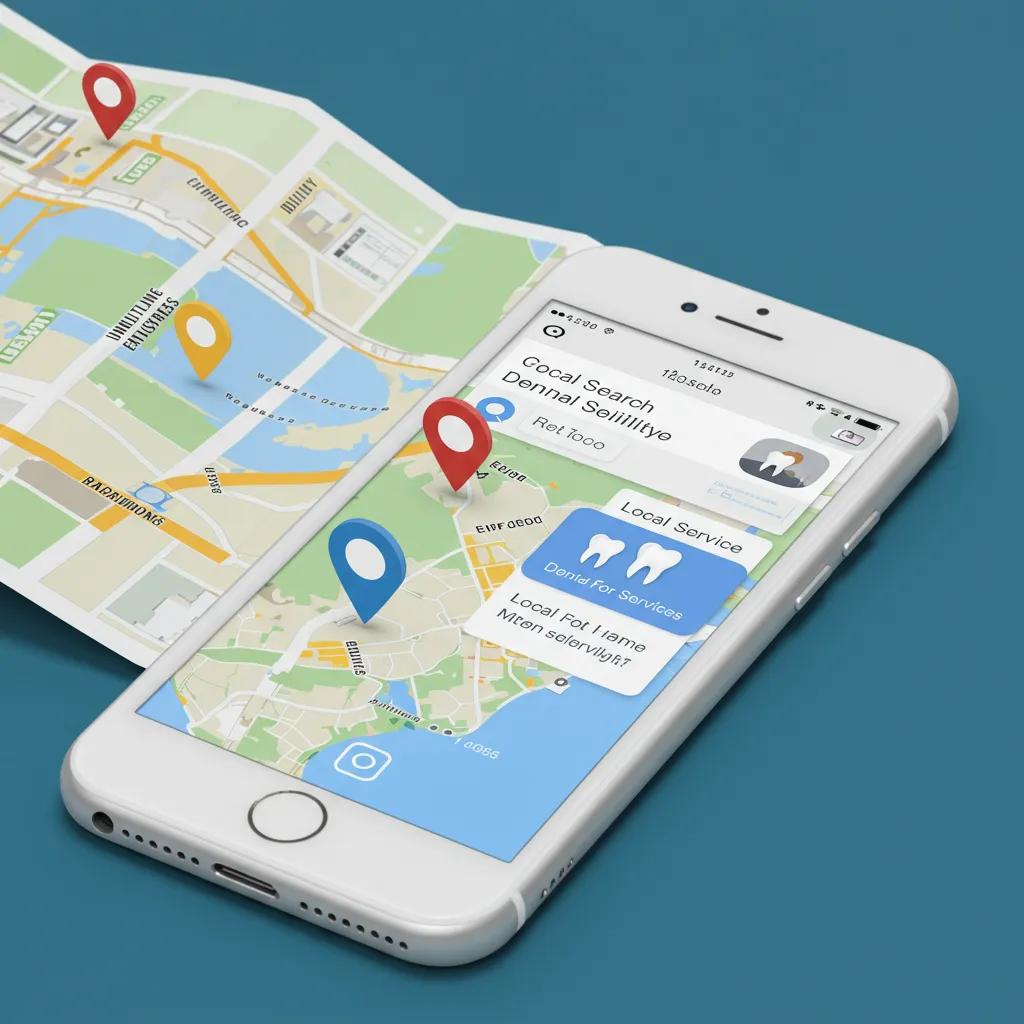
Local SEO drives new patient acquisition by placing a clinic where local intent lives: maps, local packs and neighbourhood search queries. When a profile and site match a patient’s search intent through precise location signals, category selection and service descriptions, that visibility converts into calls, bookings and walk-ins. NAP consistency, local citations and optimised Google Business Profile fields all increase local relevance and trust in search algorithms and for prospective patients. Clinics should prioritise accurate NAP, targeted service descriptions and location-specific landing pages to capture nearby searchers. Implementing those fundamentals creates a pipeline from discovery to appointment, which naturally leads into practical keyword selection and content mapping.
Which Geo-Targeted Keywords Should Dentists Use to Improve Visibility?
Geo-targeted keywords combine service intent with location modifiers to match patient queries and local search behaviour. Use templates like “service + suburb”, “service near me”, and question formats such as “how much does [service] cost in [suburb]” to capture varied intent. Mapping keywords by intent—informational (FAQ), transactional (bookings), and navigational (directions)—helps structure site content so each page meets specific patient needs. Tools for research include general keyword explorers and local search suggestion analysis to discover long-tail question phrases common among patients. Prioritising transactional and near-me terms on service pages while using long-tail and question keywords in blogs and FAQs will improve relevance and conversion.
How Can Building Local Citations Enhance Your Dental Clinic’s Online Presence?
Local citations—consistent listings of practice name, address and phone—act as foundational trust signals that support map visibility and local authority. Citations on authoritative Australian directories and healthcare listings reduce confusion for search engines and patients, improving the clinic’s chance to appear in local packs. A practical audit involves matching NAP across major directories, correcting inconsistencies, and prioritising high-value local sources for listing creation. Regular citation maintenance prevents drift and preserves local signals that search engines use to rank businesses for geographically-targeted queries. Strengthening citation accuracy lays the groundwork for GBP optimisation and higher local visibility.
How Do You Optimise Your Google Business Profile for Dentists to Maximise Local Search Rankings?
Optimising a Google Business Profile (GBP) for a dental practice requires precise completion of profile fields, curated photos and ongoing activity to signal relevance and engagement. A fully optimised GBP increases map pack visibility and supplies conversion pathways like direct calling and appointment links, which boost patient acquisition. The immediate benefit is higher local discovery and the mechanism is relevance alignment—accurate categories, services and high-quality media match search intent and patient expectations. The following field checklist clarifies the core GBP elements dentists must manage.
Key GBP fields and optimisation checklist:
- Primary category and additional categories: Choose a precise primary category and supportive additional categories to clarify services.
- Services and service descriptions: Add searchable service names with clear patient benefits and appointment CTAs.
- Photos and videos: Upload high-quality office, team and procedural images to increase engagement.
- Posts and Q&A: Publish timely updates and answer questions to show activity and relevance.
Completing these fields improves both ranking signals and patient confidence, and consistent GBP activity supports higher conversion rates by keeping contact pathways obvious and easy to use.
What Are the Key Elements of a Successful Google Business Profile for Dental Practices?
A successful GBP for dentists depends on category choice, service listings, accurate contact details and professional imagery that communicates trust. The mechanism is simple: search engines and patients use these fields to evaluate relevance, so better granularity in services and clear CTAs increase appointment actions. High-quality photos of the practice, team and procedure-related visuals improve click-through and engagement on mobile and desktop. Regular posts and up-to-date service offerings signal a maintained business, which complements on-site signals and local citations. Focusing on these elements results in clearer patient pathways from discovery to booking.
How Can Dentists Leverage Patient Reviews to Build Trust and Authority?

Patient reviews serve as both social proof and a ranking signal for local search, influencing visibility in the local pack and patient decision-making. Actively requesting reviews at appropriate moments—after successful appointments or follow-up messages—raises review volume and captures recent patient sentiment that search algorithms weigh. Showcasing representative testimonials on service pages and within GBP increases conversion by answering patient doubts with peer experiences. Using reviews to inform content topics and FAQs also aligns site copy with real patient concerns, creating a virtuous cycle between reputation and content relevance.
What Are Best Practices for Responding to Dental Patient Feedback Online?
Timely, professional responses to both positive and negative reviews demonstrate care, respect and a commitment to patient experience without revealing clinical details. For positive reviews, thank the patient and highlight specific services or staff where appropriate while inviting future visits; for negative reviews, acknowledge the issue, express empathy and offer offline resolution to protect privacy and escalate where needed. Responses should avoid clinical commentary, directness about diagnoses or treatment details, and instead offer contact avenues for further discussion. A consistent response workflow that documents incidents and follow-up improves practice reputation and reduces public escalation risk.
After these GBP optimisation practices, clinics that prefer managed support can consider external help for technical implementation. Milkcan Marketing offers Dental Marketing Services that include GBP management, local SEO and reputation workflows as a managed option for clinics. Practices that lack in-house SEO capacity often find a managed service accelerates local visibility while they focus on patient care.
This research highlights the importance of a structured SEO model for dental websites, emphasizing content, link building, social presence, and online reputation as key drivers of organic ranking and traffic.
A Comprehensive Search Engine Optimisation Model for Dental Websites
ABSTRACT: This paper presents a comprehensive survey on how various Search Engine Optimisation (SEO) strategies can improve product marketing. Search engines have become a crucial channel for increasing the global reach of Small and Medium-sized Enterprises (SMEs), enabling them to compete with larger organisations. SMEs are increasingly employing SEO to enhance their online visibility. Through SEO, smaller companies can effectively compete with larger ones and achieve higher search engine rankings. The primary objective for any website is to appear at the top of search engine results pages. Consequently, SEO is an art that enhances a website’s visibility in search engine results, fostering a more transparent and competitive business environment. A literature survey was conducted for data collection. The findings indicate that implementing an SEO strategy can significantly enhance product marketing.
1. The purpose of this study is to develop a Search Engine Optimisation (SEO) model to improve the organic ranking and traffic to commercial websites. Four SEO strategies – content, link building, social presence, and online reputation – are applied to the website of a Sydney-based oral and maxillofacial surgeon to enhance its ranking in organic search results. Google Analytics and search engine tools are utilised to monitor the website’s organic traffic and ranking. This study demonstrates that factors such as keywords in meta descriptions, content-related headings, longer and unique content with valuable information, webpage loading speed, SSL certificates, mobile responsiveness, links to relevant local sites, and online reputation contribute to improved organic ranking and traffic. This study specifically uses content length, keyword density, SSL certificates, relevant local link building, and online reputation to enhance website SEO.
2. This paper is a comprehensive survey examining how various strategies
Comprehensive Search Engine Optimization Model for Commercial Websites: Surgeon’s Website in Sydney., A Alsadoon, 2018
What On-Page SEO Techniques Are Essential for Optimising Dental Websites for Search?
On-page SEO for dental sites means structuring service pages, metadata and content to match patient intent and local patterns so pages rank for transactional queries. This works because search engines evaluate on-page signals—titles, headings, schema and content relevance—to match queries; properly optimised pages therefore attract higher-quality traffic. The direct benefit is improved rankings for service and local queries which increases appointment requests and calls. Below is a concise service-page anatomy and a reference table that editors can use when building or auditing pages.
A reusable service page template includes the following elements and ordering:
- H1 with target keyword and location signal.
- Intro paragraph that states the problem and the clinic’s solution.
- Treatment description, benefits and expected outcomes.
- Trust signals: testimonials, accreditations and team bios.
- FAQ with schema and clear CTA for bookings.
This template guides consistent page builds that meet both user and search intent and leads into a structured comparison for implementation.
| Page Element | Recommended Attribute | Example Implementation |
|---|---|---|
| URL structure | Short, keyword + location | /cosmetic-dentist-suburb |
| Title tag | Keyword + clinic name | Cosmetic Dentist [Suburb] — Treatment & Pricing |
| H1 / Headings | Clear hierarchy, include local modifier | H1: Cosmetic Dentist in [Suburb] |
| Meta description | Benefit-led, CTA included | Restore your smile — book a consult today |
| Schema markup | LocalBusiness + Service + Review | JSON-LD with service entries |
This table helps editors keep service pages consistent and search-optimised for local intent while maintaining user clarity.
Summary insight: applying a consistent service page template and schema markup improves indexing and local relevance, which increases qualified patient visits and appointment conversions.
How Should Dental Service Pages Be Structured for Maximum SEO Impact?
Service pages should begin with a concise problem statement that aligns with patient search intent and then present the clinic’s solution with clear benefits and CTAs. The mechanism is intent matching—searchers who see content that directly answers their need are more likely to convert. Include trust signals such as clinician bios, testimonials and before/after imagery to reduce friction and increase booking likelihood. Embed FAQ schema for common patient queries to capture featured-snippet opportunities and reduce bounce. A consistent structure across service pages enables internal linking from a hub page, spreading authority and improving indexation of key treatments.
Why Is Mobile-Friendliness and Website Speed Critical for Dental SEO?
Mobile-friendliness and site speed matter because Google uses mobile-first indexing and performance signals to rank sites, and slow or clumsy mobile experiences reduce patient conversion. Core Web Vitals—loading, interactivity and visual stability—directly affect user satisfaction and therefore organic performance. Quick wins include image compression, lazy loading, leveraging browser caching and deferring non-critical scripts to reduce first contentful paint. Monitoring performance regularly with site audits ensures clinics maintain thresholds that support both rankings and appointment completion rates.
How Can Content Optimisation Improve User Experience on Dental Websites?
Optimised content improves readability, reduces friction and answers patient questions quickly, which increases on-page engagement and conversion. Use clear headings, scannable lists, descriptive CTAs and jump links to allow visitors to find procedure details and booking options without friction. Implementing FAQ and HowTo schema for common queries helps surface answers in SERPs and can reduce patient hesitancy by providing authoritative guidance. Internal linking from hub content to service pages concentrates topical authority and helps patients navigate from education to booking with fewer steps.
After documenting on-page tactics and templates, clinics that need hands-on implementation support can access external content optimisation and service-page builds. Milkcan Marketing provides Dental Marketing Services that include content optimisation and service-page builds, and they can perform a site audit to prioritise fixes. Their specialist focus on small healthcare practices can be helpful for clinics that require both strategic planning and operational execution.
What Technical SEO Essentials Should Dental Practices Implement in 2025?
Technical SEO ensures crawlability, secure connections and performance metrics are configured so search engines can index and rank clinic content reliably. The mechanism is straightforward: a technically sound site exposes the right pages to search engines and delivers a fast, secure experience to users, improving both ranking potential and conversions. Key technical areas include robots configuration, sitemaps, canonical tags and structured data for services and reviews. Below is a checklist with prioritised fixes and monitoring recommendations for clinics to implement.
Essential technical checklist:
- Maintain an up-to-date XML sitemap and submit in search consoles.
- Configure robots.txt to avoid unintentionally blocking important pages.
- Implement HTTPS site-wide and correct canonical tags to prevent duplicate content.
- Add structured data for LocalBusiness, Service and Review to signal offerings.
Regular technical audits using site crawlers and search console monitoring prevent regressions and ensure indexing aligns with content strategy.
How Does Website Crawlability Affect Dental Website Indexing?
Crawlability determines which pages search engines can discover and index, and blocked or orphaned service pages rarely reach target audiences. Proper robots.txt rules, comprehensive XML sitemaps and strong internal linking ensure service pages and educational content are visible to crawlers. Common blocking issues include misconfigured disallow rules, missing sitemaps and deep pages with no internal links; auditing with site crawlers reveals these faults. Fixes typically involve updating server rules, adding internal links from hub pages and submitting refreshed sitemaps, which together restore indexation and visibility.
What Are the Best Practices for Improving Dental Website Speed and Performance?
Performance improvements prioritise high-impact changes such as optimising images, deferring non-essential JavaScript and using a content delivery network for global delivery. The mechanism is reducing load times and interaction delays to improve Core Web Vitals and user satisfaction, which indirectly supports rankings. Recommended actions include lossless image compression, implementing browser caching headers and moving heavy scripts to deferred or asynchronous loading. Monitoring performance after changes ensures improvements are maintained and informs further optimisation cycles.
How Can Dentists Ensure Their Websites Are Fully Mobile Responsive?
Mobile responsiveness requires adaptive layouts, appropriate breakpoints and touch-friendly navigation so patients can book and contact the clinic easily from phones. The mechanism is designing for the most common device behaviours—tap targets, readable text sizes and simplified forms reduce abandonment. Use responsive templates, test across device emulators and real devices, and prioritise critical CTAs near the top of mobile pages. Ongoing testing and iterative fixes prevent regressions and keep the mobile experience aligned with patient expectations.
How Can Content Marketing Drive Patient Engagement and Growth for Dental Clinics?
Content marketing converts search visibility into patient engagement by educating visitors, answering questions and nurturing trust through consistent, useful assets. This works because helpful content meets patient intent at every stage—awareness, consideration and decision—guiding prospects toward bookings. Formats that perform well include procedures guides, FAQs, testimonial stories and short videos; distributing these across the clinic site, social and local posts extends reach and builds trust. The following EAV table helps clinics select content types mapped to patient journey stages to focus effort effectively.
| Content Type | Target Audience Stage | Primary Benefit |
|---|---|---|
| Procedure guide | Consideration | Deep answers to treatment questions |
| FAQ pages | Awareness | Capture question-based searches and featured snippets |
| Testimonial videos | Decision | Increase trust and conversion |
| Short explainer videos | Awareness/Consideration | Improve engagement and time-on-site |
| Local stories | Awareness | Strengthen community relevance and local SEO |
Summary: using a mix of evergreen blogs, localised pages and video content creates a content funnel that feeds GBP posts, social channels and email nurturing for sustained patient growth.
What Types of Dental Blog Content Attract and Educate Patients?
Blog content that targets common patient questions, procedure explainers and local interest topics generates consistent organic traffic and addresses decision barriers. Educational posts such as “what to expect” procedure guides, pricing explainers and post-op care tips help searchers move from curiosity to appointment readiness. Localised topics that reference suburbs or community events increase local relevance and support geo-targeted keyword strategies. Use internal linking to route readers from blogs to service pages and booking CTAs, increasing the chance of conversion.
How Can Video Marketing Enhance Patient Trust and Clinic Visibility?
Video content—office tours, clinician introductions, patient testimonials and short procedural explainers—builds trust faster than text alone by humanising the practice. Properly optimised video titles, descriptions and transcripts improve discovery on video platforms and support accessibility and SEO when embedded on service pages. Short-form clips repurposed for social media amplify reach and encourage review acquisition by prompting viewers to engage. Embedding concise, informative videos on critical service pages increases time-on-page and conversion likelihood.
What Social Media Strategies Work Best for Dental Practices?
Effective social strategies mix educational content, behind-the-scenes posts and testimonial highlights with a consistent cadence that encourages engagement from local audiences. Use platform selection based on audience behaviour—visual platforms for before/after images, community platforms for local news and video platforms for procedure explainers. A simple cadence might include two educational posts, one testimonial and one local/community post per week, supplemented by occasional paid local promotions to amplify reach. Paid social can target local demographics efficiently and work alongside organic content to drive bookings.
How Do Off-Page SEO and Link Building Improve Dental Practice Authority?
Off-page SEO strengthens a dental clinic’s authority by acquiring backlinks, building community partnerships and amplifying content to generate referral traffic and local recognition. Backlinks from trusted local or healthcare sources signal authority to search engines while partnerships and sponsorships create referral pathways and local PR. The direct benefit is improved domain credibility and increased referral streams that supplement organic search traffic. The following prioritised tactics help clinics identify realistic backlink sources and outreach approaches.
Practical backlink tactics include:
- Local citations and directories: Low-effort, high-relevance links from local business directories.
- Healthcare publications and guest commentary: Targeted content placements build trust and relevant links.
- Community sponsorships and partnerships: Events and sponsorships often generate local press and links.
These tactics vary by effort and impact; prioritise local and healthcare-relevant sources before broader initiatives.
What Are Effective Backlink Strategies for Dental Clinics?
Effective backlink strategies focus on relevance and locality: getting mentions from local health directories, community organisations and reputable health publishers yields the most value. Outreach should highlight helpful content—procedure guides, community health resources or expert commentary—that editors or local partners want to link to. A prioritisation matrix helps allocate effort: low-effort local listings, medium-effort guest posts and higher-effort PR campaigns for broader coverage. Building relationships with local organisations and clinicians leads to recurring linking opportunities and credible referral traffic.
How Do Social Signals Influence Dental SEO Rankings?
Social signals act primarily as amplification channels rather than direct ranking factors, but they increase visibility and referral traffic that can indirectly improve SEO. Shared content drives visitors to site pages, which can increase engagement metrics and lead to more reviews or backlinks over time. Use social posts to promote new blog posts, video assets and patient stories that encourage shares and local engagement. Investing in social amplification multiplies content reach and supports other SEO efforts by increasing the likelihood of external sites discovering and linking to your resources.
Why Is Online Reputation Management Crucial for Dentists?
Online reputation management protects and enhances the perceived trustworthiness of a practice, which directly affects patient conversion and local prominence. Reviews influence choice and are used by patients to evaluate clinical competence and service quality; managing that reputation requires monitoring, proactive acquisition and thoughtful responses. A short monitoring framework includes setting up alerts, regular review audits and an escalation process for complaints. Proactively amplifying positive patient experiences across the site and local listings turns reputation into a marketing asset that drives bookings.
What Are the Best Practices for Managing Patient Reviews and Building Online Reputation?
Managing patient reviews effectively increases conversion and local ranking potential by generating trustworthy social proof and demonstrating active patient engagement. The mechanism includes ethical review requests, timely responses and surfacing reviews across site assets to maximise trust signals. Clinics that implement structured review workflows typically see higher review velocity and better patient perception, which feeds into GBP prominence and conversion rates. The following practical tactics, templates and measurement guidance provide a workable process for clinics to follow.
A structured approach to review management involves these steps:
- Request: Ask for reviews at appropriate touchpoints in the patient journey.
- Respond: Reply promptly to reviews with empathy and a resolution path.
- Surface: Showcase selected reviews on service pages and testimonial sections.
How Can Dentists Acquire More Positive Patient Reviews?
Acquire more reviews by requesting feedback at moments of high satisfaction—post-treatment follow-ups, after positive clinical outcomes or via automated post-visit messages. Use neutral, compliant scripts that invite honest feedback and make it easy for patients to respond via their preferred channel. Channels can include SMS, email or physical reminder cards handed at reception where permitted, with care taken around incentivisation and regulatory compliance. Automating requests and tracking response rates helps scale acquisition while ensuring staff follow agreed scripts.
How Should Dental Practices Respond to Negative Reviews?
Responding to negative reviews requires acknowledging the patient’s experience, expressing empathy, and offering an offline resolution to maintain privacy and comply with healthcare guidelines. Public responses should be calm, brief and professional—thank the reviewer, apologise for the experience and provide contact details for private follow-up without disclosing clinical specifics. Internally, document the complaint, investigate and implement remediation steps if warranted. A clear escalation policy that involves practice leadership and legal/compliance teams when necessary protects the clinic and demonstrates accountability.
After establishing reputation processes, clinics that prefer a managed reputation service can explore specialist support. Milkcan Marketing offers reputation management as part of their Dental Marketing Services, including workflows for review acquisition and response. They provide a reputation health check option for practices that want an external assessment of review volume, sentiment and response consistency.
How Do Patient Reviews Impact Local SEO and Patient Conversion?
Patient reviews impact local SEO by contributing to prominence and relevance signals used in local-pack rankings while also serving as a conversion multiplier for prospective patients assessing clinic quality. A steady stream of recent, positive reviews increases visibility and enhances click-through likelihood from search results. Reviews also supply content that can be repurposed on site pages and social posts, reinforcing trust across channels. Measuring review volume, average rating and conversion rates provides clear KPIs to evaluate the ROI of reputation management efforts.
This article outlines a complete, implementation-focused approach to dental content SEO, local optimisation and reputation management that clinics can adopt to grow local patient acquisition. For clinics seeking expert help, Milkcan Marketing provides Dental Marketing Services that specialise in local SEO, GBP management, reputation workflows and content marketing tailored to dental practices. They can supply a free consultation or audit to prioritise the highest-impact actions and support hands-on implementation aligned with the strategies described above.