
Local SEO Secrets for Dental Clinics Success: How to Attract More Local Patients and Boost Your Practice Visibility
Local SEO for dental clinics focuses on optimising the signals that make a practice visible to nearby patients searching for care, and it directly drives patient acquisition by improving placement in the Local Pack and Maps results. This guide explains how Google Business Profile, local citations, reviews, on-page optimisation and schema markup work together to increase calls, bookings and direction requests for dental practices. Many clinics struggle to convert local intent searches into booked appointments because they miss simple local signals like consistent NAP, targeted suburb pages and structured review funnels. This article provides step-by-step processes, checklists and practical templates so practice managers and marketers can implement improvements quickly and measure results. You will learn how to claim and verify a Google Business Profile, build ethical review systems, implement local schema, create hyperlocal content and track KPIs that map to revenue. The sections map to actionable H2s covering definition and benefits, GBP optimisation, reputation and citations, technical on-page tactics, content that converts, measurement and Australia-specific considerations.
What Is Local SEO for Dental Clinics and Why Is It Essential?
Local SEO for dental clinics is the practice of optimising a clinic’s online presence so search engines display it prominently for geographically relevant patient queries, and it works by strengthening local signals such as Google Business Profile accuracy, citations and on-page location signals. These mechanisms increase visibility in the Local Pack and Maps, meaning more patients see your practice when they search for “dentist near me” or suburb-specific queries. The specific benefit is a higher share of high-intent traffic—calls, clicks-to-directions and appointment bookings—that converts at greater rates than broad organic traffic. Recent search behaviour trends show mobile and conversational queries dominate local intent, so practices that focus on local SEO win the practical micro-moments that lead to appointments. Below we unpack how visibility improves, list key benefits and explain why local intent is so conversion-rich.
How Does Local SEO Improve Dental Practice Visibility?
Local SEO improves practice visibility by aligning three core mechanisms: a verified Google Business Profile that feeds the Local Pack; accurate and consistent citations that signal authority and trust; and on-page/location pages that match searcher intent. GBP signals, including categories, photos and review patterns, directly influence map placement and Local Pack ranking, while citation consistency reduces confusion for search algorithms and patients. On-site location pages and schema markup reinforce relevance for suburb-level queries and voice search. Together these signals create a coherent local knowledge graph that search engines use to prioritise clinics for nearby patient queries, increasing measurable actions like calls and map clicks.
What Are the Key Benefits of Local SEO for Dentists?
Local SEO for dental clinics delivers measurable business outcomes that map directly to patient acquisition and clinic revenue through improved discoverability and trust signals. The primary benefits are more local traffic that includes high-intent searchers, increased calls and direction requests from mobile users, stronger trust via photos and reviews, and better conversion rates when online booking is integrated. These outcomes reduce reliance on paid ads for local patient flow and improve lifetime value by converting nearby patients who are more likely to become regulars. By tracking Local Pack impressions and booking conversions, practices can link optimisation work to tangible business results.
Why Is Local SEO Critical for Attracting Local Dental Patients?
Local SEO matters because local and mobile searches have immediate intent—many users look for same-day or next-week appointments—so visibility in maps and GBP directly shortens the path to booking. Patients expect accurate hours, photos and recent reviews in a clinic profile; missing or inconsistent information leads to lost bookings and lower trust. Long-tail queries and conversational voice searches (“affordable emergency dentist in [suburb]”) are growing, and practices that optimise for these patterns capture the micro-moments where intent is highest. Effective local SEO reduces friction at every stage of the patient journey: discovery, evaluation and appointment scheduling.
How to Optimise Your Google Business Profile for Dentists
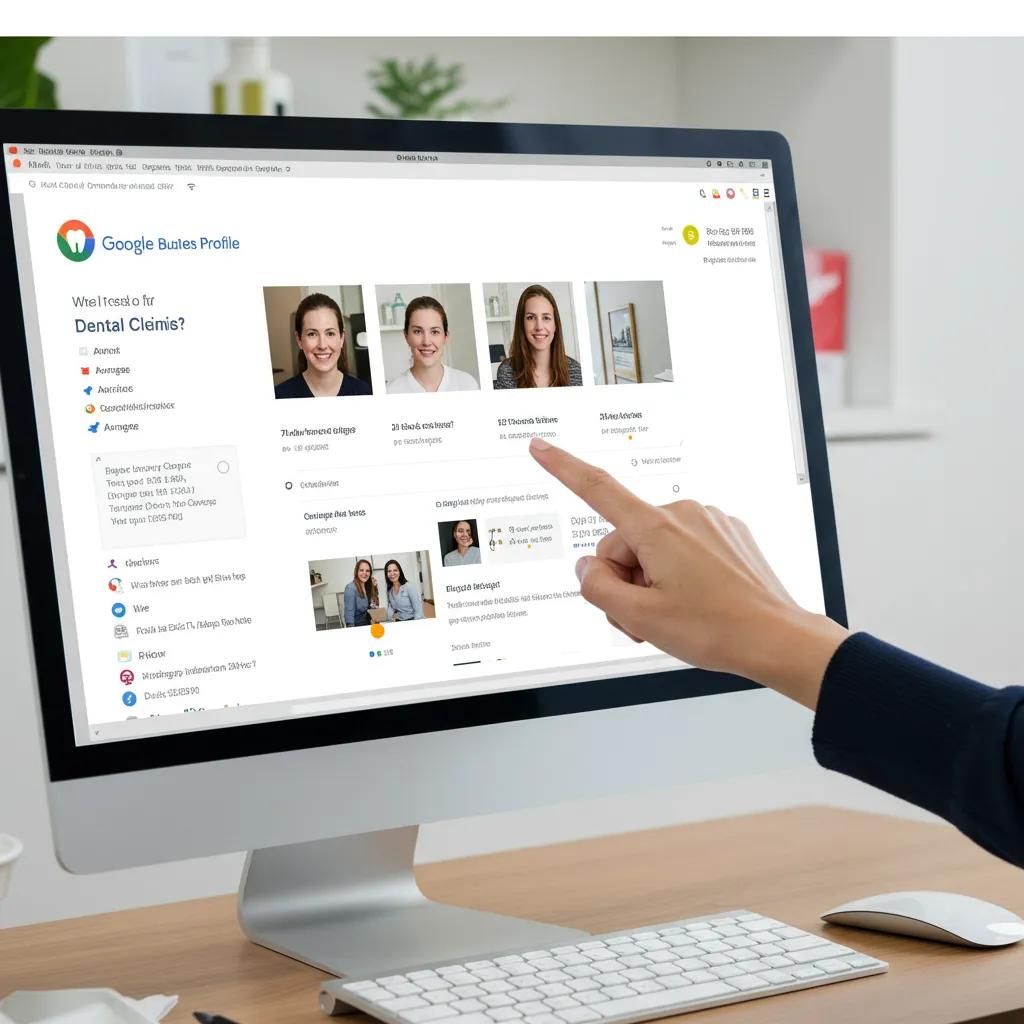
Optimising a Google Business Profile for dentists is a stepwise process that ensures the listing is claimed, verified, accurately categorised and actively managed with photos, posts and Q&A this improves map visibility and patient trust. A properly configured GBP signals relevance and authority to Google while providing patients with the essential information they need to choose and contact a clinic. The following checklist walks through the most impactful actions for dental practices, and the accompanying table compares GBP elements, best practices and expected impacts.
Dental clinics should follow a clear GBP optimisation checklist to cover high-impact items and avoid common omissions.
- Claim and verify the listing using the verified clinic name and correct practice address format.
- Select an accurate primary category (e.g., Dentist) and add relevant secondary categories and services.
- Ensure NAP consistency across the web and add a local phone number in correct national format.
- Upload high-quality photos and short clinic videos (clinic exterior, waiting area, staff, procedure prep).
- Publish regular GBP posts for offers, education and events and monitor Q&A daily to answer patient queries.
This checklist focuses on tasks that directly influence Local Pack placement and patient actions, and following it ensures the listing is both discoverable and conversion-friendly.
| GBP Field | Best Practice | Expected Impact |
|---|---|---|
| Listing Verification | Claim listing with verified clinic name and correct address format | Prevents duplicates, improves ranking eligibility |
| Categories & Services | Set precise primary/secondary categories and service fields with suburb modifiers | Enhances relevance for local queries and service-specific searches |
| Photos & Videos | Upload 10+ quality images including exterior, staff and short videos | Increases clicks-to-directions and appointment interest |
This EAV-style comparison shows which GBP components yield the largest impact and why clinics should prioritise verification, categories and media to improve patient actions.
How Do You Claim and Verify Your Google Business Profile?
Claiming and verifying a Google Business Profile involves selecting the correct entity for your clinic, submitting verification through Google’s approved methods and resolving duplicates that can split signals. The recommended flow begins with searching GBP for existing listings to prevent duplicates, then claiming the correct profile and choosing the verification method—postcard, phone or email—based on availability and speed. Common pitfalls include inconsistent practice names and multiple legacy listings; performing a duplicate audit before claiming avoids verification delays. Verification completes the ownership step, after which regular maintenance—photo updates and post cadence—keeps the listing signal fresh.
What Are the Best Practices for Accurate NAP Information?
Accurate NAP (Name, Address, Phone) information means using a single canonical format across a clinic’s website, GBP and directories to ensure consistent citation signals and avoid confusion for patients and search engines. For Australian practices, standardise the practice name (avoid extra keywords in the business title), format the suburb and state consistently and use a local phone number with correct +61 international presentation where required. A simple audit checklist—compare GBP, website footer, and top 10 directories—helps identify inconsistencies to correct. Maintaining NAP hygiene reduces lost visibility from conflicting signals and supports better Local Pack performance.
How to Use Strategic Categorisation and Keywords in GBP?
Strategic categorisation and keyword usage in GBP involves choosing the precise primary category and supplementing with service fields and natural keywords in the description and services sections. Dentists should select “Dentist” as the primary category, add service-level entries (e.g., “teeth whitening”, “emergency dental care”) and include suburb-level modifiers to capture local queries. Keywords should appear in readable, patient-focused descriptions—avoid stuffing and focus on relevance. Proper categorisation and service entries signal to Google the clinic’s core offerings and help match queries to the right profile.
Why Are High-Quality Photos and Videos Vital for Your GBP?
High-quality photos and short videos act as visual trust signals that increase user engagement, click-throughs and direction requests from GBP results by showing a professional, comfortable environment and real staff. Best practice is to upload a diverse set: exterior shots for easy identification, interior/waiting area images to set expectations, staff portraits to humanise the practice, and short 30–60 second video tours or patient-introduction clips. These assets should be named and described with location and service context to reinforce local relevance. Clinics that maintain a strong visual profile typically see improved click and direction metrics.
How Can You Utilise GBP Posts and Q&A to Engage Patients?
GBP Posts and Q&A are dynamic features that let clinics publish timely updates, promotions and educational content while answering prospective patient questions directly in the profile. Use posts to announce new services, share short how-to tips or promote seasonal offers with clear calls to action and include images for higher engagement. For Q&A, pre-populate common questions and monitor new submissions daily so answers appear promptly—this both helps patients and reduces misinformation. A simple cadence—two posts per week and daily Q&A checks—keeps the listing active and signals freshness to search platforms.
For clinics that prefer expert support, Milkcan Marketing offers Google Business Profile management and Local SEO services that handle claiming, verification, photo optimisation and ongoing post and Q&A management to sustain visibility and patient engagement.
Local SEO for Dental Clinics: Proven Tips to Attract Local Patients

Building trust through reviews and local citations means creating an ethical review generation process, responding professionally to feedback and ensuring authoritative directory listings accurately reflect the clinic’s NAP. Reviews act as social proof in the Local Pack and on-site, and local citations from high-authority directories reinforce geographic relevance. The tactics below cover how to increase review volume ethically, provide response frameworks and prioritise Australian directories that matter most for dental practices. A table follows comparing directory types, completeness and recommendations for action.
Clinics should implement a simple review workflow that respects privacy and regulatory guidelines while making leaving feedback easy.
- Ask for reviews at the right moment—shortly after treatment or appointment confirmation.
- Offer multiple channels for requests (email, SMS or on-receipt prompts) with a short, compliant script.
- Train staff on neutral language and consented follow-up to avoid advertising or privacy breaches.
- Monitor reviews daily and log responses and escalations in a simple CRM or spreadsheet.
This workflow increases review volume while remaining ethical and compliant, and it reduces negative surprises by creating a routine for monitoring and response.
| Directory Type | Citation Completeness & Authority | Recommendation for Australian Dental Practices |
|---|---|---|
| National Health Directories | High authority, requires full NAP and service details | Prioritise accurate, verified listings with service fields filled |
| Local Council & Community Directories | Variable authority, good for suburb-level signals | Use to boost hyperlocal relevance; include suburb and opening times |
| Dental/Healthcare Niche Directories | High relevance for patients seeking dental providers | Ensure professional registration and service details are current |
This table helps clinics prioritise directory work by balancing authority and local relevance; high-authority national and dental-specific directories should be maintained first, followed by local community listings.
Milkcan Marketing also offers reputation management and citation-building support to implement review funnels and citation audits; an anonymised mini-case showed sustained improvement in review recency and an uptick in call volume after a targeted citation clean-up.
What Are Effective Ways to Encourage Patient Reviews?
Effective review encouragement combines timing, convenience and compliance to increase authentic feedback without incentivising or coercing patients. The most effective methods are post-visit emails or SMS with a polite, short request and direct instructions on how to leave a review, receipts with a printed prompt, and asking during follow-up calls when the patient expresses satisfaction. Scripts for staff should focus on experience rather than outcome, and clinics must avoid offering incentives that conflict with regulatory guidance. When staff routinely follow a clear workflow, review volume and recency improve steadily.
How Should You Respond to Positive and Negative Feedback?
Responding to reviews requires a professional framework: thank and amplify positive feedback with a short acknowledgement and optional invitation to book again, and for negative reviews, acknowledge the issue, offer an offline resolution path and provide a way to escalate to clinic management. A simple positive response template expresses appreciation and highlights a relevant service; a negative response template expresses empathy, asks the reviewer to contact the clinic and offers to resolve the matter privately. Prompt, calm responses demonstrate responsiveness and often convert dissatisfied patients into resolved cases.
What Are Local Citations and How Do They Boost Your Practice?
Local citations are mentions of a clinic’s NAP on other websites and directories; they boost local SEO by reinforcing the clinic’s existence and geographic relevance to search engines. Citations help build a distributed signal of trust when entries are consistent and include service descriptors and suburb modifiers. An audit should map where the practice appears, identify variations, and prioritise corrections on high-authority sites. Correcting inconsistencies prevents signal fragmentation and supports stronger local rankings and discovery.
Which Directory Listings Are Best for Australian Dental Practices?
Australian dental practices should prioritise a mix of national, niche and local directories to maximise reach and relevance while ensuring details are correct and optimised. National health directories and dental association listings typically carry weight, while local council and suburb community directories support hyperlocal signals. Dental-specific directories that allow service fields and practitioner profiles provide useful context for patients and search engines. A staged approach—national and niche first, followed by local community directories—provides the best balance of authority and local targeting.
Milkcan Marketing also offers reputation management and citation-building support to implement review funnels and citation audits; an anonymised mini-case showed sustained improvement in review recency and an uptick in call volume after a targeted citation clean-up.
What On-Page and Technical SEO Strategies Drive Local Search Success?
On-page and technical SEO for local dental queries means creating location-specific content, optimising site speed and mobile UX for booking flows, and implementing LocalBusiness and Dentist schema to communicate services and review data to search engines. These elements reduce friction and increase the likelihood that local queries surface the correct practice in the Local Pack and organic results. We cover keyword discovery, content frameworks, mobile and speed targets and schema best practices, and include practical examples you can implement without heavy development.
How to Identify and Use Location-Specific Keywords for Dentists?
Identify location-specific keywords by combining service terms with suburb and city modifiers and analysing conversational queries used in voice search; tools and local rank data reveal which long-tail phrases drive bookings. Map keyword groups to specific pages: suburb-level landing pages for “[service] + [suburb]” and service pages for procedure intent queries. Include natural conversational phrases like “emergency dentist near [suburb]” to capture voice queries and ensure meta tags and headings reflect the target phrase without keyword stuffing. This mapping helps searchers find the right page at the right micro-moment.
What Website Content Optimisations Improve Local SEO?
Local website content optimisation involves structured location landing pages, service templates with clear H1/H2 hierarchy and embedded CTAs for booking and directions to convert local traffic. Each location page should include a unique description, service list, practitioner bios and local trust signals such as nearby landmarks and transport details. Internally link from service pages to the booking system and from blog posts to relevant location pages to distribute authority. A consistent H1 for service intent and descriptive H2s for FAQs improves snippet chances and helps voice-search answers.
Why Are Mobile-Friendliness and Fast Site Speed Crucial?
Mobile-friendliness and fast site speed are critical because most local searches originate on mobile devices and users expect immediate access to booking and contact actions; delays increase abandonment. Target load times under 2.5 seconds for key booking pages, optimise images with descriptive filenames and ALT text tied to services and suburbs, and streamline scripts that block rendering. Simplify mobile booking flows to reduce form fields and pre-fill known data where possible. Improving these metrics increases conversion rates from local visits and improves search ranking signals.
How Does Local Schema Markup Enhance Dental Practice SEO?
Local schema markup (LocalBusiness, Dentist, Service, Review) provides structured signals that help search engines understand a practice’s services, location, hours and review ratings, increasing the chance of rich results and voice-answer eligibility. Include essential properties such as name, address, telephone, geo coordinates, service descriptions and AggregateRating where reviews support it. Place JSON-LD in the page head or site template and validate with structured data testing tools to ensure accuracy. Well-implemented schema improves how content is presented in SERPs and supports features like knowledge panels.
| KPI | Why It Matters | How to Track & Target |
|---|---|---|
| GBP Direction Requests | Shows intent to visit the clinic in person | Track via GBP Insights; aim to increase by X% quarter-on-quarter (benchmarks depend on market) |
| Calls from GBP | High-conversion contact signal | Monitor call clicks in GBP and website call tracking; optimise call-to-action placement |
| Appointment Bookings | Direct revenue-driving action | Track via booking software or form conversions in analytics; set targets for conversion rate improvements |
This KPI comparison helps clinics prioritise metrics that map directly to patient acquisition and operational capacity, and guides tracking setup.
How to Create Content That Attracts and Engages Local Dental Patients?
Creating content for local dental patients requires hyperlocal pages, patient stories and video that answer common questions and reduce anxiety while guiding readers to book. Content should be structured to address the patient journey: discover, evaluate and convert. Use suburb-specific guides, procedural walk-throughs, testimonial formats and short explanatory videos to build credibility and address local intent. An editorial calendar that mixes evergreen service content with timely local posts (events, sponsorships) keeps the site relevant and referral-ready.
What Is Hyperlocal Content and How Does It Attract Nearby Patients?
Hyperlocal content targets suburb-level intent with pages or posts that combine service information and local context—examples include “How to find an emergency dentist in [suburb]” or “What to expect at [clinic name] near [landmark]”. These pages use long-tail, conversational keywords and link to appointment pages, maps and local resources to create a seamless patient experience. Promotion tactics include local partnerships, community sponsorship mentions and outreach to local blogs to gain locally relevant backlinks. Hyperlocal content helps clinics rank in suburb-specific Local Pack queries and captures patients who prefer nearby providers.
How Can Patient Stories and Testimonials Boost Your Credibility?
Patient stories and testimonials serve as social proof that eases patient concerns and demonstrates outcomes; when formatted clearly, they also support on-site conversion and GBP trust signals. Use short written testimonials with practitioner name and treatment context, and where possible create brief video testimonials with signed consent. Place testimonials on service pages, GBP media and a dedicated testimonials page. Remember to follow privacy and advertising rules: obtain explicit consent and avoid misleading claims when presenting outcomes.
Why Use Video Content for Dental Patient Engagement?
Video content—clinic tours, clinician introductions and procedure explainers—reduces anxiety, showcases care standards and increases conversions when embedded on booking pages and GBP. Short videos (30–90 seconds) work well for social and GBP, while longer explainers can live on service pages or a video hub. Optimise video metadata with location and service keywords and include captions for accessibility and voice-search relevance. Videos often increase on-site time and help convert visitors who need visual reassurance before booking.
What Blog Post Ideas Work Best for Local Dental SEO?
Targeted blog posts can capture long-tail traffic, answer patient questions and feed location pages; the following ideas map directly to local intent and booking behaviour.
- Local guides for dental emergencies and after-hours care in your suburb.
- “What to expect” procedural walkthroughs for common treatments.
- Patient education on oral health tied to local events or seasonal issues.
- Comparison posts that outline service options and pricing considerations.
- Posts highlighting community involvement or sponsorships to boost local relevance.
- Practitioner Q&A pieces that humanise clinicians and build trust.
- FAQs targeting conversational voice-search queries.
- Short case vignettes (anonymised with consent) that show process and outcomes.
These ideas provide a steady stream of content that supports both organic discovery and conversion-focused landing pages.
How Do You Measure and Monitor Local SEO Performance for Dental Clinics?
Measuring and monitoring local SEO means tracking GBP metrics, website conversions and local rankings on a regular cadence and using that data to refine tactics; common practice is a monthly audit cycle focusing on GBP health, citations and rank movements. Key tools include the Google Business Profile dashboard for insights, analytics for booking conversions and specialised local rank trackers for Local Pack positions. We provide a KPI-oriented table earlier and recommend a monitoring stack and reporting cadence tuned to small healthcare practices.
What Key Performance Indicators Should Dentists Track?
Dentists should track GBP views, clicks, calls, direction requests and appointment bookings as primary KPIs because these map directly to patient acquisition and clinic capacity. Website metrics such as organic local landing page sessions, bounce rate on booking pages and conversion rate for appointment forms are essential for evaluating effectiveness. Local rank tracking for target suburb/service combinations shows visibility trends over time. Setting realistic benchmarks tied to clinic size and catchment helps measure the impact of optimisation efforts and prioritise tasks that drive appointments.
Which Tools Help Monitor Local SEO and Google Business Profile Insights?
Useful monitoring tools include the Google Business Profile dashboard for direct GBP metrics, web analytics for conversion tracking and local rank-tracking services for monitoring Local Pack positions and citation trackers to audit directory consistency. Smaller clinics can implement a lean stack—GBP Insights, Google Analytics and a simple local rank tracker—while larger practices may add specialised reputation and citation platforms. Regular exports and a concise monthly report keep stakeholders informed and tie activity to business outcomes. For busy practice managers, outsourcing monitoring streamlines the workflow.
How to Adapt Your SEO Strategy to Voice Search and AI Search Trends?
Adapting to voice search and AI trends requires concise answer content, FAQ markup and structured data so search engines and LLM-driven features can surface clinic information accurately. Create question-and-answer blocks on service and location pages with short, direct responses for voice queries, and implement FAQ schema to increase the chance of AI and featured answer inclusion. Monitor emerging query patterns in search console and conversation logs to update content regularly. This approach ensures clinics remain visible as result formats evolve and voice-driven appointment intents grow.
Milkcan Marketing offers analytics and local monitoring processes, including monthly GBP audits and local rank tracking, as an option for clinic managers who prefer an expert-managed reporting cadence and actionable recommendations.
How Can Australian Dental Practices Leverage Local SEO for Competitive Advantage?
Australian dental practices can gain advantage by addressing market-specific challenges—regional access differences, state advertising rules and suburb-level competition—through targeted hyperlocal content, compliance-aware testimonial processes and local partnerships. This section outlines tactical adjustments for metro versus regional clinics, guidance on integrating regulatory considerations into marketing and a template for anonymised case studies that show ROI. Using these tactics helps practices convert nearby patients more efficiently and sustainably.
What Are Unique Australian Dental Marketing Challenges and Solutions?
Australian dental marketing must contend with differences in urban density, regional access to specialists and state-level advertising and privacy regulations that affect testimonial use. Metro clinics should emphasise suburb-level targeting and convenience, while regional clinics should highlight accessibility, telehealth options and travel-friendly scheduling. Partnerships with local GPs and community organisations increase referral flow in both metro and regional markets. Tailoring offers and content to these structural differences helps clinics capture the right patient segments.
How to Integrate Australian Dental Regulations into Your SEO Strategy?
When publishing patient stories and testimonials, clinics must follow Australian professional and advertising guidelines by obtaining explicit consent, avoiding misleading claims and keeping clinical claims factual. Implement a consent workflow for written and video testimonials and retain signed records. For before/after imagery, ensure consent covers use in digital marketing and that images do not promise unrealistic outcomes. Referencing regulatory bodies in internal checklists ensures content remains compliant while still being persuasive.
Why Is Hyperlocal Targeting Especially Important in Australian Cities?
Hyperlocal targeting is crucial in Australian cities because population distribution and suburb identities influence search behaviour—patients often search by suburb or nearby landmarks when choosing a provider. Suburb-level pages that reference local amenities, transport links and clinic access points better match these queries and often outperform city-level pages for Local Pack placement. Micro-moment tactics, such as local event posts or sponsorship announcements, amplify relevance and build local citation opportunities. Suburb targeting helps clinics compete effectively even in dense metropolitan markets.
How Do Case Studies Demonstrate Local SEO Success for Australian Dentists?
Well-structured, anonymised case studies demonstrate local SEO success by showing the problem, actions taken and measurable results such as increased GBP impressions, direction requests or appointment conversions. Use a simple template: challenge (visibility or booking shortfall), interventions (GBP clean-up, citation audit, hyperlocal pages), and outcome (improved Local Pack presence and more booked appointments). Report KPIs in ranges or percentages without revealing client identity. These case studies provide proof points that help clinics decide which tactics to prioritise.
If your practice prefers hands-on support, Milkcan Marketing can perform a tailored local SEO audit and recommend next steps focused on Local SEO, Google Business Profile management, Reputation Management and Content Marketing to improve patient acquisition and visibility.