How to Optimize Your Dental Website for SEO to Improve Dentist Google Ranking and Local Patient Acquisition
Dental SEO is the deliberate process of improving a dental practice’s online visibility so search engines surface the clinic for relevant local patient queries, and it directly increases appointment enquiries and new patient acquisition. This guide explains what dental SEO entails, why local intent matters, and how on-page, technical and off-page signals combine to boost dentist Google ranking and local patient acquisition. Many small healthcare practices struggle to convert web traffic into bookings because their sites lack local optimisation, structured data and a reputation strategy; the steps below address those gaps with practical, implementation-ready tactics. You will learn how to audit Google Business Profile entries, select geo-targeted keywords, implement schema markup, improve site speed and manage reviews to influence local pack placement.
The article maps a clear workflow across seven core areas: definition and value, local SEO tactics and GBP optimisation, on-page best practice, technical essentials, off-page authority and reputation management, advanced techniques like schema and voice search, and measurement with KPI tracking. Throughout, the guidance uses current best practices and semantic SEO approaches—such as entity relationships and structured data examples—to help dental clinics attract more local patients through search.
What Is Dental SEO and Why Is It Essential for Your Practice?
Dental SEO is the set of strategies that align a dental website and its online presence with the way patients search for local dental services, improving relevance, authority and technical health so search engines rank the practice for local queries. The mechanism works across three pillars: relevance (optimised content and keywords), authority (backlinks and reviews) and technical health (speed, mobile, secure site), producing measurable increases in local visibility and appointment enquiries. For small practices, prioritising local signals like Google Business Profile completeness, consistent NAP information and location-specific service pages delivers faster ROI than broad national campaigns. Understanding these pillars helps practices focus limited budgets on what moves the needle for patient acquisition.
What does dental SEO mean in practice for small clinics is the next logical question, and the following subsection breaks down practical priorities for clinics with constrained resources.
What Does Dental SEO Mean for Small Healthcare Practices?
For small dental clinics, dental SEO means targeting nearby patient intent with focused, high-impact changes rather than broad, competitive nationwide tactics. The approach prioritises local assets—Google Business Profile completion, service pages tailored to suburbs, review generation and citation consistency—to maximise visibility in the local pack. Resource allocation should favour quick wins (GBP optimisation, schema for local business and services, and mobile UX fixes) while scheduling longer-term investments such as content hubs and backlink outreach. This prioritisation ensures limited budgets translate into measurable increases in calls and bookings rather than diffuse traffic.
Why Is SEO Important for Dental Practices to Attract Local Patients?
SEO matters because most patients use search engines and maps to find nearby dental services, often with high intent to book when they search for terms like “dentist near me” or “dental implants [suburb]”. The mechanism connecting search to bookings is predictable: visibility in the local pack and top organic slots produces higher click-throughs and calls, while an optimised GBP listing increases direct actions such as phone calls and directions. Recent search behaviour trends show increasing reliance on mobile and voice queries for immediate needs, which underscores the need for mobile-first and conversational content. Converting that visibility into appointments requires coherent landing pages, clear CTAs, and local trust signals such as reviews and structured data.
Explaining these conversion mechanics sets up a deeper look at how dental SEO specifically improves Google ranking through relevance, authority and technical signals.
How Does Dental SEO Improve Your Dentist Google Ranking?
Dental SEO improves Google ranking by signalling relevance through keyword-optimised content, signalling authority through high-quality backlinks and positive reviews, and ensuring technical accessibility via fast, crawlable pages and proper structured data. Relevance is established when service pages match the search intent (e.g., “dental implants [suburb]”) and include semantic variations and FAQ content that capture question-based queries. Authority grows with local partnerships, directories and reviewed patient experience, while technical health prevents ranking loss due to slow load times or indexing problems. These three mechanisms work together: better relevance drives clicks, authority increases trust and backlinks, and technical health ensures search engines can access and understand the site.
Understanding the ranking mechanisms naturally leads to practical local SEO tactics that directly boost clinic visibility in maps and local pack results.
How Can Local SEO Strategies Boost Your Dental Clinic’s Online Visibility?
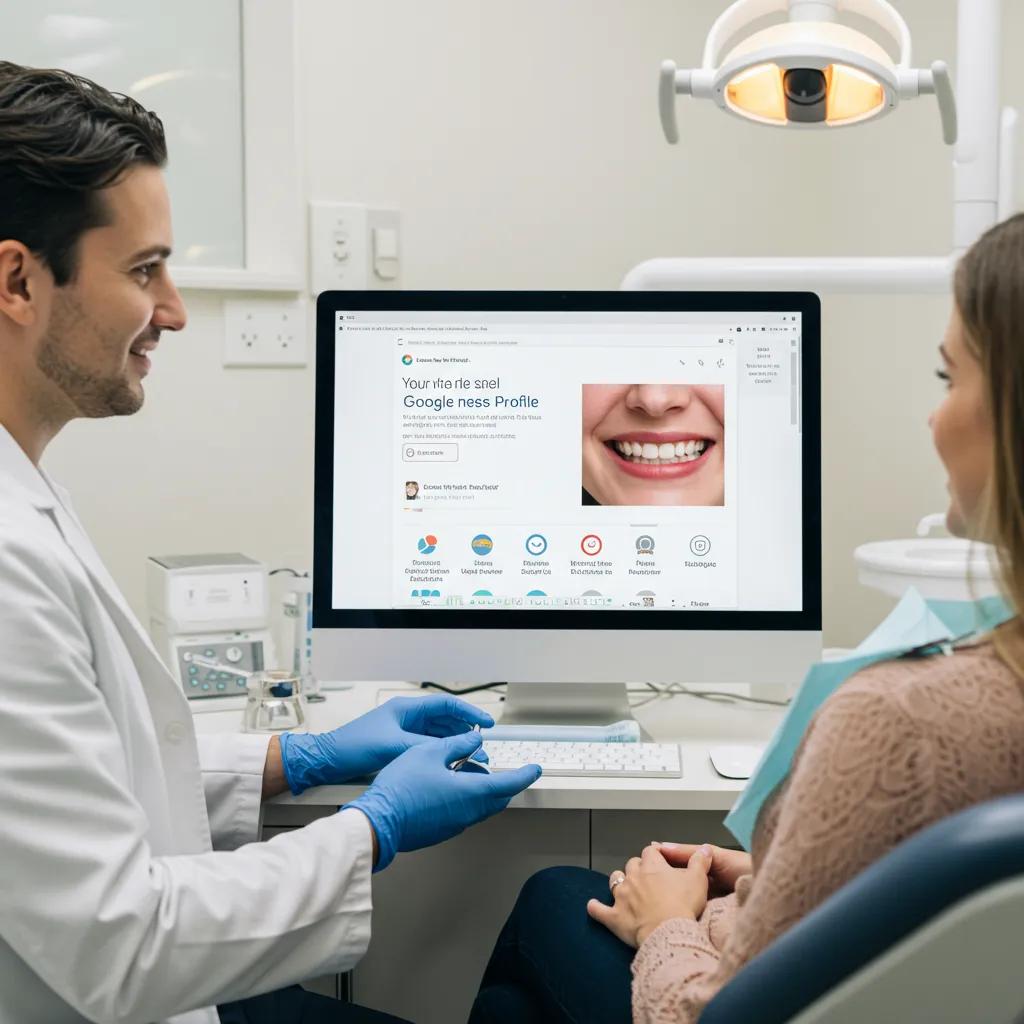
Local SEO strategies boost a dental clinic’s visibility by optimising presence across Google Business Profile, local directories, on-site location content and review signals so the clinic appears prominently for geo-targeted searches and map queries. The mechanism is straightforward: consistent NAP and rich GBP data increase trust, geo-modified service pages match local queries, and reviews plus citations signal local authority—together these actions increase local pack placement and map visibility. The practical benefit is more qualified local traffic and a higher rate of contact actions (calls, bookings, directions), which are the most valuable conversions for dental practices. Clinics should prioritise GBP completeness, targeted local landing pages and a steady review-generation process to see measurable improvements.
What follows are the key components that constitute an effective local SEO foundation for dental clinics.
What Are the Key Components of Local SEO for Dental Clinics?
Local SEO components include Google Business Profile optimisation, NAP consistency across citations, targeted local service pages, structured review management, and local schema markup to clarify business details to search engines. Each component affects a specific KPI: GBP completeness influences local pack visibility, NAP consistency supports trust signals, and local landing pages improve relevance for specific suburbs and services. Prioritise GBP verification and accurate service listings first, then address citations and localised content to compound visibility gains. Quick wins typically come from improving GBP photos, service descriptions and adding booking URLs where supported.
How to Optimise Your Google Business Profile for Dental Practices?
Optimising Google Business Profile (GBP) for dental practices involves completing every profile field, selecting accurate categories, adding service-level entries, uploading high-quality photos, and posting updates that reflect offers or community activity. The mechanism is that GBP fields and posts provide search engines with structured, local signals that feed the local pack algorithm and inform patient decision-making through visuals and service details. Recommended maintenance includes weekly photo updates, timely review responses and periodic service updates to reflect new treatments or payment options. A monthly GBP checklist helps clinics sustain visibility and ensures that searchers encounter up-to-date information before they call or book.
How Do Local Citations and Directory Listings Help Dental SEO?
Local citations and directory listings help dental SEO by reinforcing NAP consistency, increasing discoverability across local search platforms and providing additional referral sources that support local authority. The mechanism is that consistent listings reduce confusion for search engines and patients, while authoritative local directories provide contextual signals that improve trust. High-value directories in the Australian market and relevant dental directories (generic mention) should receive priority, with identical formatting for name, address and phone fields. Avoid common mistakes like inconsistent abbreviations, multiple phone numbers or outdated contact details to prevent dilution of local signals.
Which Geo-Targeted Keywords Should Dentists Use for Local SEO?
Geo-targeted keywords for dentists combine service intent with location modifiers and long-tail variants to capture patients at different stages of the decision journey, for example “emergency dentist [suburb]”, “dental implants near me”, and “kids dentist [suburb]”. The reason this works is that search engines match the localised phrase to nearby business signals and present the most relevant options in the local pack. Implement a mini workflow: seed keywords from patient FAQs and common services, expand with suburb and neighbourhood modifiers, then prioritise by search intent and conversion likelihood. Map primary geo-phrases to service landing pages and use secondary variations in blog posts and FAQ sections to capture conversational and voice queries.
| Local SEO Element | What It Affects | Expected Outcome / KPI |
|---|---|---|
| Google Business Profile completeness | Local pack eligibility and direct actions | Increased calls, bookings, direction requests |
| Local citations (NAP consistency) | Local authority and trust | Improved local rankings and map accuracy |
| Review volume & rating | Social proof and trust signals | Higher click-through and conversion rates |
| Geo-targeted service pages | Relevance for suburb searches | More qualified organic traffic and enquiries |
(Integration) For clinics that prefer outsourced support for GBP and citation management, Milkcan Marketing offers local SEO and Google Business Profile management services designed for small healthcare practices. Typical service components include GBP optimisation, citation building and geo-targeted keyword research to improve local visibility and patient acquisition. Clinics seeking hands-on help with setup and ongoing optimisation can consider a specialist audit to prioritise actions.
What On-Page SEO Techniques Should You Use to Optimise Your Dental Website?
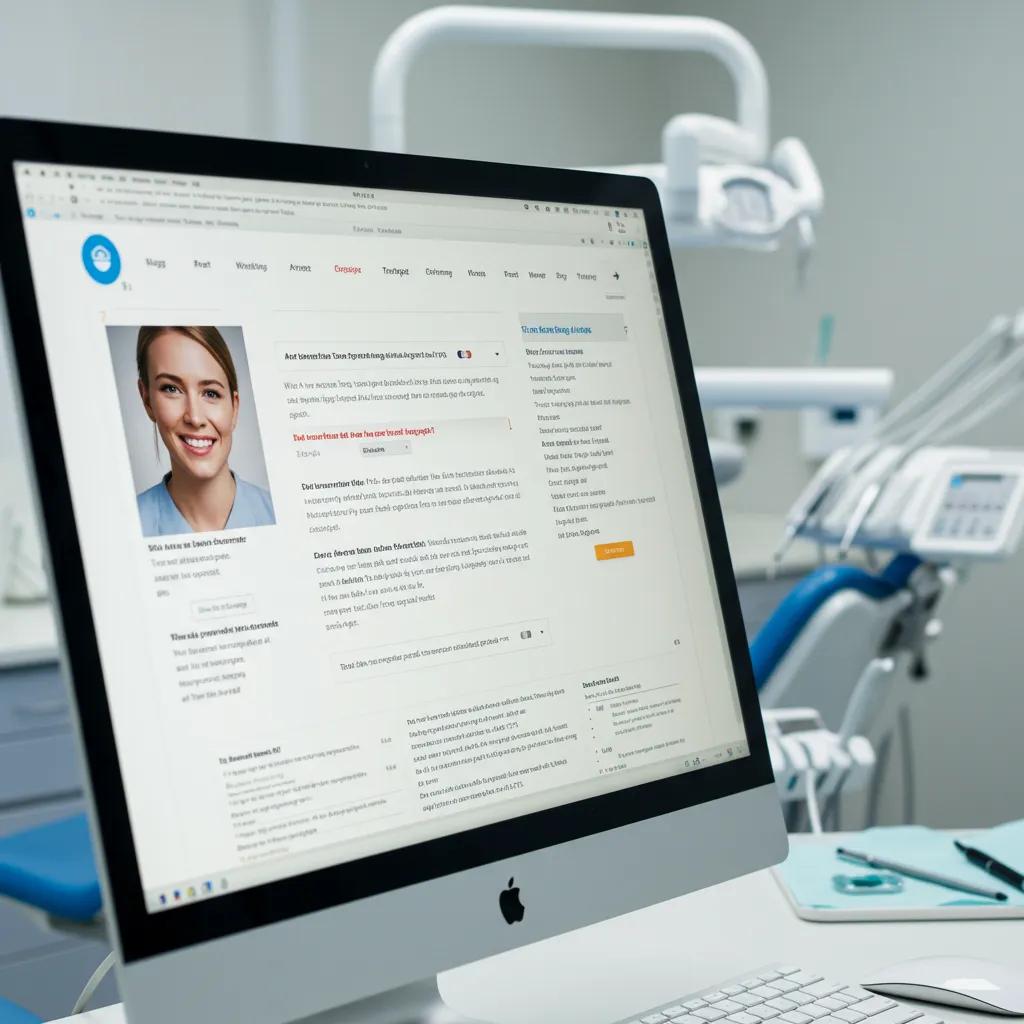
On-page SEO for dental websites improves relevance for target queries by optimising meta tags, headings, content structure, images and internal linking so pages better match patient intent and convert visitors into appointments. The mechanism is that clear on-page signals help search engines understand topical focus, while user-facing improvements (concise CTAs, trust badges, FAQ sections) increase engagement and click-throughs. Practically, service pages should follow a cluster model: a pillar service page supported by suburb-level landing pages and informative blog posts that answer patient questions. Implement schema for services and FAQs on key pages to improve SERP real estate and capture featured snippet opportunities.
How to Integrate Keywords Effectively in Dental Website Content?
Integrate keywords by matching page intent to searcher needs: use primary geo-service phrases in the title and H1, include secondary keywords in H2s and body copy, and address patient questions in FAQ sections using natural language. The mechanism is to prioritise intent alignment—transactional pages for booking-focused queries and informational pages for discovery queries—and to use semantic variations and LSI terms to avoid keyword stuffing. An example: a dental implants page might use “dental implants [suburb]” as the primary keyword, with secondary phrases like “implant cost”, “implant procedure recovery”, and conversational questions for FAQs. Microcopy, such as CTA text and appointment prompts, should contain action language and localized terms to increase conversions.
What Are Best Practices for Meta Titles and Descriptions for Dentists?
Meta titles and descriptions should include the service, location and a benefit-driven CTA to increase relevance and CTR, for example: “Dental Implants [Suburb] — Same-Day Consultations | Book Now.” The mechanism is that well-crafted metadata signals relevance to searchers and increases click-through likelihood from SERPs, which indirectly supports ranking. Use a template approach: [Service] + [Location] + [Differentiator/Benefit] within a 50–60 character title and 120–155 character description that contains a call to action. Test variations and monitor CTR in Google Search Console to refine messaging over time.
How Can Internal Linking Improve Your Dental Website’s SEO?
Internal linking improves SEO by distributing authority across service clusters, improving crawlability and guiding patients from informational content to conversion pages, such as appointment booking or contact forms. The mechanism is that strategic anchor text and contextual links help search engines understand the relationship between pages while increasing the likelihood visitors reach service or booking pages. Use a cluster-based template: pillar service pages link to suburb landing pages and related blog posts, while CTAs point to booking pages with descriptive anchors like “book an implant consultation”. Regularly audit internal links to remove orphan pages and ensure link equity flows to revenue-driving pages.
| On-Page Element | Best Practice | Example / Implementation |
|---|---|---|
| Meta title | Include service + location + benefit | “Emergency Dentist [Suburb] — 24/7 Calls” |
| H1 & H2 headings | Reflect primary and secondary intent | H1: “Dental Implants in [Suburb]” |
| Image alt text | Describe image and include keyword when relevant | “Before and after dental implant [suburb]” |
| Internal links | Use descriptive anchors to key services | “Book an implant consultation” |
What Technical SEO Essentials Are Critical for Dental Website Optimisation?
Technical SEO essentials include site speed optimisations, mobile-first design, HTTPS implementation and crawlability improvements to ensure search engines can access, index and rank key pages while providing a frictionless patient experience. The mechanism is that poor technical health undermines relevance and authority signals by increasing bounce rates, reducing crawl frequency and creating indexing issues, all of which harm rankings and patient conversion. Clinics should prioritise Core Web Vitals, responsive layouts, secure site configuration and a clear XML sitemap and robots directives to support indexing. These technical fixes often produce immediate UX benefits that translate into better engagement and higher conversions.
How Does Website Speed Affect Patient Experience and SEO Rankings?
Website speed affects patient experience and SEO because slower load times increase abandonment, lower engagement metrics and can directly reduce rankings through Core Web Vitals penalties; fast sites improve perceived trust and booking rates. To address speed, audit with PageSpeed Insights and prioritise image compression, browser caching, critical CSS, and reduced JavaScript payloads. Use a CDN for static assets and implement lazy-loading for below-the-fold images to improve LCP and cumulative layout shift. These actions both satisfy search engine thresholds and create a smoother booking journey for patients.
Why Is Mobile-Friendliness Vital for Dental Clinics’ Websites?
Mobile-friendliness is vital because most local searches for dental services occur on mobile devices and Google uses mobile-first indexing to evaluate pages, making responsive layouts and touch-friendly CTAs essential for conversions. Practical mobile UX improvements include large tappable buttons for booking, simplified navigation, and prominent contact actions above the fold. The mechanism is that a mobile-optimised site reduces friction for patients calling or booking directly from search results, increasing conversion rates from local queries. Test regularly using mobile-friendly tests and real-device checks to ensure booking forms and phone links function reliably.
How to Implement HTTPS and Website Security for Dental Practices?
Implement HTTPS by installing a valid TLS/SSL certificate, updating internal links to use secure protocols, and fixing mixed-content issues to avoid browser warnings that deter patients. The mechanism is that HTTPS protects patient data during form submissions and signals trust to both users and search engines, positively affecting rankings and conversions. Follow a migration checklist: obtain certificate, configure redirects, update canonical tags, and monitor Search Console for crawl errors. Maintain security best practices such as regular CMS updates and secure form handling to protect patient information and preserve online reputation.
| Technical Factor | Tool / Test | Recommended Threshold / Action |
|---|---|---|
| Largest Contentful Paint (LCP) | PageSpeed Insights | < 2.5s — optimise images & server response |
| Mobile responsiveness | Mobile-friendly test | All key pages pass on multiple devices |
| HTTPS & security | Browser security check / Search Console | Valid TLS, no mixed content |
| Crawlability | XML sitemap & robots.txt | Indexed pages match sitemap; fix 4xx errors |
How to Build Authority with Off-Page SEO and Reputation Management for Dentists?
Building authority for a dental practice requires a disciplined off-page strategy that combines high-quality backlinks, proactive review generation and social engagement to create trust signals that search engines and patients value. The mechanism is that backlinks from relevant local organisations and reputable health sites increase domain authority, while a positive review profile and active social presence demonstrate trust and patient satisfaction. A safe and ethical backlink strategy emphasises local partnerships, community sponsorships and content assets rather than spammy tactics, ensuring compliance with healthcare advertising rules. These off-page activities typically improve referral traffic and local rankings over time.
What Are Effective Strategies for Building High-Quality Backlinks?
Effective backlink strategies for dental clinics include creating locally valuable content (community oral health guides), partnering with local health organisations, sponsoring community events and submitting to reputable local directories that accept dental practices. The mechanism is that relevant, editorial backlinks provide contextual authority signals that search engines use to evaluate expertise and trustworthiness in local queries. Prioritise outreach to local media, dental associations and educational partners for backlinks that also drive referral visits. A simple outreach cadence—identify targets, propose a content collaboration, and follow up—creates a predictable pipeline for link acquisition.
How Do Patient Reviews Influence Your Dental Practice’s Online Trust?
Patient reviews influence online trust by providing social proof that affects both user choice and local ranking algorithms; higher volumes of recent positive reviews often correlate with better local pack placement and higher conversion rates. The mechanism is that reviews are interpreted as real-world endorsements, increasing click-through and trust for prospective patients browsing listings or service pages. Implement a review management process: request reviews after appointments, respond promptly and professionally to both positive and negative feedback, and track sentiment over time. Use templated, personalised response formats to maintain consistency and demonstrate active patient care, which also feeds into reputation management metrics.
How Can Social Media Engagement Support Dental Marketing Strategies?
Social media engagement supports dental marketing by amplifying educational content, showcasing patient outcomes (with consent), and reinforcing community presence—actions that indirectly support SEO through increased brand searches and referral traffic. The mechanism is that social platforms expand content reach, attracting local partners and referral links while driving direct visits to service and booking pages. Content ideas include oral health tips, staff introductions and local community posts, cross-posted to the website as blog content to capture search value. Maintain consistent posting cadence and repurpose high-performing posts into more in-depth web content for SEO benefits.
Within reputation management, Milkcan Marketing’s reputation management and backlink services can help clinics scale review generation, implement response strategies and acquire high-quality local backlinks; practices can request an audit to identify priority opportunities and expected performance improvements.
What Advanced SEO Techniques Can Dentists Use to Stay Competitive?
Advanced SEO techniques for dental clinics include implementing structured data (JSON-LD) for LocalBusiness, Service and FAQ, optimising for voice search with conversational content, and using AI tools to accelerate keyword discovery and content briefs while ensuring human clinical review. The mechanism is that schema clarifies entity relationships for search engines enabling rich results, voice-optimised FAQs capture question-based queries, and AI accelerates research and content scaling without replacing editorial oversight. Combined, these techniques increase the chance of featured snippets, improve SERP real estate and enhance discovery across devices. Clinics should prioritise schema for services and reviews to maximise visibility in 2025’s search environment.
How to Use Structured Data and Schema Markup for Dental Websites?
Structured data helps search engines understand business type, offered services and review ratings; implement JSON-LD for LocalBusiness, Service, FAQPage and Review to enable rich snippets and knowledge graph signals. The mechanism is that schema maps entities and relationships—clinic → offers → dental implants—which improves indexing and the likelihood of enhanced SERP features. Validate JSON-LD using structured data testing tools and monitor Search Console for errors, updating markup when services or opening details change. Correctly implemented schema can result in enhanced listings that display services, operating hours snippets (if available), and review stars, increasing CTR and trust.
What Are Best Practices for Voice Search Optimisation in Dental SEO?
Voice search optimisation focuses on conversational queries and question-based content; create FAQ sections using natural language, optimise for long-tail question phrases, and ensure local phrases like “near me” and suburb names are present in answers. The mechanism is that voice assistants prioritise concise, authoritative answers to direct questions, so structuring content as clear Q&A increases the chance of being returned for voice results. Include short, direct answers (28–40 words) at the top of FAQ responses followed by expanded explanations to target both voice and text SERP features. Monitor emerging voice query patterns and adapt content to common patient questions about procedures, costs and booking.
How Can AI Tools Enhance Dental Marketing and SEO Performance?
AI tools enhance dental SEO by streamlining keyword discovery, generating initial content briefs, performing topic clustering and identifying schema gaps, while human experts ensure clinical accuracy, tone and compliance. The mechanism is that AI accelerates repetitive research tasks and surface-level drafting, enabling teams to produce more content and iterate quickly, but human review is essential to avoid inaccuracies and maintain professional standards. Recommended workflows use AI for scoping and outlining, then apply clinician or marketer edits before publishing. Ethical checks, citation verification and clarity on medical accuracy should be mandatory steps in any AI-augmented workflow.
For dental practices seeking help with advanced tactics like schema implementation, content marketing and AI-enhanced workflows, Milkcan Marketing offers advanced SEO support including structured data and AI-enhanced SEO tools to assist clinics that want technical implementation and ongoing optimisation services.
How Do You Measure and Monitor the Success of Your Dental SEO Efforts?
Measuring dental SEO success requires tracking a blend of local and technical KPIs—local pack positions, Google Business Profile insights, organic traffic and conversion metrics—to tie search visibility to patient acquisition outcomes. The mechanism is that these KPIs reveal where visibility is improving and whether that visibility translates into bookings, allowing clinics to prioritise tasks that increase revenue. Establish a reporting cadence (monthly for local KPIs, quarterly for technical audits) and use a dashboard that combines Search Console, GBP insights and analytics to map clicks to enquiries. Regular audits and trend analysis provide the feedback loop necessary to refine keyword targeting and optimisation efforts.
What Key Metrics Indicate Improved Dentist Google Ranking and Patient Acquisition?
Key metrics include local pack rankings for priority geo-phrases, GBP actions (calls, direction requests, website clicks), organic sessions to service pages, and conversion rate from organic visitors to bookings or contact form submissions. The reason these matter is that higher local rankings increase visibility while GBP actions and conversion rates show whether that visibility produces patient enquiries. Benchmarks vary by market, but clinics should focus on trends—month-on-month improvements in local pack position and steady or improving conversion rates indicate positive impact. Tie booking system or phone call tracking to web analytics to attribute enquiries accurately to SEO efforts.
How to Use Google Business Profile Insights to Track Local SEO Impact?
Use GBP insights to monitor how patients find the profile (direct vs discovery search), which queries lead to views, and which actions they take (call, website visit, directions). The mechanism is that GBP data reveals search behaviour specific to the listing that website analytics cannot capture, such as discovery queries and map views. Adjust local content and GBP categories based on query data, update services that show high discovery counts and prioritise responses to review types that affect decision-making. Export GBP data monthly to look for patterns and guide local content strategy and promotion.
Which Tools Help Monitor SEO Performance and Reputation for Dental Practices?
A practical monitoring stack includes Google Search Console and GA4 for indexing and traffic, Google Business Profile insights for local actions, and local monitoring platforms for citation and review tracking to manage reputation and local rankings. The mechanism is that each tool provides different but complementary signals: GSC confirms indexing and queries, GA4 ties user behaviour to conversions, GBP shows local interaction data, and specialised local tools track citation consistency and ranking in the local pack. Suggested monitoring cadence is weekly checks for reviews and GBP actions, monthly for traffic and keyword trends, and quarterly for comprehensive technical and backlink audits.
This measurement framework gives clinics the evidence needed to iterate on SEO tactics and demonstrate ROI. Milkcan Marketing offers tailored Local SEO audits and dental marketing services to help Australian dental practices interpret these metrics and prioritise improvements through a structured audit and optimisation plan.