Dental Content Optimisation Strategies for SEO Success in Australia
Dental content optimisation improves local visibility and converts searchers into booked patients by aligning content, technical signals, and local relevance with how search engines and patients look for care. In this guide, you will learn practical dental SEO strategies, content marketing approaches for dentists, and local optimisation steps that turn web traffic into appointments. The article defines dental SEO, explains its role in patient acquisition, and outlines the core ranking factors dentists must prioritise, including Google Business Profile signals, structured data, and mobile UX. You will also get a step-by-step content marketing plan, local keyword and GBP checklists, a technical SEO audit framework, guidance on building authority and reputation, and measurement tactics for ongoing improvement. Throughout, the focus is on actionable steps—schema snippets, editorial templates, local landing page examples, and KPI dashboards—so clinics and marketers in Australia can implement proven tactics for patient acquisition and sustained organic growth.
What Is Dental SEO and Why Is It Essential for Your Practice?
Dental SEO is the practice of optimising a dental clinic’s online content and technical presence so search engines display the practice for relevant patient queries, improving visibility and bookings. It works by matching search intent with optimised pages, enhancing local signals like Google Business Profile accuracy, and ensuring technical readiness so pages load and index correctly; the result is more qualified local traffic and higher conversion rates. Prioritising dental SEO reduces dependency on paid channels by capturing patients actively searching for services such as implants, cosmetic dentistry, and emergency care. Below we outline how dental SEO feeds patient acquisition, the ranking factors that matter, and how intent mapping shapes content strategy.
Dental SEO increases qualified visibility which feeds a simple funnel: impressions in local packs and organic results lead to clicks, which combined with optimised service pages and GBP entries convert into calls and bookings. Tracking impressions, clicks, phone calls, and appointment bookings helps clinics measure the funnel and identify where to optimise next.
How Does Dental SEO Improve Patient Acquisition?
Dental SEO improves patient acquisition by increasing presence for local queries, moving potential patients through visibility, engagement, and conversion stages. A properly optimised Google Business Profile and service pages capture local pack placements and organic snippets that attract high-intent clicks; once visitors arrive, clear CTAs and simplified booking flows convert traffic into appointments. For example, a suburb-specific implant page that answers procedural questions, cost expectations, and recovery timelines often ranks for long-tail queries and drives form submissions or phone calls. Measure success with metrics such as local pack impressions, GBP clicks-to-call, organic booking conversions, and assisted conversions from content pages so you can prioritise pages that deliver the most bookings.
What Are the Key SEO Ranking Factors for Dentists?
Key ranking factors for dental sites centre on local signals, content relevance, and technical health: accurate GBP information, consistent citations, quality patient-focused content, site speed, and structured data all combine to influence rankings. Local relevance comes from category choices, NAP consistency across directories, and neighbourhood signals within content; content relevance requires addressing patient questions with clear headings and schema; technical health ensures pages load quickly and index properly. Practical tip: prioritise GBP accuracy and review growth first, then fix Core Web Vitals, then expand content clusters for high-conversion services.
How Does Search Intent Influence Dental Content?
Search intent shapes which content formats to publish: informational queries favour blog posts and FAQs, commercial intent benefits from service pages and pricing guides, while transactional/local intent needs booking-enabled location pages. Map seed keywords to intent buckets—e.g., “what to expect after wisdom tooth extraction” (informational) versus “dental implants near me” (local/transactional)—and design the page experience to match: FAQs and explainers for information, strong CTAs and booking widgets for transactional queries. Intent mapping improves relevance signals and reduces bounce by giving searchers exactly what they’re looking for, which in turn supports higher rankings and conversion rates.
For practices that want expert support implementing these priorities, Milkcan Marketing positions itself as a partner for dental practices focused on lead generation and local visibility. Milkcan Marketing offers tailored services such as Content Marketing, Local SEO, and Google Business Profile Optimisation designed to align clinic goals with local search behaviour and improve enquiry volumes. This brief contextual note highlights service areas without replacing the practical steps above; clinics can use the tactics here and engage specialists where resourcing or technical capacity is limited.
How to Develop an Effective Content Marketing Strategy for Dental Practices
An effective content marketing strategy for dental practices organises topics, formats, and distribution so content addresses patient needs, builds trust, and supports booking conversions. The strategy works by auditing existing content, identifying patient personas and intent clusters, then creating an editorial calendar that balances service pages, local landing pages, and informative blog posts; the result is a connected content ecosystem that drives organic traffic and nurtures patients. Start with a content audit to identify gaps, then map pillar pages and clusters that support high-value services and local queries. Distribution should include Google Business Profile posts, email follow-ups, and video placement to amplify reach.
Below is a step-by-step plan you can use as a working framework:
- Conduct a content audit and map pages to patient personas and search intent.
- Build pillar pages for core services and create local landing pages per suburb or catchment area.
- Produce supporting blog content and FAQ-rich pages to capture long-tail queries.
- Optimise each page with schema, internal links to service pages, and clear CTAs to book or call.
- Promote content via GBP posts, email newsletters, and short videos to improve engagement metrics.
This numbered plan gives a clear sequence to implement and is designed to be used as the basis of an editorial calendar that balances authority-building content and conversion-focused pages.
What Types of Content Engage Dental Patients Best?
Different content types serve specific roles in the patient journey and should be used strategically rather than randomly. Blog posts educate and capture long-tail intent, service landing pages convert by addressing treatment specifics, videos shorten trust-building time, case studies demonstrate results, and FAQs address objections. Use blog posts for how-to and recovery topics, short videos for clinician introductions and procedure explainers, and case studies or testimonials to demonstrate outcomes. A consistent pattern—educate, reassure, convert—helps patients progress from research to booking while improving topical authority in search engines.
| Content Type | Best Use / Purpose | Frequency / Optimisation Tip |
|---|---|---|
| Blog post | Capture long-tail informational queries | Publish biweekly to monthly; use long-tail keywords and FAQs |
| Service landing page | Convert commercial/transactional intent | Keep focused CTAs; include structured data and booking options |
| Video | Build trust and increase time-on-page | Short 30–90s clips; optimise titles and include transcripts |
| Case study/testimonial | Demonstrate outcomes and E-A-T | Publish as 1–2 per quarter; use before/after details and consent |
How to Optimise Dental Blog Posts for SEO Success?
Optimising dental blog posts begins with intent-driven keyword selection and ends with schema and internal linking that supports service pages. Use a content template: clear descriptive title with target keyword, concise introduction answering the query, H2/H3 structure with subtopics addressing related questions, internal links to relevant service pages, and an FAQ block with FAQ schema. Include short videos or images with descriptive alt text and captions to increase engagement and optimise meta descriptions and URL slugs for click-throughs. Finalise with a clear CTA—booking link or phone prompt—and monitor performance to refresh content every 12–18 months.
Why Are Patient Testimonials and Case Studies Important?
Patient testimonials and case studies increase trust by demonstrating real outcomes and clinical competence, which supports both conversion and E-A-T signals for search engines. Collect testimonials via structured workflows—post-appointment prompts and simple templates—and present them on service pages with review schema to surface in rich results. Case studies should describe the patient’s problem, treatment process, and outcome while preserving privacy and consent; these narratives reduce uncertainty for prospective patients and increase conversion rates when linked directly from service landing pages. Surface top reviews on location pages to reinforce local relevance.
How Can Video Marketing Boost Dental Patient Engagement?

Video marketing increases engagement by presenting complex procedures and clinician personalities in an accessible format, which shortens the trust-building cycle. Produce short videos that introduce the clinic, explain common procedures, and share patient stories; optimise video titles, descriptions, and transcripts so search engines index the content and so videos surface in both video and web results. Embed videos on service pages and include closed captions for accessibility and SEO gains. Regularly repurpose short clips for GBP posts and social channels to increase visibility and referral traffic back to the site.
For clinics seeking implementation help, Milkcan Marketing’s Content Marketing service focuses on building editorial calendars, producing patient-centred content, and aligning video assets with local SEO goals. This short service highlight explains how partnering with a specialist can accelerate content production and improve lead generation without replacing in-house clinical content oversight.
How to Implement Local SEO for Dentists to Attract Nearby Patients
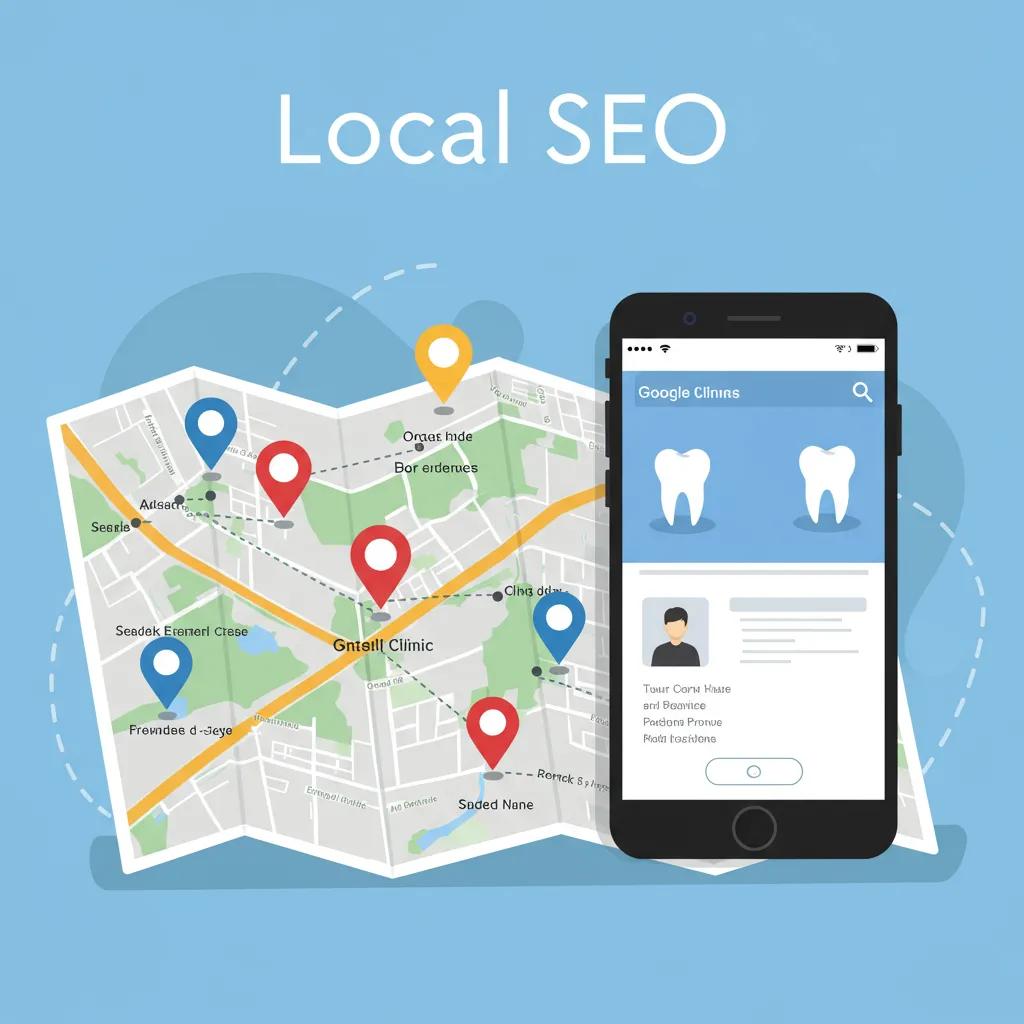
Local SEO for dentists centres on optimising your Google Business Profile, generating local reviews, and creating suburb-specific landing pages to capture nearby patients. The mechanism is straightforward: improve local signals and content relevance so search engines match your clinic to local queries, resulting in higher local pack placements and phone calls. Start with a complete GBP, then expand into location-specific content and citation management to strengthen local authority. The checklist below summarises practical GBP and local actions that clinics can implement immediately.
A practical checklist for local SEO essentials:
- Ensure NAP (name, address, phone) consistency across listings and your website.
- Select the most accurate GBP categories and list services with clear descriptions.
- Add high-quality photos and regular posts to the GBP profile to signal activity.
Keep listings maintained and review changes monthly to respond to local search trends and booking patterns; the next subsections break each area down with direct optimisation steps.
What Are the Best Practices for Google Business Profile Optimisation?
Optimising your Google Business Profile involves completing every relevant field, selecting precise categories, and enabling booking features and messaging where available. Use service descriptions that include suburb names and common treatment terms, upload quality photos of the clinic and team, and post updates or offers regularly to signal activity. Encourage patients to leave reviews and respond professionally to all feedback; include booking links and structured service lists for better conversion from GBP viewers. Residual optimisation includes attributes (e.g., accepts insurance, female practitioner) where applicable to help match patient queries.
How to Conduct Local Keyword Research for Dental Practices?
Local keyword research combines search console data, third-party tools, and GBP insights to prioritise terms that convert within your catchment. Seed keywords pair service + suburb (for example: dental implants + suburb) and generate long-tail variants that reflect common patient questions about cost, recovery, and timeframes. Prioritise keywords using a matrix of search volume, conversion intent, and competition, focusing on low-competition, high-intent phrases for near-term wins. Create a content plan that maps high-priority keywords to specific landing pages and blog posts to build topical depth and local relevance.
| GBP listing | Categories, services, photos | Complete fields, add 10+ quality photos, update services |
|---|---|---|
| Local citations | NAP consistency | Audit major directories and correct mismatches |
| Reviews | Volume and response rate | Implement review requests post-visit, respond to all reviews |
| Local landing pages | Suburb signals and local content | Create unique pages per suburb with local FAQs and testimonials |
How Do Online Reviews Impact Local SEO and Patient Trust?
Online reviews are both a ranking signal for local packs and a primary trust cue for patients evaluating clinics; higher ratings and consistent review growth improve click-through rates and conversion. Implement a simple review-generation workflow—timed prompts after appointments with clear instructions—and train staff on requesting reviews ethically. Respond to reviews promptly with templates for positive and negative feedback to demonstrate responsiveness and care. Use review schema to surface aggregated ratings on service pages and highlight exemplary reviews on landing pages to support conversions.
What Is Location-Specific Content and How to Create It?
Location-specific content uses local context to answer the queries of nearby patients and must be unique per suburb to avoid thin duplication. Create local landing pages that include suburb names, local landmarks, case studies from nearby patients, and tailored FAQs that reflect local needs. Use geo-modifiers in headings and meta elements, include local photos, and map community involvement to strengthen local signals. Avoid duplicating generic service copy across locations; instead, localise content with unique patient stories, staff mentions, and nearby references to improve relevance and rankings.
For practices needing hands-on GBP management and reputation growth work, Milkcan Marketing offers Google Business Profile Optimisation and Reputation Management as part of a local SEO service mix to help clinics implement these steps efficiently while tracking impact on enquiries and bookings.
What Technical SEO Optimisations Are Crucial for Dental Websites?
Technical SEO for dental websites ensures search engines can crawl and index pages properly, that pages load quickly on mobile devices, and that structured data is present to support rich results; these technical improvements directly impact visibility and conversion. Core areas include site speed, mobile-friendliness, clear site architecture, and implementing schema types relevant to clinics and services. Prioritise fixes that improve user pathways to booking—fast pages, obvious CTAs, and error-free indexability—then expand into structured data and canonicalisation to avoid duplicate content issues.
The EAV table below summarises technical checks and remediation steps clinics can use during an audit.
| Page speed | LCP, FID, CLS | Use PageSpeed Insights; optimise images, enable caching |
|---|---|---|
| Mobile friendliness | Viewport, touch targets | Test with Lighthouse; simplify mobile layouts |
| Structured data | LocalBusiness, Service, FAQ | Add JSON-LD snippets for clinic and services; validate |
| Crawlability | Robots, sitemap, redirects | Use Screaming Frog; fix broken links and proper redirects |
How Does Website Speed and Mobile-Friendliness Affect SEO?
Website speed and mobile-friendliness directly influence rankings and conversions because search engines prioritise fast, mobile-optimised experiences and users abandon slow pages. Core Web Vitals—Largest Contentful Paint, Interaction to Next Paint, and Cumulative Layout Shift—provide measurable benchmarks; clinics should aim for fast LCP times, minimal layout shifts, and responsive interaction times. Practical improvements include compressing and properly sizing images, implementing browser caching, and optimising server response time. Mobile-first design ensures click-to-call, visible booking buttons, and simple forms reduce friction and increase conversion from local searchers.
What Are the Best Site Structure and Navigation Practices for Dentists?
An effective site structure organises content into clear categories for services, locations, and resources so patients find relevant pages quickly and link equity flows to conversion pages. Use top-level service pages (e.g., general dentistry, implants, cosmetic dentistry), create location subfolders for suburbs, and maintain an organised blog with topical clusters that link to pillar pages. Ensure booking and contact options are accessible on all pages, and internal linking prioritises service pages from high-authority resource posts. Simplify navigation to reduce clicks-to-book and use breadcrumb trails for both users and search engines.
How to Implement Structured Data Markup for Dental Practices?
Structured data uses schema types—LocalBusiness, Dentist, Service, FAQ, and Review—to provide search engines with explicit context about your clinic and services, improving chances of rich results. Implement JSON-LD in the page head or site template, include key properties (name, address, service offered, reviewAggregateRating), and validate with schema validators. Use FAQ schema for common patient questions and Service schema for treatment pages; test changes in Google’s rich results tester and monitor coverage in search console. Correct schema reduces ambiguity and helps generative systems extract concise answers.
How to Conduct a Technical SEO Audit for Your Dental Website?
A technical SEO audit triages issues by severity and impact so clinics can prioritise high-value fixes such as broken booking links, indexing problems, and speed bottlenecks. Use tools like Google Search Console, Screaming Frog, and PageSpeed Insights to collect data, then categorise issues as critical (booking or indexability failures), medium (speed improvements, schema errors), or low (minor SEO copy issues). Create a remediation backlog, assign owners, and measure changes with pre/post metrics for conversions and page performance. This triage approach ensures technical work directly supports booking outcomes.
How to Build Authority and Trust Online Through Dental Content
Building authority and trust online relies on demonstrating clinical expertise, publishing transparent credentials, and creating linkable local resources that attract natural backlinks and references. The mechanism combines E-A-T practices—author bios, citations, and clinical references—with outreach to local partners and creating high-value assets like procedure guides and community health pages. These efforts increase topical authority, improve ranking potential for competitive service keywords, and support reputation signals that convert visitors into patients.
What Are Effective Link Building Strategies for Dental Websites?
Effective, low-risk link building for dentists focuses on local partnerships, sponsorships, guest contributions to reputable health publications, and creating in-depth guides that local media reference. Host educational events, contribute expert commentary to community outlets, and develop downloadable resources such as procedure checklists or post-op care guides that local sites link to. Avoid spammy tactics; prioritise relevance and editorial value. Outreach templates should personalise the ask, highlight mutual community benefits, and provide clear, linkable assets.
How to Apply E-A-T Guidelines to Dental Content?
Applying E-A-T means showing clinician credentials, summarising qualifications, and linking to authoritative clinical sources where appropriate; include author bios on clinical pages and ensure content cites peer-reviewed sources for technical claims. Display organisation information and editorial policies to increase transparency, and use structured data for author and organisation to signal authority to search engines. These measures reduce friction for patients evaluating clinicians and strengthen content signals in competitive search contexts.
How Does Online Reputation Management Support SEO Success?
Online reputation management supports SEO by increasing review volume and quality, which improves local rankings and click-throughs from search results, while positive sentiment increases conversion once users view your listing or website. Implement review-request workflows, publish selected testimonials on service pages with review schema, and maintain standard response templates for positive and negative feedback to show responsiveness. In crises, deploy escalation templates and transparent updates; integrating reviews into site content reinforces social proof and relevance.
How to Measure and Monitor the Success of Your Dental SEO Content
Measuring dental SEO success requires tracking a mix of visibility, engagement, and conversion metrics and reviewing them regularly to prioritise content and technical work that drives bookings. Use KPIs aligned to business goals—organic traffic and local impressions for visibility, engagement metrics for content quality, and booking-related conversions for revenue impact. Combine tools to create a single dashboard that tracks trends, alerts for dips, and supports data-driven content updates on a regular cadence.
What Key Performance Indicators Should Dentists Track?
Track a balanced set of KPIs that reflect discovery and conversion: organic sessions and local pack impressions for visibility, GBP clicks-to-call and direction requests for local intent, page-level conversions (form submissions, booking completions) for revenue impact, and engagement metrics such as time-on-page and bounce rate for content health. Set realistic benchmarks and use trend analysis to identify where to optimise—if impressions rise but conversions fall, focus on page experience and CTAs. Use KPI alerts to trigger content refreshes and technical checks.
- Organic traffic and keyword ranking trends to measure visibility.
- GBP impressions and clicks to assess local presence.
- Conversions: calls, bookings, and form submissions to quantify enquiries.
Which Tools Help Monitor Dental SEO and Content Performance?
A mix of free and paid tools gives comprehensive monitoring: Google Search Console and GA4 for core search and behaviour metrics, rank trackers for keyword trends, and local SEO tools for GBP and citation monitoring. Use site crawlers to detect technical issues and schema validators to test structured data; local reputation platforms help track review volume and sentiment. Build a lightweight dashboard that surfaces the most critical KPIs for your practice and schedule monthly reviews to act on insights.
How Often Should You Audit and Update Dental Content for SEO?
Establish an audit cadence that balances freshness with resources: review pillar and location pages every 6–12 months, update blog posts and FAQs every 12–18 months, and perform technical audits quarterly. Use performance triggers—significant ranking drops or content becoming outdated due to guideline changes—to accelerate reviews. Document updates and measure post-update impact to refine your content calendar and keep high-value pages performing well.
What Are Emerging Trends in Dental SEO and Content Marketing for 2025?
Emerging trends for 2025 emphasise Generative Engine Optimisation (GEO), mobile-first experiences, and increased weight on video and visual content to satisfy both searcher expectations and AI-driven answer systems. GEO demands concise, well-structured answers and clear entity signals so generative systems can surface accurate responses; mobile dominance requires frictionless click-to-call and booking flows; video and structured visuals increase engagement and time-on-page, which supports ranking. Practices that adopt structured data, concise FAQ answers, and short-form video will be better placed for AI-driven results.
How Is Generative Engine Optimisation Changing Dental Content?
Generative Engine Optimisation focuses on making content clear, factual, and formatted so AI systems can extract concise, authoritative answers for users; this means prioritising short answer boxes, structured lists, and explicit entity definitions. Use FAQ blocks, clear step lists, and citation of authoritative sources to help AI models generate accurate responses. Optimise metadata and schema to reduce ambiguity and test how content appears in rich snippets and answer boxes; concise, well-structured content wins in GEO environments.
Why Is Mobile Search Dominance Critical for Dental Practices?
Mobile search dominance matters because most local queries and appointment-driven searches originate on mobile devices and often lead directly to calls or bookings. Ensure click-to-call, easy-to-use booking widgets, and simplified forms that minimise typing; mobile-first page speed improvements also reduce abandonment. Design mobile layouts that prioritise service pages and local landing pages so users can convert with minimal friction from search to booking.
How Can Video and Visual Content Enhance Dental SEO?
Video and visual content increase on-page engagement and provide alternative entry points via video search and social platforms; optimised thumbnails, titles, and accurate transcripts make video content discoverable. Embed short videos on service pages to increase time-on-page and conversion, use descriptive alt text and structured captions for images, and create infographics that summarise procedural steps for linkable assets. Visuals that answer patient questions clearly tend to improve both engagement metrics and shareability.
For clinics ready to move from planning to implementation, Milkcan Marketing can provide an audit and hands-on support across Dental Marketing Services to prioritise quick wins and create a roadmap for sustained organic growth. A complementary audit from a specialist can identify the highest-impact local and technical fixes and outline an actionable content schedule to increase bookings and visibility.
Content Marketing Strategies for Dental Providers: Driving Growth in the Digital Era
The dental sector represents one of the most appealing segments within the healthcare industry, having demonstrated consistent growth in recent years. Existing research on healthcare marketing activities indicates that internet marketing has become a more significant strategy than in the preceding decade. Furthermore, content marketing can serve as an effective strategy for dental providers.
Content marketing in dentist’s websites. An empirical comparative study between Romania and the UK, A Constantinescu-Dobra, 2014
The effectiveness of content marketing in the dental industry is further underscored by research highlighting its strategic importance in today’s digital landscape.
An Analysis of Digital Marketing in Dental Healthcare: The Efficacy of Content
The Content Marketing Institute posits that effective content marketing hinges on comprehending audience needs and providing pertinent solutions.
Digital marketing analysis in dental healthcare: The role of digital marketing in promoting dental health in the community, 2023