Local Dental SEO: Proven Strategies to Attract Patients
Local Dental SEO is the targeted practice of optimising a dental clinic’s online presence so it appears for local searches, maps results and patient enquiries; it works by aligning Google Business Profile signals, on-page local relevance and off-page citations to attract nearby patients. This guide explains the core mechanisms—GBP optimisation, location-based content, citation management and reputation signals—and shows how those mechanisms convert visibility into booked appointments and measurable ROI. Many dental practices struggle to appear in the local pack or to convert website visitors into calls because they lack consistent NAP data, optimised service pages and an active review strategy; this article promises practical steps to fix those gaps. You will get a step-by-step GBP HowTo, on-page templates for service and location pages, an off-page citation and backlink playbook, plus measurement and reputation workflows that suit Australian dental clinics in the current 2025 local-search landscape. The following H2 sections cover definition and benefits, GBP claiming and optimisation, on-page best practice, authority-building through citations and links, content marketing ideas that convert, measurement and KPIs, and reputation management tactics for long-term trust. Throughout, keywords like Local SEO for dentists, optimise dental GBP and Google Maps ranking for dentists are used to ensure actionable, search-optimised guidance for practice managers and marketing owners.
What Is Local Dental SEO and Why Is It Essential for Your Practice?
Local Dental SEO is a subset of Local SEO that focuses on improving a dental clinic’s visibility for geographically targeted patient searches by optimising Google Business Profile, localised website content and citation signals. It operates because search engines use location intent, proximity and relevance signals—such as matching service pages, GBP categories and local citations—to rank clinics in the local pack and maps. The chief benefit is higher-quality local patient enquiries driven by searches like “dentist near me” or treatment-specific queries, which tend to have strong conversion intent and measurable ROI for clinics. Understanding this definition clarifies why investing in local ranking factors directly impacts appointment volume and practice growth, especially for services with urgent or elective demand. Clear local optimisation reduces spend on broader paid channels by capturing intent-driven traffic and converting it via optimised GBP actions and high-converting service pages.
How Does Local SEO Improve Dental Clinic Visibility?
Local SEO improves visibility by aligning three groups of signals: Google Business Profile completeness, on-page local relevance and consistent external citations that validate NAP data and authority. When GBP attributes such as services, photos and hours match a clinic’s website content, search engines more confidently present the clinic in the local pack for relevant queries. For example, a clinic that optimises a “dental implants” service page and adds matching GBP service entries is more likely to appear for treatment-specific searches than one with generic content. This mechanism—signal alignment—drives improved local pack rankings and higher click-to-call or direction actions, which directly generate patient queries and appointments.
What Are the Key Benefits of Local SEO for Dentists?
Local SEO delivers a concentrated set of benefits that directly affect patient acquisition and clinic reputation, and each benefit maps to measurable KPIs such as GBP actions and organic conversions.
- Increased Local Visibility: Higher ranking in the local pack and Google Maps increases impressions and local traffic.
- Higher-Quality Leads: Targeted local intent leads to patients searching for specific treatments or same-day care.
- Better ROI: Organic patient acquisition typically costs less per booking than broad paid channels.
These benefits combine to produce better utilisation of existing marketing budgets and to improve the lifetime value of patients acquired through organic local search. Tracking these outcomes ensures the strategy drives both visibility and revenue.
How Do Patients Search for Dentists Online?
Patients typically use short “near me” queries, treatment-specific searches and review-driven selection, often starting on mobile during urgent or convenience-driven moments; this behaviour explains the need for GBP accuracy and mobile-friendly pages. Data shows a high share of local-intent queries originate from mobile devices and a significant proportion include immediate intent modifiers like “open now”, “emergency dentist” or treatment terms such as “Invisalign near me”. Understanding these query patterns helps clinics prioritise service pages, GBP posts and Q&A content that match user intent. Mapping actual patient journeys—from search to GBP view to call or booking—allows clinics to optimise content and conversion points that matter most.
How to Optimise Your Google Business Profile for Dentists?
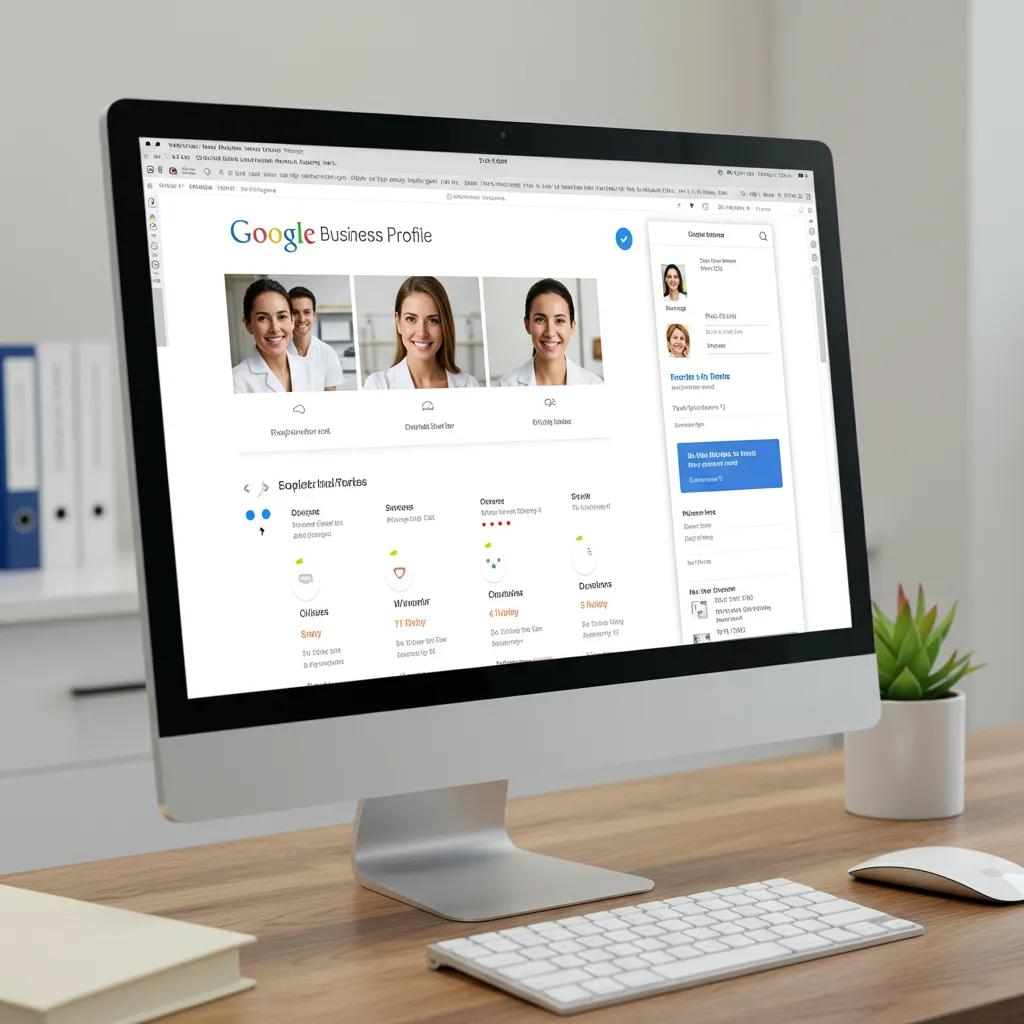
Optimising your Google Business Profile starts with claiming and verifying ownership, then configuring categories, services, photos and attributes to signal relevance for local dental searches; this works because GBP feeds structured local data directly to Google’s local-ranking systems. A fully optimised GBP increases the chance of appearing in the local pack, drives more clicks-to-call and provides conversion-focused features like booking links and photos that reduce friction. The steps below convert the definition into action and create a consistent GBP baseline from which citation and review strategies can scale. Proper GBP management also reduces the risk of spurious edits and inconsistent NAP data across directories, which can dilute local relevance.
What Are the Steps to Claim and Verify Your Google Business Profile?
- Claim or request ownership of the profile using the account that will manage GBP actions and ensure you have owner-level permissions.
- Complete the verification process—postcard, phone or email options—to confirm the listing and unlock edit capabilities.
- Immediately populate core fields: exact clinic name, primary category (dentist), phone format consistent with your website and base service area.
Expect verification timelines to vary by method, and prepare to follow up on postcard delays or to resolve duplicate listings if they appear. Completing verification promptly allows clinics to publish posts, manage Q&A and respond to reviews, which are critical activities for converting local searchers into patients.
How to Ensure NAP Consistency Across Your Listings?
NAP consistency—exact match of Name, Address and Phone across GBP, website and directories—builds trust with search engines and patients and reduces conflicting signals that harm local rankings. Conduct a citation audit by exporting current directory listings, comparing formats and identifying variations in abbreviations, suite numbers or phone number formatting that need correction. Use a prioritised correction workflow: fix your website first, then GBP, then major directories and industry-specific listings. Regularly re-audit every quarter to catch new or changed listings; this prevents data drift and sustains local relevance. Ensuring a consistent NAP also reduces patient confusion and increases the likelihood of call and direction actions from GBP.
How Can You Enhance Your GBP with Photos, Services, and Business Hours?
High-quality photos, detailed service entries and accurate business hours are meronyms of GBP that directly influence click-through and trust signals because they supply concrete attributes Google uses in the local display. Optimise image filenames and ALT text to include service and suburb keywords, and upload photos showing the practice exterior, treatment rooms and staff to create authenticity. Add granular services with short descriptions that include treatment keywords—such as “dental implants”, “Invisalign”, “emergency dentist”—to improve matching for treatment queries. Accurately configure special hours for holidays and emergency availability to prevent negative user experiences and to support GBP actions like calls and bookings.
Introductory table: recommended GBP element values and examples for dentists. This table clarifies exact attributes to prioritise for GBP optimisation and how each value supports conversions.
| GBP Element | Attribute | Recommended Value / Example |
|---|---|---|
| Photos | Filename & ALT | “dental-implants-clinic-suburb.jpg” / ALT: “Dental implants treatment room in [Suburb]” |
| Services | Title & Description | “Dental Implants — Restorative implants with on-site CBCT imaging” |
| Hours | Regular & Special | Standard hours + emergency after-hours noted under special hours |
| Categories | Primary & Additional | Primary: Dentist; Additional: Cosmetic dentist, Emergency dental service |
This table helps clinics prioritise GBP fields that deliver the most impact for local searches and patient trust. Implementing these recommended values makes GBP content more relevant and improves the clinic’s opportunity to be surfaced by local queries.
How to Use Google Posts and Q&A to Engage Patients?
Google Posts and Q&A are engagement levers that let clinics broadcast timely offers, updates and pre-emptive answers to common patient questions, increasing click and action rates from GBP views. Publish posts weekly with CTAs aligned to booking or phone actions and use Q&A to pre-fill answers to predictable queries such as insurance accepted and appointment availability. Monitor Q&A notifications and assign a team member to respond within 24-48 hours, converting curious searchers into scheduled patients. Consistent use of posts and Q&A also generates fresh GBP signals that can help sustain visibility during seasonal campaigns.
What Are Best Practices for Managing Patient Reviews on GBP?
Review management begins with ethical solicitation, timely responses and a structured escalation workflow; each of these elements functions as reputation management that both influences patient choice and supports local ranking signals. Solicit reviews by asking satisfied patients at the end of care, and follow up with polite reminders through accepted communication channels; ensure messaging complies with healthcare privacy and marketing rules. Respond to positive reviews with personalised thanks and to negative reviews with a public acknowledgement followed by an invitation for private follow-up to resolve issues. Maintain a documented response template library and review cadence to ensure consistency and to measure response impact on sentiment and conversions.
After implementing these GBP optimisation steps, clinics that prefer expert support can engage Milkcan Marketing for Google Business Profile audits and ongoing GBP management; Milkcan Marketing specialises in Local SEO, Google Business Profile management and Reputation Management tailored to dental practices and can provide an audit or consultation to identify immediate visibility wins. This professional support can be especially valuable when clinics need help resolving duplicate listings, crafting service descriptions or implementing a review-generation process that complies with healthcare guidelines. External management offers a monitored roadmap for sustained local visibility while clinic teams focus on patient care.
What On-Page SEO Techniques Boost Dental Clinic SEO Performance?
On-page SEO for dental sites improves local relevance by embedding location-based keywords, optimising meta elements, improving site speed and structuring service and location pages with schema; these elements work together to help search engines understand services and match them to patient queries. Good on-page practice includes semantic keyword placement, schema.org/Service markup, and mobile-first design to capture the majority of local searches that originate on phones. Each tactic reduces friction between search intent and conversion, whether that conversion is a call, direction or online booking. The sections below provide practical templates and a comparison table for page types to make implementation straightforward.
How to Integrate Location-Based Keywords Effectively?
Integrating geo-modified keywords requires research to find primary suburb and region phrases and judicious placement in title tags, H1s, URLs and early body copy without stuffing; the mechanism is relevance signalling to match local queries. Begin with a keyword matrix that pairs treatment terms (e.g., dental implants, emergency dentist, Invisalign) with suburb and nearby locality names to create natural title and H1 variations. Use example placements: Title: “Dental Implants [Suburb] — Restorative Care Near You”, H1: “Dental Implants in [Suburb]”. Keep content readable and patient-focused while ensuring key phrases appear in strategic HTML elements to support both users and search algorithms.
Why Are Meta Titles and Descriptions Important for Dental SEO?
Meta titles and descriptions affect click-through rates and provide succinct relevance signals; optimised meta tags combine service, location and a unique proposition that encourages clicks from local searchers. Use a formula: Service + Location + Benefit (e.g., “Emergency Dentist [Suburb] — Same-Day Appointments”). Keep titles under 60 characters and descriptions informative with a clear action under 160 characters to balance readability and search display limits. Test variations and measure CTR in Google Search Console to refine templates that deliver more qualified visits and GBP actions.
Introductory table: compare page types and recommended attributes for dental websites, to guide content planning and schema selection.
| Page Type | Key Attribute | Recommended Schema / Meta |
|---|---|---|
| Service Page | Target keyword & treatment details | Service schema, title: “Dental Implants [Suburb]” |
| Location Page | Localised content & directions | LocalBusiness schema, include map embed and directions |
| Blog Post | Topic relevance & intent match | Article schema, target long-tail queries and FAQs |
This comparison clarifies which page types need which schema and meta focus to capture different stages of patient intent. Applying these structured recommendations improves indexing and local-match signals for varied query types.
How Does Site Speed and Mobile-Friendliness Affect Local SEO?
Site speed and responsive design influence mobile-first indexing and user satisfaction, both of which factor into local search performance; slow pages increase bounce rates and reduce the probability of conversion from search. Run PageSpeed Insights and prioritise quick wins: compress images, implement lazy loading for below-the-fold content, and leverage browser caching. Ensure mobile layouts surface key conversion elements—click-to-call buttons and visible booking CTAs—above the fold. Improving Core Web Vitals supports both search visibility and patient experience, which together increase the likelihood of GBP actions and web-based bookings.
What Role Do Service and Location Pages Play in Dental SEO?
Service and location pages are the structural backbone that match treatment intent with geographic modifiers, using in-depth content, FAQs and schema to answer patient queries and to feed local algorithms. A service page should include a clear H1 with targeted treatment and location, a concise treatment overview, outcomes and procedure steps, patient-friendly FAQs and a strong CTA. Link service pages to location pages to distribute local authority and to create logical internal linking. Implement LocalBusiness and Service schema to expose structured data such as accepted payments, opening hours and offered treatments to search engines.
How to Build Authority with Off-Page SEO and Local Citations for Dentists?
Off-page authority for dental clinics comes from consistent citations, high-quality backlinks and local partnerships that act as third-party endorsements; these signals tell search engines the practice is a trusted local provider. Citations provide factual confirmation of the clinic’s existence and contact details, while backlinks convey topical authority when they come from reputable health directories, local news or partner organisations. A focused outreach and citation management workflow ensures that a clinic’s external signal profile supports on-page and GBP efforts. The subsections below explain citation types, backlink tactics and how reviews and partnerships amplify trust.
What Are Local Citations and How Do They Impact Dental SEO?
Local citations are structured or unstructured references to the practice’s name, address and phone across directories and platforms, and they function as data signals that corroborate a clinic’s legitimacy for local search algorithms. High-quality citations on authoritative directories and healthcare listings increase the chance that search engines consider a clinic stable and consistent; inconsistent citations, by contrast, inject uncertainty. An audit should list current citations, note discrepancies and prioritise corrections based on domain authority and traffic. Regularly maintaining citations reduces ranking volatility and supports GBP trust signals.
Introductory table: local citation sources, backlink types and acquisition tactics with quality indicators and recommended actions to guide outreach prioritisation.
| Source Type | Quality Indicator | Acquisition Tactic |
|---|---|---|
| Health directories | Domain authority & relevance | Create or claim listings, add services and photos |
| Local news / PR | Editorial links & citations | Issue press releases on clinic events or sponsorships |
| Partner organisations | Referral links & community ties | Sponsor local events and request partner page mentions |
This table helps practices choose the highest-impact citation and backlink opportunities and explains realistic tactics for acquisition. Prioritising these high-quality sources increases authority while remaining compliant with healthcare marketing constraints.
How to Acquire Quality Backlinks for Dental Practices?
Quality backlinks come from local partners, professional organisations, patient-education resources and local media where contextual relevance and editorial control produce durable authority signals. Tactics include contributing expert commentary to local health stories, creating patient-education resources that local organisations will link to, and seeking sponsorship mentions on community sites. Outreach templates should be personalised, note the value exchange and comply with healthcare regulations by focusing on informational value rather than promotional claims. Quality links are fewer but more impactful than numerous low-quality links for local search authority.
How Do Online Reviews and Local Partnerships Enhance Trust?
Online reviews and local partnerships act as social proof and community validation, increasing patient confidence and signalling relevance to search engines that weigh sentiment and volume in local ranking heuristics. Encourage reviews through ethical timing—after successful treatment or follow-up—and highlight partnership activities such as school dental programs to show community integration. Measure review volume, rating trends and sentiment to assess impact on conversions and adjust solicitation strategies accordingly. The combination of authentic reviews and visible local partnerships strengthens both patient trust and local algorithmic signals.
After explaining citation building and backlink acquisition tactics, note that Milkcan Marketing provides local citation management and backlink outreach tailored for dental clinics, helping practices prioritise directories and secure editorial links while maintaining consistent NAP and review workflows. Their local SEO and Reputation Management services can assist clinics that lack internal time or expertise to implement a structured outreach program. Engaging external support can accelerate citation cleanup and link acquisition while preserving clinical compliance and patient confidentiality.
What Content Marketing Strategies Drive Patient Engagement for Dental Clinics?

Content marketing converts search visibility into patient trust and bookings by using targeted blogs, videos and FAQs that answer local and treatment-specific intent; content acts as both discovery and conversion infrastructure. High-value content includes treatment explainers, patient journey pages, post-op care resources and localised landing pages that capture intent across the funnel. Combining blog posts with short patient-education videos and FAQ schema improves chances of appearing in featured snippets and People Also Ask boxes. Below are specific topic lists, video formats and essential FAQs to prioritise.
Which Blog Topics Attract Local Dental Patients?
A strategic content calendar focuses on localised, treatment-specific and urgency-related topics that match common search intents and convert readers into appointments. Suggested blog titles and focus keywords target both immediate needs and elective procedures:
- “Emergency Dentist [Suburb]: What to Do for a Knocked-Out Tooth” — targets urgent care queries.
- “Dental Implants Cost in [Region]: What to Expect” — captures research-stage implant patients.
- “Invisalign vs Braces in [Suburb]: Which Is Right for You?” — targets cosmetic orthodontics.
- “Aftercare for Wisdom Tooth Removal — Recovery Timeline” — supports post-procedure searches.
- “How Often Should You See a Dentist in [Suburb]?” — local preventive care queries.
- “Children’s Dentistry Tips for New Parents” — family dental audience.
- “What to Do During a Dental Emergency After Hours” — maps to emergency intent.
- “Smile Makeovers: Before and After Case Studies” — conversion-focused social proof.
Each topic should include local modifiers and a clear CTA to book or call, and the content should use schema to surface in rich results and PAA placements. Frequent publication around local events and seasonal demand maintains topical freshness and patient interest.
How Can Video Content Educate and Convert Dental Patients?
Short videos—30 to 90 seconds for social and 3–5 minutes for procedure explainers—serve to reduce patient anxiety, demonstrate expertise and increase on-site dwell time, which supports both conversion and search relevance. Produce clinic tour videos, procedure explainers with patient consent, and short testimonials that focus on outcomes and process rather than promotion. Host videos on YouTube and embed them on relevant service pages, optimise titles with treatment and location keywords and include concise descriptions that mirror on-page content. Videos help bridge informational gaps, move patients toward booking, and create additional discovery channels in organic and local search.
What FAQs Should You Include to Answer Patient Questions?
A targeted FAQ set reduces friction by addressing insurance, appointments, emergency procedures and treatment timelines; these concise Q&A pairs are ideal for FAQPage schema to increase the likelihood of featured snippets and People Also Ask results for patient queries. High-impact FAQs include:
- “Do you accept new patients in [Suburb]?”
- “What payment options and insurance do you accept?”
- “How quickly can I get an emergency appointment?”
- “What is the recovery time for dental implants?”
- “Do you offer sedation or pain management options?”
- “How do I prepare for my first dental appointment?”
- “Can I see before-and-after photos for cosmetic procedures?”
- “What are your COVID-19 safety protocols?”
- “How much do common treatments typically cost?”
- “What should I bring to my appointment?”
Use concise, factual answers and implement FAQPage schema to maximise the chance of featured-snippet visibility and to reduce booking friction for patients.
How to Measure and Adapt Your Local Dental SEO Strategy for Maximum Results?
Measurement and adaptation rely on tracking KPIs such as organic visibility, GBP actions, calls and bookings, then using insights to prioritise optimisation cycles; this feedback loop is how SEO investment turns into predictable patient acquisition. Tools like Google Search Console, GA4 and GBP insights provide query data, click behaviour and GBP action metrics that map to real-world bookings. Establish a regular reporting cadence—monthly for tactical changes, quarterly for broader strategy reviews—and apply competitive analysis to identify local gaps. The steps below define essential KPIs and show how to use GBP insights for iterative improvement.
What KPIs Should You Track for Dental SEO Success?
Tracking the right KPIs enables attribution and optimisation decisions; focus on metrics that connect visibility to patient actions and revenue.
- Organic Impressions and Clicks: measures visibility for treatment and location queries.
- Local Pack / GBP Position and Actions: tracks calls, direction requests and website visits from GBP.
- Booking and Call Conversions: maps online actions to appointment outcomes.
- Review Volume and Average Rating: indicates social proof and sentiment trends.
Benchmarks vary by market, but tracking trends and conversion rates over time allows clinics to prioritise high-impact changes and attribute patient acquisitions to SEO activity. Regular monitoring supports optimisation loops to improve both ranking and conversion.
After describing KPI frameworks, clinics that prefer outsourced monitoring can use Milkcan Marketing’s monitoring and reporting services for GBP insights, GA4 integration and local rank tracking tailored to dental needs; these services provide ongoing dashboards and recommended actions so clinic teams can quickly act on opportunities identified in reports. Outsourced measurement can be helpful for clinics that lack in-house analytics skills, enabling data-driven adjustments and freeing clinical staff to focus on patient care.
How to Use Google Business Profile Insights to Improve Visibility?
GBP insights reveal search queries, profile views and action breakdowns; interpreting these metrics helps clinics optimise service descriptions, photos and post cadence to increase conversion-focused actions. Track which queries lead to GBP views and adjust service wording to reflect those terms; if “dental implants” queries generate views but few actions, optimise photos and add clear booking CTAs. Use the “where customers view your profile” metric to learn whether search or maps is the primary discovery channel and tailor content accordingly. Iterative improvements based on GBP insights create a data-led path to higher local actions and bookings.
Why Is Competitive Analysis Important for Dental SEO?
Competitive analysis benchmarks your GBP presence, content depth and review volume against nearby clinics and identifies keyword and content gaps that you can exploit to capture local intent. Monitor competitors’ service pages, backlink profiles and GBP attributes to spot opportunities such as underserved treatment pages or local partnership possibilities. Use a simple competitive audit checklist monthly to track changes and adjust your content calendar and citation outreach accordingly. Understanding competitor actions reduces surprise algorithmic shifts and helps you prioritise clinically relevant content that moves the needle.
How to Stay Updated with Dental SEO Trends and Algorithm Changes?
Staying current requires monitoring reputable search and industry sources, subscribing to algorithm update summaries and maintaining an internal review routine to test and adopt relevant changes quickly. Set up a monthly review meeting that scans search-engine guidance, local-search blogs and authoritative dental marketing updates, then translate important changes into actionable tasks for your content and GBP calendars. Regularly test schema changes, post formats and review response approaches to see real-world impact in your local metrics. Consistent monitoring reduces risk and keeps your local SEO strategy future-proof.
How Can Reputation Management Boost Your Dental Practice’s Online Trust?
Reputation management combines ethical review solicitation, thoughtful response protocols and sentiment tracking to create a trustworthy online profile that increases patient conversion and local ranking signals. Positive reviews function as both social proof for prospective patients and signals for local algorithms that favour well-rated businesses. A structured reputation workflow ensures compliant solicitation, timely responses and remediation of negative feedback, increasing the probability that online sentiment converts to bookings. The sections below detail review-generation tactics, response templates and how reputation correlates with acquisition.
What Are Effective Strategies for Generating Positive Patient Reviews?
Effective review generation hinges on timing, ease and polite prompts that encourage satisfied patients to share their experiences without incentivisation or pressure; this approach respects ethical healthcare marketing boundaries. Ask for reviews at the completion of a successful visit or treatment and provide simple instructions on how to leave feedback on common platforms. Use a 1–2 follow-up cadence to remind patients gently and track which channels yield the most responses. Over time, prioritising convenience and clear patient communication increases review volume and average ratings.
How Should You Respond to Negative Dental Reviews?
Responding to negative reviews should follow a public acknowledgement template that is respectful and invites private follow-up to resolve the issue, then a private outreach that seeks resolution while maintaining patient confidentiality. The public reply should thank the reviewer, acknowledge the concern and offer to follow up offline; the private message can gather details and propose remediation. Document escalation paths for serious complaints and train staff on compliant communication. This two-step framework protects privacy, demonstrates professionalism and often leads to offline resolution or even review updates.
How Does Online Reputation Influence Patient Acquisition?
Online reputation affects conversion at multiple stages: search result impressions, GBP click-through rates and eventual booking decisions; higher ratings and substantive review bodies increase trust and reduce friction in booking. Studies show that even small increases in average rating can materially improve click-through and conversion rates for local businesses, and dental practices benefit similarly when reviews reflect real patient outcomes and care quality. Measuring correlation between review trends and bookings over time helps clinics understand the ROI of reputation work and prioritise the most effective solicitation channels.
Schema.org Structured Data Recommendations for Local Dental SEO
Schema.org structured data such as LocalBusiness, Service, FAQPage and Review schema helps search engines explicitly understand treatments, location and review content, improving eligibility for rich results and featured snippets. Implement Service schema on treatment pages with properties like serviceType, provider and areaServed to create semantic triples such as: Service → offeredBy → LocalBusiness, and LocalBusiness → hasReview → Review. Use FAQPage schema for concise Q&A pairs to increase the likelihood of appearing in featured snippets and People Also Ask results for patient queries. Ensure the content behind the schema is visible to users and not hidden, and keep answers concise and evidence-based. Proper schema implementation reduces ambiguity for search engines and enhances the clinic’s visibility in result features.
Optimising Image ALT Text and Filenames for Dental SEO
Optimising image ALT text and filenames involves descriptive, concise phrases that include treatment and location where appropriate, which helps both accessibility and local relevance signalling. Use filenames like “wisdom-tooth-extraction-[suburb].jpg” and ALT attributes that describe the image content and context: “Patient exam room for wisdom tooth extraction in [Suburb] clinic.” Avoid keyword stuffing and prioritise natural descriptions that reflect the image and the page topic. Consistent, semantic image attributes contribute to faster indexing and support improved image search presence and page relevance.
Using FAQPage and HowTo Schema for Dental SEO Content
FAQPage and HowTo schema expose structured question-and-answer and step-by-step content to search engines, increasing the chance of appearing in featured snippets and People Also Ask results for patient queries. Use HowTo schema for procedural content such as “What to do after a tooth extraction” with clear steps and expected outcomes, and use FAQPage schema for short, direct Q&A pairs that resolve common patient questions. Ensure the content behind the schema is visible to users and not hidden, and keep answers concise and evidence-based. Proper schema implementation supports discoverability and reduces friction for patients seeking quick answers.
Effective Search Engine Optimisation and Pay-Per-Click for Dental Lead Generation
Leads can be generated for the website through robust Search Engine Optimisation (SEO) and Pay-Per-Click (PPC) campaigns. SEO encompasses a broad spectrum of activities aimed at achieving high rankings for the website(s) on Google. PPC campaigns are highly effective at generating leads from targeted geographical areas for specific dental services, including but not limited to dental implants, orthodontics, cosmetic dentistry, and sleep medicine.
How to effectively market your multi-location dental group, 2019