
Presenting Marketing Data Effectively

How to Present Marketing Data Clearly — to Grow Your Healthcare Practice
Turning numbers into clear decisions is the whole point of marketing reporting. For small dental, chiropractic and physio practices that means focusing on a handful of clinic-centred KPIs, using straightforward visuals and telling a short story that links metrics to actions. This guide sets out practical best practice: which metrics matter, how to build a data narrative that wins owner buy‑in, and which tools and templates make reports usable for non‑marketers. You’ll also get step‑by‑step checks for accuracy and privacy, ready‑to‑use monthly report templates, and clear next steps to turn insights into growth experiments. The emphasis is on simple dashboards, one‑page summaries and clinic‑specific KPIs — new patients, cost per acquisition and patient lifetime value — so owners can act, not drown in spreadsheets. Read on to make your marketing data directly useful for local patient acquisition and measurable practice growth.
What Are the Best Practices for Marketing Data Presentation?
Good reporting is relevant, simple and actionable: show what matters, use the clearest visual, and finish with recommended next steps. Practically, reduce cognitive load by highlighting 4–6 clinic KPIs, comparing consistent time periods and annotating charts with the insight plus the recommended action. A well‑structured report saves owners time and makes budget decisions evidence‑based instead of opinion‑driven. These principles lead to ready‑to‑use tactics small clinics can apply now — from a single‑page executive summary to annotated trend lines that explain why a number moved.
How Can Small Healthcare Practices Simplify Complex Marketing Data?
Map metrics to the patient journey and show only outcome‑focused numbers. Start with a one‑page executive summary that lists the top three KPIs (for example: new patients, booked appointments, CPA), then add a compact funnel: website sessions → leads → booked appointments → patients. Keep the active report to four‑six KPIs and move technical metrics (bounce rate, pageviews) to an appendix for clinicians who want the details. That keeps the focus on business impact and makes decisions faster — exactly what busy practice owners need.
Which Visualisation Techniques Improve Data Clarity and Impact?
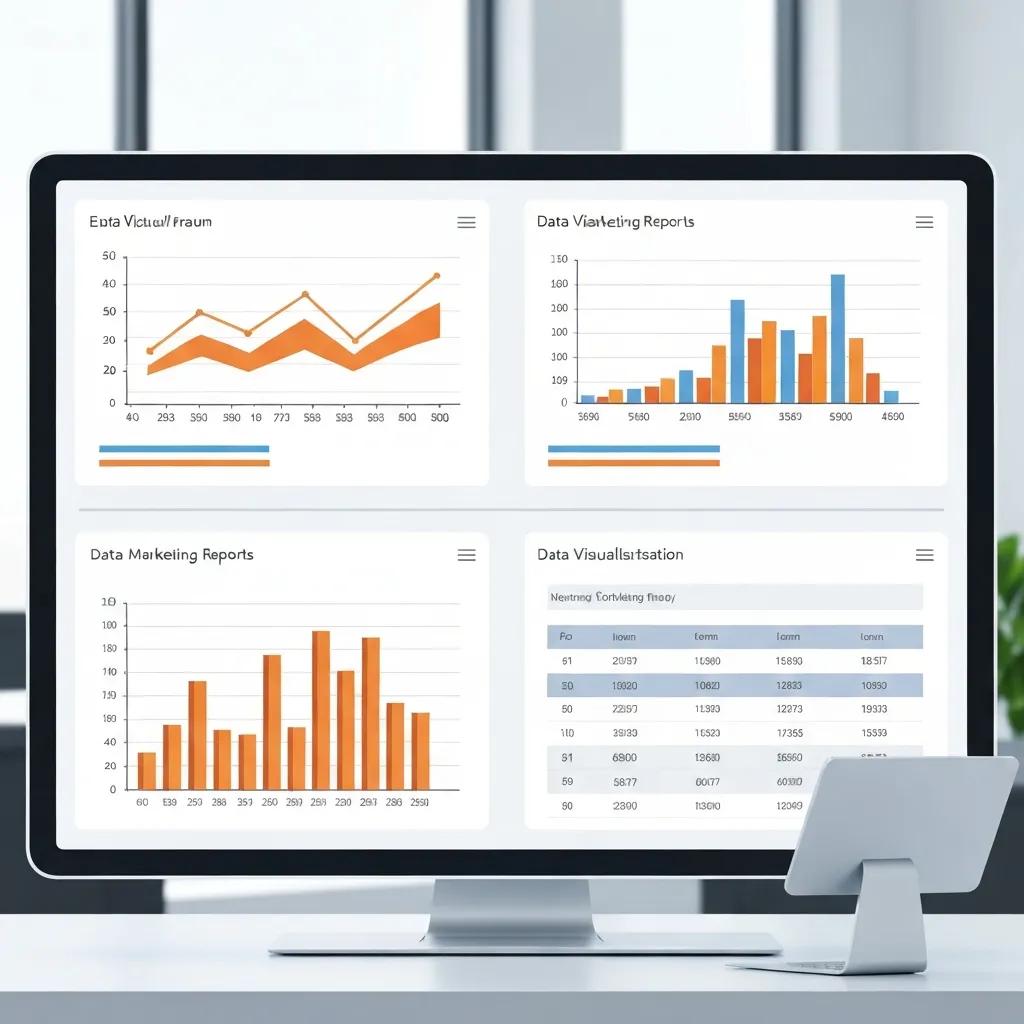
Match the visual to the question: use line charts for trends, bar charts for channel comparisons and tables when exact values matter. Add short annotations with the insight and a recommended action (example: “Local search traffic +18% — increase GBP posts this month”). Avoid flashy 3D effects that make comparisons harder. Use consistent colours tied to goals (for instance, conversion metrics in one colour), label axes clearly, and show period comparisons. These rules make the data story easier to read and end with practical next steps.
What Key Marketing Metrics Should Healthcare Practices Track?
Focus on metrics that reflect patient flow and marketing efficiency: new patients, booked appointments, conversion rates, cost per acquisition (CPA), patient lifetime value (LTV) and retention. Each metric signals a specific funnel stage and suggests an action — for example, a rising CPA points to ad optimisation or budget reallocation. Report monthly for most clinics and keep definitions consistent across platforms so comparisons remain meaningful. The table below summarises the core KPIs and why each matters.
The table below compares primary clinic KPIs, how they are measured, and why they matter.
| KPI | Measurement | Why it matters |
|---|---|---|
| New patients | Count of first‑time patients in the period | Direct measure of acquisition success |
| Booked appointments | Scheduled appointments from marketing leads | Shows funnel effectiveness from lead to booking |
| Cost per acquisition (CPA) | Total marketing spend ÷ new patients | Tracks advertising efficiency and budget ROI |
| Patient lifetime value (LTV) | Average revenue per patient × average number of visits | Guides how much you can spend to acquire a patient |
This table clarifies which KPIs drive growth and which should trigger specific actions — for example, optimise ad channels or improve booking flow. Use these definitions to standardise reporting and remove ambiguity when decisions are made.
How to Present Marketing Data Clearly for Healthcare Practice Growth
Track channel‑level CPA, lead‑to‑booking conversion and source attribution. Knowing CPA by channel shows which sources deliver new patients at a sustainable cost, while lead‑to‑booking highlights friction in the booking process (for example, form drop‑off). Make sure attribution includes Google Business Profile, organic search and paid channels so resource allocation mirrors real patient pathways. Clear channel reporting helps decide whether to boost local search investment or fix website conversion first.
How Do You Measure ROI and Patient Retention Effectively?
Use a simple ROI formula: (Gross revenue from new patients − marketing spend) ÷ marketing spend. Track cohorts by acquisition month to measure retention and LTV over time. Retention metrics — appointment frequency, recall rates and follow‑up adherence — directly affect LTV and therefore how much you can justify spending on acquisition. These calculations tell you whether to focus on retention initiatives or scale acquisition campaigns.
How Can Data Storytelling Enhance Marketing Results for Healthcare Clients?
Data storytelling turns insights into decisions by giving context, highlighting the key finding and recommending a clear action. Use a three‑part narrative: frame the business question, present the evidence with a clear visual, then close with a prioritised action and expected impact. When owners see an insight paired with a recommended test or budget change, buy‑in happens faster and experimentation follows. Good storytelling makes analytics a growth driver, not just a record of what happened.
What Are the Steps to Craft a Compelling Marketing Data Narrative?
Use this simple three‑step template: set the context (goal and timeframe), show the key evidence (chart + one‑line insight), and finish with a clear recommendation and expected outcome. Example: “Goal: increase new patients from local search. Evidence: GBP impressions +25% but booking conversion −8%. Recommendation: improve website booking flow; expected +10% bookings in eight weeks.” Quantify outcomes where possible and keep the narrative to one page so the owner can act quickly. That way each report ends with a decision, not a to‑do list.
How Do Case Studies Demonstrate the Power of Effective Data Presentation?
A simple, anonymised example shows the value of focused reporting: a clinic saw rising traffic but flat bookings. The dashboard highlighted low phone‑call conversions caused by incorrect Google Business Profile hours. Fixing the listing and changing the booking CTA led to measurable appointment growth within a month. The change wasn’t in the marketing spend — it was in highlighting the conversion drop and linking it to one practical fix. That’s how clear reporting turns observations into quick wins.
Which Tools and Templates Help Present Healthcare Marketing Data Clearly?
Tool choice depends on scale and technical comfort: spreadsheets and templates suit small clinics, dashboards suit teams wanting automated updates, and reporting platforms suit practices that need consolidated cross‑channel views. The clarity mechanism is automation plus a sensible layout: executive summary, KPI dashboard, annotated trends and an insights‑and‑actions section. Templates and connectors cut manual work and keep reporting consistent, which builds trust in the numbers and speeds action.
Recommended tools and templates fall into three categories that match common clinic needs:
- Spreadsheets with templates: Best for small clinics that prefer manual entry and customisation.
- Dashboard platforms: Best for clinics that want automated, visual cross‑channel reporting with scheduled exports.
- Automated reporting connectors: Best for practices that need consolidated data from ad platforms, GA4 and GBP without manual pulls.
These categories help clinics pick a workflow that suits their resources and reporting cadence, and act as a map for building a monthly report the owner will actually read.
The table below helps select the right tool or template by use case and example metric illustrated.
| Tool/Template | Best for | Example metric illustrated |
|---|---|---|
| Spreadsheet template | Clinics starting with manual reporting | Monthly new patients and CPA |
| Dashboard (visual) | Clinics needing automated visuals | Channel performance and trends |
| Connector + report | Clinics with multiple ad platforms | Consolidated CPA by channel |
This comparison makes it easier to choose the right approach. After you pick a category, build a one‑page executive summary so the owner sees top‑line impact first.
How Does Milkcan Marketing’s Analytics & Reporting Service Support Data Presentation?
Milkcan Marketing delivers Analytics & Reporting tailored to small dental and healthcare practices. We translate complex marketing data into clear recommendations focused on local patient acquisition and measurable online growth. Our reports align to clinic KPIs — new patients, appointment bookings and CPA — and explain results in plain language with specific next steps. For practices that want a turnkey option, our service bundles local SEO, reputation management and digital advertising insight into clinic‑specific reporting that owners can act on immediately.
This short feature‑benefit summary explains what practice owners can expect from a specialist partner: faster insights, less internal workload and clear, local growth strategies. The next section outlines monthly report templates clinics can adopt straight away.
What Are Recommended Templates for Monthly Marketing Reports?

A standard monthly report should begin with an executive summary, then a KPI dashboard, a short insights section and prioritised next steps. Each part has a clear purpose: the executive summary gives the three most important takeaways, the KPI dashboard shows trends, the insights section explains causes and next steps recommend experiments. Label visuals, include a one‑line action per insight and attach raw data or an appendix for technical reviewers. This template creates a repeatable cadence that drives continuous improvement.
The following simple template outlines what to include in each section:
- Executive summary with three key metrics and one recommended action.
- KPI dashboard with definitions and trend charts.
- Insights & decisions section with prioritised next steps.
Using this structure keeps reports short, actionable and aligned to clinic goals so owners can make confident decisions quickly.
| Template Section | What to include | Purpose |
|---|---|---|
| Executive summary | Top 3 KPIs + one‑line action | Fast decision‑making |
| KPI dashboard | Definitions + trends | Track performance consistently |
| Insights & actions | Root cause + recommended test | Turn data into experiments |
This plug‑and‑play structure reduces friction in reporting and makes it easier to act on analytics.
How Do You Ensure Data Accuracy and Compliance in Healthcare Marketing Reporting?
Accuracy and privacy come from good governance: standardised tracking, routine audits and data minimisation when patient information is involved. Use clear naming conventions, document tracking changes and schedule reconciliations across platforms (ads, GA4, GBP) to reduce discrepancies. Remove personally identifying information from reports and present aggregated metrics for performance reviews. These steps protect patient privacy and keep the numbers trustworthy.
What Are the Key GDPR and Privacy Considerations for Marketing Data?
Take practical privacy steps: anonymise patient data, minimise PII in marketing reports and document the lawful basis for processing. Avoid exporting individual patient details; present aggregated cohorts or counts instead. If you need to link data to patient outcomes, get explicit consent and seek legal advice. Doing this lowers regulatory risk and keeps the focus on aggregated metrics that guide marketing decisions.
The table below summarises common data sources, integrity risks and practical mitigations to keep reporting compliant and accurate.
| Data Source | Integrity risk | Mitigation |
|---|---|---|
| Google Analytics / GA4 | Tracking gaps from misconfiguration | Regular audits and event validation |
| Google Business Profile | Inaccurate listing details | Scheduled checks and ownership controls |
| Ad platforms | Incorrect attribution or UTM errors | Standardised UTM taxonomy and reconciliation |
How Can Practices Maintain Data Integrity for Reliable Insights?
Maintain integrity by standardising UTM parameters, documenting KPI definitions, scheduling monthly reconciliation checks and setting alerts for tracking drops. Use cohort analysis to confirm changes reflect real patient behaviour, not tracking anomalies. Keep a changelog of tracking updates and annotate reports when definitions or sources change so historical comparisons remain valid. These habits build a reliable foundation for decision‑making.
What Are the Next Steps to Turn Marketing Data Insights into Practice Growth?
Turn insights into growth by prioritising experiments, measuring impact and iterating. Start with an impact‑vs‑effort matrix, run small A/B tests on the highest‑impact items (booking flow, ad creative, local SEO listing changes) and measure with the same KPIs you report. Document learnings and adjust cadence as needed to capture outcomes. This system keeps analytics tied to tested improvements rather than ad‑hoc changes.
How Can Practice Owners Use Data to Make Informed Marketing Decisions?
Map each insight to a specific experiment and budget. Use short‑term metrics (leads, booked appointments) to validate a hypothesis before scaling. For instance, if GBP impressions are up but bookings are flat, test a new booking CTA or corrected opening hours and measure conversion over a defined period. Use cohorts to isolate effects and update the report with the experiment outcome and decision. Repeat the loop — insight, test, measure, decide — to embed evidence‑based optimisation into everyday clinic operations.
Why Choose Expert Support for Ongoing Marketing Data Analysis?
Specialist support speeds insight generation, saves clinic time and brings local SEO and clinic KPI expertise general providers often miss. Look for partners who focus on small dental and healthcare practices, offer transparent pricing with no lock‑in and translate complex data into clear, actionable recommendations. A specialist can run routine reporting so the clinic focuses on patient care while improving the speed from insight to action and the likelihood that marketing spend produces predictable patient growth.
The practical next step is to pick the highest‑impact experiments, set a simple reporting cadence and decide whether to use an in‑house template or engage specialist support. With clear metrics, dependable data practices and a short list of prioritised actions, clinics can turn marketing analytics into steady patient growth.
Frequently Asked Questions
What are the common challenges in presenting marketing data for healthcare practices?
Typical problems are information overload and the difficulty of turning technical metrics into clear actions. Clinicians often lack time or technical bandwidth to interpret data, and privacy rules add another layer of complexity. The solution is to focus on relevance, keep visuals simple and frame each insight with a one‑line recommendation.
How often should healthcare practices review their marketing data?
Monthly is the best practice for most clinics. It’s frequent enough to spot trends and make timely adjustments, yet slow enough to collect meaningful data. Use monthly reviews to assess campaign effectiveness and decide whether to pivot or scale.
What role does patient feedback play in marketing data analysis?
Patient feedback provides the qualitative context that numbers alone can’t. Surveys and testimonials explain why campaigns work or fail and help prioritise improvements in patient experience and messaging. Include feedback alongside metrics to make the narrative more relatable and actionable.
How can healthcare practices ensure compliance with data privacy regulations?
Implement clear data‑governance practices: anonymise data, minimise PII in reports, get explicit consent where needed and run regular audits. Train staff on data handling and document processing activities to stay transparent and reduce legal risk.
What are the benefits of using automated reporting tools for healthcare marketing data?
Automation saves time, reduces manual errors and keeps reporting consistent. It provides near‑real‑time visibility and makes it easier to track trends and measure experiments. Built‑in visualisations also help owners understand results quickly.
How can storytelling improve the effectiveness of marketing data presentations?
Storytelling adds context and makes data relatable. A short narrative — business question, evidence, recommended action — helps owners understand the implication of numbers and supports faster decision‑making. Pair data with the next step and you get action, not ambiguity.
What should be included in a monthly marketing report for healthcare practices?
A monthly report should contain an executive summary with the top three KPIs, a KPI dashboard with trend analysis and an insights section that explains the why and recommends specific actions. Keep it visual, short and outcome‑focused so owners can act without extra work.
Conclusion
Clear, action‑focused reporting empowers healthcare practices to make decisions that drive patient acquisition and sustainable growth. By concentrating on the right KPIs, using plain‑spoken visuals and ending every report with a recommended next step, clinics can turn analytics into repeatable improvements. Start using these techniques today to make your marketing data a practical tool for practice success.