Build a Healthcare Marketing Strategy to Win Patients in Australia
A practical healthcare marketing strategy is a coordinated plan that uses local search, targeted content marketing, reputation management and paid advertising to turn nearby prospects into booked patients. It works by aligning discovery channels—Google Business Profile, on-site pages, paid search and social—with trust signals like reviews and testimonials so small practices see measurable patient-acquisition results. The immediate upside is predictability: consistent messaging and channel management drives local visibility, which leads to more calls, bookings and returning patients. This guide walks through the components to prioritise, step-by-step local SEO tactics for Australian dental and allied health clinics, practical ad and retargeting setups, reputation workflows, website conversion fixes and the KPIs to track. You’ll also find checklists, comparison tables and monitoring templates that cover Local SEO for healthcare, content for allied health, Google Business Profile optimisation and marketing KPIs to support patient acquisition in 2025. Follow these frameworks and examples to build a localised plan that balances organic growth with focused paid acquisition.
What are the key components of an effective healthcare marketing strategy?
An effective healthcare marketing strategy brings together Local SEO, content, reputation management, digital advertising, website optimisation and analytics into a single patient-acquisition engine. Each part has a clear role: Local SEO improves map and organic discoverability, content educates and builds trust, reputation management turns intent into bookings, paid ads capture high-intent searches, website optimisation reduces friction in the booking flow, and analytics ties outcomes back to investment. Together these elements form a feedback loop—analytics sharpen keyword focus, paid campaigns amplify top content, and reviews boost local rankings and click-throughs. Knowing how they interact helps a small practice prioritise low-effort, high-impact tasks and set realistic monthly budgets for growth.
Milkcan Marketing shows how these pieces fit into an actionable Local Growth Strategy for small practices through specialised Local SEO, Google Business Profile optimisation, reputation management and targeted digital advertising for Australian healthcare. Our approach is transparent and contract-free, focused on aligning local targeting with patient-acquisition goals so an agency supports practice priorities without taking them over. This model clarifies how individual tactics connect into a continuous patient-acquisition funnel.
Different marketing activities map to distinct goals and budgets—use the table below to prioritise based on capacity and likely ROI.
| Component | Primary Goal | Typical Monthly Metrics | Indicative Monthly Budget (AUD) |
|---|---|---|---|
| Local SEO | Improve local visibility and GBP actions | GBP views, clicks, direction requests | 500–1,500 |
| Content Marketing | Educate patients and capture long-tail queries | Organic sessions, time-on-page, leads | 800–2,000 |
| Reputation Management | Increase review volume and sentiment | New reviews, average rating, response time | 200–800 |
| Digital Advertising | Drive immediate appointment bookings | Click-through rate (CTR), CPA, conversions | 800–3,000 |
| Website Optimisation | Improve conversion rate and UX | Conversion rate, bounce rate, booking completions | 300–1,200 |
This side-by-side view helps small clinics allocate resources efficiently and scale as patient-acquisition goals change. The sections that follow unpack each component and offer actionable steps you can implement straight away.
How does Local SEO drive patient acquisition for medical practices?

Local SEO drives patient acquisition by making your practice visible where nearby people search—mainly through Google Business Profile (GBP), local organic listings and trusted citations. The mechanism is simple: optimised local signals (complete GBP data, localised service pages and consistent citations) increase impressions and clicks, which convert into phone calls and online bookings. The direct patient benefit is faster discovery by high-intent local searchers, producing measurable actions like direction requests and appointment enquiries. Start with a complete GBP, service-specific landing pages with local keywords, and a post-visit review workflow to strengthen your ranking signals.
Visibility alone isn’t enough—pair it with conversion-focused pages so discovery reliably turns into bookings. The next subsection covers content types that support that discovery-to-conversion path.
Why is content marketing essential for engaging healthcare patients?
Content marketing educates prospective patients, reduces perceived risk and nudges readers toward booking with clear, locally relevant information and trust-building content. Many patients research symptoms, treatments and practitioner credentials before they call; helpful blog posts, FAQs and short videos shorten that decision time and position your practice as an authority. Useful formats include condition pages, treatment explainers, patient guides, short videos and structured FAQs that answer common queries and target featured snippets. Regular topical coverage also feeds local SEO and improves landing page relevance for paid campaigns.
Distribution matters: map content to the patient journey—awareness, consideration, decision—and promote it via GBP posts, social and local newsletters so your educational assets get seen. The following section gives tactical Local SEO steps to complement your content work.
How can small healthcare practices use Local SEO to attract more patients?
Local SEO for small practices focuses on high-impact, low-complexity tasks that deliver quick visibility gains in Australian local search. The practical approach is to optimise your Google Business Profile, ensure NAP consistency, build service pages targeting local keywords and collect reviews to increase clicks and bookings. The result is better placement in the map pack, more GBP actions and measurable rises in calls and online bookings. Prioritise tasks a small team can manage: a GBP health-check, three service pages and a review-request workflow to see early traction.
Below is a concise checklist for busy practice owners to implement Local SEO with limited time.
Local SEO action checklist:
- Complete GBP Profile: Fill categories, services, opening hours and add appointment links where available.
- Create Local Service Pages: Publish service pages with local keywords and structured FAQs.
- Build Consistent Citations: List on reputable Australian directories and ensure identical name, address and phone details.
- Collect and Respond to Reviews: Ask satisfied patients for reviews and reply promptly and professionally.
- Monitor GBP Insights: Track calls, direction requests and search queries to refine priorities.
These steps establish a measurable local growth foundation and feed into content and paid strategies. Next, we cover the GBP fields to optimise.
What are the best practices for optimising your Google Business Profile?
Optimising your Google Business Profile begins with correct categories, a clear services list, quality photos and consistent appointment links to reduce booking friction. GBP completeness and relevance tell Google your listing matches local search intent, improving visibility and action rates like calls and bookings. Choose primary and secondary categories that reflect your clinical services, add structured service descriptions with local keywords, upload recent images of the clinic and team, and post regular updates or offers. Keep opening hours accurate and enable booking links where possible to shorten the conversion path.
Check GBP Insights regularly to see which queries drive views and tweak service descriptions and posts to match those terms. The next subsection explains how citations and directories further support GBP signals and local ranking.
How do local citations and directories improve online visibility?
Local citations and directories help visibility by reinforcing your practice’s name, address and phone across trusted sources, which strengthens local relevance and authority in search. Search engines cross-reference directory listings to validate legitimacy and location—consistent citations help map pack ranking. Focus on high-quality Australian healthcare and local directories rather than broad mass listings, and fix any inconsistencies in name, address or phone to avoid ranking issues. Schedule quarterly audits to keep citations accurate after any practice changes.
Audit key citations quarterly and prioritise listings that actually send referral traffic. The following section covers digital advertising options for clinics needing faster patient inflow.
| Citation Source | Attribute to Optimise | Expected Impact |
|---|---|---|
| Local health directories | Complete profile, service categories | Improved referral traffic and trust |
| Government or regulator listings | Accurate professional details | Authoritativeness and verification |
| Major Australian directories | Photos and reviews | Increased visibility and discovery |
Accurate citations reduce discovery friction and work alongside GBP optimisation to drive more bookings.
What digital advertising strategies work best for dental and allied health clinics in Australia?
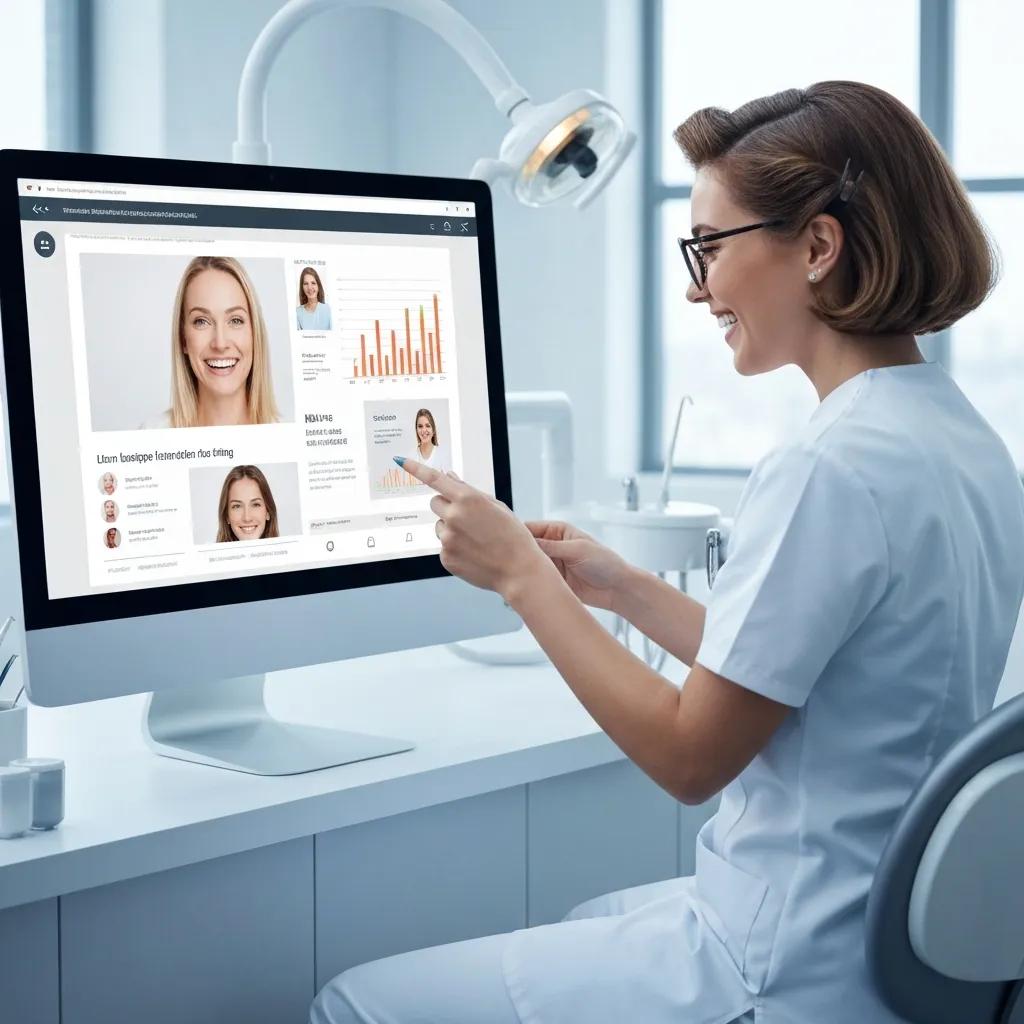
Digital advertising for dental and allied health clinics should balance intent-capture (search) with audience-building (social) to generate bookings efficiently. Search ads (Google Ads) capture people actively looking for care, while Facebook and Instagram ads build awareness and retarget warm audiences—together they form a reliable acquisition stack. The best campaigns match ad creative and keywords to local landing pages that include clear calls-to-action and simple booking options, lowering cost per acquisition and improving ROI. Allocate more to search for immediate bookings and to social for longer-funnel awareness based on your goals.
Example setup: run a focused search campaign for “emergency dentist near me” with suburb-level geo-targeting, pair it with a short social video promoting same-day appointments to build an audience, then retarget site visitors with a booking offer. This combined approach increases top‑of‑funnel reach and captures high‑intent patients when they search.
If you want a tailored audit or campaign that matches your clinic’s goals and local competition, consider a targeted review and audit from a specialised agency like Milkcan Marketing.
How can Google Ads and social media advertising boost patient acquisition?
Google Ads and social media advertising boost patient acquisition by matching messages to intent and context: search ads capture immediate need, social ads warm audiences and build recognition. Search campaigns target high‑intent keywords and point users to optimised landing pages, while social uses lookalike or interest targeting to build retargeting pools. Best practice is geo‑targeting to limit waste, ad copy with local phrasing and service guarantees, and landing pages that mirror ad messaging to lift Quality Score and conversions. Measure CPA, conversion rate and downstream metrics like new patient value.
Tailoring creatives to patient segments—families, older adults or athletes—improves relevance and lowers CPA. The next subsection outlines retargeting techniques to reclaim lost visitors.
What are effective retargeting techniques for healthcare practices?
Effective retargeting re-engages visitors who showed interest but didn’t book by serving sequenced ads that guide them to action. The method is audience segmentation (site visitors, booking abandoners, blog readers) and tailored creatives that address common barriers—cost, FAQs or availability—to convert. Use frequency caps to avoid ad fatigue and sensitive, privacy-aware language in healthcare contexts. Test messages that highlight benefits like extended hours or new‑patient offers. Use conversion tracking and UTM tags so you can attribute returns and refine audience lists.
A typical remarketing funnel includes a value-focused ad, an FAQ or testimonial ad, and a final call‑to‑action ad with a booking link, sequenced over a few days to maximise recall and reduce drop-off. The following section explains how reputation management supports both paid and organic efforts.
How does reputation management build trust and strengthen healthcare marketing?
Reputation management builds trust by increasing the number and quality of online reviews and by sharing patient stories that lower the perceived risk for new patients. Social proof—positive reviews and visible, professional responses—encourages prospective patients to choose your practice. Managing reputation means proactively collecting reviews, monitoring channels, using structured response templates and following privacy and regulatory rules. A systematic approach to reputation improves conversion rates from GBP and website traffic while supporting local SEO signals.
Put a simple review-collection workflow in place (post-visit prompts and follow-up messages), assign someone to monitor major review channels and keep templated but personalised responses that acknowledge feedback and offer offline resolution. The next subsections give practical guidance on responding to reviews and using testimonials.
What are the best ways to manage and respond to online reviews?
Good review management is fast, professional and privacy-aware. Monitor reviews daily, thank positive reviewers and handle negative feedback with an invitation to resolve the issue offline while acknowledging the concern publicly. Avoid clinical specifics when responding to protect privacy; show empathy and a willingness to follow up—this approach often turns unhappy patients into satisfied ones. Consistent, timely responses signal to prospects that the practice cares and can lift average ratings over time.
A simple escalation workflow (acknowledge → invite to contact → resolve offline → follow up) keeps responses consistent and helps recover relationships. The next subsection covers how to capture and deploy testimonials effectively.
How can patient testimonials and feedback improve your practice’s credibility?
Patient testimonials and structured feedback build credibility by showing real outcomes and creating emotional connection that factual pages alone can’t achieve. Short testimonials that mention specific benefits (pain relief, convenience, clear communication) reduce uncertainty and increase the chance of booking. Obtain written consent, use brief quotes with first name and general treatment (where compliant), and place testimonials on service pages, GBP posts and social ads. Rotate quotes and link to case-study pages to demonstrate consistent results and lift conversions.
Collect testimonials with short post-visit surveys and weave them into landing pages and ads to multiply their impact—testimonials improve ad relevance and organic conversion simultaneously. The next H2 explains website optimisations that turn traffic into appointments.
How can website optimisation improve patient experience and conversion rates?
Website optimisation improves patient experience and conversion by reducing friction across the discovery-to-booking journey—faster pages, clear navigation and simple appointment systems. The behavioural principle is straightforward: quicker, clearer pages lower abandonment and build trust, which boosts conversions and lifetime patient value. Key focuses are mobile-first design, service pages optimised for local queries, obvious booking CTAs and practitioner profiles that clearly state credentials and patient-focused messaging. These changes deliver measurable increases in booking completions and reduce acquisition costs when paired with paid media.
Prioritise visible contact options, short forms and FAQs that match search queries so visitors can find answers and book quickly. The next subsections cover mobile speed and online booking systems.
Why is mobile-friendliness and website speed critical for healthcare sites?
Mobile-friendliness and page speed matter because most local healthcare searches happen on phones, and slow pages cause booking abandonment. Patients expect fast load times and simple booking flows—delays mean lost bookings and lower SEO performance. Use PageSpeed tools and focus on image optimisation, server response and caching to cut load times. Improving mobile layout, simplifying navigation and reducing form fields boosts conversions on appointment pages.
Small clinics can deliver fast wins—compress images, remove unused plugins and enable browser caching—to see immediate gains that translate into more bookings. The next subsection explains how online booking systems help engagement and retention.
How do online booking systems increase patient engagement and retention?
Online booking systems raise engagement and retention by offering convenient scheduling and automated reminders that reduce no-shows and improve satisfaction. The combined effect is convenience plus reliability: patients who can view availability and confirm online are more likely to complete bookings and return. Prioritise calendar sync, SMS/email reminders, short intake forms and secure payments or deposits where relevant. Integrating booking links with your GBP and practice management system smooths the patient journey and improves reporting.
Start with a lightweight booking widget on service pages and test scheduling flows to lower abandonment. Next, we list the KPIs that tell you whether these optimisations are working.
| Booking Feature | Benefit | Implementation Priority |
|---|---|---|
| Mobile booking widget | Immediate scheduling on phones | High |
| Automated reminders | Reduced no-shows | High |
| Calendar sync / two-way integration | Avoid double bookings | Medium |
| Secure payments / deposits | Lower cancellations | Medium |
What metrics and KPIs should healthcare practices track to measure marketing success?
Track a tight set of KPIs that map directly to patient acquisition and retention so you can measure marketing ROI and prioritise tactics. Core metrics are new patient count, cost per acquisition (CPA), website conversion rate, Google Business Profile actions, average appointment value and retention rate. Each KPI comes from specific sources—booking systems, analytics and GBP Insights—and together they reveal which channels drive sustainable growth. Aim for weekly monitoring of top metrics and monthly strategic reviews to turn data into decisions.
| Metric | How It’s Measured | Why It Matters |
|---|---|---|
| New patients | Booking system / CRM records by source | Direct measure of acquisition |
| Cost per acquisition (CPA) | Ad spend ÷ conversions | Controls marketing ROI |
| Website conversion rate | GA4: bookings ÷ sessions | Shows site effectiveness |
| GBP actions | GBP Insights: calls, directions, bookings | Local visibility and intent |
| Retention rate | Repeat appointments over time | Long-term patient value |
| Average appointment value | Revenue ÷ appointments | Helps calculate LTV and budget |
Knowing these KPIs helps practices allocate budgets and run tests with clear expectations. If you prefer outsourced reporting, Milkcan Marketing offers Analytics & Reporting packages for small practices that deliver dashboards and monthly insights tying activity to patient outcomes.
Which key performance indicators are most relevant for patient acquisition?
The most relevant KPIs for patient acquisition are new patient count, CPA, GBP action rate and website conversion rate because they trace the path from discovery to paid appointment. New patient count is the outcome KPI, CPA measures efficiency, and GBP actions show local demand and visibility. Benchmarks differ by speciality and location—focus on trends and set incremental targets. Weekly checks of GBP actions and ad performance with monthly CPA and new-patient reviews keep you agile and data‑led.
The next subsection lists practical tools to measure and monitor these KPIs.
What tools help monitor and analyse healthcare marketing performance?
A compact toolset for small practices includes GA4 for website analytics, Google Business Profile Insights for local actions, a lightweight rank tracker for local keywords and a review-monitoring tool to capture sentiment. These tools provide the raw signals you need to calculate KPIs like conversion rate, CPA and new-patient attribution. Build a simple dashboard that shows new patients, CPA, GBP actions and website conversions so stakeholders can review performance quickly. Regular audits and quarterly strategy reviews keep the data driving improvement rather than just reporting.
Choose tools that are easy to use and integrate with your booking system so attribution is accurate and reporting time is minimised.
| Tool Type | Example Use | Reporting Frequency |
|---|---|---|
| Web analytics | Track sessions and conversions | Weekly / Monthly |
| GBP insights | Monitor calls and bookings from maps | Weekly |
| Ad platforms | Measure CPA and conversions | Daily / Weekly |
| Review monitoring | Track new reviews and sentiment | Weekly |
Those tools form the monitoring backbone for iterative improvement and informed budgeting.
Milkcan Marketing can support practices that prefer managed reporting and dashboard setup, offering packages that translate analytics into clear monthly actions while keeping pricing and commitments transparent.
When you’re ready to accelerate patient acquisition with a coordinated, local-first marketing plan, Milkcan Marketing accepts enquiries and offers tailored audits and implementation packages focused on Local SEO, reputation and targeted digital advertising. Our approach is practical and affordable, helping Australian dental and allied health clinics turn visibility into booked appointments while keeping pricing and contracts clear and flexible.
Frequently asked questions
What role does social media play in healthcare marketing?
Social media helps build brand awareness, engage patients and share useful content. Platforms like Facebook and Instagram let practices post educational content, patient stories and health tips. Social is also useful for targeted ads to reach specific demographics and drive traffic to your website or booking system. Kept active and relevant, social channels help build community trust and encourage repeat visits.
How can healthcare practices measure the effectiveness of their marketing strategies?
Measure effectiveness by tracking KPIs like new patient acquisition, website conversion rates and social engagement. Use Google Analytics for site behaviour and GBP Insights to see how patients interact with your listing. Regularly review these metrics and adjust tactics based on what’s working so you spend time and money more efficiently.
What are the benefits of using patient feedback in marketing?
Patient feedback boosts credibility and trust. Positive reviews and testimonials act as social proof, showing quality of care and satisfaction. Using feedback across your website and social channels helps address common concerns and highlight outcomes. Responding to feedback also demonstrates a commitment to improvement, which attracts and retains patients.
How important is website design for patient acquisition?
Website design is critical because it affects user experience and conversion. A well-designed site should be mobile-friendly, easy to navigate and clearly focused on bookings. Key elements are strong calls-to-action, fast load times and accessible information about services and clinicians. A better site improves engagement and search visibility, making it easier for patients to find and choose your practice.
What strategies can be used to improve online reviews?
Improve reviews through proactive reputation management. Encourage satisfied patients to leave feedback via follow-up messages and provide direct links to review platforms. Respond promptly and professionally to all reviews to show you value feedback. A structured process for collecting reviews will strengthen your online reputation and help attract new patients.
How can healthcare practices effectively use email marketing?
Email marketing is an efficient way to engage patients and share updates. Regular newsletters can include health tips, service news and appointment reminders. Personalised emails and segmented lists increase relevance and engagement—use them for follow-up care, recalls and new-service announcements to build stronger patient relationships and encourage repeat visits.
What are the key elements of a successful healthcare marketing campaign?
A successful campaign starts with clear objectives, a defined audience and a mix of channels. Core elements are concise messaging that resonates with patients, a strong call-to-action and consistent branding. Integrate analytics to measure and optimise performance in real time. Focus on patient needs and preferences to drive acquisition and improve engagement.
Conclusion
A coordinated healthcare marketing strategy—built around Local SEO, helpful content and strong reputation management—will increase patient acquisition and build trust in your local area. These components work together: visibility brings people to your site or GBP, content and testimonials build confidence, and conversion-focused pages and booking systems turn interest into appointments. If you’d like a tailored plan, consider a personalised audit or consultation to map priorities and next steps for your practice. Reach out to start turning local visibility into more booked appointments.