Boosting Your Email Campaign Performance

Boosting Your Email Campaign Performance: Practical Healthcare Email Marketing to Improve Practice Results
Effective email campaigns for clinics are about sending the right message to the right patient at the right time — increasing bookings, cutting no-shows and lifting lifetime value. This guide walks small Australian healthcare practices through proven steps: ethical list building, purposeful segmentation, compelling content, automation and compliance with Australian law. You’ll get practical advice on subject lines, personalisation, using short videos and building automated sequences that move patients from first contact to loyal advocates. We also cover measurement and optimisation — which metrics matter, how to A/B test, and realistic benchmarks for clinics. Where relevant, Milkcan Marketing’s Content Marketing services are called out as a fast, no-lock-in way for small dental and healthcare practices to access templates, copy and automated sequence design. The sections that follow cover benefits and stats, list building and segmentation, content best practice, automation playbooks, measurement and optimisation, Australian compliance essentials, and niche tactics for dentistry, chiropractic and physiotherapy.
Why Is Email Marketing Essential for Australian Healthcare Practices?
Email is a direct, measurable channel that supports patient retention, appointment management and preventative care communications. By combining good segmentation with timely triggers, clinics deliver messages when patients are most likely to act — improving opens, bookings and follow-through. For small practices on tight budgets, email usually gives a lower cost-per-acquisition than paid ads and keeps relationships built through local SEO and reputation work. A steady email cadence also builds trust and authority when clinics share useful education, reminders and simple calls to action that match the patient journey. Understanding these core benefits makes it clear what clinics can expect and why recent data supports email’s role in healthcare.
What Are the Key Benefits of Email Campaigns for Patient Engagement and Acquisition?

Email campaigns help retain patients, reactivate lapsed clients and drive repeat appointments through targeted reminders and short educational sequences. When clinics use segmented journeys — for example, preventive-care reminders or post-treatment follow-ups — patients receive relevant prompts that reduce no-shows and improve adherence to care plans. Email also lets clinics cross-sell services like hygiene appointments or allied therapies by explaining benefits and likely outcomes, which raises revenue per patient. Small clinics can see measurable gains quickly when emails link to booking pages and simple conversion tracking.
How Do Recent Statistics Support Email Marketing Success in Healthcare?
Industry reports show healthcare email open and click-through rates compare well with other sectors when messages are personalised and transactional in nature. Personalised subject lines and appointment-related content often boost open rates by double digits, and including or linking short explainer video thumbnails can lift CTRs noticeably. Timing matters: appointment emails sent 48–72 hours before a visit tend to get higher confirmation rates, and re-engagement sequences for inactive patients commonly return results within 30 days. These patterns make a strong case for prioritising segmentation and automation to capture predictable improvements from email.
How Can Small Clinics Build and Segment Effective Patient Email Lists?
Building a useful patient list starts with clear, ethical opt-ins and grows through capture points across the patient journey. Collect consent at registration, on website booking forms and at point-of-care, using straightforward wording and storing consent records. Integrate list capture with your practice management system and use tags to segment by treatment, visit frequency and lifecycle stage so messages stay relevant. Avoid bought lists — they increase compliance risk and hurt deliverability — while consent-first lists keep engagement high and reduce spam complaints. Next, set simple segmentation rules and map tags for common clinic scenarios.
What Are Ethical List Building Strategies for Australian Medical Practices?
Ethical list building depends on clear, informed consent and easy unsubscribe options to protect patient trust and meet regulatory expectations. Use short opt-in copy at point-of-care that explains the purpose (reminders, health tips, offers) and capture explicit tick-box consent recorded in patient files. Web forms should encourage double opt-in for better-quality signups, and reception staff can ask permission at checkout while noting how consent was given. These steps protect deliverability and support long-term engagement while aligning with Australian best practice for healthcare communications.
The table below compares common list sources, typical consent methods and practical pros and cons for clinics.
| List Source | Consent Method | Best Use | Key Consideration |
|---|---|---|---|
| Website booking form | Explicit checkbox; double opt-in recommended | New patient onboarding and newsletter signups | Higher-quality leads; confirm email ownership |
| In-clinic opt-in | Written or digital tick-box at reception | Appointment reminders and post-visit follow-up | Clear consent at point of care; capture context |
| Third-party leads | Broker consent statement (rare) | Limited; rarely recommended | Higher compliance and deliverability risk |
How Does Patient Segmentation Improve Email Targeting and Engagement?
Segmentation allows clinics to tailor messages by demographics, treatment type and behaviour, which increases relevance and response. For example, segmenting by last-visit date supports recall campaigns; tagging by treatment (orthodontics, chronic pain, etc.) enables targeted education and offers. Practical steps are: define three core segments, map tags in your CRM, and create short templates for each segment to make sending efficient. Start small and expand — incremental segmentation reduces complexity and delivers measurable lifts in open and click rates.
What Are the Best Practices for Crafting High-Performing Healthcare Email Content?
High-performing healthcare emails combine a short subject line, a clear preheader, personalised body copy and a single, obvious CTA. The goal is simple: remove friction and make value obvious in seconds, then offer the next step — booking, reading a resource or confirming an appointment. Use visuals and short videos sparingly as supportive elements, and always respect privacy and accessibility. Clinics should keep templates for common journeys — welcome series, reminders, post-visit summaries — so messaging stays consistent and testing is easier. If you need help, professional content support can supply templates, copy and design; Milkcan Marketing’s Content Marketing service gives small dental and healthcare practices ready-to-use email templates and campaign strategy without long-term contracts.
How Do You Write Effective Subject Lines to Boost Open Rates?
Subject lines should be concise, specific and patient-focused — aim for under 50 characters and clear action. Use personalisation where it helps (patient name, appointment type or location) and A/B test options like urgency versus curiosity. Examples include reminder-style lines, preventive-care prompts and reactivation nudges. Test small variations (time, sender name) to learn what your patients respond to, and build hypotheses before you test so results are useful.
- Subject-line checklist: Use this when drafting healthcare subject lines.
- Keep it under ~50 characters and relevant to patient needs.
- Include personalisation (name or appointment type) where sensible.
- Avoid spammy words and state the value clearly.
Summary: This checklist helps improve opens while protecting deliverability and trust.
What Personalisation Techniques Increase Patient Engagement?
Go beyond the name — use treatment history, appointment type and local references to make messages feel relevant. Dynamic content blocks ensure patients see only what applies to them, such as post-op care tips or exercise reminders for physio clients. Merge tags and behavioural triggers allow transactional messages (confirmations, results) to feel genuinely personal. Always balance personalisation with data minimisation and security: use only the fields you need and respect consent requirements.
How Can Video and Visual Content Enhance Healthcare Emails?
Short, captioned videos and clear images can show exercises, explain treatments or guide aftercare — boosting CTRs and comprehension. Host videos externally and use a thumbnail with a play button to preserve deliverability and reduce load. Keep videos under 90 seconds, include captions for accessibility and add a brief text summary for patients who can’t stream. Used thoughtfully, visuals clarify next steps and demonstrate outcomes, which improves conversions.
What Are Clear Calls-to-Action That Drive Patient Responses?
One prominent CTA per email reduces decision fatigue and raises the odds of the desired action — booking, confirming or viewing results. Use action verbs and direct phrasing like “Book your hygiene visit” or “Confirm appointment for 12 June,” and place the CTA above the fold and again at the end. Micro-conversions — click-to-call, view availability or quick feedback — capture intent from people not ready to book. Test CTA wording and placement to find what converts best for your patients.
How Can Automated Email Sequences Improve Patient Journeys and Retention?
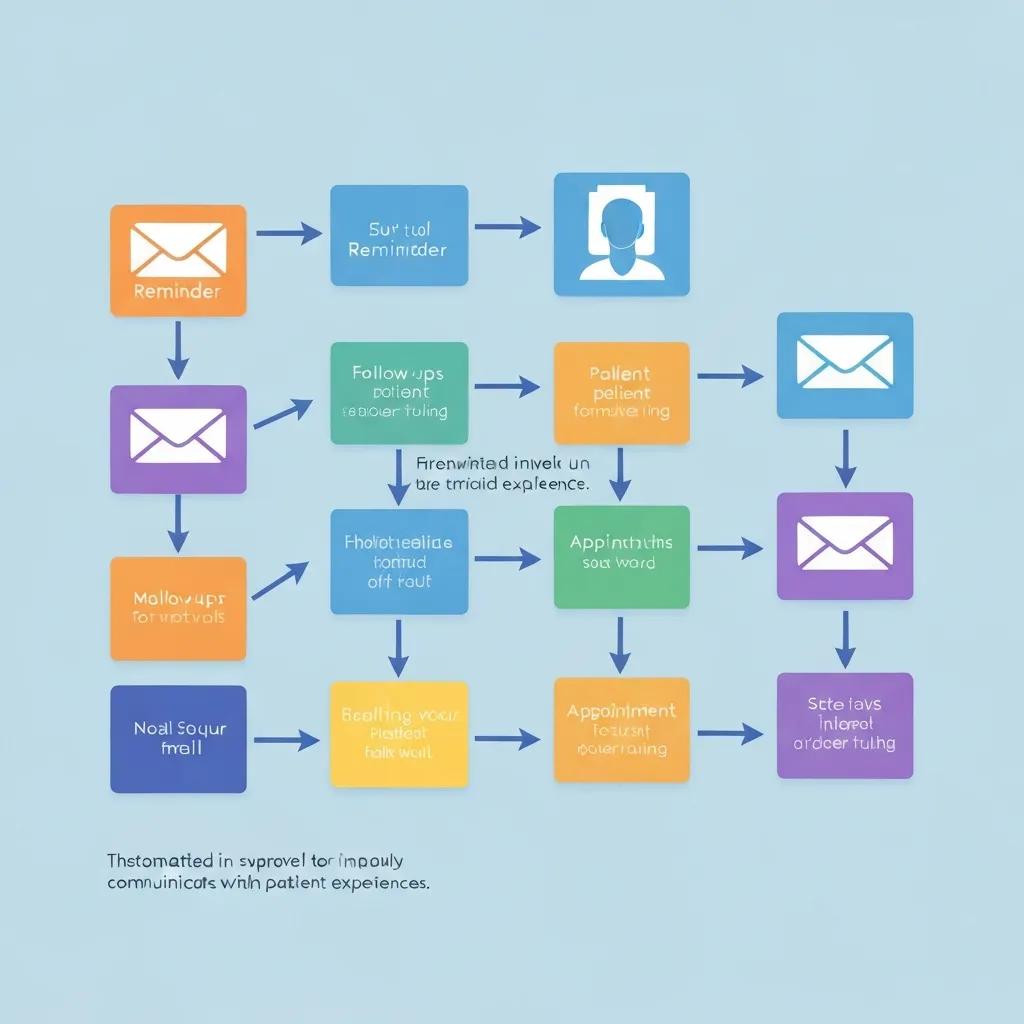
Automated sequences tie communications to lifecycle events, removing manual workload while delivering timely, personalised touchpoints that improve adherence and retention. Triggers—booking, attendance or inactivity—ensure patients get the right info: confirmations, preparation steps, reminders and follow-ups without staff chasing. Automation cuts no-shows, raises satisfaction and frees clinical teams to focus on care, while creating structured chances to educate and cross-sell preventive services. Clinics that implement thoughtful automation normally see less admin time and better appointment conversion.
What Types of Automated Emails Should Healthcare Practices Use?
Key sequences are welcome/onboarding, booking confirmations, pre-appointment reminders, post-visit follow-ups, feedback requests and re-engagement for lapsed patients. Each sequence has a clear job: confirmations reduce uncertainty, reminders lower no-shows and follow-ups increase adherence and collect feedback. Define explicit timing and trigger rules — for example, reminders at 72 and 24 hours before an appointment — and keep CTAs simple for confirm or reschedule. If you prefer external help, Milkcan Marketing can design and implement these sequences as part of Content Marketing services or alongside your existing email platform, focusing on outcome-driven workflows that cut manual follow-up.
- Common automated sequences and their main objective:
- Welcome series: set expectations and next steps.
- Appointment confirmations & reminders: reduce no-shows and cancellations.
- Post-visit follow-ups: collect feedback and encourage ongoing care.
Summary: Automation scales personalised patient journeys and improves operational efficiency.
How Do Birthday and Anniversary Emails Boost Patient Loyalty?
Birthday and treatment-anniversary emails are low-effort, high-engagement touchpoints that show the clinic cares beyond transactions. These messages often get higher opens because they feel personal; adding a small offer or useful resource increases conversion chances. Make sure consent covers this messaging and offer a clear opt-out. Use milestones to reinforce preventive care or maintenance programs that match the patient’s history. When used sparingly and sincerely, celebratory emails build loyalty and encourage referrals.
How Do You Measure and Optimise Email Campaign Performance for Medical Practices?
Start measuring with a focused set of KPIs — open rate, click-through rate (CTR), conversion rate (bookings) and deliverability — then turn results into action with A/B testing and iterative improvements. Each metric points to a different opportunity: open rate signals subject line and sender reputation, CTR shows content and CTA strength, conversion rate ties emails to business outcomes, and bounce/unsubscribe rates reveal list health. For clinics, linking conversions to the practice management system gives the clearest ROI picture. Regular reports and hypothesis-driven tests keep performance moving in the right direction with efficient use of time.
What Key Metrics Should Healthcare Marketers Track?
Track open rate, CTR, conversion-to-booking rate, unsubscribe rate and hard bounce rate monthly to spot issues and prioritise fixes. Benchmarks vary by message type — appointment reminders typically have higher opens than general newsletters — so compare like with like. Deliverability is critical: watch spam complaints and ensure authentication (SPF/DKIM) is set up to protect inbox placement. Reporting should focus on actionable insights: which segment converted, which subject line won and which change produced the lift.
The table below summarises key email metrics, what they indicate and practical benchmark targets for healthcare campaigns.
| Metric | What it Indicates | Typical Healthcare Benchmark |
|---|---|---|
| Open Rate | Subject line relevance and sender trust | 25–35% for appointment/transactional emails |
| Click-Through Rate (CTR) | Content relevance and CTA clarity | 5–12% depending on message type |
| Conversion Rate | Email-to-booking or desired action | 2–6% for targeted campaigns |
| Bounce Rate | List quality and deliverability | <2% for maintained lists |
How Can A/B Testing Improve Email Effectiveness?
A/B testing isolates one variable at a time — subject line, sender name, CTA text or send time — so you know what drives uplift. Start with subject lines and sender name, then move to content and CTAs once subject performance is consistent. Use clear hypotheses (for example, personalised vs generic subject line), test on sufficiently large samples, and keep a steady testing cadence (one primary test per campaign). Log results and build a library of winning variants to speed future wins.
What Are the Compliance Requirements for Australian Healthcare Email Marketing?
Healthcare email in Australia must follow the Spam Act 2003 and privacy rules: clear consent, accurate sender ID and an easy unsubscribe option. For patient communications, capture and record consent properly and include the clinic’s identity in every message. Privacy principles — data minimisation, secure storage and transparent privacy notices — should guide what data you use for personalisation and automation. Practical compliance means simple opt-in wording, retained consent records and regular checks of third-party providers’ data handling to protect trust and legal safety.
How Does the Australian Spam Act 2003 Affect Email Campaigns?
The Spam Act requires clear consent (express or inferred), accurate sender identification and a functional unsubscribe facility in every commercial message. For clinics, express consent is best practice — captured via tick-boxes at registration or booking — and recorded in patient systems. Sender identification means showing the clinic’s name and contact details in the email, and unsubscribe links must be processed promptly. These requirements protect patients and improve deliverability, lowering the risk of regulator complaints.
Below is a simple compliance checklist linking legal obligations to practical clinic examples.
| Requirement | Practical Example | Why it Matters |
|---|---|---|
| Consent | In-clinic tick-box with recorded consent method | Ensures lawful communication and preserves patient trust |
| Identification | Clear clinic name and contact details in emails | Reduces complaints and increases transparency |
| Unsubscribe | One-click unsubscribe processed quickly | Legal requirement and best practice for list hygiene |
What Privacy and Consent Practices Ensure Trust and Compliance?
Collect only what you need, keep consent records for each contact and limit access to patient data. Encrypt contact lists, use role-based permissions and choose email platforms with strong security and, where possible, Australian data-handling assurances. Publish a clear privacy notice explaining how emails are used and how patients can manage preferences, and implement retention rules to remove inactive contacts after a reasonable period. These steps strengthen compliance and support sustainable engagement.
What Niche-Specific Email Marketing Strategies Work for Dentistry, Chiropractic, and Physiotherapy?
Niche strategies match messaging to typical patient journeys and services, which boosts relevance and conversions. Dental practices do well with recall programs and treatment education; chiropractors benefit from maintenance nudges and posture tips; physiotherapy clinics get strong engagement from exercise videos and progress check-ins. Each specialty should map a few high-impact sequences — recall, post-treatment follow-up and educational newsletters — and tune tone and timing for their audience. These targeted approaches deepen clinical relationships and drive repeat bookings.
How Can Dental Practices Use Email to Acquire and Retain Patients?
Dental clinics should combine recall campaigns, new-patient welcome sequences and treatment education to keep hygiene and treatment plans on track. A simple 3-email recall series — initial reminder, follow-up with a booking link, final nudge with a short educational tip — can recover many lapsed patients. Subject lines that emphasise timing and benefit, like preventive care or comfort, improve open rates. Clear educational content about treatments and financing increases patient confidence and lifts conversion for elective services.
What Are Effective Chiropractic Email Campaigns for Patient Retention?
Chiropractic campaigns that emphasise maintenance programmes, posture education and short exercise clips keep patients engaged between visits. Automated series that remind patients about maintenance check-ins, provide home-exercise tips and invite progress reviews encourage ongoing care. Reactivation emails offering a short assessment or consultation lower the barrier to return. Regular, helpful content positions the clinic as a partner in long-term pain management and functional health.
How Do Physiotherapy Clinics Educate Patients Through Email Newsletters?
Physio newsletters that combine short exercise videos, patient stories and staged home-programme tips drive engagement and adherence to rehab plans. A typical newsletter includes a quick education piece, a video thumbnail and a CTA to book a follow-up or telehealth check-in. Measure engagement by CTR and downstream bookings to see which topics and exercises lead to appointments. Over time, that data guides editorial planning and improves patient utility.
If your clinic is ready for a quick audit, Milkcan Marketing offers a complimentary consultation to review current email performance and recommend targeted improvements for small dental and healthcare practices. This no-obligation review focuses on list health, automation opportunities and compliant content strategies to increase patient acquisition and retention without long-term lock-in.
Frequently Asked Questions
What are the best ways to ensure compliance with email marketing regulations in Australia?
To stay compliant with Australian regulations like the Spam Act 2003, clinics should obtain clear consent before sending emails — for example, explicit opt-ins at registration or booking. Every email must include correct sender identification and an easy unsubscribe option. Regularly review consent records and stick to privacy principles to maintain compliance and patient trust.
How can clinics effectively measure the success of their email campaigns?
Measure success with key metrics: open rate, CTR, conversion rate and unsubscribe rate. Analyse these regularly to spot trends and optimisation opportunities. A/B testing gives insight into what content works, and linking email data to bookings in your practice management system reveals true ROI.
What role does personalisation play in email marketing for healthcare?
Personalisation significantly increases engagement. Tailor messages using treatment history, appointment type and local references so patients receive relevant content. Dynamic content blocks and merge tags help create a more personalised experience, which improves open and click rates and strengthens the patient–clinic relationship.
How can clinics use automated email sequences to improve patient retention?
Automated sequences support retention by sending timely, relevant messages across the patient journey — welcome emails, reminders and post-visit follow-ups. Triggers like bookings or inactivity let clinics deliver personalised messages without manual effort, cutting no-shows and reinforcing care continuity.
What types of content should be included in healthcare email newsletters?
Include a mix of educational content, brief patient stories and practical tips. Dental newsletters might focus on oral-health advice; physiotherapy updates can share exercise demos. Use visuals like short videos or infographics sparingly, and finish with a clear CTA to book or learn more so the newsletter serves both education and conversion.
How can clinics effectively segment their email lists for better targeting?
Segment by demographics, treatment type and engagement level using data from patient records and interactions. This enables tailored messaging — for example, preventive-care reminders for patients who haven’t visited recently — and improves open rates and overall engagement.
What are some common pitfalls to avoid in healthcare email marketing?
Common mistakes include not getting proper consent, skipping personalisation, and failing to segment lists. Over-mailing can also cause fatigue and unsubscribes. Focus on relevant, well-timed content, maintain compliance, and prioritise quality over quantity to build long-term patient trust.
Conclusion
Well-planned email marketing can materially improve patient engagement and retention for healthcare practices. By using ethical list building, targeted segmentation and clear, useful content — plus automation and measured testing — clinics can strengthen relationships and drive measurable results. Start small, test consistently and scale what works. If you’d like help, Milkcan Marketing can support template, copy and automation setup without locking you into long contracts.