Dental Mobile SEO Strategies for Local Success: How to Optimise Your Dental Practice for Mobile and Local Patient Acquisition
Mobile search behaviour now dominates how local patients find dental services, and Dental Mobile SEO combines mobile-first technical work with local search tactics to convert those searches into bookings and calls. This article explains what Dental Mobile SEO is, why mobile-first indexing and Google Business Profile signals are essential, and how a mobile-friendly site, voice-ready content and targeted local keywords work together to increase local patient acquisition. Many dental practices lose patients when mobile pages load slowly, when GBP fields are incomplete, or when conversational voice queries aren’t answered; this guide provides clear remediation steps, checklists and schema templates to fix those issues. You will learn how to claim and optimise your Google Business Profile, how to build fast, responsive mobile pages that meet Core Web Vitals, which local and voice-search keywords to target, and how to measure ROI with practical KPIs and tools. The following H2 sections walk through definitions and impact, a step-by-step GBP playbook, technical mobile site priorities, voice and local keyword tactics with schema examples, content marketing that converts local visitors, AI and trend implications for 2025, and a reporting cadence to keep improvements delivering bookings. Throughout, semantic SEO approaches—structured data, lexical relations, and entity-driven content—are used to ensure search engines and voice assistants understand your practice’s services.
What Is Dental Mobile SEO and Why Is It Crucial for Local Success?
Dental Mobile SEO is the set of technical, content and local optimisation practices that ensure a dental practice appears prominently in mobile search results and local packs, improving calls and clinic visits. It works by aligning mobile-first indexing, fast page experiences (Core Web Vitals), and local relevance signals such as Google Business Profile completeness, citations and reviews; the mechanism is improved crawl/indexing plus stronger relevance signals, which increases visibility for “dentist near me” and appointment queries. The specific benefit is higher conversion-ready traffic: more direction requests, calls and online bookings from nearby patients who search on smartphones. Recent search behaviour shows that local intent and mobile queries frequently lead directly to contact, so dentists who prioritise mobile and local signals capture higher-value patient queries. Understanding these components leads to a deeper look at how mobile UX and local signals improve visibility and user action.
How Does Mobile SEO Improve Dental Practice Visibility?
Mobile SEO improves visibility by ensuring pages render quickly on phones, present essential contact CTAs above the fold, and supply structured answers that voice assistants and AI overviews can surface. Faster, responsive pages reduce bounce rates and increase dwell time, signalling relevance to search engines and improving local pack ranking potential; this relationship explains why site speed and UX are ranking mechanisms. For dentists, the visible result is more map placements, more GBP interactions and higher click-to-call rates from mobile listings. These user-level improvements naturally connect to the differences between mobile and local SEO strategies.
What Are the Key Differences Between Mobile SEO and Local SEO for Dentists?
Mobile SEO focuses on technical performance and on-page mobile UX—responsive layout, image and script optimisation, and Core Web Vitals—whereas Local SEO emphasises geographic relevance signals: Google Business Profile fields, consistent NAP, citations and review volume. Mobile SEO affects indexability and ranking via mobile-first indexing; Local SEO affects proximity and prominence in the local pack through authority and relevance signals. The two overlap where mobile pages need localised content and structured data to reinforce the GBP, and this overlap is why combined strategies produce better patient acquisition. Recognising those overlaps leads to concrete steps for mobile-first indexing readiness.
How Does Mobile-First Indexing Affect Dental Websites?
Mobile-first indexing means search engines primarily crawl and index the mobile version of a website, so content parity between mobile and desktop is critical: every service description, FAQ and structured data must be present on mobile pages. The mechanism is straightforward—if essential local content or schema is missing on mobile, pages can lose rankings despite a rich desktop site. Practical benefit: ensuring mobile content parity preserves or improves local visibility and prevents sudden ranking drops when Google re-evaluates your site. Preparing a checklist for parity and crawlable mobile assets is the next practical step for clinics.
How to Optimise Your Google Business Profile for Local Dental SEO Success
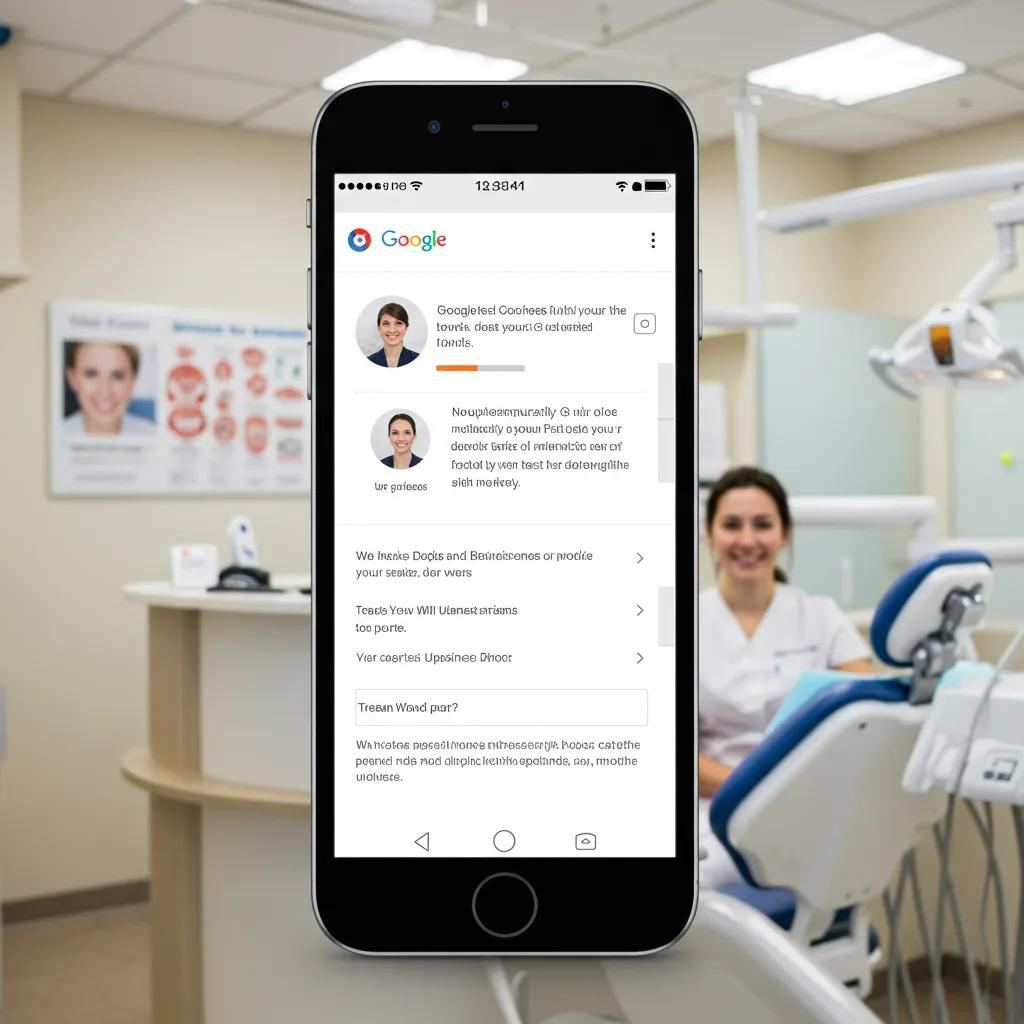
A fully optimised Google Business Profile (GBP) is a primary local ranking signal and a direct conversion channel that drives calls and directions from mobile searchers. Optimisation works by supplying complete, accurate profile fields, strategic categories, recent photos and regular posts which increase relevance and engagement; the result is higher visibility in branded and non-branded local queries. For dental practices, the expected benefit is more profile views, more direct calls, and greater placement in the local pack for targeted dental searches. The following steps show how to claim and optimise a GBP and why each action matters for local patient acquisition.
- The key GBP actions for dental clinics are:
- Claim and verify the profile to control information and gain access to insights and messaging.
- Complete NAP fields, primary and secondary categories, services and business attributes to improve relevance.
- Add high-quality photos, regular posts and Q&A answers to increase engagement and trust.
This ordered list summarises the immediate actions; next we walk through verification and NAP consistency in detail.
What Steps Are Needed to Claim and Verify Your Google Business Profile?
Claiming a Google Business Profile ensures you control public-facing business data and access GBP Insights; verification proves ownership and unlocks full features. Claiming involves searching for your practice in GBP, requesting management, and choosing a verification method—postcard, phone, email or instant verification when available—to certify the listing. Verification’s mechanism increases trust signals and allows you to edit services, add posts, enable messaging and collect structured insights that feed local ranking signals. After verification the next priority is ensuring NAP consistency and building high-value citations to strengthen local authority.
How to Ensure NAP Consistency and Build Local Citations for Dentists?
NAP consistency means the practice name, address and phone number match exactly across GBP, website, directories and local citations; consistent NAP reduces indexing confusion and improves trust with local algorithms. A practical audit involves listing current citations, checking for variations, and prioritising corrections on high-authority directories such as professional associations, local chambers and dental directories. Building citations increases prominence: add or correct listings, ensure category alignment and include service-level detail where possible. These citation tasks directly support review management, which in turn amplifies local ranking signals.
When users search for local keywords, Google’s algorithm presents Google Maps as an option within the search results, thereby directing traffic to your practice.
Local SEO: Utilising Google Maps for Dental Practice Customer Acquisition
When users search for local keywords, Google’s algorithm presents Google Maps as an option within the search results, thereby directing traffic to your practice. Google Maps offers a review
Digital Marketing Strategy to Attract New Customer for Dental Clinic (Case Study: Bandung Dental Center), NN Arief, 2023
How Can Dentists Manage and Respond to Patient Reviews Effectively?
Responding to reviews demonstrates care, manages reputation and signals responsiveness to search engines—this practice improves conversions and local ranking potential. Effective workflow: acknowledge positive reviews quickly with a personalised thank-you, address negative feedback with an offer to discuss offline and a proposed resolution, and request updated reviews when issues are resolved.
- Positive response: Thank the patient, highlight the procedure and invite them back.
- Negative response: Apologise for the experience, offer contact details for resolution and indicate follow-up.
Using templated but authentic replies increases throughput while preserving human oversight; consistent review management ties to GBP posts and Q&A optimisation next.
What Are the Best Practices for Google Business Profile Posts and Q&A Optimisation?
GBP posts and Q&A let practices proactively answer patient concerns and surface offers to mobile searchers, improving CTR and trust for nearby queries. Use posts to announce services, new dentist availability, emergency hours or short educational tips; keep posts concise, mobile-friendly and action-oriented with clear CTAs like “call to book.” For Q&A, pre-fill common questions with short, structured answers and monitor user-generated Q&A to prevent misinformation. These proactive items feed local relevance signals and prime the site for mobile visitors, after which technical mobile-site work becomes the priority.
| GBP Field | Recommended Action | Expected Impact |
|---|---|---|
| Primary Category | Choose the most specific dental category (e.g., Dentist, Dental Clinic) | Improves query relevance and local pack eligibility |
| Services & Attributes | List all treatments and use updated attributes (e.g., emergency care) | Increases matching to service-specific queries |
| Photos & Posts | Publish recent clinic photos and weekly posts with CTAs | Higher engagement and improved click-through rates |
After implementing GBP and citation fixes, the next step is making the website itself mobile-friendly to capture and convert mobile traffic.
How to Create a Mobile-Friendly Dental Website That Boosts Local SEO Rankings
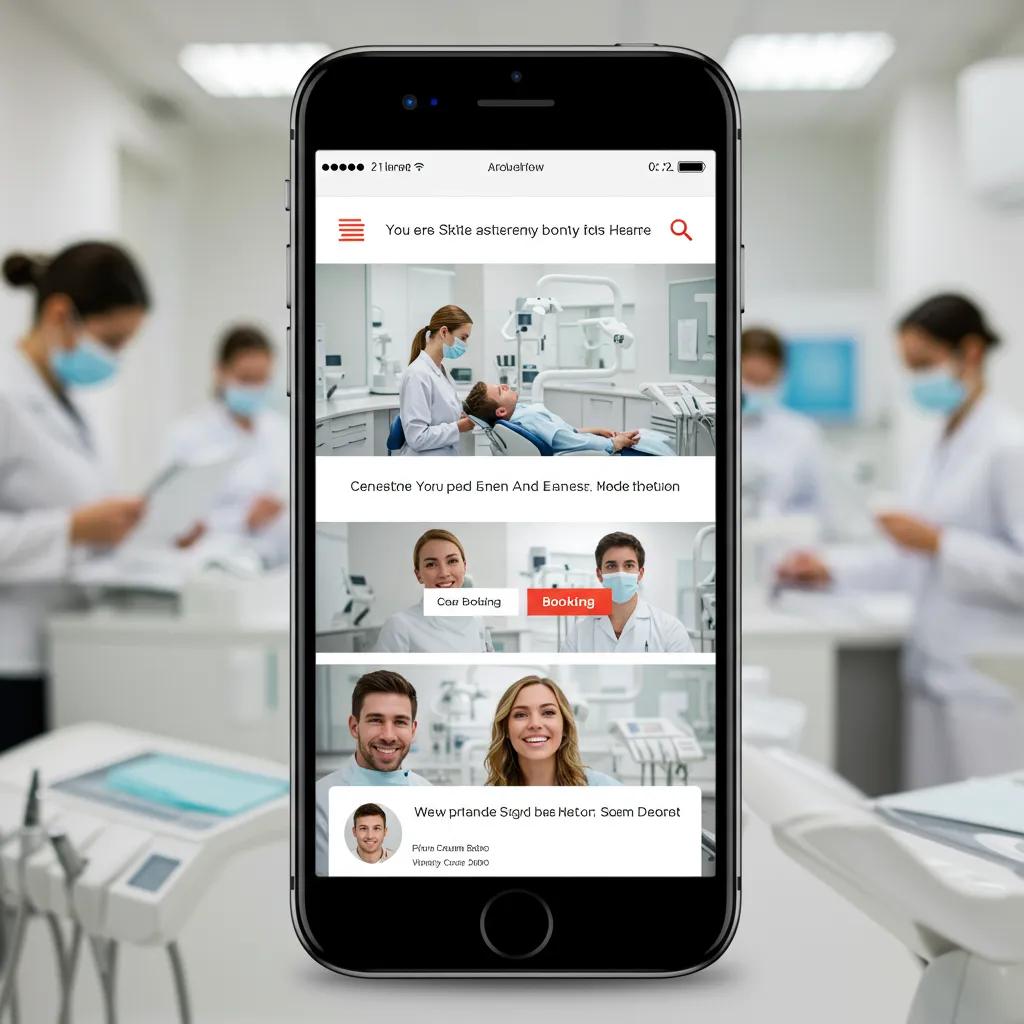
A mobile-friendly dental website ensures fast loads, clear contact actions and structured markup, which together increase conversions from mobile searchers and reinforce local relevance for search engines. The mechanism combines responsive design, asset optimisation and mobile-visible structured data to ensure pages are crawlable and useful to both users and AI-driven search features. The benefit is improved Core Web Vitals, higher mobile rankings and a smoother path to booking or calling directly from search results. The subsections below provide responsive design principles, page speed remediation steps, Core Web Vitals definitions and a checklist for mobile-first indexing readiness.
What Are Responsive Design Principles for Dental Websites?
Responsive design adapts layout and content to the user’s screen, prioritising contact CTAs, appointment booking and service highlights on small screens. Designers should place the phone number and booking CTA above the fold, use touch-friendly buttons, and design service pages with scannable headers and concise paragraphs for mobile reading. The mechanism is focused user flow: mobile visitors typically want quick contact or immediate answers, so the design must reduce taps to booking. These UX elements directly affect load behaviour and Core Web Vitals performance, which we cover next.
How to Optimise Page Speed for Mobile Dental Sites?
Page speed optimisation focuses on reducing payloads and improving server response so mobile pages load in under two seconds on common mobile networks. Key tactics include compressing and responsive-sizing images, deferring non-critical JavaScript, inlining critical CSS, enabling browser caching and using a fast hosting stack or CDN to improve Time to First Byte. Use tools like PageSpeed Insights to prioritise fixes and measure impact, and monitor load times after each change to confirm improvements. These asset and server optimisations feed measurable Core Web Vitals improvements, which influence rankings and user experience.
Mobile page speed checklist:
- Resize and compress images to appropriate mobile dimensions.
- Minimise and defer JavaScript, and inline critical CSS.
- Use server-side caching and a content delivery network for global speed.
Optimising web performance is crucial for businesses to succeed online, as a significant percentage of users will abandon a website that takes too long to load.
Web Performance Optimisation: The Significance of Web Vitals for Business Success
In today’s digital landscape, where users demand instant and seamless web experiences, optimising web performance has become paramount for businesses to succeed online. According to a recent study[1], 52% of users will abandon a website that takes longer than 3 seconds to load. This highlights the importance of measuring website speed and responsiveness using effective performance optimisation techniques. This paper delves into the significance of web performance tooling in measuring and optimising key performance indicators (KPIs) known as “web vitals.” It explores popular tools such as Lighthouse, PageSpeed Insights, and WebPageTest, analysing their functionalities and roles in enhancing web performance [2][3][4]. These tools help evaluate critical metrics like Largest Contentful Paint (LCP) and First Input Delay (FID), which directly impact user experience. Additionally, the paper investigates the importance of optimising core web vitals like LCP and FID and their impact on key metrics such as bounce rate, conversion rate, and time on site. Studies show even small delays in LCP, CLS and FID can negatively affect these business metrics[7].
Web performance tooling and the importance of web vitals, MK Dobbala, 2022
What Are Core Web Vitals and Why Do They Matter for Dental Practices?
Core Web Vitals are a set of user-centric metrics—Largest Contentful Paint (LCP), Interaction to Next Paint (INP) replacing FID, and Cumulative Layout Shift (CLS)—that quantify mobile UX and influence search ranking signals. LCP measures perceived load speed, INP measures responsiveness during interactions, and CLS measures visual stability; together they show whether a patient can access booking CTAs quickly and reliably on a phone. Dental-specific examples include large unoptimised hero images causing poor LCP, third-party booking widgets delaying INP, and layout shifts from injected pop-ups causing high CLS. Addressing these tangible issues typically yields improved engagement and higher local ranking potential.
| Metric | Recommended Threshold | How to Fix |
|---|---|---|
| LCP | < 2.5s | Optimise hero images, reduce server response time, enable caching |
| INP | Low/fast interactions | Minimise long tasks, defer heavy JS, use efficient event handlers |
| CLS | < 0.1 | Reserve space for images and embeds, avoid inserting content above existing content |
How to Prepare Your Dental Website for Mobile-First Indexing?
Preparing for mobile-first indexing means ensuring mobile pages include the same primary content, titles, meta descriptions, and structured data as desktop pages so search engines index the correct page version. Audit mobile content parity, check that schema markup (Dentist, LocalBusiness, Service, FAQ) is present on mobile-rendered HTML, and confirm robot access to mobile assets. Prioritise fixes that restore content parity and ensure the booking widget and contact information are crawlable and not blocked by scripts. These preparatory steps protect rankings during indexing changes and set the stage for local visibility improvements, which dovetail with targeted keyword and voice strategies.
Which Local Keyword and Voice Search Strategies Drive More Dental Patients?
Local and voice search strategies convert nearby, intent-driven queries into appointments by matching conversational queries and local modifiers with on-page content and GBP signals. The mechanism is intent alignment: when content uses high-intent local keywords and natural language answers to voice queries, search engines and assistants are more likely to surface that practice for “near me” and spoken requests. The practical benefit is increased calls and booking clicks from mobile users who ask for immediate services or availability. The following subsections explain keyword identification, “dentist near me” tactics, conversational SEO examples, and schema implementation.
How to Identify High-Intent Local Keywords for Dental Practices?
High-Intent Local Keywords pair service terms with local modifiers and conversion intent (e.g., “emergency dentist near me”, “child dentist booking [suburb]”), indicating a user ready to act. The methodology involves starting with seed services, using local modifiers (near me, [suburb], [postcode]) and analysing competitor SERPs and GBP queries to find gaps where your practice can rank. Tools and filters help prioritise keywords by search volume and local competition, and mapping intent to pages (service pages, location pages, FAQ) ensures queries land on optimised content. This prioritisation naturally leads to tactics for capturing “near me” and long-tail local queries.
| Query Type | Example Phrase | Optimisation Tactic |
|---|---|---|
| Near-me transactional | “emergency dentist near me” | GBP updates, emergency service page, mobile CTA |
| Long-tail informational | “how much does a dental filling cost in [suburb]” | Localised blog with price range and FAQ schema |
| Voice conversational | “where can I find a dentist open now near me” | Short direct answers in FAQ with structured data |
How to Optimise for “Dentist Near Me” and Long-Tail Local Queries?
Optimise for “dentist near me” by ensuring strong proximity signals: consistent NAP, service-specific GBP entries, and location landing pages that reference the suburb and nearby landmarks in natural language. On-page tactics include clear H1s, schema markup for LocalBusiness and Service, and locally informed meta descriptions that answer the searcher’s immediate needs. For long-tail queries, create targeted content—short guides or price-explainers—that match the user’s intent and include FAQ schema for direct answers. These on-page and GBP actions reduce friction for mobile searchers and drive more direct conversions.
What Are Conversational SEO Techniques for Voice Search in Dentistry?
Conversational SEO focuses on writing short, natural-language Q&A pairs that match how patients speak to voice assistants, and structuring those answers in FAQ sections to be eligible for assistant responses. Example voice queries include “Where is the nearest dentist who does same-day crowns?” and “What are the opening hours for a dentist near me?”—each answered with concise, schema-marked text. Use long-tail natural phrases in headings and canonical short answers directly beneath the question to feed AI Overviews and voice assistants. This approach increases the chance your practice is named by assistants, which converts to mobile calls or directions.
The practices of search engine optimisation, voice search, and digital voice assistants are all integral components of the modern digital marketing landscape.
Search Engine Optimisation for Voice Search and Digital Assistants
The practices of search engine optimisation, voice search, and digital voice assistants, as discussed in this thesis, are all integral components of the modern digital marketing landscape. The primary objective of this thesis is to present established practices for search engine optimisation. Furthermore, many of the digital voice assistants…
Search engine optimisation for digital voice assistants and voice search, 2019
How to Implement Local Schema Markup to Enhance Dental Service Visibility?
Implement Dentist, LocalBusiness, Service and FAQ schema on mobile-rendered pages to provide explicit entity signals to search engines and AI features, improving the chance of rich results and voice answers. Prioritise schema for the homepage, key service pages and FAQ pages; include service names, service descriptions, accepted payment methods (if applicable), and geo-coordinates or address fields when available. Use structured data testing tools to validate markup and iterate until errors are resolved. Proper schema implementation complements GBP signals and helps AI Overviews correctly attribute local services to your practice.
How Can Content Marketing Support Mobile and Local SEO for Dental Patient Acquisition?
Content marketing for mobile and local SEO focuses on short, scannable, location-aware content formats—localised blogs, mobile-first video, testimonial snippets and FAQ pages—that match searcher intent and convert on small screens. The mechanism is content mapped to intent across the patient journey: discovery (local blog posts), evaluation (case studies and testimonials), and conversion (service pages with FAQ and booking CTAs). Benefits include higher visibility in PAA and local pack queries, increased trust through social proof, and more effective conversion paths for mobile users. The subsections that follow give topic ideas, video suggestions, testimonial structures and FAQ best practices.
- Localised blog and content types that attract patients:
- Short guides to common procedures with localised context (e.g., “What to expect for a tooth extraction in [suburb]”).
- Emergency care pages that emphasise availability and mobile CTAs.
- Clinic news and community involvement posts that reinforce locality.
What Types of Localised Blog Content Attract Dental Patients?
Localised blog content should answer immediate patient questions and include location cues: emergency procedures, treatment costs, post-op care, and insurance or payment guidance relevant to the practice area. Offer concise paragraphs, clear headings and a short conclusion with the booking CTA prominent for mobile readers. Map each post to a stage in the patient journey—informational, comparative or transactional—to ensure content serves a measurable conversion purpose. These focused pieces integrate with FAQ schema and voice query targeting to capture mobile-first intent.
How to Use Video Content to Enhance Mobile Dental Marketing?
Short, mobile-first videos (30–90 seconds) such as clinic tours, meet-the-team intros, and simple procedure explainers increase trust and engagement on small screens and social feeds. Host short clips on landing pages with captions and structured data to make content indexable and accessible for users who watch without sound. Transcribe videos and include short, SEO-friendly summaries and FAQ snippets on the page to help voice and text-based searchers find answers quickly. Videos combined with concise written answers improve both mobile user experience and search visibility.
Why Are Patient Testimonials and Case Studies Important for Local SEO?
Testimonials and short case studies serve as trust signals that improve click-through rates from GBP and organic listings, and they often appear in rich snippets that increase perceived credibility. Structure testimonials with a short problem → treatment → outcome format, include the service and suburb where appropriate, and place them near booking CTAs on mobile pages for quick conversion. Highlight measurable outcomes where possible (e.g., relief of pain, restoration results) and use schema where appropriate to help search engines present them. Effective social proof leads directly into collecting questions for a robust FAQ library.
How to Create FAQ Content That Boosts Dental SEO and Answers Patient Queries?
Collect common patient questions from reception logs, GBP Q&A and search queries, then write concise, direct answers and mark them up with FAQPage schema to increase visibility for PAA and voice search. Prioritise short answers (one to three sentences) followed by optional expanded details for users who want more context, and ensure mobile formatting (bulleted steps, bolded times) for easy scanning. Keep an index of FAQ pages and update them when new recurring patient questions appear to maintain relevance. Well-built FAQs feed AI Overviews and voice assistants, improving the chance your practice is the direct answer for local queries.
| Content Type | Purpose | Mobile Implementation |
|---|---|---|
| Localised Blog | Capture informational and long-tail queries | Short paragraphs, clear CTAs, FAQ schema |
| Video Snippet | Increase trust and conversion | Captioned, transcribed, embedded with summary |
| Testimonial/Case Study | Social proof for conversion | Short format, service+suburb mention, schema |
What Are the Latest Trends and AI Innovations Impacting Dental Mobile SEO?
AI Overviews and generative features in search are reshaping how information is presented, often summarising multiple sources and potentially reducing clicks; practices must provide authoritative, structured, and trust-signalling content to remain visible. The mechanism is that AI-driven summaries prioritise clear answers and trusted sources; to adapt, dentists should use concise answers, strong local signals and structured data so generative systems attribute content correctly. Benefits of adapting now include maintaining click-through rates and ensuring your practice is recommended in AI summaries and voice assistant replies. The subsections below outline AI Overviews, AI tools for reviews and patient comms, and near-term trends to prepare for.
How Is Google’s AI Overviews Changing Dental Search Results?
Google’s AI Overviews generate concise summaries from multiple sources, which can reduce direct clicks but increase exposure for practices that provide structured, authoritative answers and strong local citations. The tactical response is to produce clear, structured content (FAQ schema, short answers, and verified GBP data) so that AI systems pull your practice’s wording and attribute it in overviews. Maintaining authoritative local signals—citations, reviews, and detailed service pages—improves the likelihood the AI will surface your name. These tactics lead into practical AI-assisted workflows for reputation management.
How Can Dentists Leverage AI for Review Management and Patient Communication?
AI tools can help automate review requests, sentiment monitoring and draft reply templates, speeding response times while preserving human review for sensitive escalations; the mechanism increases review volume and responsiveness, which improves local ranking signals. A recommended workflow: use AI to identify review sentiment and draft personalised reply options, then have staff edit and publish to retain authenticity. Guardrails are essential: every AI-generated reply should be reviewed by a human to avoid tone or factual errors. Human oversight combined with AI efficiency strengthens reputation management and patient communications.
What Future Mobile and Local SEO Trends Should Dental Practices Prepare For?
Near-term trends include richer local schema adoption, continued emphasis on mobile page experience metrics beyond Core Web Vitals, and greater influence of AI Overviews requiring concise, directly-structured answers. Practices should prioritise structured data for services and FAQs, maintain fast mobile experiences, and collect robust local citations and reviews to preserve visibility in generative search. Preparing these elements now reduces future risk and positions a practice to be recommended by assistants and AI summaries. These forward-looking actions naturally feed into measurement and reporting to track effectiveness.
How to Measure and Monitor the Success of Your Dental Mobile SEO Strategies?
Measuring mobile and local SEO success requires a focused KPI set, the right toolstack and a regular audit cadence to convert visibility into patient growth and quantify ROI. The mechanism is correlation mapping: track mobile traffic, GBP interactions and local rankings, then map changes to patient calls or bookings to understand impact. The benefit is clear: with appropriate KPIs and tools you can prioritise work that drives booking increases. Below we define key KPIs, discuss how to use GBP Insights, recommend tools and suggest audit frequency.
- Key KPIs for dental mobile and local SEO include:
- Mobile organic sessions and mobile conversion rate to contact or booking.
- GBP calls, direction requests and booking clicks per month.
- Local pack rankings for priority service+location keywords.
- Review volume and average rating trends.
Which KPIs Best Reflect Mobile and Local SEO Performance for Dentists?
Mobile organic traffic measures volume while mobile conversion rate measures the ability to turn visits into contacts; GBP metrics measure direct local engagement and are often the highest-fidelity signals for patient intent. Each KPI maps to actions: low mobile conversions but healthy traffic suggests UX or CTA issues, while declining GBP calls point to weakened local signals or profile problems. Benchmarks vary, but the important step is tracking trends and mapping them to optimisation efforts to prioritise the highest-impact fixes. These KPI assessments feed into GBP Insights interpretation and tool selection.
How to Use Google Business Profile Insights to Track Patient Engagement?
GBP Insights show how users find your profile, whether via direct or discovery searches, and the actions they take—visits to website, calls, direction requests—enabling clinics to prioritise which profile elements to improve. Prioritise monitoring monthly metrics for calls and direction requests, identify queries that led to profile views, and adjust categories, posts or services in response to declining actions. Insights can also reveal which posts or photos correlate with spikes in engagement. Understanding these patterns helps choose tools to monitor local rankings and review growth.
What Tools Help Monitor Local Rankings, Mobile Traffic, and Review Growth?
A compact toolset for dental local SEO includes Google Search Console and GA4 for organic and mobile traffic, Google Business Profile Insights for profile engagement, and specialised local tools for rank tracking and citation monitoring; each tool serves a distinct role. Use rank-tracking tools for local pack position monitoring, review-monitoring platforms for sentiment and volume, and uptime/page-speed monitors for Core Web Vitals alerts. Consider a blend of free and paid tools based on clinic needs and scale, and set automated reports to review monthly trends. After selecting tools, set an audit cadence to ensure continuous improvement.
- Recommended audit cadence:
- Monthly: GBP checks, review responses, and basic page-speed scans.
- Quarterly: Full technical audit including Core Web Vitals and schema validation.
- Bi-annually: Content and keyword strategy review, citation audit and competitor gap analysis.
| Tool Type | Primary Use | Practical Note |
|---|---|---|
| Analytics (GA4, GSC) | Traffic, queries, mobile behaviour | Essential for organic and mobile performance |
| GBP Insights | Calls, directions, discovery vs direct searches | Direct indicator of local patient engagement |
| Local Monitoring | Rank tracking, citation & review alerts | Useful for tracking local pack movements |
For practices that prefer external support, Milkcan Marketing is positioned as a trusted partner specialising in local SEO, Google Business Profile optimisation, reputation management and content marketing tailored for dental clinics; they offer mobile site audits, technical optimisation and ongoing monitoring for practices seeking hands-on implementation. A short engagement with a specialist can rapidly identify high-impact technical fixes and local signal improvements while preserving clinic time.
How Often Should Dental Practices Audit and Update Their Mobile SEO Efforts?
Auditing frequency should balance resource constraints with impact: monthly for GBP and review management, quarterly for Core Web Vitals and technical fixes, and bi-annual strategic reviews for content and keyword coverage. Monthly checks catch urgent profile issues and review spikes, quarterly technical audits address evolving performance regressions, and bi-annual content reviews keep local topic coverage fresh and aligned to patient intent. Prioritise fixes by patient-impact—booking CTAs, GBP calls and emergency pages first—then iterate on lower-impact items. Consistent audits create a feedback loop that sustains long-term local visibility.
For clinics ready to accelerate results, Milkcan Marketing provides dental marketing services including mobile audits, GBP optimisation and local reporting to help maintain momentum and translate improvements into patient enquiries.