
How Patient Reviews Boost Local Dental SEO in Australia
Patient reviews are verified accounts of care and experience that influence how search engines and prospective patients evaluate a dental practice, and they act as a direct mechanism to improve local search visibility and patient acquisition. By signalling review volume, average rating, recency and descriptive content, patient feedback feeds local ranking signals that search engines use to place practices in local packs and maps. This article explains the mechanisms by which reviews affect Dental SEO, provides step-by-step, AHPRA-aware workflows to generate authentic reviews, and describes how to measure ROI from review management. Practitioners will learn practical templates for review requests and responses, platform prioritisation for Australian markets, technical schema and GBP optimisation, and the added value of video testimonials and multimodal evidence. The guide also covers monitoring tools and KPIs for clinics and how to operationalise a compliance-safe review programme that protects patient privacy while improving local search performance. Read on to understand what to prioritise first, how to respond to praise and criticism, and how to quantify the impact of review activity on bookings.
How Do Patient Reviews Influence Dental SEO Rankings?
Patient reviews are evaluative signals—both direct and behavioural—that search engines interpret as local relevance, authority and user satisfaction, improving a practice’s chance of appearing in local search results. Reviews operate through measurable attributes: rating value, review count, recency and textual content, each of which contributes to local ranking algorithms and to user click behaviour. The mechanism works because AggregateRating and review snippets increase perceived relevance, which boosts click-through rate (CTR) from search results and can increase session duration and conversions on the practice website. To capture these benefits, focus on steady review velocity and descriptive review content that includes service and location keywords. The next section explains how Google’s local algorithms evaluate different review attributes and why that matters for ranking improvements.
How Does Google’s Algorithm Interpret Patient Feedback?
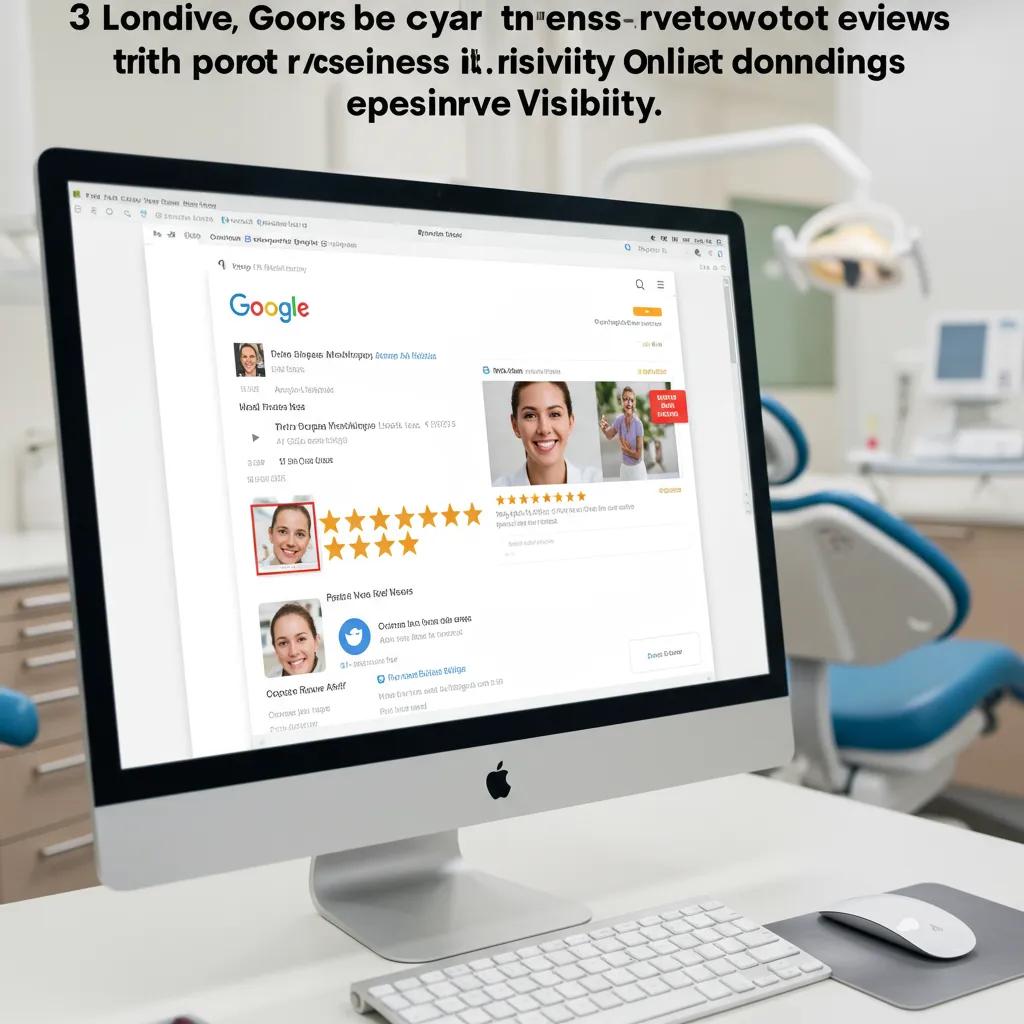
Google’s local algorithm evaluates reviews as structured signals—average star value, number of reviews, review recency and review text relevance—to help determine a business’s local prominence. Review text that naturally contains service terms (for example “dental implant” or “cosmetic dentistry”) contributes topical relevance while reviewer diversity and account credibility help validate authenticity. The algorithm also assesses behavioural effects: practices with higher CTR from search results and more actions on their Google Business Profile tend to show stronger local visibility over time. For Australian dental practices, ensuring a mix of recent, authentic reviews from different patients strengthens both the signal set and resistance to anomalous feedback.
What Role Do Star Ratings and Review Recency Play in Local SEO?
Average star rating and review recency are primary summary metrics that prospective patients scan first and that search engines use as trust proxies when comparing nearby practices. Higher average ratings typically increase CTR, while a steady flow of recent reviews signals ongoing patient satisfaction and reduces the influence of older, possibly irrelevant feedback. Operational targets help: aim for consistent monthly review acquisition and maintain an average rating that accurately reflects service quality. Establishing a cadence for review requests makes recency predictable, which in turn sustains the local ranking momentum discussed in the next section.
How Do Patient Reviews Build Trust and Improve Click-Through Rates?
Patient reviews function as social proof that reduces uncertainty during the patient decision process, and visible review elements such as stars and snippets increase perceived credibility in search results and on practice pages. This trust pathway — review visibility → increased CTR → higher on-site engagement — converts search impressions into calls and bookings. Optimising GBP meta-descriptions, service labels and review highlights will enhance snippets and encourage clicks. Implementing short testimonial highlights on service pages can amplify this trust effect and feed the behavioural signals that influence local rankings.
What Are the Best Strategies for Generating Positive Dental Patient Reviews?
Generating reviews ethically and effectively requires clear workflows that respect AHPRA guidance while making it easy for patients to share detailed, useful feedback. The best strategies combine timing, channel choice, and compliant request wording to maximise response rates without incentives. Start by defining a post-visit review workflow that prompts satisfied patients within 24–72 hours, using in-practice prompts and follow-up messages that request specific details about the visit. The next subsections outline scripts, platform choices for Australian dentists, and how to stay compliant with advertising and testimonial rules.
How Can Dentists Encourage Authentic Patient Testimonials?
Authentic testimonials come from clear, respectful requests that specify the type of feedback requested and the best time to respond, such as immediately after a positive procedure or during a follow-up appointment. Use a short, patient-friendly script that explains why feedback matters, and ask for details about what the patient valued most (comfort, clarity of explanation, treatment results). Make the process frictionless by providing simple steps to leave a review and offering to demonstrate the process in reception. This approach increases the chance of descriptive reviews, which are more valuable for SEO than one-line ratings.
Research indicates that patient review websites have become a significant resource for consumers selecting healthcare providers and for providers seeking to improve their services.
Patient Reviews: A Key Resource for Dental Care Selection and Practice Improvement
Over the last few years, patient review websites have attracted increasing interest among health consumers, academic communities, and healthcare providers [1,2]. A tremendous volume of online patient reviews has been made publicly available through patient review websites, becoming a common source of information for patients selecting a doctor. Accordingly, a growing body of literature on online patient review studies has been developed using public health informatics methods to leverage the distribution and determinants of data for informing public health and public policy, coinciding with the Research Framework of Infodemiology and Infoveillance [3].
1. Background: Over the last two decades, patient review websites have emerged as an essential online platform for doctor ratings and reviews. Recent studies have suggested the significance of such websites as a data source for patients choosing doctors, for healthcare providers to learn from and improve based on patient feedback, and to foster a culture of trust and transparency between patients and healthcare providers. However, compared to other medical specialties, studies of online patient reviews focusing on dentists in the United States remain scarce.
Assessing patient experience and healthcare quality of dental care using patient online reviews in the United States: mixed methods study, Y Lin, 2020
Which Review Platforms Should Australian Dentists Prioritise Beyond Google?
Different platforms serve different purposes; choosing the right mix increases reach and patient trust. The table below compares platform reach, credibility, and ease of collection for Australian dental practices to help prioritise where to focus review efforts.
Intro: This table compares major review platforms by reach, credibility for healthcare in Australia, and ease of collecting reviews so practices can allocate effort effectively.
| Platform | Characteristic | Practical Value |
|---|---|---|
| Google Business Profile | Highest search visibility | Drives local pack placements and GBP actions |
| Broad social reach | Good for community reputation and referrals | |
| Health directories (e.g., local dental directories) | Healthcare-specific credibility | Higher intent traffic and specialist referrals |
| Practice website testimonials | Controlled presentation | Useful for SEO when marked up and combined with case studies |
Summary: Prioritise Google for search visibility, complement with Facebook for community reach, list on health directories for credibility, and publish selected testimonials on your website for controlled presentation and schema marking.
How Do AHPRA Guidelines Affect Dental Review Generation in Australia?
AHPRA imposes rules around advertising and testimonials that require clinics to avoid misleading claims and respect patient privacy when soliciting and publishing reviews. Practically, this means avoiding incentives that could distort genuine feedback, not editing reviews in ways that change meaning, and never publishing patient-identifying clinical details without explicit consent. Use compliant request phrasing that asks for honest feedback about the patient experience rather than clinical outcomes, and keep records of consent when using testimonials in marketing. A clear, documented internal workflow will protect the practice and maintain trust.
How Can Dental Practices Effectively Manage and Respond to Patient Reviews?
Effective management combines monitoring, prioritisation, and templated, timely responses that protect reputation and encourage further engagement. A simple standard operating procedure ensures every new review is actioned: monitor platforms, triage by sentiment and impact, respond within an agreed timeframe, and escalate when necessary. Response tone should be professional, empathetic and focused on resolving issues offline where patient privacy is involved. The next subsections give templates for positive and negative responses and recommend tools to automate alerts and reporting.
Intro: Below are practical response templates and a comparison table to help clinics choose an appropriate tone, turnaround and expected outcome for different review types.
| Response Type | Tone | Recommended Turnaround |
|---|---|---|
| Positive review response | Grateful, personalised, CTA for referral | Within 48 hours |
| Neutral review response | Clarifying, inviting more detail | Within 72 hours |
| Negative review response | Empathetic, de-escalating, invite offline resolution | Within 24–48 hours |
| Flagging/request removal | Professional, evidence-based request | Case-by-case, document actions |
Summary: Use these templates to standardise responses; quick, empathetic replies preserve reputation and demonstrate responsiveness to prospective patients.
What Are Best Practices for Responding to Positive Reviews?
Positive review replies should thank the patient, personalise the message by referencing the service, and include a gentle CTA such as inviting referrals or suggesting related services. Reinforce local keywords and services naturally in the reply to strengthen topical signals but avoid promotional language that could conflict with regulatory guidance. When appropriate, ask permission to use the review as a testimonial on the website and offer to anonymise details if required. These replies build rapport with the reviewer and signal to search engines that the practice actively engages with its community.
How Should Dentists Address Negative Feedback to Protect Their Reputation?
When addressing negative reviews, acknowledge the patient’s experience, apologise for their dissatisfaction where appropriate, and invite the reviewer to continue the conversation offline to preserve privacy and resolve issues. Avoid defensive language and do not disclose clinical or personal information. If a review contains false statements, document evidence and follow the platform’s dispute process while maintaining professional tone publicly. Proper escalation rules — for example, clinical lead review and legal review thresholds — help teams act consistently and protect the practice’s online reputation.
Which Tools and Systems Help Monitor Dental Reviews Efficiently?
Monitoring tools vary from free alerts to paid reputation platforms offering multi-platform aggregation, sentiment analysis, and reporting dashboards; choose based on practice scale and the need for automation. Essential features include multi-platform alerts, response templates, reporting on KPIs like review count and average rating, and integration with booking or CRM systems. For small clinics, lightweight solutions with email alerts and a single dashboard may suffice, whereas larger practices benefit from enterprise features like role-based workflows and advanced analytics. Selecting the right tool reduces manual effort and ensures consistent, timely engagement.
Milkcan Marketing offers reputation management support tailored to small healthcare practices that need operational help with monitoring and response workflows; practices seeking hands-on assistance can enquire about monitoring and response options and how these services fit within an existing patient communications programme.
How Do Video Testimonials and Multimodal Reviews Enhance Dental Marketing?
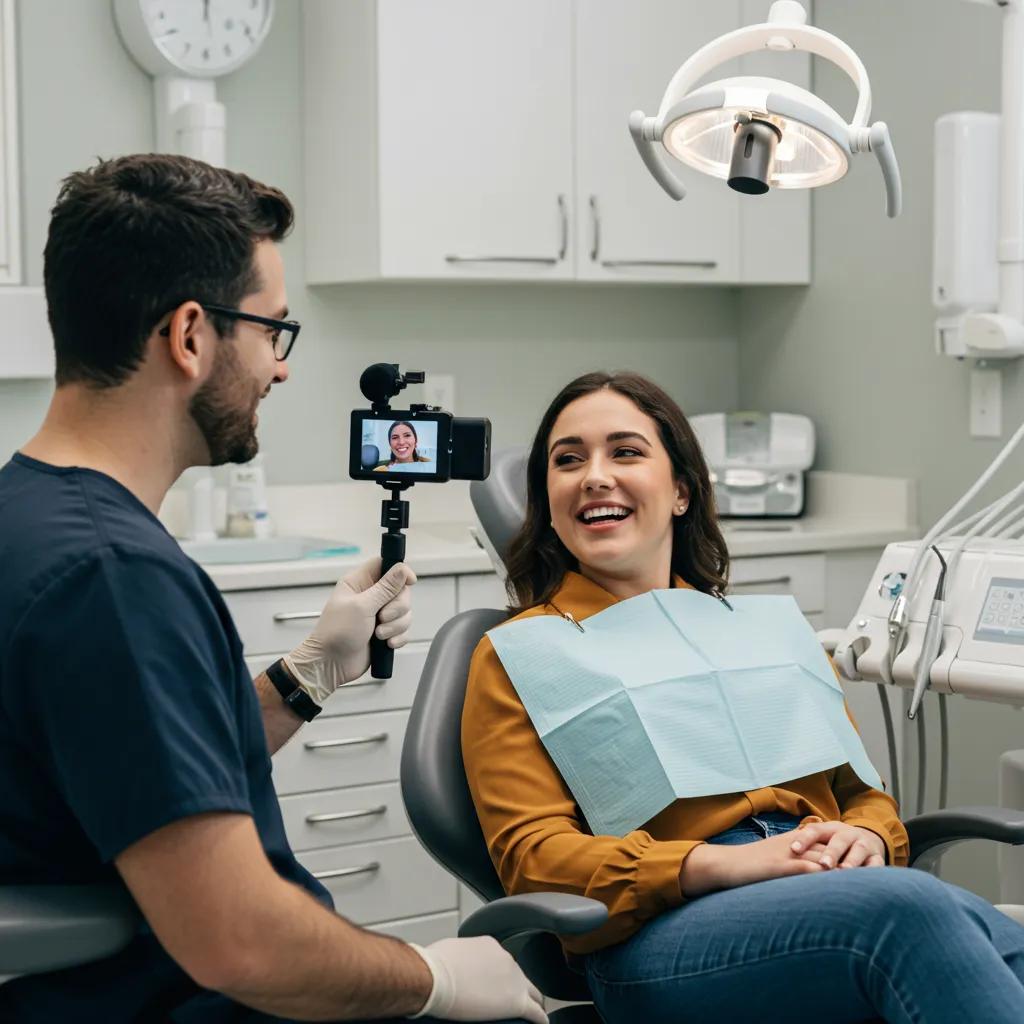
Video and multimodal testimonials combine auditory, visual and textual signals to increase credibility and engagement, improving on-page time and conversion metrics that contribute indirectly to SEO value. Video testimonials create richer social proof by showing patient expressions and context, which increases trust and can raise conversion rates when embedded on treatment pages. From a technical perspective, marking up video content with appropriate schema (VideoObject) and providing transcripts enhances crawlability and accessibility. The following subsections explore video impact and how to structure case studies to maximise both SEO and patient trust.
What Is the Impact of Video Testimonials on Patient Trust and Engagement?
Short, focused video testimonials (typically 30–90 seconds) that highlight the patient’s experience and the benefits they received increase trust more rapidly than text alone because they provide visual cues and narrative detail. Videos increase engagement metrics such as time on page and can generate higher click and booking rates when used on service landing pages. To preserve accessibility and SEO value, provide captions and a written transcript, and ensure patient consent is documented before publishing. These steps turn video assets into durable SEO content that supports review-driven discoverability.
How Can Visual Content and Case Studies Support Dental SEO Success?
Case studies that combine before/after imagery, video, and structured narrative create content that search engines interpret as high-quality, relevant evidence of service efficacy, which can improve topical authority for key service terms. Use a consistent case study outline: challenge, treatment, outcome, patient quote, and CTA, and mark up the page with appropriate schema types such as Review, AggregateRating and VideoObject where applicable. Distribute case studies across social channels and directories to increase backlinks and GBP interactions, reinforcing the signals that local ranking algorithms value.
How Can Dental Practices Measure the ROI of Patient Review Management?
Measuring ROI requires mapping KPIs to concrete patient acquisition and revenue outcomes so review-driven activity can be quantified and optimised. Core metrics include review count and average rating, GBP views and search impressions, CTR from search results, and conversions such as phone calls, online bookings or form submissions attributable to the GBP or review landing pages. Use a simple attribution model to estimate revenue per booking and calculate ROI from incremental bookings driven by improved review metrics. The following subsections define KPIs and recommend an audit cadence to maintain momentum.
Intro: The table below maps primary KPIs to measurement methods and their impact on conversions so clinics can track the direct business value of review management.
| Metric | Measurement Method | Impact on Conversions |
|---|---|---|
| Review count | GBP and platform dashboards | Signals trust; increases CTR |
| Average rating | Aggregated across platforms | Direct effect on click propensity |
| GBP views | Google Insights | Exposure leading to actions |
| Calls/bookings from GBP | Call tracking / booking source | Directly attributable patient acquisition |
Summary: Tracking these KPIs monthly and relating them to revenue per booking enables clinics to calculate an estimated ROI for review management initiatives.
What Key Performance Indicators Reflect Review-Driven SEO Success?
Primary KPIs include number of new reviews, average rating, review velocity (rate of reviews per month), GBP views, CTR from search results and actions such as calls or bookings originating from GBP. Collect these metrics from platform dashboards and combine them with appointment and revenue data to estimate the monetary impact of review improvements. For a simple ROI formula: estimate incremental bookings attributable to review improvements multiplied by average revenue per booking, minus the cost of management tools or services. Regular tracking of these metrics reveals whether review activity is translating into tangible business outcomes.
How Often Should Dental Practices Audit and Update Their Review Strategies?
A practical cadence balances responsiveness with strategic review: monitor reviews daily, perform operational checks and responses weekly, conduct a KPI review and content refresh quarterly, and complete a comprehensive annual audit that includes competitive benchmarking and platform shifts. Monthly checks should focus on new review responses and immediate remediation; quarterly work includes updating site testimonials, refreshing schema markup, and analysing conversion pathways. An annual deep dive identifies systemic improvements and allocates budget for tools, staff training or external support.
Why Is Google Business Profile Essential for Dental Review SEO?
Google Business Profile is the primary display mechanism for patient reviews in local search, as it aggregates star ratings, review snippets and images in a format that directly influences local pack inclusion and user action. Because the GBP is front-and-centre in searches for “dentist near me” and service-specific queries, optimising GBP content, categories and review management is essential to maximise visibility. Ensuring consistent NAP details, comprehensive service lists and active review responses increases the profile’s authority and the likelihood of higher placements. The following subsections describe how GBP displays reviews and practical optimisation steps for dentists.
How Does Google Business Profile Display and Leverage Patient Reviews?
GBP surfaces aggregate star ratings, the most recent reviews, review snippets and Q&A entries in search results and map views, and these elements act as immediate trust signals for prospective patients. Reviews on GBP often appear in the local pack and knowledge panel, increasing the real estate a practice occupies in search results and driving higher CTR. Google also uses GBP engagement metrics—such as clicks to call, direction requests and website visits—as behavioural signals feeding local ranking adjustments. Optimising these GBP elements and encouraging review interactions therefore directly supports local SEO objectives.
What Are the Best Practices for Optimising Google Business Profile for Dentists?
A dentist’s GBP should be complete and accurate, with consistent NAP, relevant service categories, high-quality images, regular posts and active review responses to signal an engaged practice. Use service attributes and descriptions that include natural service and location terms, encourage structured review submissions, and ensure photos and videos are current and captioned. Pair GBP activity with schema on the practice website to reinforce signals and increase the chance Google extracts rich snippets. Maintaining this consistency supports both review visibility and search performance.
Milkcan Marketing provides hands-on Google Business Profile optimisation services for dental practices seeking practical support with GBP configuration, review strategies and local SEO execution; practices interested in a tailored approach can enquire about GBP optimisation and reputation management services.
How Does Online Reputation Management Impact Patient Acquisition for Dentists?
Online reputation management converts qualitative patient feedback into quantifiable trust and demand signals that influence prospective patient decisions, especially for local, service-led searches. A strong online reputation increases conversion probability at multiple stages of the funnel: search discovery, profile engagement and final booking. For small healthcare practices, reputation management is particularly powerful because a few positive reviews can outweigh volume advantages held by larger competitors. The next subsections explain why small practices are especially sensitive to reputation effects and how Australian patient behaviours make reviews a decisive factor.
Why Is Managing Online Reputation Critical for Small Healthcare Practices?
Small practices are vulnerable because a handful of negative reviews can disproportionately impact perceived quality and reduce bookings, whereas consistent, prompt responses and a steady stream of authentic reviews can significantly enhance credibility. Managing reputation actively ensures that the clinic’s most visible content reflects current patient experiences and mitigates the risk posed by isolated negative posts. Operationalising reputation management through SOPs, staff training and monitoring tools helps small teams sustain a competitive presence in local search results and patient choice.
How Do Patient Reviews Influence New Patient Decisions in Australia?
Australian patients routinely consult reviews when choosing healthcare providers, and they place particular weight on recency and detailed experience descriptions when deciding between local options. Reviews serve as social proof at decision points such as choosing a new dentist or selecting a specialist procedure, and they can tip the balance when practices have similar pricing or proximity. For Australian dental practices, prioritising transparent, compliant review generation and visible engagement demonstrates quality and reassures local patients at the critical moment of booking.
Milkcan Marketing supports small healthcare practices with reputation management, Local SEO and Google Business Profile optimisation services designed to translate review activity into measurable patient acquisition; clinics can request bespoke guidance on integrating these services into their patient journeys.