Local SEO Tactics for Dentists: Boost Engagement & New Patients
Local SEO for dentists is the practice of aligning a dental practice’s online presence with how local patients search, using signals such as Google Business Profile, citations, reviews, and localized website content to increase calls, bookings, and new-patient inquiries. This article explains how these local signals work—how GBP listing accuracy and review volume influence local map-pack placement—and the specific patient engagement benefits dentists can expect from improved local visibility. Many dental practices struggle to convert search visibility into booked appointments; targeted local SEO strategies solve that problem by mapping tactics to the patient journey from awareness to decision. You will learn why local SEO matters in the Australian market, step-by-step Google Business Profile actions, review-generation and response templates, on-site local optimization, citation best practice, content strategies that build trust, and the KPIs and tools to measure success. Throughout, the guide uses practical checklists, EAV comparison tables, and implementation actions that dental teams can apply directly or hand to a provider for execution.
Why Is Local SEO Crucial for Dentists in Australia?
Local SEO for dentists is the set of practices that improves a clinic’s visibility for geographically relevant queries by signaling relevance, proximity, and prominence to search engines and patients. The mechanism works via local ranking signals—Google Business Profile engagement, consistent citations, on-page local intent signals, and review quality—so clinics that optimize these signals appear more often in local searches and map-pack results, producing higher click-to-call and booking rates. The benefit is clear: better local visibility turns passive searches into patient contacts and appointments. Below are the core reasons Australian dental practices should prioritize local SEO, followed by how these reasons translate into measurable patient acquisition.
Local SEO matters for Australian dentists because of three core drivers:
- Local searches often indicate immediate intent to book: clinics that rank in the map pack capture high-intent patients.
- Reviews and GBP media influence trust and click-through, increasing calls and direction requests.
- Citation consistency and localized content improve relevance for suburb-level queries used by patients.
These drivers lead directly to the practical steps clinics should take to convert visibility into bookings, which we cover in the next section on GBP optimization.
How Does Local Search Visibility Impact Dental Patient Acquisition?
Local search visibility converts online attention into patient actions by creating a measurable pathway: impressions → GBP views → clicks → calls/bookings. The mechanism is behavioral: patients searching “dentist near me” or a suburb + service look at star rating, photos, and service attributes before deciding to call or book, so higher visibility and stronger GBP content increase conversion probability. Typical conversion points include website appointment bookings, phone calls via click-to-call, and direction requests—each representing a distinct patient intent signal that clinics can measure. Mapping these conversion points to patient journey stages (awareness → consideration → decision) helps dental teams prioritize which signals to test and improve.
Patient journey mapping shows where to invest: GBP and reviews for decision-stage visibility, service pages for consideration, and educational content for awareness. The next section outlines GBP steps clinics can take in 30–60 minutes to secure and improve that decision-stage presence.
What Are the Latest Trends in Dental Healthcare SEO in Australia?
Local dental SEO in 2025 is shaped by mobile-first indexing, AI-driven semantic search, and growing importance of entity-based content that maps services to patient needs. Mobile-first mechanisms mean pages that load quickly and present clear CTAs capture patients searching on phones; semantic search rewards content structured around entities such as “Dentist,” “Dental Practice,” and “Service Pages.” Voice search and conversational queries are increasing the value of FAQ and natural-language content for dentists targeting nearby patients. These trends require dentists to prioritize structured data, concise service descriptions, and content that answers common patient questions to be understood by AI ranking systems.
Adapting to these trends improves both discovery and engagement, and that practical adaptation begins with the Google Business Profile actions described next.
How Do Patient Behavior and Mobile-First Indexing Affect Dental SEO?
Patient behavior is increasingly mobile and intent-driven: most local dental queries happen on smartphones and often result in immediate contact actions such as calls or direction requests. Mobile-first indexing means Google uses the mobile version of a site for ranking and indexing, so responsive design, fast load times, and touch-friendly CTAs directly affect local visibility. Practical consequences include ensuring click-to-call buttons are prominent, placing booking CTAs above the fold, and using structured data to signal service locations and availability. These mobile and behavior-driven factors determine which on-site and off-site changes deliver the fastest gains in patient engagement and will be explored further in the website optimization section.
Improving mobile experience and local signals naturally leads to focusing on Google Business Profile optimization tactics that influence patient choices in search and maps.
How Can Dentists Optimize Their Google Business Profile for Maximum Local Visibility?
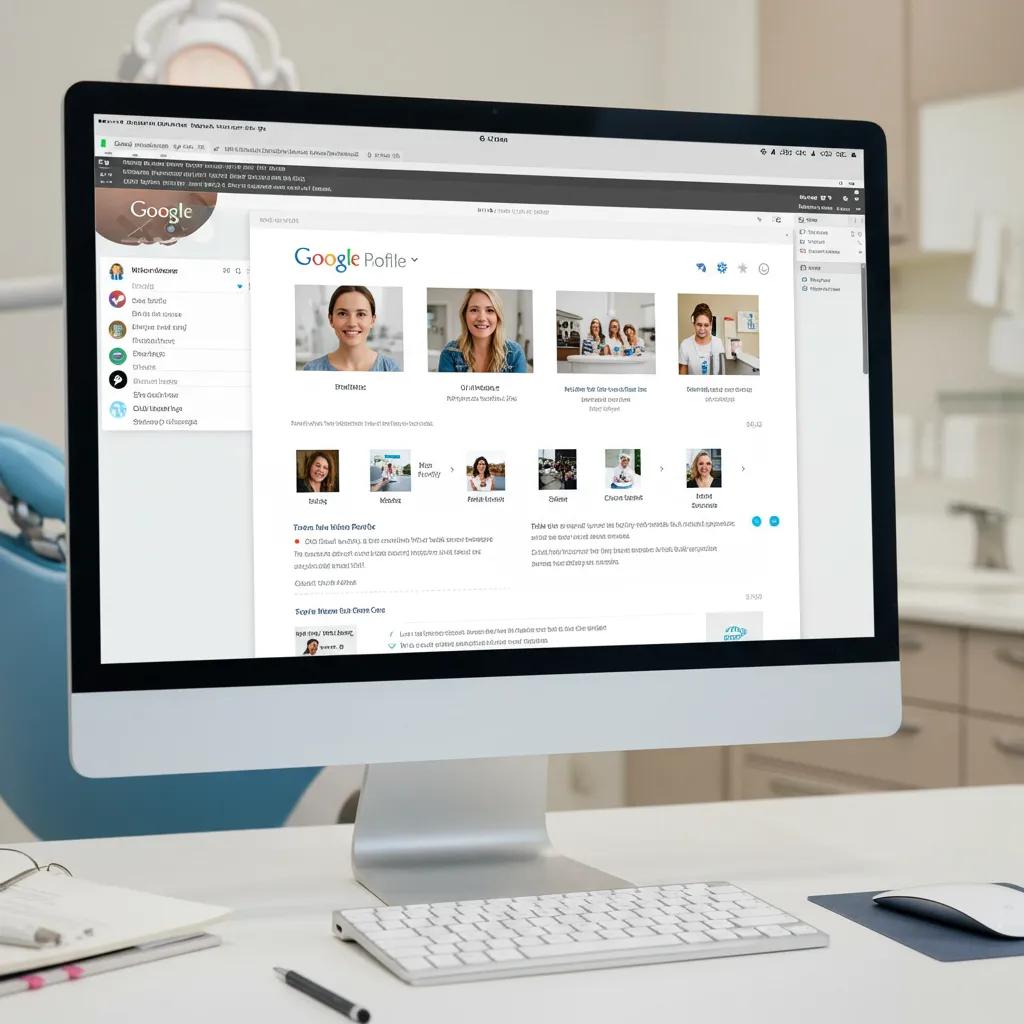
Google Business Profile optimization for dentists is the process of completing and refining GBP fields so the listing signals accurate service, location, and trust to local searchers and Google’s algorithms. The mechanism works by combining category selection, service attributes, photos, posts, and Q&A management to increase relevance and engagement, which in turn raises the likelihood of map-pack placement and click-throughs. The benefit is increased visibility in relevant local searches, more calls, and more appointment bookings from nearby patients. Below is a concise, actionable how-to checklist and a comparison table for core GBP components.
Follow this step-by-step to claim and improve a GBP listing:
- Check for an existing listing, claim ownership, and complete verification via postcard, phone, or email.
- Select the most accurate primary category and add secondary services using dental-specific service names.
- Populate service fields, add high-quality photos and short videos, and use Posts for offers or appointment updates.
- Monitor Q&A, answer proactively, and encourage recent patient photos and reviews to keep the profile fresh.
These steps set the foundation for more detailed field-level improvements explained in the following subsections.
Before the table: the following table compares key GBP components for dentists, what to include, and why each element matters for local visibility and patient engagement.
| Profile Component | What to include | Why it matters |
|---|---|---|
| Primary & Secondary Categories | Precise categories like “Dentist” and service-level entries (e.g., “Emergency Dentist”) | Helps Google match searches to services and improves local relevance |
| Services & Service Descriptions | Clear service names, brief descriptions, and local modifiers (service + suburb) | Supports snippets and localized search intent |
| Photos & Videos | Team photos, before/after, clinic exterior, short procedure explainers (15–30s) | Builds trust and increases click-through to bookings |
| Posts & Offers | Promotions, availability updates, seasonal reminders | Signals freshness and can influence CTR |
| Q&A Management | Pre-populated FAQs and timely answers | Shapes expectations and reduces friction to booking |
This comparison highlights that accurate categories and recent media directly affect patient decisions, so practices should schedule regular GBP updates. For clinics that prefer external support, Milkcan Marketing offers Google Business Profile management as part of its Dental Marketing Services, providing focused profile optimization and media workflows; an anonymized case review showed measurable improvements in GBP engagement and new-patient inquiries for a small dental practice. The next subsection covers claiming and verification mechanics.
What Are the Steps to Claim and Verify Your Google Business Profile?
Claiming and verifying a Google Business Profile requires finding any existing listing, requesting ownership, and completing verification so the practice controls edits and insights. The mechanism includes searching Google Maps for the practice name, selecting “claim this business” in the GBP interface, and choosing a verification method; postcard verification is common but phone or email options may appear depending on the listing. Verified ownership unlocks the ability to edit categories, services, hours, and to view GBP Insights that show views and actions. Common verification issues include duplicate listings and address mismatches, which can be resolved by standardizing NAP and merging duplicates via the GBP interface.
Resolving verification problems prepares a practice to focus on category and media optimization, which is the next critical step for visibility.
How to Optimize GBP Categories, Services, Photos, and Videos for Dentists?
Optimizing categories, services, photos, and videos is about selecting precise service labels, delivering high-quality media, and refreshing content regularly to improve both relevance and patient trust. The mechanism is that categories and services feed Google’s matching algorithm while photos and videos influence patient choice and click-throughs; together they increase GBP engagement metrics that impact local ranking. Use a primary category of “Dentist,” then add secondary services with local modifiers (for example, “dental implant clinic [suburb]”) and short service descriptions that include common patient terms. For media, upload professional exterior photos, interior shots, team photos, and short video clips (15–30 seconds) demonstrating the reception process or a patient journey overview.
Optimized media and service labels lead naturally into proactive GBP content management via Posts and Q&A, which we cover next.
How Does Managing Q&A and Posts on GBP Enhance Patient Engagement?
Managing Q&A and Posts increases patient engagement by answering common queries before they arise and by highlighting timely offers or availability, which encourages clicks and bookings. The mechanism is behavioral: patients scanning a GBP listing use Q&A and Posts to assess suitability, and readily-answered questions reduce friction in booking decisions. Implement a cadence of weekly or biweekly Posts for promotions and use pre-approved Q&A responses for common questions on payment options, parking, and emergency availability. Proactive Q&A can be populated with questions the practice receives most often, then updated when services or policies change.
Regular Posts and curated Q&A keep a GBP profile fresh and directly support higher conversion rates, which we will see reinforced by good review management.
What Are Effective Patient Review Management Strategies for Dental Practices?

Patient review management for dental practices is the planned approach to generating, responding to, and leveraging patient reviews to build trust and improve local ranking signals. The mechanism relies on the SEO and conversion signals embedded in review quality, recency, and volume: search algorithms and prospective patients both use ratings and review content to assess a practice’s suitability. The benefit is twofold: improved local rankings and better conversion rates from users who read positive, recent reviews. Below are practical tactics for generating reviews ethically and templates for timely responses.
Dental practices should adopt these core review-generation tactics:
- Ask at the right moment: request reviews after positive interactions or completed treatments.
- Use automated workflows: integrate review prompts into SMS or email appointment follow-ups.
- Make leaving a review easy: provide clear instructions on how to leave feedback for the practice’s profile.
- Train staff to mention review requests during checkout or follow-up calls.
These tactics prepare the practice for disciplined responses and reputation management processes.
Before the table: the following EAV-style comparison shows common review-generation tactics, how to implement them, and the expected response or impact.
| Tactic | How to implement | Expected patient response / SEO impact |
|---|---|---|
| Post-visit email prompts | Triggered automatically after appointment with simple instructions | Higher review volume; increased recency |
| SMS review requests | Short message with clear call-to-action sent within 24–48 hours | Higher conversion due to mobile convenience |
| In-practice prompts | Receptionists provide a short card or QR code with review steps | Increased compliance from satisfied patients |
| Staff referral asks | Hygienists or dentists ask patients after positive treatment | Personal ask often yields more detailed reviews |
This table shows that combining automation with in-person asks yields stronger review flows; the next paragraph outlines response templates and escalation.
For practices overwhelmed by review volume or compliance concerns, Milkcan Marketing’s reputation management service—offered within its Dental Marketing Services—can operationalize monitoring, provide response templates, and run review-generation campaigns, helping clinics maintain consistent public-facing replies and save staff time. The following subsections explain earning reviews and responding tactically.
How Can Dentists Earn More 5-Star Reviews from Patients?
Earning more 5-star reviews starts with delivering excellent care and closing the feedback loop by asking for reviews at the optimal time and via the channel the patient prefers. The mechanism is timing and convenience: patients who are satisfied immediately after treatment are more likely to leave positive feedback if requested promptly and with a simple process.
Use standardized scripts at checkout, follow-up email templates that thank patients and include clear steps, and short SMS prompts for mobile users to reduce friction. Training staff to explain how reviews help the clinic and to show appreciation encourages follow-through.
What Is the Best Way to Respond to Positive and Negative Patient Reviews?
Responding to reviews requires a respectful, timely, and privacy-compliant approach: thank authors of positive reviews and for negative reviews acknowledge concern, apologize where appropriate, and invite offline resolution without discussing clinical details. The mechanism is trust repair and public reassurance—well-handled responses demonstrate professionalism and can turn negative experiences into neutral or positive perceptions for future patients. Use templates that are empathetic and brief, avoid discussing protected health information publicly, and offer direct contact channels for private follow-up. Speed matters: respond within a few days to show attentiveness.
Good response practices reduce escalations and demonstrate a practice’s commitment to patient care, which improves conversion for prospective patients reading reviews.
How Do Patient Reviews Influence Local SEO and New Patient Acquisition?
Reviews influence local SEO through multiple signals: rating average, review volume, and recency contribute to local ranking algorithms, while review content containing local keywords and service names reinforces relevance for map-pack queries. The mechanism is both algorithmic and behavioral: algorithms use review metrics as ranking signals, and patients use reviews to decide which practice to contact. Improved review profiles typically lead to increased GBP clicks, calls, and direction requests, which are measurable via GBP Insights and relate directly to new-patient acquisition. Tracking review trends alongside action metrics reveals the conversion impact of reputation efforts.
Understanding this impact makes it clear why reviews should be part of any local SEO program, and the next section turns to on-site optimization that complements GBP and reviews.
How to Optimize Your Dental Website for Local SEO and Patient Engagement?
Optimizing a dental website for local SEO and patient engagement involves aligning page content, technical performance, and structured data with local intent so that pages convert searchers into booked patients. The mechanism is combined: on-page signals (titles, local keywords, service descriptions) indicate relevance while technical signals (mobile performance, schema) ensure discoverability and good user experience—together they increase site conversions. The benefit is a website that supports GBP activity, captures local search traffic, and provides clear conversion paths such as bookings and call-to-action buttons. Below are keyword research practices and a structured comparison table of page types and local optimization tips.
Effective keyword research and page planning for dental practices include these actions:
- Build localized keyword buckets combining service + suburb for each service page.
- Prioritize keywords by intent (informational, commercial, transactional) and volume.
- Map each keyword group to a page or content asset that matches patient intent.
These practices lead into structured service-page templates and technical checks described next.
Before the table: the following table compares common dental page types, their SEO attributes, and local intent optimization tips.
| Page type | SEO attributes | Local intent optimization tip |
|---|---|---|
| Service page | Targeted keywords, schema, CTA | Include suburb modifiers and LocalBusiness/Dentist schema |
| Location landing page | NAP, map embed, local testimonials | Use unique local content and directions |
| Blog/FAQ | Long-tail queries, conversational phrases | Answer common local questions and include neighborhood names |
| Contact/Booking | Structured data, click-to-call, appointment form | Prominent mobile CTA and schema for contact points |
This table clarifies which page templates serve different intents and how to add local signals; the next subsections provide specifics on keyword research, service-page structure, and technical basics.
What Are the Best Keyword Research Practices for Dental Practices?
Keyword research for dental practices should focus on local modifiers, patient intent, and conversational queries that reflect real booking behaviors. The mechanism is mapping searcher intent to content: combine service names with suburb or “near me” modifiers to create a list of target phrases, then prioritize by estimated intent and achievable search volume for the practice. Use patient-facing language (e.g., “emergency dentist near me,” “affordable dental implants [suburb]”) and group terms into buckets for awareness, consideration, and decision stages. This targeting ensures content serves the right patient at the right stage and increases conversion potential.
These keyword buckets feed directly into the service page templates and content calendar discussed next.
How to Optimize Dental Service Pages for Local Search?
Service pages should use clear H1/H2 structures, descriptive meta titles with local modifiers, targeted schema (Service, LocalBusiness, Dentist), and prominent CTAs to convert visitors into bookings. The mechanism is signal alignment: titles and content show relevance to search engines while schema and CTAs improve usability and indexing.
Include a short service overview, benefits for patients, common FAQs, and a localized section specifying the suburbs served. Internal links from location or blog pages strengthen local pathways and support conversions.
What Technical SEO Basics Should Dentists Implement for Better Rankings?
Technical SEO basics for dental sites include ensuring mobile-first responsiveness, optimizing page speed, implementing LocalBusiness/Dentist schema, using HTTPS, and correcting canonicalization to prevent duplicate content issues. The mechanism is that search engines prioritize sites that load quickly on mobile and present clear structured data signals, so technical improvements directly improve crawlability and ranking potential. Use compressed images, lazy-loading for non-critical assets, and audit site performance with common tools to find quick wins.
Also, ensure XML sitemaps and robots.txt are configured correctly to facilitate indexing.
Addressing these technical basics supports the content and GBP efforts and reduces friction in the patient booking funnel.
How Can Local Citation Building Improve Your Dental Practice’s Local SEO?
Local citation building is the practice of listing a clinic’s Name, Address, and Phone (NAP) consistently across authoritative directories so search engines and patients see coherent location signals. The mechanism is that consistent citations reduce confusion for crawlers and reinforce the practice’s geographic footprint, which supports local rankings and trust. The benefit is more reliable map-pack eligibility and fewer lost patient contacts due to incorrect listings. Below are recommended directories and an audit checklist to manage citation quality.
Start with a citation priority list focused on high-authority and healthcare-specific sources:
- National health directories and well-known general business listings.
- Local/regional chambers and community directories relevant to the practice’s suburbs.
- Healthcare-specialized directories that index dental providers.
These choices feed into an audit process and remediation steps for NAP consistency explained next.
Which Local Directories Are Best for Dentists in Australia?
Priority directories for Australian dentists include national business listings, recognized health directories, and local council or chamber directories that patients use to find nearby services. The mechanism is authority and relevance: directories with higher trust pass stronger local signals and make the practice easier to find. Prioritize national directories first, then local and specialty healthcare directories to maximize impact. Quick submission tips include using a standardized NAP format, uploading a clinic photo, and selecting appropriate health/dental categories.
These directory submissions should be tracked and rechecked regularly to prevent drift, which leads into the next subsection on NAP consistency.
Why Is NAP Consistency Critical for Dental Local SEO?
NAP consistency is critical because inconsistent name, address, or phone information across listings confuses search engines and patients, which can lower local rankings and reduce trust. The mechanism is data reliability: inconsistent citations create conflicting signals that search engines must reconcile, often diminishing local prominence. An audit checklist involves compiling existing listings, verifying the exact NAP format to use on the website and primary GBP, and correcting discrepancies via directory edits or suppression of duplicates.
Ongoing monitoring ensures new citations follow the standardized format and maintain ranking signals. Standardizing NAP gives search engines a single, authoritative location signal to rely on and reduces patient friction when contacting the practice.
What Content Marketing Strategies Drive Patient Engagement for Dentists?
Content marketing for dentists uses educational articles, FAQs, videos, and local stories to answer patient questions, build trust, and support local SEO by matching content to stages of the patient journey. The mechanism is intent alignment: content that addresses awareness, consideration, and decision queries attracts and nurtures patients, while embedding local keywords and schema improves discoverability. The benefit is increased website traffic, better patient understanding of services, and higher conversion rates from informed visitors. Below are topic ideas mapped to the patient journey and video recommendations.
Content planning should include these content types for different patient journey stages:
- Awareness: educational blog posts on common dental problems and prevention.
- Consideration: procedure explainers, pricing guides, and comparisons.
- Decision: local testimonials, booking information, and FAQs about what to expect.
These content types feed into video ideas and repurposing tactics described next.
What Blog Topics Attract and Retain Dental Patients?
Blog topics that attract and retain patients combine common concerns, procedural explanations, and local community angles to address each stage of the patient journey. The mechanism is problem-solution content: awareness posts answer common issues, consideration content explains options, and decision-stage pieces remove barriers to booking. Suggested topics include:
- “How to manage a toothache before your appointment”
- “What to expect with dental implants”
- “Costs explained: common dental treatments”
- “Choosing a family dentist in [suburb]”
Each post should end with a clear CTA for booking or contacting the clinic.
How Can Video Marketing Enhance Patient Trust and Local SEO?
Video marketing enhances patient trust with practice tours, clinician introductions, short procedure explainers, and patient testimonial clips; optimizing video titles and descriptions with local keywords improves discoverability. The mechanism is visual trust-building: videos let prospective patients see the clinic, meet staff, and reduce appointment friction, increasing the likelihood of booking.
Production tips include:
- Keeping videos concise (30–90 seconds for clinic tours, 2–3 minutes for explainers)
- Adding captions
- Using descriptive filenames
- Embedding videos on service pages and GBP where possible
Host on a mainstream platform for discoverability and embed on the site for on-page engagement.
Videos complement written content and GBP media to create a cohesive trust-building content strategy that supports local SEO.
How Do You Measure Success in Local SEO for Dental Practices?
Measuring success in local SEO for dental practices involves tracking GBP metrics, website behavior, and conversion events to link SEO actions to patient acquisition outcomes. The mechanism is metric alignment: by monitoring views, clicks, calls, and booking conversions, practices can see whether GBP and on-site changes translate into patient contacts and booked appointments. The benefit is clear decision-making: data guides which tactics to scale. Below is a KPI breakdown, tools comparison, and recommended reporting cadence to operationalize measurement.
Key KPIs dental practices should track include GBP views and actions, organic website traffic, local keyword rankings, and conversion metrics such as online bookings and new patient inquiries. Use these KPIs to prioritize improvements and assess ROI. The table below summarizes core KPIs, their definitions, and suggested benchmarks for small practices.
| Metric | Description | Suggested focus |
|---|---|---|
| GBP views & actions | Number of views, website clicks, calls, and direction requests from GBP | Track weekly for trends |
| Organic local traffic | Visitors arriving via localized queries to service/location pages | Monitor monthly with source filters |
| Conversion events | Bookings, contact form submissions, phone calls tracked as goals | Optimize pages with low conversion rates |
| Review metrics | Volume, rating average, recency | Aim to maintain steady growth in volume and recency |
This table helps teams link visibility to patient outcomes; the following subsections recommend tools and cadence for monitoring.
For clinics seeking structured reporting and audits, Milkcan Marketing provides measurement and reporting as part of its Dental Marketing Services, combining local SEO tools and content marketing analytics to produce actionable monthly reports and tailored audits—clinics can contact Milkcan Marketing for a tailored audit and recommendations.
What Key Performance Indicators Track Local SEO and Patient Engagement?
Priority KPIs include GBP-specific metrics (profile views, website clicks, calls), local organic traffic to service pages, conversion rates for booking forms, and the number and average rating of reviews. The mechanism is connecting exposure to outcomes: increased GBP actions and improved local rankings should correlate with higher booking volumes. Suggested short-term targets for small practices focus on steady monthly improvements in GBP actions and conversion rate optimization rather than raw traffic spikes. Regularly reviewing these KPIs highlights which local SEO efforts drive patient engagement.
Tracking these KPIs leads to selecting the right tools for ongoing monitoring.
Which Tools Help Monitor Google Business Profile and Local SEO Performance?
A useful toolkit for monitoring includes Google Business Profile Insights for profile actions, Google Search Console and GA4 for on-site monitoring, and local SEO tools for citation and rank tracking. The mechanism is layered monitoring: GBP Insights shows patient interactions, Search Console reveals query performance and GA4 tracks conversion events, while local SEO tools identify citation and ranking issues. For small practices, focus on GBP Insights plus GA4 for conversions; agencies may add specialized tools for broader citation audits and rank tracking. The choice of tools determines reporting granularity and audit frequency.
With the right tools in place, a review cadence ensures the strategy stays current and effective.
How Often Should Dentists Update Their Local SEO Strategies?
Dentists should adopt a cadence of weekly GBP checks, monthly performance reviews, and quarterly content and technical audits to keep local signals fresh and aligned with patient behavior. The mechanism is continual optimization: local SEO benefits from timely responses to reviews and GBP updates, monthly adjustments to content priorities, and quarterly technical reviews for performance and schema. Operationally, assign weekly GBP monitoring to a staff member, review KPI dashboards monthly, and schedule quarterly strategic audits to refresh content and citations.
This cadence balances responsiveness with strategic planning.
Maintaining this schedule supports sustained improvements in visibility and patient acquisition; to implement a tailored cadence, contact Milkcan Marketing’s Dental Marketing Services for a customized plan.