

How to Optimise Medical Specialist Profiles for Visibility and Trust
Profile management for medical specialists involves actively creating, optimizing, and monitoring the digital profiles that patients use to find and evaluate clinicians. It works by ensuring accurate profile information, high-quality media, compliant patient feedback, and reliable directory citations, which together improve search visibility and patient trust. This article explains the mechanisms that make profile management effective, walks through Google Business Profile (GBP) optimization step-by-step, and provides Australia-specific reputation and AHPRA-compliant guidance for specialists. You will learn practical local SEO tactics, review-generation workflows, and measurable KPIs to track patient inquiries and bookings. The guide also compares reputation channels and includes EAV-style tables and checklists to streamline implementation. Finally, for practices seeking hands-on support, the article notes how Milkcan Marketing’s Profile Management service aligns with specialist needs and where to explore that option.
What Is Profile Management for Medical Specialists and Why Is It Essential?
Profile management for medical specialists is the systematic process of maintaining authoritative, accurate, and patient-focused online profiles across Google Business Profile, professional directories, and the clinic website. It functions by aligning authoritative signals—consistent NAP (name, address, phone), current service listings, clinician bios, and verified credentials—with rich media and patient feedback to improve local visibility and conversion. The result is higher placement in local packs, clearer patient expectations, and more direct inquiries through calls and booking links. Effective profile management reduces patient confusion from duplicate listings and stale information, and it supports reputation building that influences referral pathways. The next sections break down visibility mechanisms, the core components you must manage, and how these elements together support patient acquisition.
How Does Profile Management Improve Medical Specialist Online Visibility?
Profile management improves visibility by consolidating the signals local search engines and referral platforms use to surface specialists in search results and map packs. Google Business Profile, local directories, and structured data on your clinic website form a semantic network that signals specialty, location, and services, which increases the chance of appearing for relevant queries. This improves measurable metrics such as profile views, calls, and website clicks, and a clearer profile increases click-through rates from search results. For example, a complete GBP with services, photos, and booking links typically achieves higher engagement than a sparse listing. Understanding these visibility mechanisms leads into the specific profile components you should prioritize.
Business Optimisation in the Digital Age: Local SEO and Google Business Profile Strategies
The purpose of the presented research is to substantiate the importance of local business optimisation for retailers in search engines to increase organic traffic; to present insights and provide practical recommendations for retailers regarding the local optimisation of their business on Google as part of an effective marketing strategy; to create typical valid data micromarking (using the example of a Ukrainian retailer), which will contribute to advantageous placement in the Local Pack compared to competitors, and increase organic traffic and conversion. Methods. To achieve the purpose, a system of general and special research methods is employed, including logical generalisation, analysis, comparison, and synthesis. To formulate recommendations for retailers, the following online tools are used: Google My Business (to study profile specifics), JSON-LD Generator (to generate data micromarking), and Google Structured Data Testing Tool (to verify data micromarking validity).
Business optimization in the digital age: Insights and recommendations, A Natorina, 2020
What Are the Key Components of Profile Management for Healthcare Providers?
Key components of profile management include a complete Google Business Profile, consistent directory citations, professional clinician bios, up-to-date service listings, quality photos, and active review management. Each component contributes a meronymic piece of the overall digital footprint: photos improve CTR, service lists and categories signal relevance, and reviews build social proof. Structured data/schema on your website connects these components to search engines, while directory consistency reduces fragmentation across referral platforms. Prioritizing these components provides a clear roadmap to raise local ranking and patient trust, which naturally flows into tactics for turning visibility into inquiries.
How Does Profile Management Support Patient Acquisition for Medical Specialists?
Profile management supports patient acquisition by converting discovery into direct actions: phone calls, appointment bookings, and referral requests. Accurate service descriptions and booking links shorten the decision funnel, while timely review responses and clinician bios build the trust required for first-time bookings. KPI tracking—calls, website bookings, appointment requests, and conversion rates from GBP insights—lets practices measure ROI and iterate on profile content. A data-driven approach to profile tweaks and A/B testing of CTAs improves conversion over time. These acquisition mechanics set the stage for practical GBP optimization steps covered next.
How to Optimize Your Google Business Profile for Doctors and Medical Specialists?
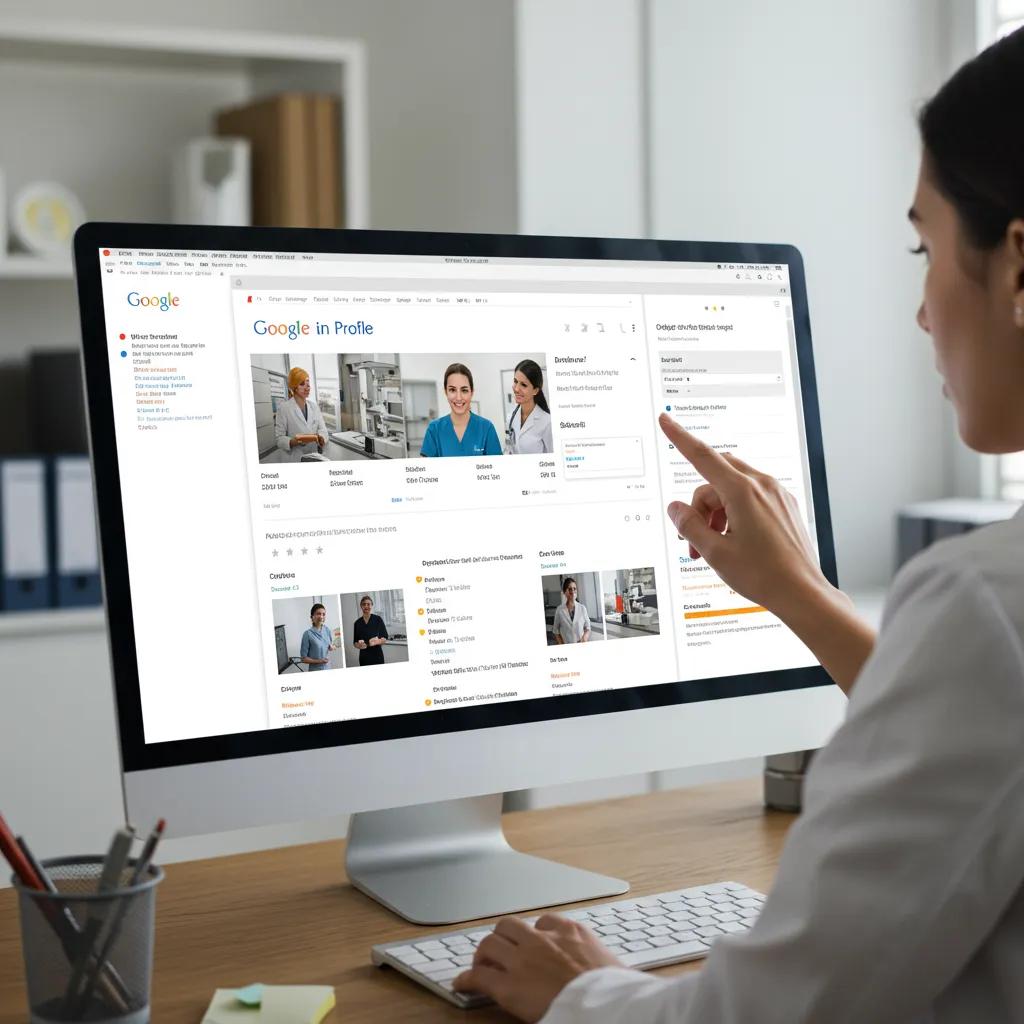
Optimizing your Google Business Profile (GBP) is a tactical process that starts with claiming and verifying the correct listing, then completing every field, publishing high-quality photos, defining services, and using posts and booking links to drive actions. GBP optimization directly influences local relevance and patient choice by providing succinct clinical information at the point of search. A stepwise checklist for claiming and verification helps avoid common pitfalls with duplicated listings and telehealth entries, and media and service best practices maximize engagement. The following subsections offer a verification walkthrough, a media and copy checklist, and guidance for managing Q&A and review workflows.
Introductory checklist for GBP optimization:
- Claim and verify the correct listing: Ensure the listing represents the clinic location or clinician as appropriate.
- Complete profile fields: Fill categories, services, contact options, and attributes for telehealth or in-person care.
- Use high-quality media and posts: Upload clinical space photos, staff headshots, and regular posts with clear CTAs.
These steps form the core of a GBP optimization routine and are complemented by verification details and media tactics below. Near the end of this practical section, note that Milkcan Marketing offers dedicated GBP optimization services tailored to specialists for teams that prefer outsourced implementation.
What Are the Steps to Claim and Verify Your Google Business Profile?
Claiming and verifying a GBP listing begins by searching for existing listings to prevent duplicates and then choosing the correct entity to claim, whether clinic-level or clinician-level. Verification typically proceeds via postcard, phone, or email depending on eligibility, and expected timelines range from a few days to a couple of weeks for postcard methods. If duplicated or misattributed listings exist, the recommended approach is to request ownership transfer or to create a support case within GBP support channels, documenting clinical credentials where required. Keep verification records and screenshots to speed future edits and to satisfy health directory requirements. These verification best practices minimize downtime and preserve continuity of patient-facing information.
How Can You Optimize Your Profile Information, Photos, and Posts Effectively?
Optimizing profile information requires concise service descriptions, correct categories, and properly formatted clinician names and credentials that reflect what patients search for. Photos should include exterior signage, reception and clinical rooms, clinician headshots, and procedure-appropriate imagery, all optimized with descriptive file names and ALT text to aid indexing. Posts should appear at a regular cadence—such as weekly—to announce services, patient resources, and booking availability, each with a focused CTA that aligns with the conversion you measure. Use semantic triples to craft descriptions: “Clinic [entity] provides [relationship] specialist dermatology consultations [entity]” so search systems and patients understand your offering. Consistent updates signal relevance, which increases the profile’s presence in local search.
Optimising Medical Websites for Google Search Rankings: A Methodological Approach
Background: The internet is a widely used source of information for patients seeking medical/healthcare information. While numerous studies have assessed existing medical/healthcare information online, relatively few have examined methods for the design and delivery of such websites, particularly those aimed at the general public.
Objective: This study outlines a method for evaluating material for new medical/healthcare websites, or for assessing existing ones, which correlates with higher rankings on Google’s Search Engine Results Pages (SERPs).
Methods: A website quality assessment (WQA) tool was developed using criteria related to the quality of the information to be included on the website, in addition to an assessment of the text’s readability. This was retrospectively applied to asse
A method for the design and development of medical or health care information websites to optimize search engine results page rankings on Google, S Dunne, 2013
Why Is Managing Google Business Profile Q&A and Reviews Important for Specialists?
Q&A and reviews are direct patient signals: Q&A clarifies expectations pre-booking, while reviews supply social proof that influences trust and ranking algorithms. Monitoring Q&A avoids misinformation and lets you proactively publish authoritative answers to common procedural or referral questions, which reduces friction for prospective patients. For review management, adopt a cadence to monitor responses daily or weekly, use neutral, professional language in replies, and escalate privacy-sensitive issues to offline channels. Sample response frameworks and a monitoring schedule help staff handle feedback without contravening professional guidelines, which feeds into AHPRA-compliant reputation strategies discussed next.
| Profile Element | Recommended Setting | Practical Tip |
|---|---|---|
| Business Name | Official clinic or clinician name | Use exact registered name; avoid keyword stuffing |
| Categories | Primary specialty + secondary services | Choose the most specific available category for accuracy |
| Services | Short service titles + concise descriptions | Include evidence-based terms patients search for |
| Photos | Mix of exterior, interior, clinician, procedure-appropriate images | Use descriptive filenames and ALT text for SEO |
How Can Medical Specialists Manage Their Online Reputation in Australia?

Managing online reputation in Australia requires a monitoring system, response workflows that respect AHPRA guidance, and ethical review-generation practices that protect patient privacy and reduce selection bias. Reputation channels include Google, specialist directories, and social channels; each channel needs tailored monitoring frequency and response tone. AHPRA constraints affect how testimonials and patient stories are solicited and displayed, so any review-generation workflow must include informed consent and neutral language. The following subsections outline monitoring best practices, AHPRA implications for testimonials, and compliant strategies to generate patient feedback.
Monitoring and response tools and cadence overview:
- Tools: Use a reputation dashboard, alerting for new reviews and mentions, and periodic manual checks on specialist directories.
- Cadence: Check primary channels daily for reviews and weekly for wider mention monitoring.
- Response tone: Keep replies professional, neutral, and privacy-preserving, and escalate clinical complaints offline.
This monitoring routine forms the backbone of an AHPRA-compliant reputation management strategy and leads into the detailed guidance below.
What Are Best Practices for Monitoring and Responding to Patient Reviews?
Best practices include setting up alerts for new reviews, triaging feedback into praise, neutral comments, and clinical complaints, and responding within a set timeframe—typically 48–72 hours for public replies. Responses should acknowledge the patient’s experience, provide a neutral apology if needed, and offer an offline channel for further discussion without disclosing clinical details. Maintain a log of responses, actions taken, and escalation outcomes to inform continuous improvement and risk management. Use neutral templates that can be customized quickly to maintain consistency across staff responders. Proactive monitoring decreases public escalation and preserves trust, which connects into AHPRA compliance considerations.
How Do AHPRA Guidelines Affect Online Reputation and Patient Testimonials?
AHPRA rules restrict the use of testimonials that could be misleading, comparative, or create unrealistic expectations; any published patient feedback must be handled with explicit consent and neutral presentation. Practitioners must avoid incentivizing testimonials or amplifying only exceptional outcomes, and they should keep testimonial content factual rather than promotional. The practical approach is to document consent, anonymize sensitive health details where appropriate, and include contextual information about typical outcomes and risks in clinical information pages. When in doubt, refer to the regulator’s guidance and use neutral language in public replies and testimonial displays. These compliance guardrails drive the design of review-generation workflows described next.
What Strategies Help Generate Positive Patient Feedback Compliantly?
Compliant strategies include systematic post-appointment prompts that explain how to leave feedback, templated neutral language that asks for an honest review, and offering third-party platforms where consent and impartiality are clearer. Timing matters: send a polite request within 24–72 hours of an appointment while the experience is fresh, and include simple instructions for leaving a review without scripting content. Maintain an internal compliance checklist for consent capture and anonymization before publishing patient comments on your website or social channels. Ethical, consistent solicitation increases review volume and diversity of perspectives without breaching professional standards.
| Channel | Recommended Monitoring Frequency | Recommended Response Tone |
|---|---|---|
| Google Reviews | Daily | Neutral, professional, privacy-preserving |
| Specialist directories (Healthshare, Medrefer) | Weekly | Informative and factual |
| Social media mentions | Weekly | Public-friendly, escalate clinical details offline |
Which Local SEO Strategies Boost Specialist Clinic Online Presence in Australia?
Local SEO for specialist clinics combines on-page clinic content, consistent citations, targeted backlinking, and clinician-focused content to improve both local pack and organic visibility. Local signals—correct NAP, curated directory listings, and GBP activity—interact with on-site schema and service pages to reinforce specialty relevance for search engines and referral platforms. Tailored local content targeted to catchment-area queries and referral sources drives quality traffic and referral connections. The next subsections explain how local SEO lifts rankings, the role of professional directories, and how personal branding complements clinic-level signals.
Local SEO priority checklist:
- On-page local content: Publish service pages targeting location-specific queries.
- Citation consistency: Audit and standardize listings across high-value directories.
- Local link building: Pursue referral links from professional organizations and local health networks.
These tactical priorities help busy practices decide where to allocate limited resources and lead into practical implementation below.
How Does Local SEO Improve Search Rankings for Medical Specialists?
Local SEO improves rankings by signaling geographic relevance and service specificity to search engines through consistent NAP data, localized content, and authoritative backlinks. On-page signals include schema markup for medical services and clinician profiles, which help AI and search systems map services to user intent. Citations and directory listings act as corroborating evidence for the clinic’s existence and specialty, improving trust in local algorithms. Prioritize tasks that yield the highest signal gain—GBP completeness, one high-value directory optimization, and a clinician profile with schema—before more time-intensive link campaigns. This prioritization yields clearer, faster improvements in impressions and patient inquiries.
What Role Do Professional Directory Listings Play in Profile Management?
Professional directories and referral platforms drive targeted traffic and can influence referral behavior among GPs and allied health professionals when optimized correctly. Optimizing a directory listing means completing specialty fields, adding clinician bios, uploading appropriate images, and linking to service pages for verification. Track referral traffic with UTM-tagged directory links where possible, and prioritize listings based on referral volume and authority. Directory optimization reduces fragmentation and supports the broader citation consistency that underpinning local ranking. The EAV table below summarizes typical directory attributes and recommended approaches.
| Directory | Key Attribute to Optimize | Expected Impact |
|---|---|---|
| Specialist referral platforms | Complete clinician credentials and specialty fields | Increased referral visibility |
| Local health directories | Accurate NAP and service categories | Improved local ranking and patient discovery |
| Professional association listings | Verified credentials and publications | Trust signal to both patients and peers |
How Can Personal Branding Enhance Your Digital Footprint as a Healthcare Provider?
Personal branding bolsters clinic visibility by showcasing clinician expertise through thought leadership content, clinician bios, publications, and speaking engagements that build professional authority. A coherent clinician profile with linked publications and media coverage creates additional indexed pages that search systems associate with your specialty and locality. Content topics for thought leadership include patient education, procedural explanations, and referral-focused guidance that attract both patients and referring clinicians. A consistent brand voice, professional headshots, and clear role descriptions help convert visitors into referrers and patients, which complements clinic-level profile management.
What Are the Benefits of Comprehensive Profile Management for Medical Practices?
Comprehensive profile management delivers measurable business outcomes: more patient inquiries, improved conversion rates from search, stronger referral referrals, and higher patient trust. By combining GBP optimization, reputation management, and local SEO, practices can see uplifts in calls, bookings, and referral traffic that are trackable via GBP insights and web analytics. Building trust through transparent clinician credentials and compliant patient feedback reduces friction for first appointments and supports higher lifetime referral rates. The following subsections unpack how profile management drives inquiries, trust, and local competitive advantage.
Key benefits summary:
- Increased inquiries: Better visibility and CTA placement produce more calls and bookings.
- Stronger trust: Consistent credentials and reviews reduce patient hesitation.
- Competitive advantage: Tailored local strategies target service gaps in the catchment area.
These outcomes explain why profile management is a strategic investment and lead into the performance details below.
How Does Profile Management Increase Patient Inquiries and Referrals?
Profile management increases inquiries by improving the relevance and completeness of patient-facing information so prospects can take immediate action, such as calling or booking online. Conversion points on profiles—click-to-call, booking links, and service pages—shorten the path from discovery to appointment, and clearer bios help referring clinicians decide which specialist to contact. Tracking these conversion metrics using GBP insights and website analytics allows measurement of uplift and attribution of patient inquiries to specific profile updates. A hypothetical example: improving GBP photos and adding booking links can quickly lift click-through rates and call volume within weeks. This evidence-based approach underpins ROI measurement for profile efforts.
Why Is Building Trust Through Online Presence Critical for Specialists?
Trust signals—verifiable credentials, patient education content, consistent reviews, and clinician bios—directly influence patient choice, especially for higher-risk or elective procedures. Specialist patients often make decisions based on perceived competence and peer recommendations visible online, so optimizing these signals reduces no-shows and improves referral acceptance. Educational content that transparently communicates risks, benefits, and typical outcomes supports informed consent and patient satisfaction, which feeds back into positive reviews. Strengthening trust online also protects against misinformation and helps control the narrative when adverse events occur.
How Does Tailored Local Growth Strategy Give You a Competitive Advantage?
A tailored local growth strategy focuses efforts where they generate the most local demand: targeted service pages for in-demand procedures, GBP campaigns timed to local referral cycles, and outreach to referring clinicians and allied health networks. This level of specificity outperforms one-size-fits-all approaches because it allocates resources to realistic referral and demand channels. Expected outcomes include improved visibility for priority services, higher-quality leads, and a measurable increase in local market share over time. Templates for targeted outreach and service-page structures make these tactics repeatable and measurable.
How Does Milkcan Marketing Support Medical Specialists with Profile Management?
Milkcan Marketing provides Profile Management services designed for Australian specialist practices, combining Google Business Profile optimization, online reputation management, and local SEO focused on dental and healthcare clinics. As a lead generation and information hub, the agency emphasizes transparent pricing, no lock-in contracts, and tailored local growth strategies suited to small specialist practices. Milkcan’s approach is relevant for clinicians who prefer an outsource partner to implement technical GBP changes, manage review workflows within compliance constraints, and deliver regular reporting on visibility and inquiries.
What Makes Milkcan Marketing’s Approach to Profile Management Unique?
Milkcan Marketing’s approach combines specialist-focused tactics—particularly for dental and healthcare providers—with localized strategies that prioritize directory optimization, specialism-specific categories, and practitioner bios. The process begins with a diagnostic audit, followed by a tailored plan addressing GBP completeness, citation cleanup, and review workflows, and concludes with regular reporting on call and booking metrics. Reporting cadence and transparent processes help practices see exactly what changes were made and how visibility improved over time. This client-centered workflow ensures alignment with clinic priorities and regulatory constraints.
How Does Transparent Pricing and No Lock-In Contracts Benefit Your Practice?
Transparent pricing and no lock-in contracts reduce vendor risk for small practices by enabling predictable budgeting and the flexibility to change providers if needs evolve. Such models lower the barrier to trialing professional profile management services, allowing practices to test impact without long-term commitments. Predictable fees enable better internal budgeting for marketing and simplify ROI calculations tied to increases in inquiries and bookings. For clinics balancing limited administrative resources, the flexibility of short-term engagements is particularly valuable.
Can You See Examples of Success Stories or Case Studies?
Milkcan Marketing shares anonymized case highlights that follow a challenge → action → outcome structure to illustrate measurable uplifts in visibility and patient inquiries for specialist clients. Typical case blurbs show problem diagnoses such as duplicate listings or poor GBP completeness, the optimization actions performed, and outcomes like increased profile views, calls, or booking conversions. These summaries demonstrate practical results for practices considering professional help and invite clinics to request a GBP audit or consultation to evaluate fit. For practices seeking support, a concise audit often clarifies the fastest wins to improve local visibility.
What Are Common Questions About Profile Management for Medical Specialists?
This FAQ-style section addresses common practitioner concerns about profile management, review handling, GBP importance, and AHPRA rules in concise, actionable answers. Short question-and-answer pairs supply quick guidance for clinicians who need rapid clarity before committing resources to a broader profile strategy. Use these answers to decide next steps, then read the detailed sections above for implementation playbooks.
What Is Profile Management for Medical Specialists?
Profile management for medical specialists is the ongoing practice of maintaining accurate, compliant, and persuasive online profiles across GBP, directories, and clinician pages to improve visibility and patient trust. It combines technical SEO signals, quality media, and compliant review workflows to drive measurable inquiries. Effective management reduces listing fragmentation and supports referral pathways. Implementing a basic routine—weekly monitoring, monthly updates, quarterly audits—creates sustainable improvements in online presence.
How Do I Manage Online Reviews for My Medical Practice in Australia?
Manage online reviews by monitoring primary channels daily, responding promptly with neutral professional language, and taking clinical complaints offline for privacy and resolution. Use standardized response templates adapted to the situation, document consent for any testimonial use, and track remediation actions internally. Escalate legal or serious clinical issues through established governance channels. Consistent review handling preserves reputation and supports compliance.
Is Google Business Profile Important for Doctors?
Yes. Google Business Profile is crucial because it influences local pack placement, supplies direct contact options, and provides key impression and action metrics that correlate with patient inquiries. A complete, active GBP increases the chance that a prospective patient contacts the practice directly. Prioritize GBP completeness as a high-impact, low-cost task to improve local discoverability. Recent trends indicate GBP activity strongly correlates with local patient traffic.
What Are AHPRA Guidelines for Patient Testimonials?
AHPRA guidelines restrict promotional testimonials that could mislead or create unrealistic expectations; testimonials should not be selectively promoted or incentivized. Practitioners must secure informed consent for publication, avoid clinical detail disclosure without permission, and present any patient-reported outcomes in a factual, contextualized manner. Where uncertainty exists, prefer neutral patient feedback platforms and anonymize content when publishing on clinic sites. Following these rules protects both patients and practitioners.
How Can Dentists Improve Their Online Reputation?
Dentists can improve online reputation by ensuring GBP and directory listings are complete, soliciting patient feedback ethically post-appointment, publishing patient education content that sets realistic expectations, and responding professionally to feedback. Prioritize high-quality intraoral and practice photos and clinician bios that highlight special interests and credentials. Regular audits of directory citations and monitoring referral sources increase the effectiveness of reputation investments. Implementing a simple post-visit review prompt with documented consent raises review volume while remaining compliant.
| Profile Field | Attribute | Value |
|---|---|---|
| GBP Category | Specific specialty | Choose the narrowest appropriate category |
| Review Workflow | Monitoring cadence | Daily for Google, weekly for directories |
| Directory Citations | NAP consistency | Exact-match formatting across high-value sites |
- Prioritize a complete and verified Google Business Profile: This is often the fastest path to increased patient inquiries.
- Standardize directory citations and clinician bios: Consistency reduces listing fragmentation and improves local algorithms.
- Implement an AHPRA-compliant review workflow: Ethical solicitation and neutral responses protect reputation and regulator compliance.
These three priorities provide a compact action plan for busy specialists and form the basis for iterative improvement over time.
Frequently Asked Questions
What are the common challenges faced in profile management for medical specialists?
Common challenges in profile management include maintaining accurate and consistent information across multiple platforms, dealing with duplicate listings, and managing patient reviews effectively. Many specialists struggle with time constraints, making it difficult to regularly update their profiles and respond to patient feedback. Additionally, navigating AHPRA guidelines can complicate the solicitation of patient testimonials. These challenges can lead to decreased visibility and trust, ultimately affecting patient acquisition. Implementing a structured approach to profile management can help mitigate these issues.
How often should medical specialists update their online profiles?
Medical specialists should aim to update their online profiles at least once a month. Regular updates ensure that all information, such as services offered, contact details, and patient reviews, remains current and accurate. Additionally, posting new content, such as articles or patient education materials, can enhance engagement and improve search visibility. Monitoring reviews and responding promptly is also crucial, as it demonstrates responsiveness and builds trust with potential patients. A consistent update schedule can significantly enhance online presence and patient inquiries.
What role does social media play in profile management for medical specialists?
Social media plays a vital role in profile management by providing an additional platform for engagement and visibility. It allows medical specialists to share valuable content, interact with patients, and showcase their expertise. By maintaining an active social media presence, specialists can drive traffic to their primary profiles, such as Google Business Profile, and enhance their reputation through patient interactions. Social media also serves as a channel for patient feedback and testimonials, which can further bolster trust and credibility in the eyes of prospective patients.
How can medical specialists measure the success of their profile management efforts?
Success in profile management can be measured through various key performance indicators (KPIs), such as the number of profile views, click-through rates, and patient inquiries generated from online sources. Tracking metrics like appointment bookings and phone calls originating from Google Business Profile insights can provide valuable data on conversion rates. Additionally, monitoring patient feedback and review scores can indicate improvements in reputation and trust. Regularly analysing these metrics allows specialists to adjust their strategies and optimise their profiles for better performance.
What are the implications of not managing online profiles effectively?
Failing to manage online profiles effectively can lead to several negative implications, including decreased visibility in search results, loss of potential patients, and diminished trust among existing patients. Inaccurate or outdated information can create confusion, leading to missed appointments and negative reviews. Additionally, poor online reputation management can result in a lack of patient engagement and referrals. Ultimately, neglecting profile management can hinder a practice’s growth and success, making it essential for specialists to prioritise their online presence.
How can medical specialists ensure compliance with AHPRA guidelines in their profiles?
To ensure compliance with AHPRA guidelines, medical specialists should focus on presenting factual, unbiased information in their profiles. This includes avoiding misleading testimonials and ensuring that any patient feedback is shared with explicit consent. Specialists should also refrain from incentivising reviews and ensure that all content is presented in a neutral tone. Regularly reviewing AHPRA guidelines and seeking legal advice when necessary can help practitioners maintain compliance while effectively managing their online reputation.
Conclusion
Effective profile management for medical specialists enhances online visibility, builds patient trust, and drives inquiries through strategic optimisation of Google Business Profiles and reputation management. By implementing tailored local SEO strategies and maintaining consistent, accurate information, practices can significantly improve their patient acquisition efforts. For those seeking expert assistance, consider exploring Milkcan Marketing’s dedicated services designed specifically for healthcare providers. Take the first step towards elevating your practice’s online presence today.