Targeting Patients with Relevant Emails

Timely, Targeted Healthcare Emails to Increase Appointments
Targeted emails are the backbone of modern patient communication. By combining patient segmentation, personalised content and automation, clinics send the right message to the right person — increasing bookings and strengthening ongoing care relationships. This guide walks practice owners through practical steps: how segmentation works, which email types drive engagement, automation flows that cut no-shows, and the Australian compliance basics under the Spam Act. You’ll get step-by-step advice for building segments for dental, chiropractic and physio patients, winning email templates, and measuring ROI with KPIs and A/B tests. The guide also connects email programs to local SEO and reputation management so clinics turn opens into bookings and better online visibility. Practical checklists, comparison tables and ready-to-use lists are included so teams can implement segmentation, build reminder flows, keep data compliant and grow the clinic in measurable ways.
Why targeted email marketing matters for patient engagement
Targeted email marketing means sending messages that match a patient’s profile, behaviour or clinical need. When you increase relevance through segmentation and personalisation, open and conversion rates rise. It cuts generic inbox clutter, supports continuity of care and drives measurable outcomes like more appointments and fewer no-shows. Clinics that adopt targeted emails generally see better patient satisfaction and stronger recall compliance because messages deliver timely value — education, reminders or follow-ups — at each stage of the care journey. That’s why moving from one-size-fits-all blasts to lifecycle-driven communication directly supports booking and reputation goals.
What personalised patient emails deliver

Personalised emails use data points — treatment type, last visit, age group and consent status — to deliver relevant content. Relevance lifts engagement and builds trust. Personalisation improves opens and clicks by addressing specific needs such as post-procedure care, recall reminders or targeted preventive offers. For example, a dental patient post scale-and-polish can get tailored home-care tips, while a physiotherapy patient receives exercise-progress emails with a simple next-step scheduling prompt. These timely touches support continuity of care, encourage repeat bookings and reduce admin work through automated, useful messaging.
How email marketing supports retention and new patient acquisition
Email improves retention by automating timely touches — recall reminders, care instructions and satisfaction surveys — that keep patients on a predictable care path. It supports acquisition by nurturing enquiries with welcome sequences and local offers. A short nurture funnel turns an online enquiry into a booked appointment through a welcome series, clear education and an easy booking CTA; retention flows handle reminders and re-engagement for lapsed patients. Clinics that track email-to-appointment conversions can prove ROI and refine segmentation and offers, creating a cycle where better targeting boosts lifetime patient value and local reputation.
How clinics should segment patient email lists
Good segmentation groups patient data into actionable clusters — demographic, behavioural, clinical and lifecycle segments — so messages match patient needs. Segmentation works best when clinics combine attributes like treatment type and visit history to form practical groups. Keep segment rules clear, run routine data hygiene and verify consent to maintain accuracy and compliance. Prioritise segments mapped to care processes (e.g., recall due, new enquiry, treatment series) and give each segment a campaign objective and KPI. The list below summarises the common segmentation methods clinics should adopt.
- Demographic: age bands, gender and location to match life-stage messaging.
- Behavioural: recent bookings, site behaviour and email engagement for trigger-based sends.
- Clinical: treatment type, chronic condition and assigned clinician for tailored care guidance.
- Lifecycle: new, active and lapsed patients to map automated journeys.
This framework helps clinics turn email relevance into booked appointments and better patient outcomes by focusing on the attributes that drive action.
Quick comparison of segmentation approaches for clinics:
| Segmentation approach | Best for | Example use-case |
|---|---|---|
| Demographic | Broad targeting by life stage | Send fluoride tips to parents of kids aged 6–12 |
| Behavioural | Trigger-based communication | Re-engage visitors who abandoned the booking form |
| Clinical | Condition-specific care | Post-op physio exercises for ACL repair patients |
| Lifecycle | Progression-based messaging | Welcome series for new enquiries to secure the first visit |
Segmentation strategies for dental, chiropractic and physiotherapy clinics
Dental, chiropractic and physio practices benefit from segments that reflect appointment frequency, treatment cycles and preventive needs — because these align with clinical reality. Dental segments often include “recall due in 30 days,” “treatment plan pending” and “new patient enquiry,” each with clear CTAs such as online booking or pre-visit forms. Chiropractors can use “acute back follow-up” or “maintenance care opt-in” to deliver exercise videos and booking nudges. Physio practices should segment by injury and rehab stage — acute, active rehab, discharge — to send stage-appropriate exercises and progress-check prompts.
| Segment name | Characteristic | Suggested message |
|---|---|---|
| Recall due | Time-based (next appointment due) | Reminder with booking link and available times |
| Treatment plan pending | Clinical action required | Prompt to schedule and complete treatment |
| New patient enquiry | Recent lead | Welcome email + intake form and booking CTA |
| Lapsed patient | No visit in 12+ months | Re-engagement message and care reminder |
Why combine behavioural and demographic segmentation
Behavioural segmentation — based on actions like bookings, site visits or email clicks — enables trigger-based emails that respond to intent. Demographic segmentation tunes tone and offers to life-stage concerns. Together they boost perceived relevance. For example, sending hydration and recovery tips to someone who opened a post-procedure email builds on clear interest; pairing that with demographic data (e.g., older adult) lets you adapt safety language or availability. Combining attributes into micro-segments (behaviour + clinical) creates high-value groups that drive better outcomes and lower unsubscribe risk because messages are narrowly useful.
Which email types move patients and build loyalty?
A balanced mix — educational content, appointment reminders, targeted promotional offers and transactional emails — keeps patients informed, reduces no-shows and encourages repeat visits. Each type has a clear role in the patient lifecycle. Educational emails build trust and adherence with actionable guidance; reminders cut missed appointments; promotional emails can reactivate lapsed patients when used sparingly; transactional messages confirm bookings and share clinical instructions. To operationalise this, define goals and frequency for each type and map content to specific segments and KPIs so every message advances care or conversion.
- Educational: condition-focused advice, sent weekly or monthly as appropriate.
- Reminder: confirmations and lead-up reminders, triggered by booking dates.
- Promotional: targeted reactivation or preventive-care offers, used sparingly and clinically.
- Transactional: booking confirmations, invoices and care instructions.
Balancing these types protects patient trust while driving clinic performance. Educational and reminder emails typically deliver the strongest long-term ROI.
Overview of email types, goals and common CTAs:
| Email type | Objective | Sample CTA |
|---|---|---|
| Educational | Build trust and adherence | Read more / Watch exercise video |
| Reminder | Reduce no-shows | Confirm or reschedule |
| Promotional | Reactivate or upsell | Book now — limited availability |
| Transactional | Confirm logistics | View appointment details |
Writing educational, reminder and promotional emails that work
Keep educational emails short, clinically accurate and actionable — open with a clear headline, deliver one key takeaway and finish with a single CTA like “book a follow-up” or “view exercises.” Reminder emails should list appointment details, include a one-click confirm/reschedule option and any pre-visit instructions; keep the tone neutral and helpful. Promotional emails can re-engage lapsed patients with limited, clinically appropriate offers but prioritise value over discounts; use tight segmentation so only relevant recipients get promotions. Every email should have one primary CTA and plain, accessible language that respects patient privacy.
Subject lines, CTAs and visuals — quick best practices
Subject lines should be clear, benefit-led and trustworthy — think “Your upcoming appointment” or “How to speed recovery after X.” Use a single, action-oriented CTA per message to avoid decision fatigue — examples: “Confirm appointment” or “View care plan.” Visuals should support the message: patient-friendly photos, branded headers and ALT text for accessibility — avoid alarming medical imagery. Consistent sender names, optimised preheaders and mobile-first design all improve open and click performance.
How automation nurtures patients from enquiry to loyal patient
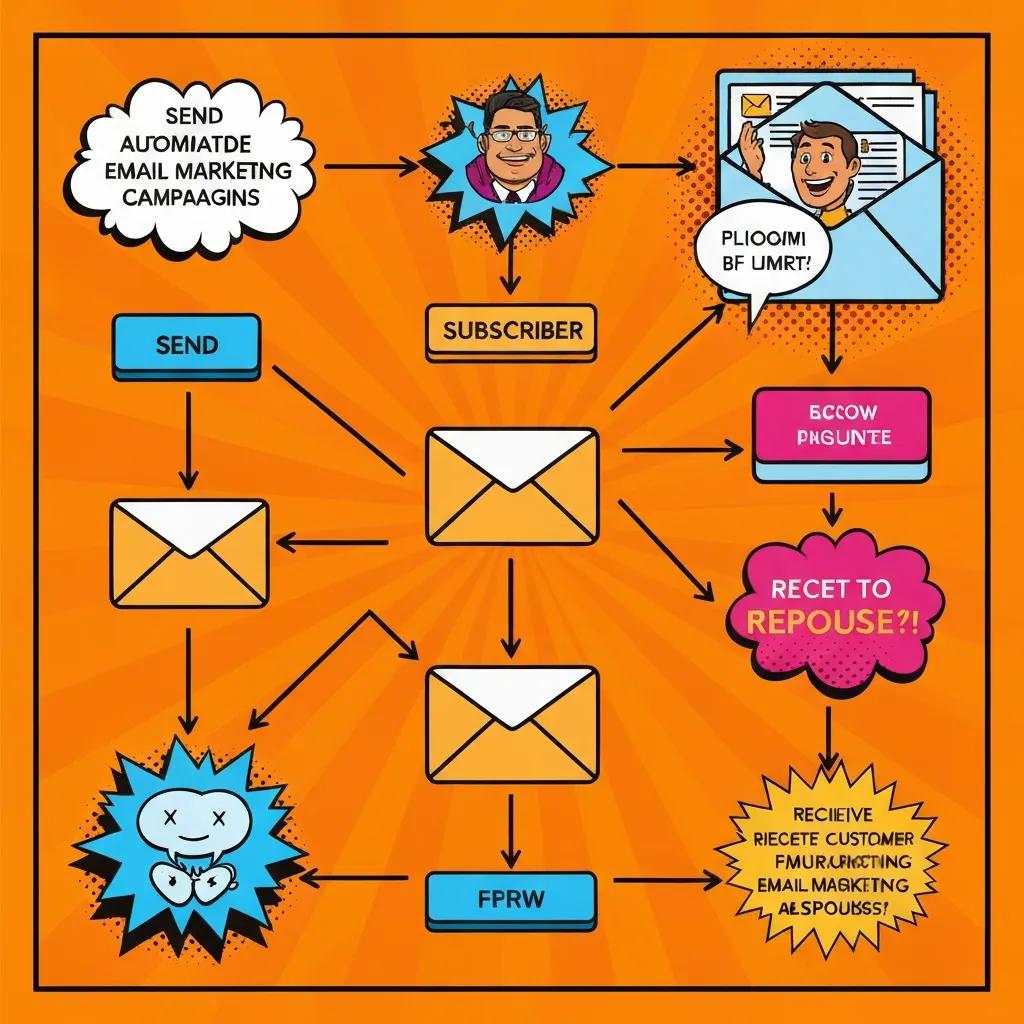
Automation uses triggers and timed sequences to guide patients along a care pathway, reducing manual work while increasing consistency and conversion. Core sequences include a welcome series for new enquiries, confirmations and reminders, post-visit follow-ups with care instructions and review requests, and re-engagement flows for lapsed patients. Automation depends on accurate segmentation and trigger logic — when a patient books, the system updates their lifecycle status and fires the right sequence so messages stay timely and relevant. Used with local SEO and reputation management, email automation helps turn clicks into bookings and reviews.
Effective automated sequences for reminders and follow-ups
Good sequences use multiple timed steps and clear reschedule options to reduce missed appointments and support post-visit care: a typical cadence is immediate confirmation, a 7‑day pre-reminder for complex visits, a 48‑hour reminder and a 24‑hour final prompt — each with reschedule options. Post-visit flows include a 24–48 hour “how to care” email, a one-week satisfaction survey and a three-week rebooking prompt when clinically appropriate. Messages should be clinical but warm — confirmations list details, reminders offer one-click reschedule links and follow-ups give care steps plus a simple feedback CTA. These steps reduce no-shows and turn visits into ongoing care and reviews.
If you’d like a practical partner to implement automated patient journeys, Milkcan Marketing offers tailored automation strategies for small clinics. We map your workflow to automated sequences — welcome, multi-step reminders, post-visit follow-ups and re-engagement — and align messaging with local growth goals. We can audit your current automation and deliver a pragmatic roadmap to lift bookings and patient retention while tying email activity into your local SEO and reputation strategy.
Which platforms and tools work best for Australian clinics?
When choosing a platform, prioritise automation power, deep segmentation, practice-management integration and compliance features like consent logging; data residency and local support are also important for Australian practices. Options include general ESPs with strong automation, marketing suites with advanced workflows and practice-specific tools that integrate scheduling and records. Evaluate each by its ability to trigger sequences from booking events, manage suppression lists and record consent for audits. The right tool makes lifecycle mapping easier, supplies templates for reminders and follow-ups, and tracks appointment conversions attributed to email.
How Australian clinics stay compliant with email laws
Compliance with Australia’s Spam Act requires clear consent, accurate sender ID and a working unsubscribe option. Clinics must manage consent records and align privacy practices to reduce legal risk and protect patient trust. Consent may be express (tick-boxes on intake forms) or implied in some treatment-related contexts, but broader marketing generally needs express consent. Document the basis for sends, provide easy opt-out routes, maintain a suppression list, consider double opt-in where useful, and ensure your email privacy wording matches clinic policies. Clear rules for frequency and content reduce complaints and protect reputation.
Compliance checklist — practical actions for clinics:
| Requirement | What it means | Practical action for clinics |
|---|---|---|
| Consent | Permission to send messages | Capture consent at intake and record the source |
| Identification | Emails must show the sender | Use the clinic name and contact details consistently in the email |
| Unsubscribe | Easy opt-out | Include a one-click unsubscribe and process requests promptly |
| Record-keeping | Keep consent and send records | Store consent logs and suppression lists for audits |
Key points of Australia’s Spam Act for patient emails
The Spam Act requires consent, clear identification and an unsubscribe facility for commercial electronic messages. In healthcare, implied consent often covers treatment-related messages, but broader marketing usually needs express consent. Separate transactional messages (like confirmations) from promotional sends and apply the correct consent basis. Log when and how consent was obtained and keep suppression lists to avoid accidental sends. These steps lower liability and preserve patient trust by ensuring messages are wanted and relevant.
Maintaining consent, privacy and sensible email frequency
Capture consent at multiple touchpoints — online bookings, paper intake and in-clinic opt-ins — and standardise the wording so patients know what to expect; keep timestamped records. Match email lists to your privacy policy, minimise personal data in marketing lists and secure access with role-based controls. For frequency, use a cadence matrix that limits promotional sends (for example, no more than monthly) while allowing clinical reminders and transactional messages as needed. Regular list hygiene and prompt unsubscribe handling support long-term deliverability and compliance.
Operational table for consent, privacy and frequency:
| Requirement | Meaning | Clinic action |
|---|---|---|
| Consent capture | Explicit or implied permission | Use clear intake wording and record timestamps |
| Privacy alignment | Data handling matches policy | Minimise fields in marketing lists and secure access |
| Frequency control | Avoid over-emailing | Set cadence by email type and watch unsubscribe rates |
| Audit readiness | Be able to demonstrate compliance | Export consent logs and suppression lists when needed |
If you need help implementing compliant flows, Milkcan Marketing understands Australian requirements and can configure consent capture, suppression rules and automation to reduce legal risk and improve patient trust.
How to measure and optimise patient email performance
Start with KPIs that map directly to clinic goals — open rate, click-through rate, conversion to booked appointment and unsubscribe rate — and set up tracking to attribute bookings to emails. Use UTM tags, booking tags and practice-management integration to see which emails generate appointments, and report on these metrics regularly (weekly for operations, monthly for strategy). Optimisation needs A/B testing on subject lines, send times and CTAs, plus cohort analysis by segment to prioritise changes. A disciplined measurement framework ties email performance to revenue and retention, not just vanity metrics.
- Open rate: shows subject line and sender effectiveness.
- Click-through rate: measures content and CTA strength.
- Conversion to appointment: the primary business KPI linking email to revenue.
Tracking these metrics helps clinics prioritise improvements that increase bookings and reduce unsubscribes.
Which KPIs and analytics matter most
Primary KPIs map to business outcomes: open rate (subject line resonance), click-through rate (CTA effectiveness) and conversion-to-appointment (revenue impact). Secondary KPIs include unsubscribe rate, bounce rate and reply rate for qualitative signals. Benchmarks vary by practice, so focus on conversion from email to booking and track trends over time. Build dashboards that combine ESP metrics with practice-management appointment data so teams can see how a small lift in CTR translates to extra appointments and revenue.
How A/B testing improves email engagement
A/B testing lets clinics test one variable at a time — subject line, sender name, CTA wording or send time — using appropriate sample sizes and durations. Prioritise tests with the biggest potential impact: start with subject lines to lift opens, then test CTA wording for clicks, then send times for marginal gains. Run one test at a time per segment, set clear success criteria and roll out winners broadly. Document tests and results so learnings transfer across campaigns.
If you’re ready to turn measurement into action, Milkcan Marketing can audit your reporting, set up appointment attribution tracking and design a prioritised A/B testing roadmap to lift bookings from email. Our focus is small healthcare practices and tying email performance to local SEO and reputation outcomes so improved email metrics convert to real clinic growth.
Frequently asked questions
What are the best practices for maintaining patient email lists?
Keep lists clean with routine data hygiene: update contact details, remove inactive addresses and verify consent status. Run a scheduled list-cleaning process so only engaged patients receive communications. Use segmentation to tailor messages and improve relevance. Accurately document consent and always provide an easy opt-out to stay compliant and keep patient trust.
How can clinics use email marketing to educate patients effectively?
Email is an efficient way to deliver concise, actionable education. Focus on short emails with clear subject lines and a single CTA. Cover topics like managing chronic conditions, post-procedure care or new treatment options. Segment by clinical need so the information you send is timely and relevant, which improves adherence and patient satisfaction.
What role does automation play in email marketing for healthcare?
Automation streamlines communications so clinics send timely, relevant messages without manual effort. Typical automated sequences include welcome series, appointment reminders and post-visit care emails. Automation saves time, ensures consistency across the patient journey, reduces no-shows and raises overall satisfaction — all of which support better health outcomes.
How can clinics measure the effectiveness of their email campaigns?
Track KPIs such as open rate, click-through rate and conversion rate to booked appointments. Use analytics and integration with your booking system to see which emails actually generate visits. Regular reviews of these metrics reveal what’s working and where to adjust content, timing or segmentation to improve engagement and retention.
What types of content should be avoided in healthcare emails?
Avoid overly promotional or irrelevant content that feels spammy. Don’t send messages with complex medical jargon that might confuse patients. Keep messaging clinical, useful and respectful of privacy. Always prioritise helpful, evidence-based content over hard-sell tactics.
How can clinics ensure compliance with email marketing regulations?
Obtain explicit consent before sending marketing emails, keep clear records of consent, and include an easy unsubscribe option in every message. Regularly review privacy policies and align email practices with Australia’s Spam Act. Proper record-keeping and suppression lists minimise legal risk and protect patient trust.
What are the benefits of using A/B testing in email campaigns?
A/B testing helps you learn what resonates by testing subject lines, content and CTAs one variable at a time. Use the results to optimise future emails, improve engagement rates and increase conversions. Over time this iterative approach boosts campaign effectiveness and delivers better patient outcomes.
Conclusion
Targeted email marketing helps clinics engage patients more effectively by delivering relevant, personalised messages that support care and drive bookings. With the right segmentation, automation and compliance, practices can improve appointment rates, strengthen patient relationships and grow sustainably. Start refining your email programs today — small, consistent improvements in relevance and measurement translate into real clinic growth.