10 Dental Content Repurposing Strategies to Boost Engagement and Reach
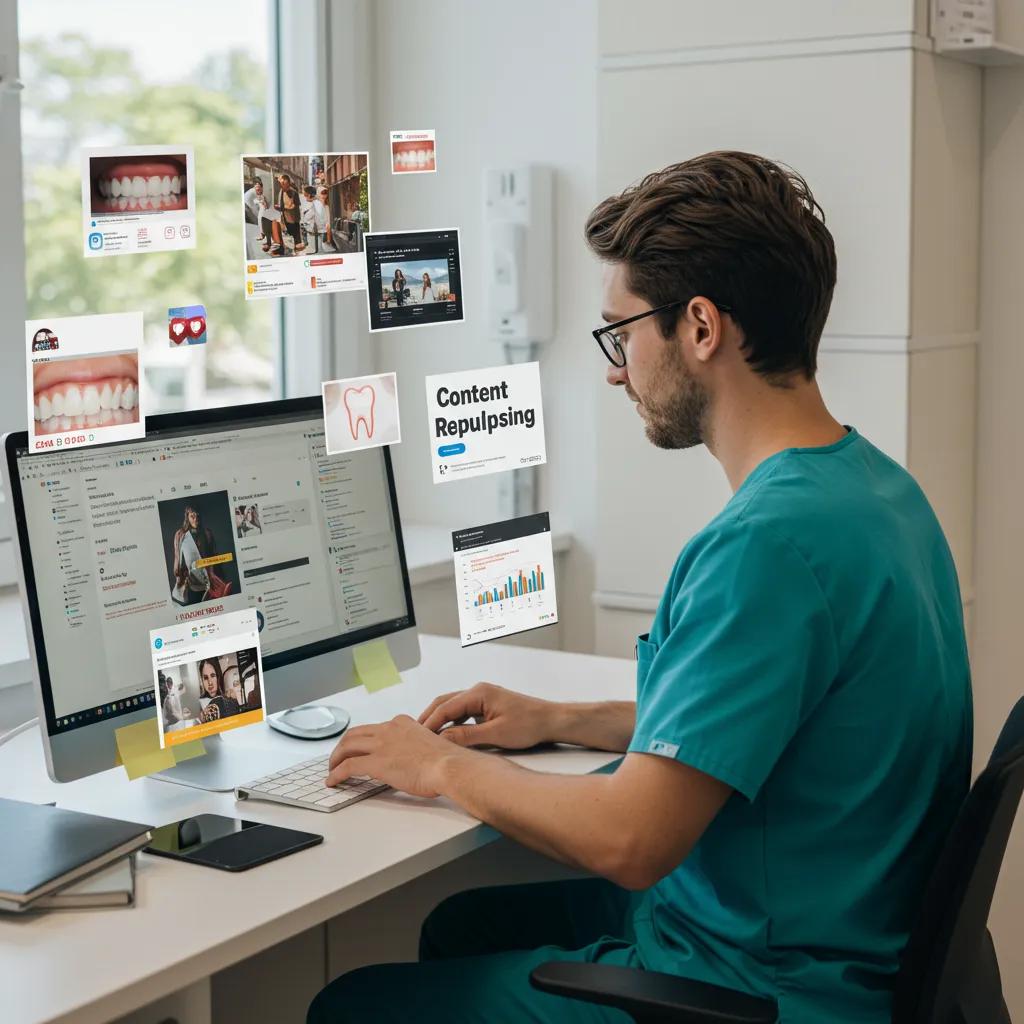
Content repurposing is the deliberate practice of transforming existing materials into new formats to extend reach, increase engagement, and improve search visibility for dental practices. This article shows how content repurposing strategies save time and amplify patient education by turning a single blog post, webinar or testimonial into many patient-facing assets across social, email and local channels. You will learn ten practical, dentist-focused strategies — from blog-to-video workflows and infographic creation to evergreen guide building, short-form clips and analytics-driven optimisation — that increase discoverability and conversion. The guide maps each strategy to patient-journey stages (awareness → consideration → decision), local SEO outcomes, tool suggestions such as Canva and transcription platforms, and consent considerations for patient content. Readers will finish with concrete checklists, EAV comparison tables for choosing content to repurpose, and KPI tables to measure success so practices can systematically recycle content for better patient acquisition and trust-building.
What Is Content Repurposing and Why Does It Matter for Dentists?
Content repurposing is the process of converting existing educational or marketing assets into alternative formats that better match audience preferences and platform behaviours, increasing exposure with less new production effort. The mechanism works by matching high-value information to format-specific consumption patterns — for example, turning a long blog into a short video clip increases mobile engagement while transcribing a webinar boosts search visibility. The specific benefit for dental practices is higher patient reach per unit of production time, which supports local patient acquisition, improves SEO signals, and strengthens trust through repeated, consistent messaging. Repurposing also creates multiple touchpoints along the patient journey, making it easier to move prospective patients from awareness to booking. The next section explains how repurposed formats directly improve patient engagement and local reach.
How Does Content Repurposing Improve Patient Engagement and Reach?
Content repurposing improves patient engagement by adapting messages to platform norms and user intent, which increases relevance and consumption. For example, blog-to-reel conversions meet short attention spans on social platforms, while webinar transcripts improve long-tail search performance and accessibility; this mechanism increases impressions, shares and time-on-content. Patient education benefits when core clinical explanations are offered in varied formats — video, infographic, and short email snippets — helping patients understand treatment options and pre/post care. Local reach improves when repurposed assets include localised CTAs and GBP-friendly copy, driving search and discovery by nearby patients. Understanding these mechanisms sets up practical tactics for converting specific asset types into high-performing formats.
What Types of Old Content Are Best for Repurposing in Dental Practices?
Best candidates for repurposing are evergreen educational pieces, high-traffic blog posts, recorded consultations/webinars (with consent), FAQs, and patient testimonials, because they contain reusable, consultative content and proven interest. Evergreen pieces retain relevance and convert well into guides or e-books; high-traffic posts can be sliced into social snippets; webinars provide raw footage for short clips and transcripts; testimonials can become quote cards or mini case studies. Selection criteria include evergreen potential, historical traffic, search intent fit, and compliance with privacy/consent requirements. Applying these criteria helps prioritise efforts and ensures repurposing yields measurable patient engagement and lead opportunities.
How Can Dentists Turn Blog Posts into Engaging Social Media Content?
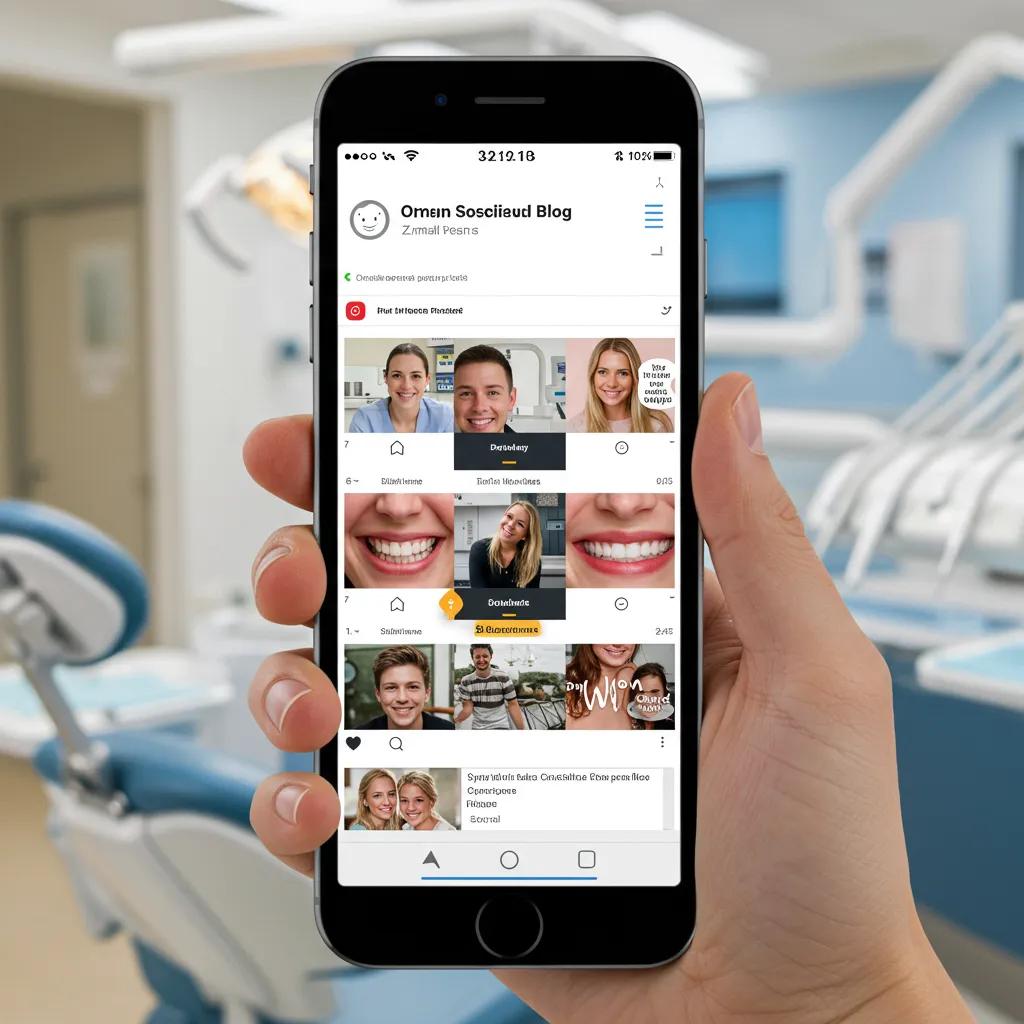
Repurposing a blog into social requires an audit, extraction of key points, creative redesign, and scheduling that respects platform formats and local messaging. The mechanism is simple: extract the strongest patient-focused insights, craft attention-getting hooks for the first slide or seconds of a clip, and pair with accessible visuals and local CTAs to drive actions. The benefit is amplified reach on mobile-first platforms and increased GBP interactions when local tags and prompts are used. Below are tactical steps and a tool table to help dentists convert posts quickly and effectively.
What Are Effective Ways to Create Social Media Carousels and Snippets from Blogs?
Extract the core argument and 5–7 supporting micro-points from a blog to make a carousel with clear hierarchy: headline slide, 3–5 informative slides, and a CTA slide. Use bold headlines, simple visuals, and alt text for accessibility, keeping fonts readable on mobile. Tools like Canva speed design workflows with templates and brand kits that maintain consistency and reduce production time. Captions should include a local CTA and scheduling prompt and end with a question to encourage comments. This carousel template keeps content digestible and guides readers toward the practice’s booking or contact options.
How Does Repurposed Social Content Boost Local SEO and Patient Interaction?
Repurposed social content boosts local SEO by increasing brand signals, driving website traffic that improves behavioural metrics, and generating GBP interactions when social posts encourage calls or bookings. Local tags, neighbourhood references and “book now” CTAs raise local relevance; engagement metrics (shares, comments, direct messages) create secondary visibility and referral traffic. Social content can also surface patient questions that inform new FAQ pages and schema-enhanced service pages, creating a feedback loop from social to search. Translating social interest into on-site conversions supports local patient acquisition and tangible appointment growth.
Enhancing Dental Patient Education through Social Media and Interactive Web Tools
The convergence of interactive media formats with web-based communication tools is likely to improve e-patient education and foster patient engagement in ways that will alter traditional healthcare interactions, potentially leading to enhanced levels of participatory medicine. Keywords: Hospital websites, social media, podcasts, online tools, mobile applications, blogs, Facebook, Twitter, YouTube, e-health, health information. Citation: Gallant LM, Irizarry C, Boone G, Kreps G. Promoting participatory medicine with social media: new media applications on hospital websites that enhance health education and e-patients’ voice. J Participat Med. 2011 Oct 31; 3:e49. Published: 31 October 2011. Competing Interests: The authors have declared that no competing interests exist.
Promoting participatory medicine with social media: new media applications on hospital websites that enhance health education and e-patients’ voices, 2011
Intro to social formats and tools:
| Social Format | Best Length / Structure | Ideal Hook | Suggested Tool |
|---|---|---|---|
| Carousel post | 5–7 slides; 15–20s per slide | Promise a clear benefit in slide 1 | Canva |
| Short video (Reel/Short) | 15–30 seconds | Open with problem or surprising stat | CapCut / mobile editor |
| Quote card | Single image with text | Pull a memorable patient tip or stat | Canva |
| Thread / multi-tweet | 6–10 posts | Start with a bold claim or myth-buster | Native platform composer |
How Do You Convert Webinars and Videos into Blog Posts and Transcripts?
Converting video into text and blog posts increases accessibility, creates SEO-ready content and multiplies distribution channels with relatively low incremental cost. The mechanism involves accurate transcription, editorial summarisation, semantic structuring with headings and CTAs, and embedding key timestamps for clips. Benefits include improved organic discoverability, better accessibility compliance, and the ability to reuse the same insights as downloadable resources or email content. Next, practical transcription and consent best practices ensure content remains compliant and patient-centric.
What Are Best Practices for Transcribing Dental Webinars into Written Content?
Start with a machine transcription, then perform human-led QA to correct speaker tags, medical terms, and remove any patient-identifiable information unless explicit consent exists. Structure the transcript into an SEO-friendly blog post by creating H2/H3 headings, adding short summaries, and inserting links to related service pages or downloadable assets. Include timestamps for video clips you will extract, and validate clinical claims against current guidelines before publishing. This careful approach preserves accuracy, respects privacy, and makes transcripts useful as searchable educational content.
How Can Video-to-Blog Conversion Extend Content Reach and Patient Education?
Video-to-blog conversion creates multi-format access points: search users find the written guide, watchers find video clips, and email subscribers receive digestible excerpts — expanding reach across channels. It also supports patient education by offering both visual demonstrations and text-based instructions for pre- or post-treatment care, increasing adherence and satisfaction. Republishing the blog with embedded clips and downloadable checklists multiplies lead-capture opportunities and encourages return visits, enhancing long-term patient relationships.
Utilising Blogs, Podcasts, and Wikis for the Creation and Dissemination of Dental Content
We have observed a rapid increase in the use of Web-based ‘collaborationware’ in recent years. These Web 2.0 applications, particularly wikis, blogs, and podcasts, have been increasingly adopted by many online professional and educational health services. Due to their ease of use and speed of deployment, they offer the potential for powerful information sharing and straightforward collaboration. Wikis are websites that can be edited by anyone with access. The term ‘blog’ is a contraction of ‘Web Log’ – an online web journal that can provide a rich multimedia resource environment. Podcasts are repositories of audio and video materials that can be ‘pushed’ to subscribers, even without user intervention. These audio and video files can be downloaded to portable media players, enabling ‘anytime, anywhere’ learning experiences (mobile learning).
Wikis, blogs and podcasts: a new generation of Web-based tools for virtual collaborative clinical practice and education, MNK Boulos, 2006
What Are the Best Ways to Create Infographics and Visuals from Data-Rich Dental Articles?
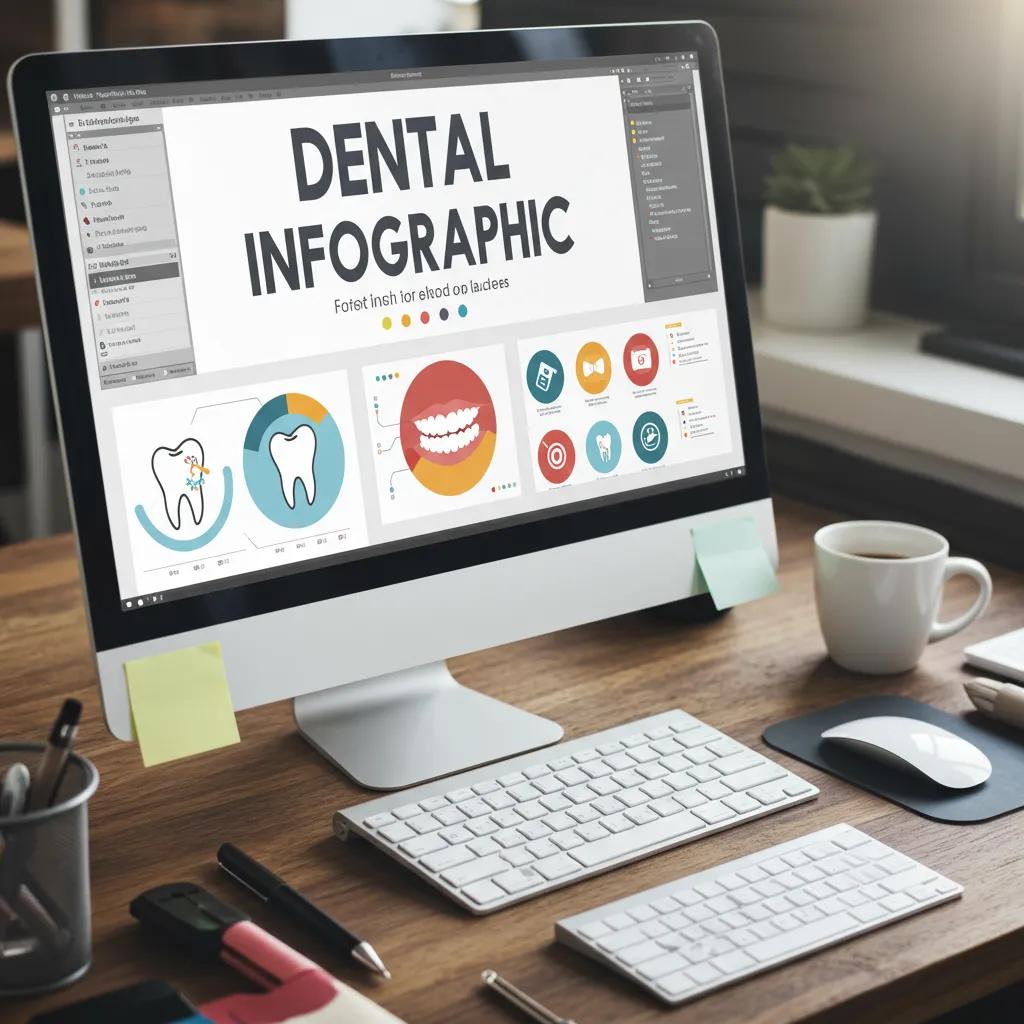
Turning dense articles into infographics clarifies complex information and increases shareability; infographics distil key statistics, procedures, or care timelines into visual hierarchies that patients can quickly understand. The mechanism is selecting the most impactful data points, simplifying language for non-clinical readers, and using visual cues (contrast, icons, callouts) to guide attention. The benefit is higher comprehension, easier waiting-room distribution, and social shareability that drives referrals. Below are use-cases and tool recommendations to streamline production.
How Do Infographics Simplify Complex Dental Information for Patients?
Infographics reduce cognitive load by breaking procedures or statistics into digestible visual steps, colour-coded timelines, and annotated diagrams, making treatment pathways easier to follow. Use-cases include waiting-room posters explaining implant procedures, social posts comparing treatment options, and printable aftercare handouts. Design rules include limiting text per panel, using readable fonts, establishing hierarchy with headings, and ensuring contrast for readability. These visual rules increase patient understanding and reduce time spent answering repetitive questions.
The use of infographics can significantly simplify complex medical information, making it more accessible and shareable for patients.
Infographics in Clinical Pharmacy: Enhancing Education, Research, and Reach through Visual Communication
Infographics can help simplify information into a more digestible format, increasing reach through sharing them on social media. This review explores the role of infographics in clinical pharmacy practice, education, and research, highlighting their potential to maximise the visual translation of medical information.
Maximizing the visual translation of medical information: A narrative review of the role of infographics in clinical pharmacy practice, education, and research, A Webb, 2021
Which Tools Help Dentists Develop Effective Infographics from Existing Content?
Canva is a practical choice for most practices because it offers templates, icon libraries and export options for web and print; simple workflows include extract → select template → populate data → export. Other lightweight tools and plugins can generate charts from spreadsheet data for evidence-based content. For busy practices, delegate design tasks with a brand kit and templates to maintain consistency and save production time. Exports should include web-optimised PNG/SVG and print-ready PDFs for in-clinic distribution.
Infographic creation workflow comparison:
| Phase | Task | Outcome |
|---|---|---|
| Extract | Identify 3–6 key data points or steps | Clear content scope |
| Design | Choose template, apply brand kit | Fast, consistent visuals |
| Review | Clinical accuracy check and readability test | Safe, patient-friendly assets |
| Publish | Export formats for social and print | Multi-channel distribution |
How Can Dentists Develop Evergreen E-books and Guides from Related Content Clusters?
Compiling thematic blog clusters into an evergreen e-book creates a downloadable lead magnet that organises content into a cohesive patient resource and captures contact details for nurturing. The mechanism involves mapping existing posts by topic, filling content gaps, adding clinical checklists and CTAs, and designing for readability. Benefits include measurable lead generation, authority building, and providing a long-lived asset that supports both SEO and email workflows. The next paragraphs describe what to include and how evergreen guides sustain engagement.
What Content Should Be Included in Dental Practice Lead Magnet E-books?
Include an accessible introduction, treatment overviews, patient FAQs, step-by-step preparation and aftercare checklists, common myths and evidence-based clarifications, and a clear scheduling CTA. A sample table of contents could be: Introduction → Common Treatments → Preparation & Aftercare → FAQs → Patient Stories → How to Book. Design the download to be scannable with bullet lists, short sidebars and images to aid understanding. This structure converts readers into measurable leads while educating patients.
How Do Evergreen Guides Support Patient Trust and Continuous Engagement?
Evergreen guides demonstrate clinical authority and create a reference patients return to, increasing repeat visits to the site and ongoing trust. When paired with a simple lead-capture form, downloads convert casual readers into contacts for nurture sequences and appointment prompts. Regularly updating the guide with new evidence or practice changes keeps the asset relevant and supports long-term SEO performance by signalling freshness to search engines.
How Do You Update and Refresh High-Performing Evergreen Content for Continued Success?
Refreshing evergreen content sustains rankings and relevance, and involves auditing performance signals, updating facts and images, and improving conversion elements to reflect current practice priorities. The mechanism is to monitor traffic and engagement, identify stale statistics or broken links, and republish with clear versioning and internal linking. The benefit is preserved organic traffic, renewed social interest, and improved conversion rates without creating entirely new content. Below are triggers and quick fixes for efficiency.
When Should Dental Practices Refresh Old Content with New Statistics and Trends?
Refresh when traffic drops, bounce rates increase, search intent shifts, guidelines or pricing changes, or when competitors publish more current material. Recommended cadence is an annual content audit for evergreen assets and quarterly checks for high-priority pages. Quick audit steps include reviewing analytics for traffic trends, checking top queries, and verifying clinical accuracy. Timely refreshes protect rankings and signal to patients and search engines that content remains authoritative.
What Are Quick Ways to Refresh Outdated Dental Service Pages?
Perform five quick fixes: update statistics and testimonials (with consent), add a concise FAQ section, include schema-friendly FAQ markup, refresh images and alt text, and add a clear, localised CTA with booking guidance. These micro-updates improve both user experience and search signals, often producing measurable uplift. Applying these quick tactics regularly reduces the need for major rewrites and keeps service pages conversion-optimised.
How Can Dentists Use Patient Testimonials to Build Case Studies and Social Proof?
Patient testimonials turn subjective trust signals into structured proof when repurposed as short videos, quote cards, or mini case studies that respect privacy and consent. The mechanism is to obtain documented consent, extract salient patient quotes and outcomes, and present them in formats that align with platform constraints and clinical safety. The benefit is stronger credibility, higher appointment conversion, and stronger GBP performance when reviews are actively leveraged. Practical extraction techniques and consent templates make this process repeatable and safe.
What Are Effective Methods to Extract and Repurpose Testimonials for Marketing?
Mine reviews and post-appointment feedback to identify concise, permission-granting quotes that highlight outcomes or experience; use a simple interview prompt to expand short reviews into usable narratives. Templates can convert a testimonial into a one-line quote card, a 30–60 second video testimonial, or a two-paragraph case study with anonymised details. Always include a written consent checkbox and store permissions securely. Consistent repurposing amplifies social proof across site, social and GBP profiles.
How Does Social Proof Influence Patient Decisions and Local SEO?
Social proof reduces decision friction by demonstrating real patient outcomes and satisfaction, increasing click-throughs and calls from prospective patients who prioritise trust. Reviews and testimonials signal reputation to both users and local search algorithms, improving GBP actions such as calls and directions. Amplifying reviews through repurposed assets — quote cards, testimonial videos, and FAQ entries — increases both behavioural signals and discoverability in local searches.
How Do You Create Interactive Quizzes and Polls from Existing Dental Content?
Interactive quizzes and polls transform passive content into two-way engagement that educates while collecting first-party data for nurturing. The mechanism is to convert FAQs and common decision pathways into diagnostic or educational quizzes that conclude with personalised guidance and a soft booking CTA. The benefit includes higher time-on-site, increased social shares, and qualified leads for follow-up. Below are quiz types, templates and distribution tips.
What Types of Quizzes Best Educate and Engage Dental Patients?
Diagnostic quizzes (e.g., “Do you need a dental check-up?”), educational assessments (knowledge checks about oral hygiene), and suitability quizzes (treatment readiness) work well; each should be short (5–7 questions) and conclude with next steps. Question structure should move from general to specific and offer immediate, actionable advice. Lead capture on results enables follow-up via email nurture or phone outreach. Well-designed quizzes convert curious users into scheduled consultations.
How Can Polls and Interactive Content Boost Patient Interaction Online?
Polls boost short-term engagement by inviting quick participation and revealing audience preferences that can generate new content ideas. Repurposing poll results into infographics, FAQs or a short blog post turns ephemeral interactions into lasting assets. Sharing poll outcomes on social and in-clinic screens builds community and encourages GBP engagement, while also creating material for email newsletters and local promotion.
How Can Email Nurture Sequences Be Built from Educational Dental Content?
Email sequences repurpose topical content into a structured nurture flow that educates patients, builds trust and prompts bookings; the mechanism maps repurposed assets to sequence stages and delivers targeted CTAs over time. The benefit is improved retention, higher appointment bookings and an owned channel for distributing refreshed content. Below is a blueprint and sequence example to operationalise repurposing outcomes into email campaigns.
What Content Works Best for Patient Education in Email Campaigns?
Short, scannable excerpts from guides, links to short videos, downloadable checklists and patient testimonials perform well; emails should be concise, visually scannable, and include one clear CTA. A 5-email example sequence could be: welcome + top tips, treatment overview, patient story + social proof, downloadable checklist, and booking reminder. Mix formats and use A/B testing for subject lines to improve open rates and conversions.
How Do Email Sequences Support Patient Retention and Appointment Bookings?
Email sequences nurture awareness into action by delivering timely, relevant reminders and educational touchpoints that reduce friction to booking. Tracking open rates, CTRs and booking conversions allows iteration on content and timing. A simple A/B test — subject line variations or CTA phrasing — quickly reveals performance differences and informs optimisation of repurposed assets for higher conversion.
How Do You Create Short-Form Video Content from Long-Form Dental Assets?
Short-form video extracts high-value moments from long videos or articles and packages them with strong hooks, captions and CTAs geared for mobile viewers; the mechanism amplifies attention and drives micro-conversions. The benefit includes better reach on Reels and Shorts, increased GBP interactions and more opportunities to test messaging quickly. Below are effective clip-selection templates and publishing tips.
What Are Effective Formats for Short-Form Dental Videos?
High-performing formats include quick how-to clips (30s), before/after showcases with brief context, myth-buster spots that address common misconceptions, and FAQ snippets answering a single patient question. Start with a 3-second hook, include captions, and end with a soft CTA like “learn more” or “ask us.” Use clear visuals and single-topic focus to boost completion rates and shares.
How Does Short-Form Video Content Maximise Mobile Patient Engagement?
Short-form video respects attention economics by delivering value within seconds and using captions for sound-off environments, increasing completion and share rates. Optimisation tips: hook viewers within 3 seconds, use readable captions, and tailor aspect ratio to the platform. Testing different hooks and CTAs across posts reveals which messages drive appointments and local enquiries.
How Do You Choose the Best Content to Repurpose for Your Dental Practice?
Choose content to repurpose using a simple scoring rubric based on traffic, evergreen potential, conversion history and relevance to local search intent; the mechanism prioritises high-impact assets for maximal ROI. The benefit is efficient resource allocation and faster uplift in engagement and bookings. Use the EAV comparison table below to compare common content types and their repurposing suitability.
Intro to comparison table for selection criteria:
| Content Type | Evergreen Potential | Shareability / Platform Fit |
|---|---|---|
| Blog post | High | Medium–High |
| Webinar / Recorded video | Medium | High (clips) |
| FAQ page | High | Medium |
| Patient testimonial | Low–Medium | High (social proof) |
| Service page | Medium | Medium |
What Metrics Identify High-Performing and Evergreen Dental Content?
Key metrics include organic traffic, time on page, conversion rate (appointment requests), backlinks and query volume; these indicate both audience interest and potential for repurposing. Benchmarks depend on practice size, but rising traffic and strong time-on-page suggest evergreen value. Use analytics to rank content by a simple weighted score (traffic 40%, conversions 30%, evergreen intent 30%) to prioritise repurposing targets.
How Does Patient Search Behaviour Influence Content Repurposing Choices?
Search intent patterns—informational, local-commercial, transactional—should guide format selection: informational queries favour guides and videos, local queries favour GBP-optimised excerpts and service pages, transactional queries favour booking-focused CTAs and short-form conversions. Map top queries to repurposed formats (FAQ → snippet, blog → short video) to better match patient intent and capture traffic.
How Can Dental Practices Implement an Effective Content Repurposing Workflow?
An effective workflow includes an audit phase, prioritisation matrix, content briefs, production sprints and publishing cadence with measurement and iteration; the mechanism ensures repeatable outputs with minimal friction. The benefit is scalable content that consistently feeds social, email and local channels. Below are recommended tools and a compact SOP to help small teams operationalise repurposing.
What Tools and Processes Streamline Content Repurposing for Healthcare Providers?
Recommended toolstack: content calendar (to organise topics), transcription tool (for video-to-text), Canva (design), mobile video editors (clip creation), and analytics platforms (GA4, GSC) for measurement. An SOP example: audit → score → brief → produce → publish → measure → iterate. Assign roles for each step (content owner, editor, designer) and automate scheduling to reduce heavy lift. This process ensures consistent quality and timely delivery.
How Do You Integrate Repurposed Content with Local SEO and Reputation Management?
Integrate repurposed assets by adding localised keywords in captions and meta, linking social posts to service pages, and using repurposed testimonials to encourage GBP review responses. Use repurposed FAQs as schema-enhanced content on service pages to improve snippet prospects. Pairing content repurposing with online reputation management turns positive patient experiences into discoverable assets that boost local trust and search performance.
How Do You Measure the Success of Repurposed Content in Healthcare Marketing?
Measuring success focuses on KPIs that map to engagement, reach and conversions: impressions, CTR, time on page, video completions, GBP actions and appointment conversions. The mechanism is consistent tracking with analytics tools, event tagging and a review cadence that feeds optimisation tests. The benefit is clear attribution of repurposing efforts to patient acquisition and continuous improvement of content choices. The table below maps KPIs to repurposed asset types and target ranges.
Intro to KPI table:
| KPI | Description | Target / Benchmark |
|---|---|---|
| Impressions | Views on social or search | Increasing month-on-month |
| CTR | Clicks divided by impressions | 1–3% for blog links; higher for email |
| Time on page / Engagement | Engagement depth | 1.5–3 minutes for long-form |
| Video completion rate | % who watch full clip | 30–60% depending on length |
| GBP actions | Calls, directions, bookings | Monitor weekly increases |
What Key Performance Indicators Track Engagement, Reach, and Patient Inquiries?
Core KPIs to track are impressions, CTR, time on page, conversions (appointment requests), GBP actions and video engagement. Measure the baseline before major repurposing efforts and set timed goals (e.g., 10–20% lift in GBP actions over 3 months). Attribution requires tagging UTM parameters and monitoring referral traffic to connect social or email campaigns to appointments. Regular measurement enables targeted refinements and budget allocation.
How Can Dentists Use Analytics to Refine Their Content Repurposing Strategy?
Use an iterative analysis loop: measure performance, hypothesise improvements, run tests (A/B titles, thumbnails, CTAs), and iterate on formats and distribution. Weekly or bi-weekly checks on social metrics and monthly reporting for organic search provide fast feedback. As part of this optimisation, practices can prioritise formats that show the best conversion per production hour and adjust the workflow accordingly.
For dental practices seeking hands-on help with operationalising these measurement and optimisation processes, Milkcan Marketing offers a Content Marketing service that includes analytics-driven optimisation and integration with Local SEO strategies. Their approach helps map repurposed assets to KPIs and refines campaigns to improve local patient acquisition while ensuring content supports Google Business Profile management and online reputation management priorities.
For practices that prefer a partner to adapt blog content into social campaigns, Milkcan Marketing’s Content Marketing service provides targeted repurposing workflows. For example, a short case scenario: a dental blog on “implant aftercare” was sliced into a carousel, two short clips and an FAQ that together increased GBP interactions and appointment bookings in the local area. This demonstrates how combining content repurposing with Local SEO and Google Business Profile management can produce measurable local patient reach.
For analytics and optimisation support, Milkcan Marketing tracks CTR, time on page, GBP actions and conversions as part of its Content Marketing service, and pairs those insights with Local SEO tactics to refine distribution and messaging. Their analytics-driven approach focuses on continuous testing and practical recommendations to increase both engagement and appointment bookings.
Milkcan Marketing can also assist with content governance and reputation amplification as part of online reputation management services, helping practices turn repurposed assets into measurable patient acquisition channels.