Proven Local SEO Tips to Grow Your Dental Practice
Local SEO for dental practices focuses on making your clinic discoverable to nearby patients when they search for dental services, and it works by aligning your online presence with local search signals such as Google Business Profile, localized keywords, and patient reviews. This guide explains how local search optimization increases visibility for dentists, converts searchers into callers or bookings, and strengthens trust through consistent listings and reputation management. Many small dental clinics struggle to turn local searches into new patient appointments; this article offers concrete tactics — from Google Business Profile optimization to technical on-site fixes — to close that gap. You will learn what local SEO for dentists is, step-by-step Google Business Profile best practices, how to conduct location-specific keyword research, tactics for generating and managing patient reviews, on-page and technical essentials including schema, content marketing ideas for neighborhood authority, and how to measure results. Throughout the guide, we use practical examples and tools recommendations tailored to dental clinics in Australia, show sample tables and checklists, and indicate where professional support like Google Business Profile management and Local SEO services can accelerate outcomes. Read on for an actionable local SEO checklist for dental practices that attracts more local patients and improves appointment growth.
What Is Local SEO for Dentists and Why Is It Essential?
Local SEO for dentists is the practice of optimizing a dental clinic’s online assets so search engines and maps surface the practice to nearby patients when they search for services, and it works by combining localized content, directory citations, Google Business Profile signals, and review management to increase visibility. This approach improves direct patient actions — calls, direction requests, and bookings — by matching user intent with location-specific relevance and trust indicators. Local SEO differs from general SEO by emphasizing the local pack, Google Maps prominence, consistent NAP data across directories, and structured data for LocalBusiness. The immediate benefit is more qualified local traffic that converts at higher rates than broad organic search traffic because intent and proximity align. Understanding the components of local SEO prepares clinics to prioritize the highest-impact actions, starting with claiming the Google Business Profile and auditing local citations.
How Does Local SEO Improve Dental Practice Visibility?
Local SEO improves dental practice visibility by ensuring the clinic appears in location-based results such as the local pack and Google Maps when patients search for nearby dentists, and it does so by optimizing signals that search engines use to infer local relevance. Mechanisms include optimized GBP categories and services, localized landing pages targeting suburb keywords, and a steady flow of verified patient reviews that act as trust signals for both users and algorithms. Patients searching “dentist [suburb]” or “emergency dentist near me” are more likely to click listings that show hours, reviews, and booking options in the SERP, which elevates click-through rates and direct contacts. Improving these signals creates compounding visibility gains: more clicks generate behavioral signals that reinforce local relevance, which in turn helps maintain or improve rankings in the local pack. This visibility improvement naturally leads to the next priority: auditing and strengthening each component that contributes to local presence.
What Are the Key Components of Local SEO for Dental Clinics?
Key components of local SEO for dental clinics include Google Business Profile optimization, a robust review strategy, consistent local citations, on-page localized content, and technical elements like schema markup and mobile performance that support ranking and conversions. Each component plays a role: GBP is the public-facing local listing, reviews supply social proof and ranking signals, citations validate NAP consistency across the web, and on-page content targets long-tail local queries for specific services. For dental practices, service pages for cleaning, implants, orthodontics, and emergency care should be combined with suburb pages and local FAQs to capture different stages of patient intent. Prioritizing these components ensures a holistic local presence and prepares a practice to convert increased visibility into measurable patient inquiries and bookings.
How Does Local SEO Impact Patient Acquisition for Dentists?
Local SEO impacts patient acquisition by increasing qualified local searches that result in calls, direction requests, and appointment bookings, and by using trust signals such as reviews and accurate service descriptions to improve conversion rates. A well-optimized Google Business Profile and local landing pages typically produce a higher percentage of users who contact the clinic directly compared with generic organic traffic because local queries often imply immediate intent. For example, optimizing GBP for emergency services and adding booking links or clear phone prompts increases the probability of same-day calls; pairing that with review management raises patient confidence. Tracking these actions — GBP calls, direction clicks, and booked appointments — provides a direct line of sight from optimization work to new patient acquisition, making local SEO a measurable driver of practice growth.
How to Optimize Your Google Business Profile for Dental Practices?
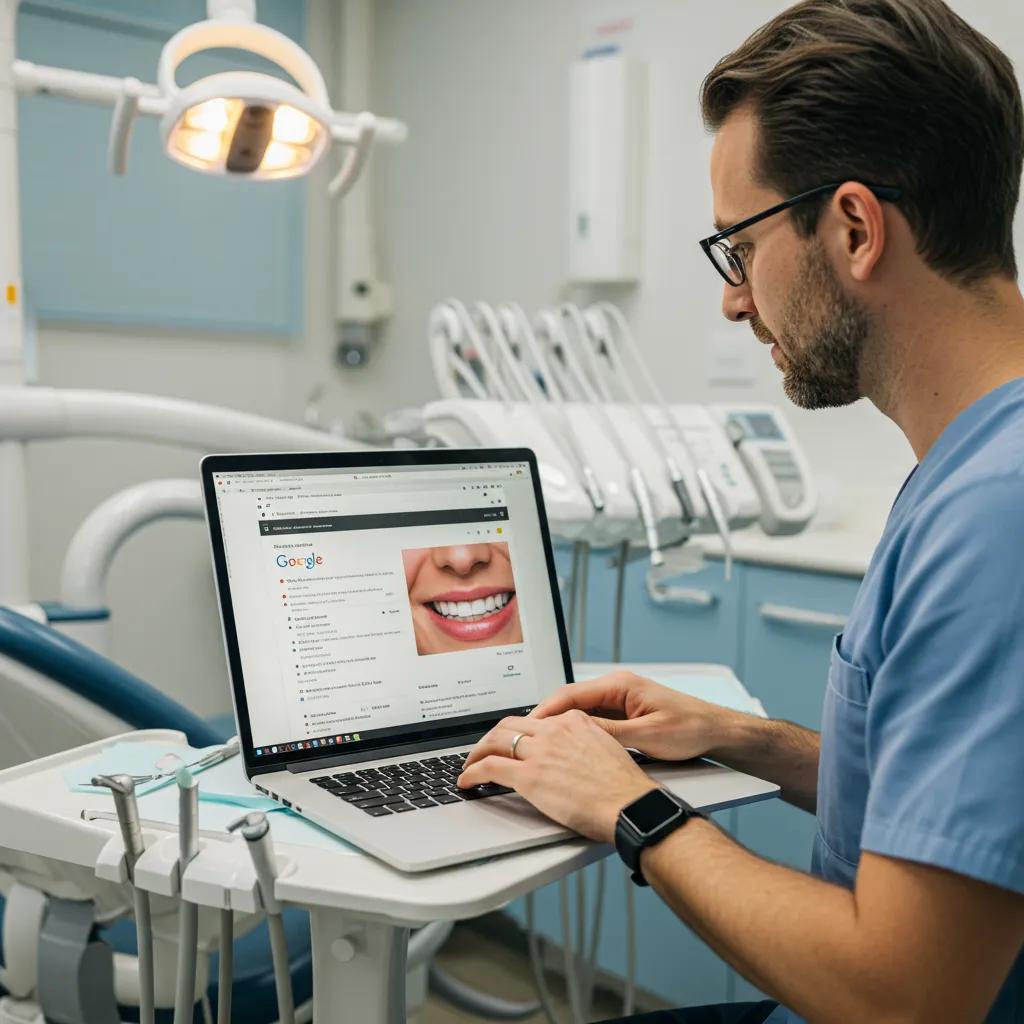
Optimizing your Google Business Profile (GBP) is a priority because GBP drives the local pack, maps visibility, and many direct patient interactions, and the optimization process involves claiming the profile, verifying ownership, completing services and fields, adding high-quality photos, using Posts and Q&A, and ensuring NAP consistency across directories. A clear, optimized GBP increases trust and encourages clicks, and it signals to Google the services and areas you serve. The following steps provide a practical checklist for dental clinics to claim ownership, structure services correctly, and use GBP features strategically to attract patients. Clinics that prefer a done-for-you approach can consider professional Google Business Profile management or Local SEO services to implement these steps and measure outcomes without internal resource strain. Next, we outline the concrete verification steps and content strategies for GBP.
What Are the Steps to Claim and Verify Your Google Business Profile?
Claiming and verifying your Google Business Profile begins with locating the existing listing or creating a new one, then following Google’s verification options — usually postcard, phone, or email — to confirm ownership, and it succeeds when the profile is marked as verified in the dashboard. Start by searching for your practice by exact name and address to avoid duplicates, claim the correct listing, and request verification; if a previous owner claimed the listing, follow the request ownership workflow. During verification, prepare documentation that proves your connection to the practice (ownership or management) and be ready to follow up on postal verification delays. Once verified, assign a small team member or agency access through role-based permissions to manage updates and monitor profile health, which leads into how to populate services and photos effectively.
- Claim or create the listing and confirm the business name exactly matches your official clinic name.
- Choose the primary category as “Dentist” and add relevant secondary categories for specialties.
- Request verification via postcard, phone, or email and follow up promptly if delayed.
These steps secure your listing and unlock the ability to complete every profile field required to attract local patients.
How to Add Accurate Information, Services, and Photos to Your Profile?
Populate GBP fields with accurate NAP details, a concise service description, properly named services, and a diverse set of photos—exterior, interior, team, and clinical equipment—to build trust and relevance, and ensure alt text and filenames include location and service keywords. Use service naming conventions that match patient queries, for example, “Emergency dental care” or “Dental implants consultation” rather than internal shorthand, and list service prices or appointment options where allowed. High-quality images increase clicks; include a consistent cover photo and periodic updates to show recent clinic activity. Accurate information reduces confusion, improves match rates for local queries, and supports the next tactic: using Posts and Q&A to keep the listing active and relevant.
| GBP Field | Recommended Value | Example for Dental Clinics |
|---|---|---|
| Business Name | Exact clinic name | Smith Dental Clinic |
| Primary Category | Broad but precise | Dentist |
| Services | Patient-facing service titles | Emergency dental care; Dental implants; Teeth whitening |
| Photos | Diverse, high-quality images | Exterior, waiting room, clinical team, procedure equipment |
This table clarifies which GBP fields to prioritize and how to format values for clarity and search relevance.
How Can Google Posts and Q&A Features Boost Your Local SEO?
Google Posts and the Q&A feature boost local SEO by providing fresh content signals, timely offers, and quick answers to patient questions that appear in the knowledge panel and can influence clicks and conversions. Use Posts for promotions, events (e.g., free consultation days), or educational content that targets local audiences and refresh these weekly to demonstrate activity. Monitor Q&A and pre-populate common questions with authoritative answers; encourage staff to answer promptly since public responses shape patient perceptions. Posts and Q&A also supply micro-content that can be reused on the website and social channels to reinforce local relevance, and a consistent posting cadence complements other reputation-building activities such as review solicitation.
Why Is Consistent NAP Data Crucial Across All Listings?
Consistent NAP (Name, Address, Phone) data across directories, the website, and citations is crucial because search engines use these signals to verify the existence and location of your dental practice, and inconsistencies can dilute citation authority and harm local rankings. Conduct an audit of major directories and professional directories common in Australia and correct any mismatches; pay special attention to abbreviations, suite numbers, and phone formats. Inconsistent NAPs create confusion for potential patients and can reduce calls and direction requests, so maintain a canonical source of truth on your website and update third-party listings after any change. A clean citation profile supports GBP signals and strengthens overall local presence.
How to Conduct Local Keyword Research for Dental Clinics?
Local keyword research for dental clinics is the process of identifying high-intent, location-specific queries patients use — such as suburb-based searches, “near me” modifiers, and long-tail procedure queries — and it works by combining search volume, intent analysis, and competitor insights to prioritize landing pages and GBP copy. Targeting the right keywords focuses content creation and on-page optimization where it will drive local patient action. The workflow typically uses Search Console for existing queries, plus keyword tools for expansion and local modifiers to capture nearby suburbs and urgent-intent terms. Below is a practical comparison table showing keyword types, intent, and example targets to guide prioritization.
| Keyword Type | Search Intent / Volume | Example Keywords |
|---|---|---|
| Navigational | Find clinic location or hours | “Smith Dental clinic hours”, “dentist [suburb] contact” |
| Transactional | Appointment or service booking | “book dentist appointment [suburb]”, “affordable dental implants [city]” |
| Informational (local) | Learn about services in area | “teeth whitening cost [suburb]”, “emergency dentist near me” |
This table helps clinics map keyword types to landing page priorities and content cadence.
Which Location-Specific Keywords Should Dentists Target?
Dentists should target a mix of suburb-specific queries, service-plus-location long-tail keywords, and urgent modifiers such as “emergency” to capture high-intent local traffic, and prioritize terms by intent rather than raw volume. Examples include “emergency dentist [suburb]”, “dental implants [city name]”, and “kids dentist near me” which signal strong conversion potential. Map each high-priority keyword to a dedicated service page or neighborhood landing page and include schema and GBP references to maximize local signals. Prioritizing intent improves ROI on content production and prepares the site for technical optimization such as schema markup and speed improvements.
How to Identify Long-Tail Keywords for Dental Services?
Identify long-tail keywords by combining seed service terms with locality modifiers and patient questions using Search Console, autocomplete suggestions, and specialized keyword tools, then score candidates by intent and difficulty. Use Search Console to find existing queries with local modifiers and expand them with phrase match and question-based queries like “is teeth whitening safe while pregnant [suburb]”. Prioritize long-tail terms that align to different patient journey stages (awareness, consideration, booking) and map them to content such as FAQs, blog posts, and service landing pages. This mapping ensures content captures micro-moments and converts niche queries into bookings.
What Are the Best Local SEO Tools for Dentists to Use?
Small dental practices should combine native tools and affordable third-party solutions to monitor local performance: Google Business Profile Insights for listing metrics, Google Search Console for organic queries, GA4 for conversions, and a lightweight rank/review tracker for GBP and citation monitoring. For keyword research and competitor analysis, select tools that balance capability and cost, and prioritize platforms that provide GBP tracking and review monitoring for reputation management. Integrating these tools into a simple monthly reporting workflow helps clinics track calls, direction requests, and booking conversions without overwhelming internal resources.
| Tool Category | Tool Example | Application |
|---|---|---|
| GBP Insights | Google Business Profile Insights | Monitor views, calls, and direction clicks |
| Keyword Research | Search Console / keyword tools | Discover local queries and query intent |
| Reputation | Review monitoring platforms | Track and respond to patient reviews |
This comparison helps practices assemble a compact toolkit for local SEO monitoring and operational reporting.
How to Build and Manage a Strong Online Reputation with Patient Reviews?
A strong online reputation relies on consistently generated patient reviews, ethical solicitation practices, prompt and professional responses to feedback, and the use of review data to improve services and search visibility. Reviews serve both as conversion signals for prospective patients and ranking signals for local search, so clinics should embed review workflows into patient touchpoints. Effective strategies include asking at the moment of high satisfaction, using QR codes or follow-up messages, and monitoring reviews for themes that inform service improvements. Next, we outline concrete tactics to generate reviews and templates for professional responses.
What Are Effective Strategies to Generate 5-Star Patient Reviews?
Effective strategies to generate 5-star patient reviews include asking for feedback at the point of positive interaction, providing a simple review link or QR code, and following up with a polite reminder that explains how reviews help other local patients find care. Train reception staff to request reviews after successful treatments or positive appointment experiences and provide printed or digital prompts to streamline the process. Use automated post-appointment messaging where permissible and ensure reminders are timed to coincide with patient satisfaction. Ethical considerations in Australia require that requests avoid incentivization that could bias responses; focus on ease and clarity to maximize voluntary patient feedback.
- Generate review prompts at checkout or after a positive interaction.
- Provide QR codes and short instructions for ease of use.
- Follow up once with a polite reminder explaining the benefit for local patients.
These steps increase review volume while maintaining ethical standards and improve the clinic’s social proof for prospective patients.
Patient Online Reviews: A Key Determinant of Dental Practice Quality and Patient Experience
In recent years, patient review websites have attracted considerable attention from health consumers, academic circles, and healthcare providers [1,2]. A vast quantity of online patient reviews has been disseminated publicly via patient review websites, establishing them as a common source of information for patients selecting a clinician. Consequently, a substantial body of literature concerning online patient reviews has emerged, employing public health informatics methodologies to analyse the distribution and determinants of data for informing public health and policy, aligning with the Research Framework of Infodemiology and Infoveillance [3].
Assessing patient experience and healthcare quality of dental care using patient online reviews in the United States: mixed methods study, Y Lin, 2020
How Should Dentists Respond to Negative Reviews Professionally?
Dentists should respond to negative reviews by acknowledging the patient’s experience, offering a sincere apology if appropriate, inviting offline resolution, and outlining steps taken to investigate or rectify the issue, while avoiding clinical details that breach privacy regulations. A calm, structured reply demonstrates professionalism and reassures prospective patients reading the exchange; it also signals to reviewers that the practice values feedback. When necessary, request to take the conversation offline and provide a generic contact method without sharing private patient information. Proper responses preserve reputation, may convert dissatisfied patients back into advocates, and limit the negative review’s impact on conversions.
Why Are Patient Reviews Critical for Local SEO Success?
Patient reviews are critical for local SEO because they act as trust signals for search engines and users, influence GBP prominence, and can trigger review-based rich snippets that increase click-through rates from the SERP. High-quality reviews with mention of services and locations also contain natural, user-generated keywords that reinforce local relevance. A steady flow of authentic reviews improves conversion rates by reducing perceived risk and making appointment decisions easier for prospective patients. Prioritizing review generation and management therefore yields compounding benefits: better visibility, higher CTRs, and increased bookings.
What Are the On-Page and Technical SEO Essentials for Dental Websites?
On-page and technical SEO essentials for dental websites include optimizing page speed and mobile performance, implementing LocalBusiness and Service schema, ensuring clear NAP placement and internal linking to service clusters, and addressing meta titles and descriptions for local keywords. These technical elements support local rankings and user experience, and they transform visibility into conversions by reducing friction during the appointment journey. Below is a concise table that compares technical elements with their impacts and recommended actions to guide implementation.
| Technical Element | Impact | Action / Example |
|---|---|---|
| Site Speed | Affects ranking and user bounce | Compress images, leverage caching, reduce third-party scripts |
| Schema Markup | Improves SERP display and local understanding | Add LocalBusiness, Service, aggregateRating JSON-LD |
| Mobile-Friendliness | Critical for local mobile searches | Implement responsive design and touch-friendly CTAs |
This table outlines priority technical fixes and their direct benefits for local search and patient experience.
How Does Website Speed and Mobile-Friendliness Affect Local SEO?
Website speed and mobile-friendliness affect local SEO by influencing both ranking signals and user behavior metrics such as bounce rate and session duration, and they are particularly important because many local searches occur on mobile devices with immediate intent. Use Lighthouse or PageSpeed Insights to identify bottlenecks, prioritize reducing Largest Contentful Paint and Time to Interactive, and ensure responsive layouts with clear call-to-action buttons. Fast, mobile-optimized pages improve conversion for callers or online booking forms and align with Google’s mobile-first indexing approach. Addressing these performance factors directly supports local visibility and the user experience that converts searches into appointments.
How to Implement Schema Markup for Dental Practices?
Implement schema markup by adding JSON-LD for LocalBusiness/MedicalBusiness or Service types, specifying key properties such as name, address, telephone, openingHours, service offerings, and aggregateRating to help search engines understand your practice structure and services. Include Service schema for procedure pages and Review schema where appropriate to surface ratings in rich snippets. Place JSON-LD in the site head or via tag manager to ensure consistent indexing and test markup with structured data testing tools. Proper schema enhances SERP appearance and supports GBP data signals, creating a consistent entity representation across search.
Why Is Internal Linking and NAP Consistency Important on Your Website?
Internal linking and on-site NAP consistency are important because they distribute topical authority across service and location pages, help search engines discover related pages, and present a single canonical identity for the clinic to both users and algorithms. Use descriptive anchor text that links neighborhood pages to service pages and vice versa, and prominently display NAP on the contact page and footer. A clear internal linking strategy supports conversion funnels from informational content to booking pages and reinforces local relevance for search engines. Regular audits ensure links and NAP remain aligned with GBP and external citations.
How Can Content Marketing Establish Local Authority for Dental Practices?
Content marketing establishes local authority by producing neighborhood-focused pages, patient education content, and event posts that address local needs and capture long-tail search queries, and it strengthens both topical relevance and backlink potential from local organizations. Content that answers common patient questions, explains procedures in plain language, and highlights local community involvement builds trust and positions the clinic as a local resource. A practical content calendar targeting suburbs, services, and seasonal needs helps maintain consistency and supports GBP posts and local outreach for backlinks. Below are content types and an example cadence to use.
What Types of Location-Focused Content Should Dentists Create?
Dentists should create neighborhood landing pages, local FAQs, service pages with suburb modifiers, and community event posts to capture different local queries and patient concerns, and each page should include locally relevant keywords, schema, and contact prompts. Case-oriented pages for emergency services, children’s dentistry, and cosmetic procedures tailored to suburbs help match patient intent. Include staff bios that reflect community ties and local patient stories (with consent) to build credibility. This mix supports organic visibility and makes outreach to local partners more fruitful for link opportunities.
How Does Content Marketing Integrate with Local SEO Strategies?
Content marketing integrates with local SEO by supplying targeted landing pages and blog posts that feed internal linking, enhance GBP posts, and provide shareable assets that earn local backlinks, and it also helps capture long-tail queries through educative content addressing patient concerns. Map content pieces to keywords and user intent, then use content to generate social and email signals that encourage reviews and citations. Well-structured content that connects to service pages improves topical authority and yields measurable traffic and conversion gains. Coordinating content production with GBP updates ensures coherent local signals across platforms.
How to Use Content to Build Trust and Attract Local Patients?
Use content to build trust by publishing staff profiles, procedural explainers, before-and-after galleries (with consent), and patient education articles that address safety and outcomes, thereby reducing appointment friction and improving conversion rates. Ensure any patient stories comply with privacy and consent norms in Australia, and avoid sharing identifying clinical details without explicit written permission. Educational content that clearly explains what to expect during common procedures or emergency visits lowers anxiety and increases appointment bookings. Trust-building content also supports reputation management by providing authoritative references when responding to patient questions or reviews.
How to Measure and Track Local SEO Success for Dental Clinics?
Measuring local SEO success for dental clinics requires tracking GBP metrics, website behavior and conversions, and using a simple cadence for reviews and content audits to maintain momentum, and it works by tying visibility metrics to real-world outcomes such as calls, direction requests, and booked appointments. Establish a reporting set that includes GBP insights, organic landing page traffic, conversion rates, and review volume and average rating to evaluate efforts. The next sections describe essential KPIs, recommended tools, and a practical review cadence to keep local SEO functioning as a growth channel.
What Key Performance Indicators Should Dentists Monitor?
Dentists should monitor GBP views, search and map impressions, calls and direction clicks, organic landing page traffic for local pages, conversion rates for booking forms and new patient inquiries, and review volume and average rating to correlate online activity with patient acquisition. Define targets based on baseline performance and local market conditions, for example aiming to increase GBP calls by a set percentage month-on-month. Tracking these KPIs helps identify which channels drive new patient bookings and where to allocate optimization effort. Regular KPI reviews reveal trends and guide tactical changes to content, GBP activity, or review solicitation.
- GBP views and calls as immediate local engagement metrics.
- Organic traffic to local landing pages and conversion rate to bookings.
- Volume and sentiment of reviews and average rating for reputation tracking.
Monitoring these core metrics connects optimization work to tangible patient-growth outcomes.
Which Tools Are Best for Tracking Local SEO Performance?
Use Google Business Profile Insights for listing metrics, Google Search Console for query data, GA4 for website conversions and behavior, and a lightweight third-party tool for rank tracking and review monitoring to maintain a consolidated reporting view. For clinics preferring external support, Milkcan Marketing provides Local SEO and reputation management services tailored to dental practices that integrate these tools into monthly reporting and optimization workflows. Combining native and third-party tools offers both depth and operational ease for small teams. The next paragraph outlines a reporting cadence that keeps optimization on schedule.
Optimising Dental Practice Websites: Quality, Content, and Regulatory Compliance
Conclusion: Those responsible for dental practice websites must be aware of a broad spectrum of regulations and guidance. It is advisable to follow expert recommendations regarding content and optimisation to maximise the potential of their websites.
Quality and content of dental practice websites, 2011
How Often Should Dental Practices Review and Update Their Local SEO Strategy?
| Review Cadence | Focus | Typical Tasks |
|---|---|---|
| Monthly | GBP & conversions | Check GBP Insights, respond to reviews, track calls/bookings |
| Quarterly | Keyword & content | Audit target keywords, update local pages, produce new content |
| Annual | Technical & citation | Full site audit, schema validation, citation reconciliation |
This schedule makes local SEO manageable for small practices while preserving steady improvement.