Best SEO Tools for Australian Dental Practices
Dental SEO tools are specialised software and platforms that help clinics improve search visibility, attract local patients, and convert visitors into bookings through technical, on-page, and reputation-focused tactics. In this guide, we explain which tools matter for Australian dental practices, how they work together, and which workflows deliver more local enquiries and measurable KPIs such as impressions, map-pack placements, and booking clicks. Many dentists face strong local competition and constrained marketing budgets; using the right mix of local SEO, keyword research, on-page optimisation, and reputation management tools reduces wasted effort and accelerates growth. This article maps critical tool categories, compares leading platforms, outlines practical implementation steps for site health and content, and highlights advanced 2025 trends including AI, video SEO, and voice search optimisation. Throughout, you’ll find actionable checklists, comparison tables tailored to Australian suitability, and recommended workflows for clinic owners and practice managers seeking to increase online patient acquisition using dental website optimisation tools and local SEO for dental practices.
Why Are SEO Tools Essential for Dental Practices in Australia?
SEO tools are essential because they identify visibility gaps, automate local signals, and turn search behaviour into actionable growth for clinics seeking nearby patients. These tools work by uncovering search intent, mapping relevant keywords to service pages, auditing technical issues that prevent indexing, and automating reputation workflows that influence trust and conversion. For Australian dentists, local search dominates patient intent—queries like “dentist near me” or “emergency dentist [city]” require precise local signals such as a comprehensive Google Business Profile, consistent citations, and prompt review responses. Tools streamline repetitive tasks, surface high-impact fixes, and provide measurable KPIs such as local pack rankings, organic impressions, and contact clicks. Understanding these mechanisms enables a clinic to prioritise low-effort, high-impact actions that drive enquiries and bookings.
How Do SEO Tools Improve Patient Acquisition and Online Presence?
SEO tools improve patient acquisition by converting search data into optimised content and local signals that rank for patient-driven queries, increasing relevant impressions and clicks. Keyword research tools identify high-intent search phrases for treatments and locations, while on-page tools guide content structure and schema to match intent and increase SERP features. Technical auditors detect crawlability and speed issues that suppress rankings, and reputation platforms increase review volume and sentiment—both of which feed local ranking algorithms. Together these tools create a workflow: discover keywords → build localised landing pages → optimise Google Business Profile → solicit reviews → monitor performance, which typically lifts calls and appointment bookings within months. This practical workflow transforms analytics into new patient enquiries and clearer ROI.
What Makes Local SEO Crucial for Australian Dentists?
Local SEO is crucial because most dental searches signal immediate intent and proximity matters; search engines prioritise relevance, distance, and review signals when returning dental clinics to users. Australian market nuances—such as widespread use of Google Business Profile features, state-based search patterns, and directory ecosystems—mean citation accuracy and local content are high-value tasks. Tools that manage citations, local schema, and Google Business Profile attributes help clinics appear in the map pack and local finder, which are primary conversion points for users seeking appointments. Prioritising local SEO reduces competition with national brands and focuses resources on keywords that drive nearby patient visits, turning search visibility into measurable patient acquisition.
What Are the Top Local SEO Tools for Dentists in Australia?
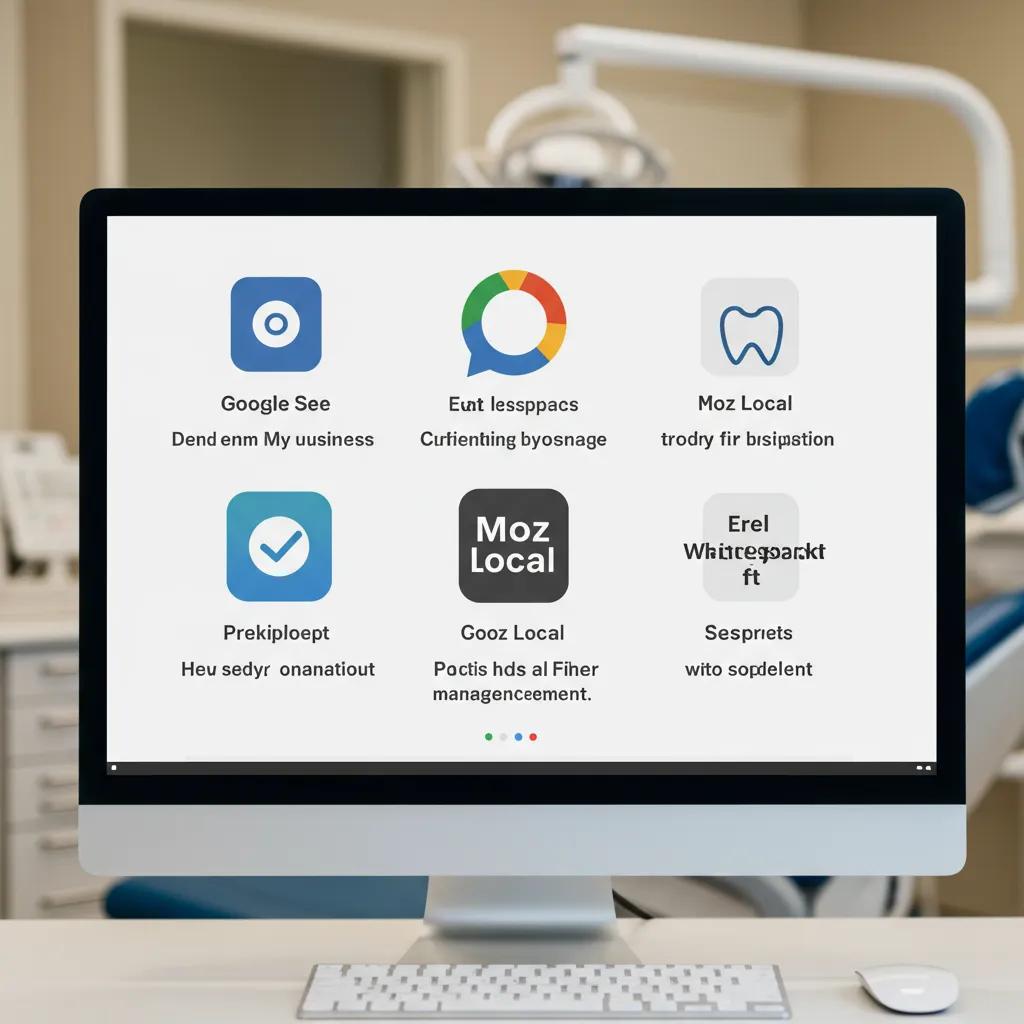
Local SEO tools are platforms that manage profile listings, build citations, monitor local rankings, and provide actionable tasks to improve map-pack visibility for dental practices. These tools work by aggregating directory signals, validating NAP consistency, and providing dashboards to track Google Business Profile performance and local keyword positions. For Australian dentists, suitability includes coverage of Australian directories, support for service menus and attributes relevant to healthcare, and the ability to integrate with review workflows. Selecting the right local SEO platforms shortens the path to more calls, website visits, and appointment bookings.
Different local SEO platforms vary by distribution reach, automation, and Australian directory coverage. The table below compares core local tools on features and use-case suitability for dental clinics.
| Tool | Primary Feature | Price Model | Best for (Australian suitability) |
|---|---|---|---|
| Google My Business | Local profile management, insights | Free | Essential for all practices; primary map-pack signal |
| Moz Local | Citation distribution and consistency | Subscription | Good for automated citation building and monitoring |
| Whitespark | Local rank tracking and citation services | Subscription / service fees | Best for targeted citation building and local SEO consultancy |
This comparison highlights that Google Business Profile is non-negotiable for local visibility, while Moz Local and Whitespark provide scalable citation and tracking capabilities that support Australian clinics. The right mix combines direct Google Business Profile optimisation with a citation service to maintain NAP accuracy and local signals.
How Does Google My Business Enhance Local SEO for Dental Practices?
Google My Business (Google Business Profile) enhances local SEO by directly controlling the clinic’s appearance in map results, local packs, and knowledge panels, which are primary conversion touchpoints for patients. The platform works through structured fields—services, photos, business hours, posts, and Q&A—that signal relevance and freshness to search algorithms, and its insights tab surfaces actions such as calls and driving directions. Optimising these fields with treatment-focused descriptions, appointment links, and frequent photo updates increases click-throughs and patient trust. Monitoring GMB insights lets clinics prioritise adjustments based on actual searches and customer actions, linking profile changes to booking outcomes and improving local rankings over time.
What Features Do Moz Local and Whitespark Offer for Local Citation Building?
Moz Local and Whitespark offer automated citation distribution, accuracy monitoring, and manual citation-building services that strengthen local signals for ranking algorithms. These platforms work by submitting consistent NAP data to a network of directories, detecting inconsistent listings, and providing workflows to correct mismatches—actions that reduce conflicting signals which harm local visibility. Moz Local emphasises automated distribution and monitoring, while Whitespark combines tracking with bespoke citation services and local rank tracking. For Australian dentists, the choice depends on directory coverage and the need for manual outreach to local health directories, and both tools help maintain the citation hygiene that underpins map-pack success.
How to Optimise Your Google Business Profile for Maximum Visibility?
Optimising Google Business Profile begins with completing every relevant field and ensuring service listings mirror site pages to create coherent signals for search engines and patients. Include concise service descriptions, appointment booking links, accurate categories, up-to-date photos, and regular posts highlighting treatments and patient education. Actively solicit reviews after visits and respond promptly with personalised, compliant replies to reinforce trust and improve review sentiment over time. Regularly review GMB insights to identify high-performing queries and adjust your service menu and posts accordingly, closing the loop between profile optimisation and patient acquisition.
Which Keyword Research Tools Best Serve Dental Practices?

Keyword research tools identify service-specific and locality-specific search phrases that drive patient intent and prioritise content and landing pages accordingly. These tools operate by providing search volume, keyword difficulty, SERP features, and competitor keyword overlap, enabling clinics to target achievable opportunities and map content to user intent. For dental practices, combining a broad tool for discovery with local modifiers and competitor insights yields the best outcomes: discover high-value treatment keywords, identify local long-tail variants, and prioritise pages that capture queries with booking intent. Using the right keyword tools allows clinics to target content that improves organic rankings, drives relevant traffic, and increases appointment conversions.
| Tool | Attribute | Value |
|---|---|---|
| SEMrush | Keyword database size and SERP analysis | Large database, strong local filters and keyword difficulty metrics |
| Ahrefs | Competitor backlinks and keyword discovery | Excellent for competitor gap analysis and keyword difficulty |
| Google Keyword Planner | Cost-based search volume and forecasting | Free tool with broad volume estimates and Google-centric data |
This table shows that SEMrush and Ahrefs provide deep competitive and keyword analysis while Google Keyword Planner offers accessible volume estimates; combining these tools gives dentists a balanced view for content planning and local targeting.
How Do SEMrush and Ahrefs Support Dental Keyword Research?
SEMrush and Ahrefs support dental keyword research by delivering extensive keyword databases, localised volume estimates, difficulty metrics, and competitor SERP analysis that reveal which queries competitors rank for. These tools allow clinics to filter by location, extract long-tail treatment queries, and discover content gaps where competitors rank for related services without targeted pages. Comparing keyword difficulty versus search volume helps prioritise low-competition, high-intent phrases for service pages and blog topics that convert. Exporting competitor keyword lists and traffic estimates provides actionable starting points for content briefs that align with patient intent.
What Are Effective Long-Tail Keyword Strategies for Dentists?
Long-tail keyword strategies focus on service-plus-location queries, symptom-based searches, and patient questions that reflect high appointment intent. Use tools to mine question-based queries, review common phrasing in reviews and FAQs, and create landing pages that answer specific patient needs such as “painful wisdom tooth removal [suburb]” or “affordable dental implant consultation near me”. Map each long-tail phrase to a single page or FAQ entry and optimise headings, meta descriptions, and schema for clarity and local context. This approach captures niche patient demand and improves conversion rates by matching precise intent with targeted content.
How Can Competitor Keyword Analysis Improve Your Dental SEO?
Competitor keyword analysis exposes where rival clinics capture traffic and reveals gaps where your practice can create targeted content or improve existing pages. Identify top competitors, export overlapping keywords, and prioritise low-difficulty terms that competitors rank for but where content quality or local signals are weak. Translate findings into content updates, new service pages, and localised blog posts, ensuring each page targets a cluster of semantically related terms. Regular competitor monitoring lets clinics adapt strategies quickly and capture incremental patient traffic through informed content planning.
How Can On-Page SEO and Content Optimisation Tools Boost Dental Websites?
On-page SEO tools improve relevance, readability, and semantic signals so search engines and patients better understand a clinic’s services and expertise. These tools analyse meta elements, heading structure, content depth, entity presence, and readability, then recommend changes to align pages with search intent and topical authority. For dental practices, using on-page tools ensures service pages match treatment keywords, FAQ content addresses common queries, and schema highlights offerings and reviews. Implementing recommended changes increases the chance of rich results, improves click-through rates, and strengthens topical relevance across the site.
What Role Do Yoast SEO and Clearscope Play in Content Optimisation?
Yoast SEO provides practical on-site guidance—meta tags, schema basics, readability scoring, and internal linking suggestions—helping clinics structure pages and meet technical requirements for indexing. Clearscope and similar content optimisation platforms look at topical coverage and semantic relevance, recommending related terms and entity mentions that enhance authority and help content rank for a broader set of queries. Using Yoast to fix technical on-page issues and Clearscope to deepen topical coverage creates a balanced workflow: technical compliance plus semantic depth. Together these tools help dental pages satisfy both machine understanding and patient readability.
How to Use Schema Markup Generators to Enhance Dental Website SEO?
Schema markup generators create structured data snippets for Organisation, LocalBusiness, Service, FAQ, and HowTo that clarify a clinic’s offerings to search engines and enable rich results. Implement fields for serviceType, areaServed, priceRange, and availableService to connect site content with search features that boost visibility and click-through rates. Add FAQ schema to treatment pages and HowTo schema for patient-prep steps to increase the chance of featured snippets. Testing and validating schema with technical SEO tools ensures markup is error-free and effective for enhancing SERP presentation.
Why Is Readability and Entity Integration Vital for Dental SEO Content?
Readability ensures patients quickly find answers and take action, while entity integration—mentioning treatments, locations, and provider roles—signals topical authority to search engines. Aim for clear headings, short paragraphs, and patient-focused language with an average reading level appropriate for a broad audience. Incorporate entity-rich sentences that connect treatments to locations and patient outcomes, such as “dental implant consultation in [suburb] leads to faster treatment planning and improved long-term function.” Balancing readability with entity mentions improves both patient comprehension and the semantic signals that underpin search visibility.
What Technical SEO Tools Are Essential for Dental Websites?
Technical SEO tools monitor site health, fix indexing issues, and improve performance so search engines can crawl and rank dental websites effectively. These tools surface broken links, duplicate content, crawl errors, and speed bottlenecks that reduce organic visibility and user experience. Addressing technical issues prevents missed opportunities for ranking and ensures that on-page and local optimisation efforts are not undermined by preventable errors. Regular technical audits combined with fixes to speed and mobile UX create a stable foundation for content and local strategies.
How Does Google Search Console Help Monitor Dental Website Performance?
Google Search Console (GSC) provides essential reports on search performance, coverage issues, mobile usability, and rich result statuses that inform technical and content priorities. GSC reveals which queries and pages drive impressions and clicks, surfaces indexing errors, and highlights schema or AMP problems that may prevent rich results from appearing. Regularly review the Performance, Coverage, and Enhancements reports to prioritise fixes such as addressing crawl errors, improving poor-performing pages, and refining structured data. Using GSC as a monitoring hub turns raw search data into actionable technical and content tasks.
What Are the Benefits of Using Screaming Frog for Dental Site Audits?
Screaming Frog crawls the site to detect broken links, missing metadata, duplicate titles, and redirect chains—common issues that reduce crawl efficiency and dilute ranking signals. Audit outputs help prioritise quick wins such as fixing 404s, consolidating duplicate pages, and optimising title tags and meta descriptions for target keywords. For dental sites, Screaming Frog can also identify orphan pages and thin service pages that need consolidation or expansion. Prioritising fixes from a Screaming Frog audit improves site health and ensures crawl budget is spent on high-value pages.
How to Ensure Mobile-First Indexing and Site Speed Optimisation?
Mobile-first indexing and speed optimisation require responsive design, compressed images, efficient caching, and minimal render-blocking resources to reduce load time and improve user experience on phones. Use PageSpeed Insights and Lighthouse to identify slow resources, large images, and third-party scripts that delay interactive time, then implement lazy-loading, image compression, and cache headers. Ensure mobile usability by checking tap targets, viewport configuration, and condensed content structure for quick access to appointment booking. Faster mobile pages increase engagement and reduce bounce, directly supporting local rankings and conversion.
Note: Milkcan Marketing can perform technical audits and implement speed and mobile fixes as part of their Dental Marketing Services, helping clinics prioritise and remediate issues identified by the tools above.
Which Online Reputation Management Platforms Are Best for Dental Clinics?
Reputation management platforms centralise review collection, monitor sentiment, and automate follow-up so clinics can increase review volume and respond consistently to patient feedback. These platforms operate by connecting to SMS, email, and in-clinic prompts to request reviews, aggregating feedback across channels, and providing dashboards for response workflows and sentiment analysis. For dental practices, platforms that automate reminders, provide compliance-friendly templates, and integrate with the clinic’s workflow deliver the best results in building patient trust and local ranking influence. Choosing the right reputation tool streamlines review generation and ensures prompt, measured responses that protect reputation.
Intro to the reputation platform comparison table: The table below compares leading reputation platforms and AI-driven review solutions across review channels, automation, and AI features relevant to dental clinics.
| Platform | Review Channels Supported | Automation Features | AI Capabilities / Pricing Tiers |
|---|---|---|---|
| Podium | SMS, email, web links | Automated reminders and responses | Offers advanced automation; tiered pricing |
| Birdeye | Multiple review sites and social | Multi-channel review collection and routing | Includes sentiment analysis; tiered plans |
| AI-powered review tools | Aggregated channels with AI triage | Automated classification and suggested replies | AI assistance with human oversight; varied pricing |
This comparison shows that platforms differ by channel reach and AI sophistication; choosing one that fits clinic workflows and compliance needs is key. Automated reminders increase review volume, while AI features accelerate triage—but human oversight remains essential for healthcare contexts.
How Do Platforms Like Podium and Birdeye Manage Patient Reviews?
Platforms like Podium and Birdeye manage reviews by sending automated invitations via SMS or email after appointments, aggregating responses into a single dashboard, and enabling teams to respond quickly with templated or customised replies. They provide reporting on review volume, channel performance, and sentiment trends that inform staffing and patient experience improvements. Automation reduces manual effort while dashboards let practice managers monitor reputation health and campaign outcomes. Integration with appointment systems and local listing profiles helps link review generation to specific interactions and measures the impact on local visibility.
What Are Effective Strategies for Generating and Responding to Patient Feedback?
Effective strategies include asking for reviews at the right moment, using multiple channels, and offering simple guidance to patients on how to leave feedback. Timing requests within 24-72 hours of the appointment, combining in-clinic prompts with SMS reminders, and training reception staff to explain the process increases completion rates. For responses, use a consistent template that acknowledges the patient, addresses concerns, and invites offline resolution when needed; keep responses professional and compliant with healthcare privacy considerations. Escalation paths for negative feedback should prioritise swift contact and remediation to preserve reputation and patient trust.
Can AI-Powered Tools Improve Online Reputation for Dental Practices?
AI-powered tools can improve reputation management by classifying sentiment, suggesting response drafts, and prioritising high-risk feedback for human review, thereby saving time and focusing staff attention where it matters most. These tools analyse language patterns to detect urgent complaints and can summarise trends in review sentiment to guide service improvements. However, AI limitations require human oversight for tone, clinical accuracy, and compliance with healthcare regulations; automated responses should be reviewed before publishing. Combining AI triage with human-approved replies yields efficiency while safeguarding patient relationships and regulatory adherence.
Note: In integrating a reputation platform, Milkcan Marketing supports tool implementation and strategy as part of their Dental Marketing Services by advising on automation setup, response templates, and reporting frameworks that align with practice workflows and regulatory considerations.
What Are the Best Advanced SEO Strategies for Dental Clinics in 2025?
Advanced SEO strategies for 2025 blend AI-driven personalisation, video SEO, voice search optimisation, and multi-tool integration to capture increasingly sophisticated patient search behaviour. These approaches work by personalising content to user intent, using video to increase engagement and trust, and structuring content so conversational queries and voice assistants can surface clinic answers directly. An integrated tech stack that maps data from keyword tools, analytics, reputation platforms, and GSC into unified dashboards supports timely decisions and continuous optimisation. Prioritising these advanced tactics helps clinics stay ahead of competitors and capture modern patient journeys.
How Is AI Transforming SEO Tools and Personalisation for Dentists?
AI transforms SEO by automating content topic discovery, personalising on-site experiences, and providing predictive insights about patient search trends and query intent. Tools apply natural language processing to surface related entities and generate topic clusters that inform content briefs, while AI-driven analytics can forecast which pages will likely convert based on historical behaviour. Ethical and privacy considerations require anonymised data use and human review of AI outputs, especially for healthcare content and patient communications. When applied responsibly, AI shortens research cycles and improves the relevance and resonance of clinic content and outreach.
Why Is Video SEO Important for Dental Practice Marketing?
Video SEO builds patient trust through demonstrations, testimonials, and procedure explanations that reduce anxiety and answer common questions prior to appointments. Optimising video titles, descriptions, transcripts, and structured data increases discoverability on search engines and video platforms, while short educational clips and testimonials improve conversions on service pages. Technical steps include adding captions, structured data for video objects, and embedding optimised videos on relevant landing pages to improve dwell time and topical authority. Video content ideas include procedure walkthroughs, patient stories, and FAQ videos that directly address search intent.
How Can Voice Search Optimisation Benefit Dental Clinics?
Voice search optimisation benefits clinics by aligning content with conversational, question-based queries that patients use with voice assistants and mobile search. Target FAQ pages and natural-language answers that include local modifiers and quick solutions to immediate needs, for example “where can I get a same-day filling near me”. Use structured data and succinct answers in FAQ schema to increase the chance of being used as voice assistant responses. Optimising for voice helps capture urgent and local intent, converting spoken searches into phone calls and bookings.
How to Integrate Multiple SEO Tools for a Holistic Dental Marketing Strategy?
Integrating multiple SEO tools requires mapping data flows from keyword research, technical audits, content optimisation, and reputation platforms into a unified reporting structure that connects actions to KPIs. Build a tech stack with clear ownership—who runs audits, who updates site content, who manages reviews—and define reporting cadence that links tool outputs to conversion metrics such as calls, bookings, and form submissions. Use a central dashboard to track high-level KPIs while delegating tool-specific tasks to specialists or internal owners. This ensures the whole stack supports continuous improvement and measurable growth.
How to Choose the Right SEO Tools for Your Dental Practice?
Choosing the right SEO tools requires evaluating budget, local support, ease of use, and the ability to integrate with your clinic’s workflows and goals. Prioritise tools that target local search features, provide clear ROI signals, and reduce manual workload through automation, especially for citation and reputation tasks. Small practices should favour ease-of-use and high-impact features, while larger clinics may invest in advanced analytics and multi-location management. A disciplined selection process ensures tools deliver measurable improvements in online visibility and patient acquisition.
What Factors Should Dentists Consider When Selecting SEO Software?
Dentists should consider cost versus expected ROI, the tool’s local search capabilities, integration with existing systems, ease of use for staff, and the availability of support or onboarding. Assess whether a platform covers Australian directories, supports Google Business Profile workflows, and offers reporting that ties to bookings or calls. Balance feature sets with the team’s capacity to act on recommendations; a powerful tool is only valuable if someone can implement its tasks. Prioritise tools that automate local signals and reputation tasks to free up clinical staff time for patient care.
How Does Milkcan Marketing Support Tool Implementation and Strategy?
Milkcan Marketing supports dental practices by offering audit-led selection, managed implementation, and ongoing monitoring tailored to healthcare practices through its Dental Marketing Services. Their approach begins with an audit to identify tool gaps and priority fixes, followed by selecting and configuring tools that match a clinic’s scale and local needs. Implementation includes setting up Google Business Profile optimisations, citation corrections, and reputation workflows, then monitoring performance with regular reporting to ensure actions align with patient acquisition goals. Clinics seeking managed execution can inquire about Dental Marketing Services for a results-driven, local-Australia focused partnership that integrates tools into an actionable plan.
What Checklist Ensures Effective SEO Tool Adoption for Dental Clinics?
An effective adoption checklist ensures training, ownership, reporting, and review cadence are established so tools produce sustained value rather than one-off reports. Key steps include assigning tool owners, scheduling initial training, defining KPIs and reporting intervals, and setting 30/60/90-day review milestones to measure progress and reallocate effort. Include a communication plan for staff who request reviews or update profiles and document processes for responding to reputation alerts and implementing technical fixes. Following this checklist ensures consistent execution, accountability, and measurable improvements in visibility and patient enquiries. Milkcan Marketing’s Dental Marketing Services can assist with onboarding and define this checklist as part of a managed engagement.
- Assign Tool Ownership: Designate a staff member to own daily tasks and vendor contacts.
- Schedule Training: Arrange initial and follow-up training sessions for users.
- Define KPIs and Cadence: Set measurable targets and reporting intervals to review progress.
These checklist steps create the operational structure needed to turn tool outputs into ongoing improvements and higher patient acquisition.